To avoid these ads, REGISTER NOW!

Tools from the old world

Steve_P

Well-known member
Joined
Sep 15, 2010
Messages
5,181
That is not a cobra/alligator design. The jaws have sliding ways and do grip parallel. They just lack the fine adjustments.

I don't see any feature like the Plier Wrench in your pictures that move the jaw parallel. It looks like an Alligator plier with smooth jaws from what I see. But maybe I am missing something. Either way, from your pictures, the jaws clearly do not grip parallel.

The Plier Wrench uses a fine adjustment so that the jaw movement can take up that last minor amount of play and move them parallel. They obviously didn't modify the Alligator mechanism and turn it into a PW for a reason- because it's too coarse.
 
To avoid these ads, REGISTER NOW!

F-22

Well-known member
Joined
Jan 23, 2022
Messages
1,830
I don't see any feature like the Plier Wrench in your pictures that move the jaw parallel. It looks like an Alligator plier with smooth jaws from what I see. But maybe I am missing something. Either way, from your pictures, the jaws clearly do not grip parallel.

The Plier Wrench uses a fine adjustment so that the jaw movement can take up that last minor amount of play and move them parallel. They obviously didn't modify the Alligator mechanism and turn it into a PW for a reason- because it's too coarse.
Yes I have the knipex plier wrench at home. These move parallel in the same way. Here's a link to their website:


Just really ridiculously bad with the coarse adjustment. I guess mainly meant for plumbing work. The bottom jaw is incredibly wobbly.
 

Kaffeetanne

Well-known member
Joined
Oct 9, 2023
Messages
45
Location
-
Got new Unior tools I ordered for some factory workers at the workplace.
Thanks for the overview! Lately i was looking thru there lineup, especially their bicycle relatd tools, but didn't pull the trigger jet.
From what i read online it seems like Unior tools are somewhat mediocre.
 

F-22

Well-known member
Joined
Jan 23, 2022
Messages
1,830
Thanks for the overview! Lately i was looking thru there lineup, especially their bicycle relatd tools, but didn't pull the trigger jet.
From what i read online it seems like Unior tools are somewhat mediocre.
It depends. I'd say I was never too impressed with any of their "mechanism" tools like pliers or ratchets. The one-piece forgings are excellent - the various wrenches, tire tools, even the puller tools are very good, and the sockets are really nice. don't particularly like their screwdriver handles.
 

F-22

Well-known member
Joined
Jan 23, 2022
Messages
1,830
IMG_8414.JPEG

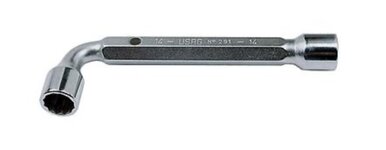
The Unior cles-a-pipe wrenches. Overall a bit disappointed. Expected the ends would be polished in the same style as their sockets. This looks quite cheap. The hole is quite off-center as well.
IMG_8415.JPEGIMG_8416.JPEG

Will probably work fine but I'd definitely go with Facom for home use.

Also kind of expected off-corner engagement as their sockets. This straight style... Well, I don't see any reason why one would make sockets like that nowadays.
 

Chrome Vanadium Cody

Well-known member
Joined
Jul 25, 2021
Messages
663
IMG_8414.JPEG

The Unior cles-a-pipe wrenches. Overall a bit disappointed. Expected the ends would be polished in the same style as their sockets. This looks quite cheap. The hole is quite off-center as well.
IMG_8415.JPEGIMG_8416.JPEG

Will probably work fine but I'd definitely go with Facom for home use.

Also kind of expected off-corner engagement as their sockets. This straight style... Well, I don't see any reason why one would make sockets like that nowadays.
Out of curiosity is country of origin listed for these wrenches?
 

Dave455

Well-known member
Joined
Mar 19, 2013
Messages
5,796
Location
Sussex, England
IMG_8414.JPEG

The Unior cles-a-pipe wrenches. Overall a bit disappointed. Expected the ends would be polished in the same style as their sockets. This looks quite cheap. The hole is quite off-center as well.
IMG_8415.JPEGIMG_8416.JPEG

Will probably work fine but I'd definitely go with Facom for home use.

Also kind of expected off-corner engagement as their sockets. This straight style... Well, I don't see any reason why one would make sockets like that nowadays.
That is very disappointing, though the Unior I have seen has always been a bit ”mixed”.

The market leader for these is probably Facom, and although they are produced in Taiwan now, they are very consistent. I have a few, all older Facom, which I enjoy using.
8D3C6596-B6EC-4FE3-9CED-F51597F70CA4.jpeg

You can get a USAG branded version too, and USAG also offer an alternative pattern.
B66A6E80-77B9-4312-BB1D-A04EC50E2859.jpeg

Some of the nicest I’ve seen are the SAM, which I believe are still made in France, but they are harder to obtain outside France.

Hard enough to obtain inside France, now that I think about it!
 

Outahere

Well-known member
Joined
Mar 13, 2021
Messages
870
Location
Idaho
I have the Facoms in 14, 17, and 19mm. Very nice wrenches. This style of wrench seems to be much more popular in Europe than here in the USA. I wonder why ?
 

F-22

Well-known member
Joined
Jan 23, 2022
Messages
1,830
Out of curiosity is country of origin listed for these wrenches?

I threw it away, but I am quite certain it said it was made here in Slovenia.

That is very disappointing, though the Unior I have seen has always been a bit ”mixed”.

The market leader for these is probably Facom, and although they are produced in Taiwan now, they are very consistent. I have a few, all older Facom, which I enjoy using.
8D3C6596-B6EC-4FE3-9CED-F51597F70CA4.jpeg

You can get a USAG branded version too, and USAG also offer an alternative pattern.
B66A6E80-77B9-4312-BB1D-A04EC50E2859.jpeg

Some of the nicest I’ve seen are the SAM, which I believe are still made in France, but they are harder to obtain outside France.

Hard enough to obtain inside France, now that I think about it!
Looking at that photo the Facom also has a straight broach. I have heard of SAM and those seem very nice. Gedore also seems to sell some nice ones, the design is a bit different so probably they make them in Germany or Austria.

So disappointed in my local brand Unior. They can make really nice stuff but they just don't put any effort.

I have the Facoms in 14, 17, and 19mm. Very nice wrenches. This style of wrench seems to be much more popular in Europe than here in the USA. I wonder why ?

Just traditions. Can see that in many tools. Most US vises have a swivel bottom which is way more rare for continental European vises, for example. Many European vises were even made of steel which was never popular in the US. US style pipe wrench, the stillson, is much less popular in Europe where the Swedish pattern is used a lot. Hammers too - the US and UK style ball peen hammers are a lot less common in Europe where the German pattern cross peen is prevalent. Also the claw and rip hammers compared to the latthammer... Or combination pliers vs linemans pliers. Or the straight jaw channellocks and vise grips while most European pliers will almost always have the curved style pipe-jaw. European breaker bar is more often the sliding-T handle instead of the actual breaker bar. European sockets are typically the shallow ones in 1/4" and 1/2" sizes. In the US the in-between 3/8" size is used a lot more instead.

And so on... Anvils too. US used mainly the "London pattern", same as the UK. Continental European anvils come in many many designs. The London is kind of big for its size, and not terribly supported on the horns - compared to German styles (or especially south German and Austrian anvils were super heavy duty). etc... :)
 

neophyte

Well-known member
Joined
Apr 23, 2012
Messages
9,526
Location
Pennsylvannia
I threw it away, but I am quite certain it said it was made here in Slovenia.


Looking at that photo the Facom also has a straight broach. I have heard of SAM and those seem very nice. Gedore also seems to sell some nice ones, the design is a bit different so probably they make them in Germany or Austria.

So disappointed in my local brand Unior. They can make really nice stuff but they just don't put any effort.


Just traditions. Can see that in many tools. Most US vises have a swivel bottom which is way more rare for continental European vises, for example. Many European vises were even made of steel which was never popular in the US. US style pipe wrench, the stillson, is much less popular in Europe where the Swedish pattern is used a lot. Hammers too - the US and UK style ball peen hammers are a lot less common in Europe where the German pattern cross peen is prevalent. Also the claw and rip hammers compared to the latthammer... Or combination pliers vs linemans pliers. Or the straight jaw channellocks and vise grips while most European pliers will almost always have the curved style pipe-jaw. European breaker bar is more often the sliding-T handle instead of the actual breaker bar. European sockets are typically the shallow ones in 1/4" and 1/2" sizes. In the US the in-between 3/8" size is used a lot more instead.

And so on... Anvils too. US used mainly the "London pattern", same as the UK. Continental European anvils come in many many designs. The London is kind of big for its size, and not terribly supported on the horns - compared to German styles (or especially south German and Austrian anvils were super heavy duty). etc... :)
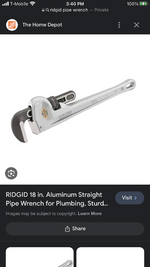
The standard USA pipe wrench should probably be called the “Ridgid” style.
Most wrenches sold as “Stillson” style pipe wrench, have the dynamic adjustable jaw mounted in a separate piece riveted to the wrench handle/fixed jaw.
Ridgid style wrenches have a jaw that pivots, but it pivots due to a couple small pieces including a spring that are hidden within the wrench handle.
Supposedly most of the “US” style wrenches are now made to match the Ridgid design as far as the dynamic and fixed jaws, and the adjustment nut, and the spring pivot system, so the parts can be interchanged or repaired for wrenches of the same size.
 

Attachments

  • IMG_8910.png
    IMG_8910.png
    1.1 MB · Views: 39
  • IMG_8909.png
    IMG_8909.png
    751.2 KB · Views: 24
  • IMG_8908.jpeg
    IMG_8908.jpeg
    247.3 KB · Views: 25

Chrome Vanadium Cody

Well-known member
Joined
Jul 25, 2021
Messages
663
I threw it away, but I am quite certain it said it was made here in Slovenia.


Looking at that photo the Facom also has a straight broach. I have heard of SAM and those seem very nice. Gedore also seems to sell some nice ones, the design is a bit different so probably they make them in Germany or Austria.

So disappointed in my local brand Unior. They can make really nice stuff but they just don't put any effort.


Just traditions. Can see that in many tools. Most US vises have a swivel bottom which is way more rare for continental European vises, for example. Many European vises were even made of steel which was never popular in the US. US style pipe wrench, the stillson, is much less popular in Europe where the Swedish pattern is used a lot. Hammers too - the US and UK style ball peen hammers are a lot less common in Europe where the German pattern cross peen is prevalent. Also the claw and rip hammers compared to the latthammer... Or combination pliers vs linemans pliers. Or the straight jaw channellocks and vise grips while most European pliers will almost always have the curved style pipe-jaw. European breaker bar is more often the sliding-T handle instead of the actual breaker bar. European sockets are typically the shallow ones in 1/4" and 1/2" sizes. In the US the in-between 3/8" size is used a lot more instead.

And so on... Anvils too. US used mainly the "London pattern", same as the UK. Continental European anvils come in many many designs. The London is kind of big for its size, and not terribly supported on the horns - compared to German styles (or especially south German and Austrian anvils were super heavy duty). etc... :)

Thank you, I appreciate it! I often have trouble tracking country of origin info down for euro brands-maybe it gets lost in translation. Bummer that the quality on these is disappointing though!
 

F-22

Well-known member
Joined
Jan 23, 2022
Messages
1,830
The standard USA pipe wrench should probably be called the “Ridgid” style.
Most wrenches sold as “Stillson” style pipe wrench, have the dynamic adjustable jaw mounted in a separate piece riveted to the wrench handle/fixed jaw.
Ridgid style wrenches have a jaw that pivots, but it pivots due to a couple small pieces including a spring that are hidden within the wrench handle.
Supposedly most of the “US” style wrenches are now made to match the Ridgid design as far as the dynamic and fixed jaws, and the adjustment nut, and the spring pivot system, so the parts can be interchanged or repaired for wrenches of the same size.
Very interesting, I thought they're the same and they seem the same on the first glance... Stillson was and American and did issue the pattern in the USA so I'd assume the current pipe wrenches are more of an evolution of that, not something entirely different.
Thank you, I appreciate it! I often have trouble tracking country of origin info down for euro brands-maybe it gets lost in translation. Bummer that the quality on these is disappointing though!
Yes... They're still perfectly usable tools, and I guess for the torque they're supposed to be put under, the broaching is fine too. Just makes no sense, why they even still use the straight broach, they could just use the one they use for the sockets and that'd be it.
 

neophyte

Well-known member
Joined
Apr 23, 2012
Messages
9,526
Location
Pennsylvannia
Very interesting, I thought they're the same and they seem the same on the first glance... Stillson was and American and did issue the pattern in the USA so I'd assume the current pipe wrenches are more of an evolution of that, not something entirely different.

Yes... They're still perfectly usable tools, and I guess for the torque they're supposed to be put under, the broaching is fine too. Just makes no sense, why they even still use the straight broach, they could just use the one they use for the sockets and that'd be it.
Daniel C. Stillson worked for the Walworth Company in Cambridge Massachusetts.
Walworth was a manufacturer of plumbing fittings and plumbing tools.
Supposedly, Stillson made a fortune of the royalties licensing his wrench patent, which was issued in 1869.

William O. Thewes seems to have designed the Ridgid style pipe wrench ( in around 1924-25), with modifications patented by the Ridge Tool Company (Ridgid) in 1928-29.
I’m not sure that the Thewes/Ridgid wrench is simplified as far as the number of parts go, but the Ridgid design eliminated the larger slightly pivoting Piece that is mounted to the fixed jaw/handle, which may have significantly reduced manufacturing costs.
The replacement springs are likely very inexpensive to manufacture and replace.
The design nay also be more solid than the Stilldon design, due to the lack of the pivot rivet, but it’s hard to say since plenty of actual Stillson wrenches survive decades later.

Plenty of plumbing tool manufacturers still offer both the Stillson and Thewes/Ridgid designs alongside each other.

Reed in the USA, one of the major old US manufacturers of plumbing tools, offers the Ridgid design, but the wrenches are made in Spain, maybe by Super Ego or Ega Master.
Virax of France used to make the Ridgid style wrenches as well back when Virax was owned by Facom, although I think after Stanley bought Facom, they nay have sold Virax to Rothenberger of Germany, and the Virax wrenches were switched to the Spanish production (I’m not sure of this).
 

F-22

Well-known member
Joined
Jan 23, 2022
Messages
1,830
Daniel C. Stillson worked for the Walworth Company in Cambridge Massachusetts.
Walworth was a manufacturer of plumbing fittings and plumbing tools.
Supposedly, Stillson made a fortune of the royalties licensing his wrench patent, which was issued in 1869.

William O. Thewes seems to have designed the Ridgid style pipe wrench ( in around 1924-25), with modifications patented by the Ridge Tool Company (Ridgid) in 1928-29.
I’m not sure that the Thewes/Ridgid wrench is simplified as far as the number of parts go, but the Ridgid design eliminated the larger slightly pivoting Piece that is mounted to the fixed jaw/handle, which may have significantly reduced manufacturing costs.
The replacement springs are likely very inexpensive to manufacture and replace.
The design nay also be more solid than the Stilldon design, due to the lack of the pivot rivet, but it’s hard to say since plenty of actual Stillson wrenches survive decades later.

Plenty of plumbing tool manufacturers still offer both the Stillson and Thewes/Ridgid designs alongside each other.

Reed in the USA, one of the major old US manufacturers of plumbing tools, offers the Ridgid design, but the wrenches are made in Spain, maybe by Super Ego or Ega Master.
Virax of France used to make the Ridgid style wrenches as well back when Virax was owned by Facom, although I think after Stanley bought Facom, they nay have sold Virax to Rothenberger of Germany, and the Virax wrenches were switched to the Spanish production (I’m not sure of this).
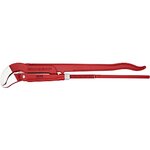
Interesting. I know some people also use those, but by far the most common design you'll see with plumbers in continental Europe is various variations of this:
image.jpg


Though I am a little tempted to buy a Ridgid. Just find it cool that it's US made...
 

neophyte

Well-known member
Joined
Apr 23, 2012
Messages
9,526
Location
Pennsylvannia
Interesting. I know some people also use those, but by far the most common design you'll see with plumbers in continental Europe is various variations of this:
image.jpg


Though I am a little tempted to buy a Ridgid. Just find it cool that it's US made...
The humorous thing about these wrenches, is that Bahco, the successor company to the the one founded by the inventor of the “Swedish Pipe Wrench”, now uses a slightly different design for their pipe wrenches, and the various German and Spanish manufacturers, seem to use a design closer to the original wrench Johan Petter Johansson designed.
 

Attachments

  • IMG_8924.jpeg
    IMG_8924.jpeg
    300.2 KB · Views: 40
  • IMG_8925.png
    IMG_8925.png
    1 MB · Views: 37
  • IMG_8926.png
    IMG_8926.png
    743.6 KB · Views: 31

_gear2

Member
Joined
Oct 19, 2013
Messages
23
Knipex 2871280 are the jaws not meant to be flush fit?
 

Attachments

  • IMG_20231115_184944450.jpg
    IMG_20231115_184944450.jpg
    424 KB · Views: 54
  • IMG_20231115_184933183.jpg
    IMG_20231115_184933183.jpg
    384.7 KB · Views: 59
To avoid these ads, REGISTER NOW!

Etchase

Well-known member
Joined
Nov 10, 2017
Messages
1,957
Location
Hawaii
They err on the side of the front touching first. Not much force required to close up the gap. You’re lucky, you can spring them a bit and still pick up vanishingly thin items
 
Last edited:

Chrome Vanadium Cody

Well-known member
Joined
Jul 25, 2021
Messages
663
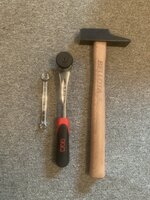
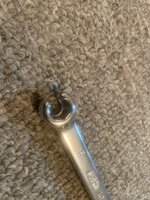
Was doing some shopping for Garage Journal Secret Santa and used the opportunity to pick up a couple items for myself that aren’t common in the USA. Sam 8x9 mm flare nut wrench, Sam S-159 1/2” drive ratchet, Bellota 8005-E carpenter’s hammer made in Spain. Both Sam tools are marked made in France which is nice- I hadn’t been able to figure out country of origin from their online catalog.

The flare nut wrench is the “webbed” style that I’ve seen some people on here mentioning lately with examples from Facom and Hazet. Cool to know Sam makes these too.
IMG_8190.jpeg
IMG_8191.jpegIMG_8193.jpeg
 

Gene Mancini

New member
Joined
Jul 19, 2018
Messages
1
Location
Philadelphia
Interesting. I know some people also use those, but by far the most common design you'll see with plumbers in continental Europe is various variations of this:
image.jpg


Though I am a little tempted to buy a Ridgid. Just find it cool that it's US made...
You should, nothing comes close when you really need to wrench it. Proverbial bull in a china shop.
 

Chrome Vanadium Cody

Well-known member
Joined
Jul 25, 2021
Messages
663
A link to that online catalog would be appreciated. Thanks!

They have an English language version of their site which is nice. Guessing they export to the UK. I emailed to ask if they have any distributors in the US and they said no. I’m still working on the best way to get their stuff here. Definitely impressed with the tools I got. Here’s the product page for the flare nut wrenches: https://www.sam-outillage.com/outil-set-of-hexagonal-flare-nut-ring-wrenches-in-mm-4337.htm
 

mobiledynamics

Well-known member
Joined
Mar 14, 2010
Messages
5,034
Location
Gotham City
I guess I will find out when it arrives.....but I a set if Facom E Torx wrenches it' way

Haven't bought any Hazet in quite some time. How doe the finish on Hazet compare to Stahwille these days.
 

CGarage

Well-known member
Joined
Nov 23, 2018
Messages
2,995
Location
United States/Switzerland
I guess I will find out when it arrives.....but I a set if Facom E Torx wrenches it' way

Haven't bought any Hazet in quite some time. How doe the finish on Hazet compare to Stahwille these days.


I think the finish question depends on the tool in question.
I sort of like the satin finish that Hazet has on their wrenches. It isn’t as slippery as chrome.
My Stahlwille tools seem relatively industrial and the finish is nothing to write home about.
I’d say the same of Hazet, also.
 

mobiledynamics

Well-known member
Joined
Mar 14, 2010
Messages
5,034
Location
Gotham City
I was looking at their Etorx wrench I think - or at least something Hazet. One of the reviews mentioned the finish was sub-par.
I think my last Hazet buy was a large 41m socket Finished seemed fine.
 

CGarage

Well-known member
Joined
Nov 23, 2018
Messages
2,995
Location
United States/Switzerland
I was looking at their Etorx wrench I think - or at least something Hazet. One of the reviews mentioned the finish was sub-par.
I think my last Hazet buy was a large 41m socket Finished seemed fine.


Monte might crucify me, but I dare say the Japanese tools I think are finished better than German tools in my opinion.

In terms of German finishing, I would say that Stahlwille and Hazet are at the top, followed closely by Gedore. This is for hardline tools like sockets and wrenches and ratchets.

The German tools are industrial and are meant for work, they are not art pieces.
 

Dave455

Well-known member
Joined
Mar 19, 2013
Messages
5,796
Location
Sussex, England
I was looking at their Etorx wrench I think - or at least something Hazet. One of the reviews mentioned the finish was sub-par.
I think my last Hazet buy was a large 41m socket Finished seemed fine.
Nothing sub-par about Hazet.

Their tools, like many German tools, are finished differently from American tools. Hazet are part matte chrome (not satin, a real matte) with polished highlights.

Although not as flashy as American chrome, it’s a very durable finish, and you can use the tool without worrying about the finish.

If that’s appealing, you won’t be disappointed. If not, you will be better served by something else.

As CGarage says, German tools are meant for work, although I find that the resultant rugged look has an appeal of it’s own.
847CF037-8AFB-4E4F-BAA5-1CEF81E197D0.jpeg

The finish inside the jaws, is excellent.
EC60EE74-6489-4B97-AA3E-1956C472AD29.jpeg

Same thing with the sockets - part matte, part polished, though many of the bit sockets have TiN coated inserts.

The matte part is a deliberate matte texture, very nicely done, and very different from a “poor” finish.
C8E9EED6-AC5F-4900-B1DD-08BE4E2EFEE0.jpeg
 
Last edited:

neophyte

Well-known member
Joined
Apr 23, 2012
Messages
9,526
Location
Pennsylvannia
Monte might crucify me, but I dare say the Japanese tools I think are finished better than German tools in my opinion.

In terms of German finishing, I would say that Stahlwille and Hazet are at the top, followed closely by Gedore. This is for hardline tools like sockets and wrenches and ratchets.

The German tools are industrial and are meant for work, they are not art pieces.
German tool companies do care about aesthetics, (in many cases, but not all),
But German industrial design seems routed in the Bauhaus tradition mostly, and Art Deco to an extent, basically the styles that predominated after WWI.
Finish wise, most German tool companies use a mat chrome finish, or a bead blasted mat finish.
Some manufacturers like Hazet do polish the wrench faces.
The mat finishes may actually be used for aesthetic reasons, since a mat finish doesn’t show mild scratches like a polished chrome finish does, and tossing wrenches together into a bin seems universally common.
The Belzer brand from Germany, actually did care about aesthetics, and made tools that were very highly polished and chrome plated, and really old Belzer tools actually had lots of extra detailing machined into the forging dies.
My understanding is the Belzer tools were more expensive than average.
I think some of the polished Belzer tools still exist in the Bahco//Snap-On Europe catalog.
 

HannibalLecter

Well-known member
Joined
Aug 26, 2023
Messages
400
Gedore tool finish is a no no for me. I am not talking about thr chrome, I'm talking about all the grinding marks and blemishes
 

Dave455

Well-known member
Joined
Mar 19, 2013
Messages
5,796
Location
Sussex, England
One has to remember, that with so many German manufacturers out there, it’s sometimes hard to generalise about finish.

These Saltus wrenches, for example, are very highly polished. Heyco Maxline are similar, and the original German made Belzer were a notch above.
B30A5319-9EAC-4204-A233-30C29F9467C6.jpeg

Gedore tool finish is a no no for me. I am not talking about thr chrome, I'm talking about all the grinding marks and blemishes

I find Gedore consistently disappointing. Their best finished wrenches are their No.7 combination wrenches, and I don’t mind those, but most of their other patterns I find have a very rough finish (unpleasant to use) and I don’t consider the overall quality that good.

I’ve seen bent wrenches, off centre broaching, random dinks and grind marks, and if you get past that you get a very unexceptional wrench.
 
To avoid these ads, REGISTER NOW!
Top Bottom