To avoid these ads, REGISTER NOW!

Torque Test Channel Open End Wrench Testing Part 2

dchawk81

Well-known member
Joined
Jul 31, 2014
Messages
14,361
And y'all keep saying I don't get the point of the test really should back off that. A person can get it and still not consider it useful information. I get it, I don't consider it useful information.

He said early on that he's trying to simulate a rusty rounded nut in the most consistent way possible. There's nothing difficult to "get" about that.

However, I personally DGAF about simulating rusty rounded nuts scientifically because they're seldom two the same and getting those off is a matter of luck, hopefully box ends, and probably fire. And once they're off you sure as heck don't reuse them. All bets are off for those. And you'd be wise to use a 6 point and penetrating oil to increase your odds of only needing the wrench. BTDT.

I want to know what's going to make my wrench fail on a normal tight fastener and at what point. Whether it's fitment or materials or regular grippy features. Again, on fasteners I actually encounter. Not soft stuff that's meant to hold two threaded rods together and not torqued down.

If you want to try rusty, get unscientific and go out there with various wrenches and romp on some junkyard stuff. It'll either round off, come off, or break the wrench. When we deal with rusty fasteners, we're prepared to use unconventional means.
 
To avoid these ads, REGISTER NOW!

ItsNemo

Well-known member
Joined
Mar 5, 2016
Messages
4,805
Location
Canada
And y'all keep saying I don't get the point of the test really should back off that. A person can get it and still not consider it useful information. I get it, I don't consider it useful information.

He said early on that he's trying to simulate a rusty rounded nut in the most consistent way possible. There's nothing difficult to "get" about that.

However, I personally DGAF about simulating rusty rounded nuts scientifically because they're seldom two the same and getting those off is a matter of luck, hopefully box ends, and probably fire. And once they're off you sure as heck don't reuse them. All bets are off for those. And you'd be wise to use a 6 point and penetrating oil to increase your odds of only needing the wrench. BTDT.

I want to know what's going to make my wrench fail on a normal tight fastener and at what point. Whether it's fitment or materials or regular grippy features. Again, on fasteners I actually encounter. Not soft stuff that's meant to hold two threaded rods together and not torqued down.

If you want to try rusty, get unscientific and go out there with various wrenches and romp on some junkyard stuff. It'll either round off, come off, or break the wrench. When we deal with rusty fasteners, we're prepared to use unconventional means.

Funny that we're all saying it, one has to wonder if they're off base when everyone says otherwise.

Let me ask you this - what test would you use to determine if the open ended wrench is well designed without the wrench itself breaking?
 

Madjik Man

Well-known member
Joined
Dec 3, 2015
Messages
1,521
Just tell me what open end combo wrench to buy, lol.

My current combo wrench set is from my mid90s Craftsman mechanic set and it’s 7-15 only.

I’m a DIY home guy. Like finding that quality : price ratio and appreciate a no questions asked warranty.

I’m leaning towards Tekton for this reasons stated above plus I held one in my hand once and the beam felt okay. 6-24mm, $115)

Capri is also another option for me. (6-24mm, $150)

Icon is possibly another. (6-19mm, $120)

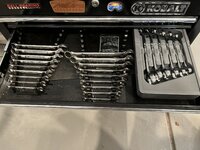
Picture of sad wrench drawer that’s somehow gotten me through most everything for the past near-30 years:
 

Attachments

  • 3C49D0B3-9D16-4A88-B5C9-912E776B444E.jpeg
    3C49D0B3-9D16-4A88-B5C9-912E776B444E.jpeg
    878.5 KB · Views: 49
Last edited:

dchawk81

Well-known member
Joined
Jul 31, 2014
Messages
14,361
Funny that we're all saying it, one has to wonder if they're off base when everyone says otherwise.

Let me ask you this - what test would you use to determine if the open ended wrench is well designed without the wrench itself breaking?
That's because you're okay with what they're testing for and I'm not.

Like I said, it's opinion. You're telling me my opinion is wrong.

Oh and being in the majority doesn't make it right. We have historical records showing that much. 😏
 
Last edited:

M635_Guy

Well-known member
Joined
Dec 5, 2019
Messages
4,334
Location
NC
Grade 5 simulates the real world better because that's what the real world uses, among even harder fasteners.

Testing is supposed to simulate the real world as closely as possible in a controlled setting.

Like I said, it's my opinion about how useful the information from TTC is based on what they're testing.
LoL - so you're an opinion vs. data/facts guy eh?

That also answers my earlier question about whether you're a scientist (or engineer) - "No"

The purpose of testing is to reduce the factors involved in order to test as strictly and repeatably for the specific performance that enables your real-world experience as possible. Use of harder fasteners would reduce the amount of data.

Like I said, it's opinion. You're telling me my opinion is wrong.

What we're telling you is your opinion isn't fact-based. It's a free country - you can say you don't like it, but insinuating that this doesn't translate well into the real world is wrong.
 

dchawk81

Well-known member
Joined
Jul 31, 2014
Messages
14,361
LoL - so you're an opinion vs. data/facts guy eh?

That also answers my earlier question about whether you're a scientist (or engineer) - "No"

The purpose of testing is to reduce the factors involved in order to test as strictly and repeatably for the specific performance that enables your real-world experience as possible. Use of harder fasteners would reduce the amount of data.


What we're telling you is your opinion isn't fact-based. It's a free country - you can say you don't like it, but insinuating that this doesn't translate well into the real world is wrong.
My OPINION is about the test being applicable to what data I would rather gather.

It's not opinion that using different hardware would yield different data.
 

dchawk81

Well-known member
Joined
Jul 31, 2014
Messages
14,361
Could yield different data*

It's entirely possible that the wrenches would slip at the same torque figures due to spread, and simply show no damage to the harder fasteners.

That's what testing is meant to determine.
 

ItsNemo

Well-known member
Joined
Mar 5, 2016
Messages
4,805
Location
Canada
My OPINION is about the test being applicable to what data I would rather gather.

It's not opinion that using different hardware would yield different data.

Your opinion about the test being applicable to the data you want to gather is wrong though lol

I can have an opinion that the earth is flat, doesn't mean I'm right.
 

M635_Guy

Well-known member
Joined
Dec 5, 2019
Messages
4,334
Location
NC
My OPINION is about the test being applicable to what data I would rather gather.

It's not opinion that using different hardware would yield different data.
You're right - it would yield different data. It would be less-useful data because the test media data would begin to mask the results of the wrench design itself. That is not a statement of opinion.

[EDIT - as a note, this is not a casual topic for me. I'm not a test engineer, but my job for the last decade has been dealing directly with that area and sitting in rooms with engineers who are doing reliability testing on a regular basis and explaining the test methodology and results to me. It isn't in area of tools, but it is mechanical testing to simulate real-world wear and durability.]
 
Last edited:

dchawk81

Well-known member
Joined
Jul 31, 2014
Messages
14,361
Your opinion about the test being applicable to the data you want to gather is wrong though lol

I can have an opinion that the earth is flat, doesn't mean I'm right.
The data I want to gather is how much torque can a wrench apply to a grade 5 fastener before it slips or breaks.

You don't get any applicable results without using grade 5 fasteners.
 

dchawk81

Well-known member
Joined
Jul 31, 2014
Messages
14,361
You're right - it would yield different data. It would be less-useful data because the test media data would begin to mask the results of the wrench design itself. That is not a statement of opinion.
Less useful to you. Not less useful to me.
 

Jswain

Well-known member
Joined
Apr 26, 2013
Messages
2,457
Location
Calgary, AB
I personally have never broken an open end wrench, but I sure have had fasteners deform (round off) from them.

If you've never spread an open ended wrench, you ain't wrenching hard enough! Dchawk I think you've found all the TTC fans🤣

Its the internet everything's 50/50. Seeing both when the wrench failed to grip the fastener, and when the wrench generated enough torque to finally spread would both be good information.

If it was projectfarm doing the test, everyone here would be jumping down his throat for using soft nuts.
 

dchawk81

Well-known member
Joined
Jul 31, 2014
Messages
14,361
If you've never spread an open ended wrench, you ain't wrenching hard enough! Dchawk I think you've found all the TTC fans🤣

Its the internet everything's 50/50. Seeing both when the wrench failed to grip the fastener, and when the wrench generated enough torque to finally spread would both be good information.

If it was projectfarm doing the test, everyone here would be jumping down his throat for using soft nuts.
Thank you. TTC is testing for one thing, which is great, but it's not everything.

It shows which ones bite into soft metal the most.

Remember also that the harder fasteners are going to benefit less from the grippy features because they won't dig in as much. The harder the fastener the less they'll dig in.

So you're back to hoping the corners hold up. That's why we love our 6 point boxes on the truly f'd stuff.
 

ItsNemo

Well-known member
Joined
Mar 5, 2016
Messages
4,805
Location
Canada
If you've never spread an open ended wrench, you ain't wrenching hard enough! Dchawk I think you've found all the TTC fans🤣

Its the internet everything's 50/50. Seeing both when the wrench failed to grip the fastener, and when the wrench generated enough torque to finally spread would both be good information.

If it was projectfarm doing the test, everyone here would be jumping down his throat for using soft nuts.

Oh, I've had them start to spread (you can feel it), I just back off and find a different tool to do the job.

As for projectfarm, he would be intentionally breaking the wrenches with a hydraulic press and calling that useful information lol
 

Jswain

Well-known member
Joined
Apr 26, 2013
Messages
2,457
Location
Calgary, AB
Oh, I've had them start to spread (you can feel it), I just back off and find a different tool to do the job.

As for projectfarm, he would be intentionally breaking the wrenches with a hydraulic press and calling that useful information lol
So if you knew what wrench would withold the most without spreading that could be valuable information then. Thanks for clarifying, sometimes the right tool is a better wrench because you can only get an open end on and that's why you're using it in the first place.
 

Torque Test Channel

Well-known member
Joined
Apr 23, 2021
Messages
119
Location
The TTC Garage
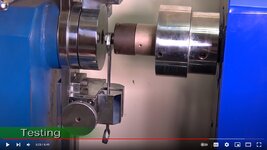
It's an inherently flawed test, I'll give you that. Choosing to test it a way of our choosing introduces a narrow lens to view results from. Which makes it imperfect. You wont find us disagreeing with that. I apologize for the ruckus this point has caused, but it's true. I also made 10 **** jokes in the video, so I hope we don't come across as beyond reproach.

However what you might not see, is what goes into making a test like this and the various approaches we abandoned because while they break stuff which is cool - the viewer doesnt learn anything, or probably more accurately can't see a numerical value accosicated with it vs others.

There's 3 avenues for testing you can take, which we've tried all.

The ANSI method using a mandrel that's rock hard like S2 tool steel. The tool is fixed, the mandrel roates, you can do this with $10,000 equipment or a digital torque wrench. This tests to failure or camming out and is still a useful data point (we do it on flarenut wrenches because we want to asses jaw spread and on a flarenut wrench cuz if the jaws spread the advantage of a line wrench over an open end disappears). On combo wrenches this often shows how much torque before your wrench breaks, and if that is your leading reason for buying a wrench - it's useful.

But if you'll notice, none of our 3 videos in this series are "best" or "Strongest wrench!" it's which will slip 1st.

So next step is grade 8 and grade 5. Both totally acceptable and if you notice the washers and bolts we use are grade 8 here.
Grade 8: The threads on the bolt at the nut location fail, every time. This leads to lost data. You might have wondered why on PF's video awhile back testing wrenches he added a washer on the bolt head for a more limited grip. This is the reason, you lose data with broken hardware unless you can hamstring the wrenches.
You have maybe 1/3-1/2 the field that breaks the hardware, the other 1/2-2/3 you have data on you can show at this wrench size at least.
So if 1/3 the field can break this hardware, doesn't that mean they are good? Yes, if you only run into perfect, new, grade 8 hardware that video would do the trick. Non slip wrenches DO bite into this grade though. A chrome covered 48Rc wrench will bit into a 36HRC bolt head every time.

Grade 5: The threads on nut stretch. Every time. It pulls the threads or at least stretches them on standard bolt thread size to nut hex sizing. if you're measuring arm effort (input) this is fine, as it measures torque effort. But we measure bolt tension (how tight the bolt is getting) which wont go up during this process. At least at this wrench size the threads are just too small. Something like 19mm, not so much, but then we need like a jack handle extension and people already have a reason to disregard results that use any extension.

Why then do coupling nuts not do this even worse?
You can buy coupling nuts with the same outside hex that accept larger than standard bolt threads through it and lots of those thread. This causes the test bolt not to be compromised at all, perfectly fine at those torque level, and ONLY the outside of the nut fail. Otherwise you're measuring a mixture of both potentially galling/stretching which is lost data. In real life none of this matters to you, as you're dealing with just the input end, but when needing to quantify things it becomes a bit trickier.

The 2nd reason: If your grade 8 or grade 5 hardware is all perfect, MOST wrenches will work nearly all the time. But the series is which wrench will slip 1st. So the people these videos might be more important for is people running into rust, old and imperfect bolts and nuts. Unfortunately you can't test with consistent rusted hardware, so a less than ideal hardness fastener is a good substitute we feel.

If you're about to loosen a soft trans cooler line and don't have a flarenut wrench that size, you might think 1st what's your best open end wrench for gripping without rounding. You might also have that thought when you see a terrible condition bolt head. Thats what the video is
 
Last edited:
To avoid these ads, REGISTER NOW!

dchawk81

Well-known member
Joined
Jul 31, 2014
Messages
14,361
It's an inherently flawed test, I'll give you that. Choosing to test it a way of our choosing introduces a narrow lens to view results from. Which makes it imperfect. You wont find us disagreeing with that. I apologize for the ruckus this point has caused, but it's true. I also made 10 **** jokes in the video, so I hope we don't come across as beyond reproach.

However what you might not see, is what goes into making a test like this and the various approaches we abandoned because while they break stuff which is cool - the viewer doesnt learn anything, or probably more accurately can't see a numerical value accosicated with it vs others.

There's 3 avenues for testing you can take, which we've tried all.

The ANSI method using a mandrel that's rock hard like S2 tool steel. The tool is fixed, the mandrel roates, you can do this with $10,000 equipment or a digital torque wrench. This tests to failure or camming out and is still a useful data point (we do it on flarenut wrenches because we want to asses jaw spread and on a flarenut wrench cuz if the jaws spread the advantage of a line wrench over an open end disappears). On combo wrenches this often shows how much torque before your wrench breaks, and if that is your leading reason for buying a wrench - it's useful.

But if you'll notice, none of our 3 videos in this series are "best" or "Strongest wrench!" it's which will slip 1st.

So next step is grade 8 and grade 5. Both totally acceptable and if you notice the washers and bolts we use are grade 8 here.
Grade 8: The threads on the bolt at the nut location fail, every time. This leads to lost data. You might have wondered why on PF's video awhile back testing wrenches he added a washer on the bolt head for a more limited grip. This is the reason, you lose data with broken hardware unless you can hamstring the wrenches.
You have maybe 1/3-1/2 the field that breaks the hardware, the other 1/2-2/3 you have data on you can show at this wrench size at least.
So if 1/3 the field can break this hardware, doesn't that mean they are good? Yes, if you only run into perfect, new, grade 8 hardware that video would do the trick. Non slip wrenches DO bite into this grade though. A chrome covered 48Rc wrench will bit into a 36HRC bolt head every time.

Grade 5: The threads on nut stretch. Every time. It pulls the threads or at least stretches them on standard bolt thread size to nut hex sizing. if you're measuring arm effort (input) this is fine, as it measures torque effort. But we measure bolt tension (how tight the bolt is getting) which wont go up during this process. At least at this wrench size the threads are just too small. Something like 19mm, not so much, but then we need like a jack handle extension and people already have a reason to disregard results that use any extension.

Why then do coupling nuts not do this even worse?
You can buy coupling nuts with the same outside hex that accept larger than standard bolt threads through it. This causes the test bolt not to be compromised at all, perfectly fine at those torque level, and ONLY the nut fail. Otherwise you're measuring a mixture of both potentially galling/stretching which is lost data. In real life none of this matters to you, as you're dealing with just the input end, but when needing to quantify things it becomes a bit trickier.

The 2nd reason: If your grade 8 or grade 5 hardware is all perfect, MOST wrenches will work nearly all the time. But the series is which wrench will slip 1st. So the people these videos might be more important for is people running into rust, old and imperfect bolts and nuts. Unfortunately you can't test with consistent rusted hardware, so a less than ideal hardness fasteners is a good substitute we feel.

If you're about to loosen s soft trans cooler line and not have a flarenut wrench that size, you might think 1st what's your best open end wrench for gripping without rounding. Thats what the video is
Yep and for the flare nut wrenches I'm all about the slippage first testing. That's what I want to know for those.
 
OP
F

Fedwrench

ALLIANCE MEMBER
Joined
Dec 9, 2007
Messages
14,952
Location
Valley of the sun
Just tell me what open end combo wrench to buy, lol.

My current combo wrench set is from my mid90s Craftsman mechanic set and it’s 7-15 only.

I’m a DIY home guy. Like finding that quality : price ratio and appreciate a no questions asked warranty.

I’m leaning towards Tekton for this reasons stated above plus I held one in my hand once and the beam felt okay. 6-24mm, $115)

Capri is also another option for me. (6-24mm, $150)

Icon is possibly another. (6-19mm, $120)

Picture of sad wrench drawer that’s somehow gotten me through most everything for the past near-30 years:
Tekton and Capri combination wrenches are the same made in Taiwan wrenches with different names stamped on them. I think Tekton offers a wider range of sizes if you need really large sizes. Neither are long pattern wrenches though , they're a little longer than say a craftsman raised panel. The Icons are long pattern wrenches and on sale or with a coupon, a sweet deal. I don't know who's making the wrenches but, it's a quality tool despite coming from Harbor Freight. :beer:

I really appreciate what TTC does and hope they continue their great work. I'd like to see 1/2 18 inch breaker bars tested . You know the ones that have the square drive in the middle of a forked handle versus the ones with U shaped square drive on the outside of the handle. :beer:
 

dchawk81

Well-known member
Joined
Jul 31, 2014
Messages
14,361
I tried to say it time and again. Your methodology is sound for what you're testing for. So don't take me as critical of that.

It's just not what I like to test for on a combo wrench and that's my own problem not yours or anyone else's.
 

ItsNemo

Well-known member
Joined
Mar 5, 2016
Messages
4,805
Location
Canada
So if you knew what wrench would withold the most without spreading that could be valuable information then. Thanks for clarifying, sometimes the right tool is a better wrench because you can only get an open end on and that's why you're using it in the first place.

The Irwin locking wrench is an alternative I've moved towards when the regular open end wrench starts spreading...or heat, or cutting and replacing, or a few other techniques.

TTC just replied though and I think clarifies reasoning behind the tests better than any of us here (duh lol). Having other things fail before being able to show the design differences between the wrenches kinda ruins the tests.
 

dchawk81

Well-known member
Joined
Jul 31, 2014
Messages
14,361
The Irwin locking wrench is an alternative I've moved towards when the regular open end wrench starts spreading...or heat, or cutting and replacing, or a few other techniques.

TTC just replied though and I think clarifies reasoning behind the tests better than any of us here (duh lol). Having other things fail before being able to show the design differences between the wrenches kinda ruins the tests.
How are you gonna get that Irwin in where a box end wouldn't fit? 🤔
 

American Locomotive

Well-known member
Joined
Jan 8, 2017
Messages
10,947
Location
Rhode Island
I think the takeaway here should be that the Wright Grips offer incredible value and performance. Absolutely top quality tool at a reasonable price. I wish more people knew about them, or they promoted themselves more.

Thank you. TTC is testing for one thing, which is great, but it's not everything.

It shows which ones bite into soft metal the most.

Remember also that the harder fasteners are going to benefit less from the grippy features because they won't dig in as much. The harder the fastener the less they'll dig in.

So you're back to hoping the corners hold up. That's why we love our 6 point boxes on the truly f'd stuff.
You are getting way to hung up on the "digging in" of the features on modern wrenches. The features on modern open-end wrenches are designed so they apply force more to the "face" of the fasteners, not just "dig in". Yes FD+ and WG2.0 wrenches do have little serrations to assist, but most of the magic is in carefully shaped geometry and very stiff jaws. Even then it still doesn't matter, since basically all wrenches are still harder than even Grade 8 hardware, and are significantly harder than Grade 5 hardware.

That's why the coupling nut is a good test. It's testing the geometry of the wrench. If the wrench has jaws that spread easily, or poor jaw geometry that concentrates stress on the corners - the nut will round off. This test shows how effectively a wrench can distribute forces to the faces of the bolt head. If the geometry works good on a Grade 0 bolt, it will also work well on a Grade 8 bolt.
 

Torque Test Channel

Well-known member
Joined
Apr 23, 2021
Messages
119
Location
The TTC Garage
I tried to say it time and again. Your methodology is sound for what you're testing for. So don't take me as critical of that.

It's just not what I like to test for on a combo wrench and that's my own problem not yours or anyone else's.
Totally makes sense. And we always encourage looking at multiple sources for this stuff. What we find important (like max torque on an impact) doesn't MAKE it the most important
 

dchawk81

Well-known member
Joined
Jul 31, 2014
Messages
14,361
You are getting way to hung up on the "digging in" of the features on modern wrenches. The features on modern open-end wrenches are designed so they apply force more to the "face" of the fasteners, not just "dig in". Yes FD+ and WG2.0 wrenches do have little serrations to assist, but most of the magic is in carefully shaped geometry and very stiff jaws. Even then it still doesn't matter, since basically all wrenches are still harder than even Grade 8 hardware, and are significantly harder than Grade 5 hardware.

That's why the coupling nut is a good test. It's testing the geometry of the wrench. If the wrench has jaws that spread easily, or poor jaw geometry that concentrates stress on the corners - the nut will round off. This test shows how effectively a wrench can distribute forces to the faces of the bolt head. If the geometry works good on a Grade 0 bolt, it will also work well on a Grade 8 bolt.
Anti slip is digging in. If it's not on the face anymore it hits the corner and rounds off.
 

jpaw

Well-known member
Joined
Dec 23, 2018
Messages
524
Location
Michigan
The only real test information pertaining to an open end that I would find useful is at what point it begins to spread.
Any other numbers are suspect imo.
 

dchawk81

Well-known member
Joined
Jul 31, 2014
Messages
14,361
Totally makes sense. And we always encourage looking at multiple sources for this stuff. What we find important (like max torque on an impact) doesn't MAKE it the most important
Exactly. Every test has a specific focus and it's designed around that.
 

Madjik Man

Well-known member
Joined
Dec 3, 2015
Messages
1,521
Tekton and Capri combination wrenches are the same made in Taiwan wrenches with different names stamped on them. I think Tekton offers a wider range of sizes if you need really large sizes. Neither are long pattern wrenches though , they're a little longer than say a craftsman raised panel. The Icons are long pattern wrenches and on sale or with a coupon, a sweet deal. I don't know who's making the wrenches but, it's a quality tool despite coming from Harbor Freight. :beer:

I really appreciate what TTC does and hope they continue their great work. I'd like to see 1/2 18 inch breaker bars tested . You know the ones that have the square drive in the middle of a forked handle versus the ones with U shaped square drive on the outside of the handle. :beer:

The size range and ability to buy single units all the way up to 50mm is why I'm leaning towards Tekton.

Capri looks really nice, and I may be interested in the WavePro open end, but they only go up to 19mm.
 

American Locomotive

Well-known member
Joined
Jan 8, 2017
Messages
10,947
Location
Rhode Island
Anti slip is digging in. If it's not on the face anymore it hits the corner and rounds off.
Once again, the geometry of the wrench plays a big roll when it starts to slip off the face and go into the corners of the fastener. Geometry that works will on very soft fasteners will also work well on stronger fasteners.

All wrenches are significantly harder than Grade 5 bolts, and are still harder than Grade 8 bolts. So the anti-slip features (beyond just the jaw geometry) will still work just fine.
 

dchawk81

Well-known member
Joined
Jul 31, 2014
Messages
14,361
Once again, the geometry of the wrench plays a big roll when it starts to slip off the face and go into the corners of the fastener. Geometry that works will on very soft fasteners will also work well on stronger fasteners.

All wrenches are significantly harder than Grade 5 bolts, and are still harder than Grade 8 bolts. So the anti-slip features (beyond just the jaw geometry) will still work just fine.
Yes the best wrenches will do better on harder fasteners. Unless they rely on the digging in.

But the point I'm making is how much higher is the baseline of the lesser wrenches on harder fasteners that do not round off so easily.

If you look at the coupling nuts on TTC, they are rounding off.

If a regular run of the mill wrench does, say 800 psi on a soft coupling nut it might do 900, 1000 (no idea really without testing) on something that retains its corners better.

So you might say "hey I don't need those Protos I can get away with Gearwrench."

Another point, some/many/most of these manufacturers don't even put the antislip serrations into sizes above a certain point, because they're no longer helpful at all. Precision becomes even less important and you're more likely to snap a wrench than round a fastener.
 

Jswain

Well-known member
Joined
Apr 26, 2013
Messages
2,457
Location
Calgary, AB
The Irwin locking wrench is an alternative I've moved towards when the regular open end wrench starts spreading...or heat, or cutting and replacing, or a few other techniques.

TTC just replied though and I think clarifies reasoning behind the tests better than any of us here (duh lol). Having other things fail before being able to show the design differences between the wrenches kinda ruins the tests.
So if said wrench you claimed you felt spread was generating enough torque on the fastener to spread the wrench without slipping or turning the bolt, was the grip strength or the resistance to spread more important of that wrench?
 

jpaw

Well-known member
Joined
Dec 23, 2018
Messages
524
Location
Michigan
I have a spare set of Urrea wrenches that measure like 0.35mm over and are super thick on the jaw end so never spread that ill give you a heck of a deal on :p
Come on man, that would be a test on a flawed tool... I know that you wouldn't use an out of spec tool during a repeatably test. 😁
 

ItsNemo

Well-known member
Joined
Mar 5, 2016
Messages
4,805
Location
Canada
How are you gonna get that Irwin in where a box end wouldn't fit? 🤔

I only really use open end wrenches for line sets or places I can't get the box end in...the Irwin's aren't a replacement for box ends.

So if said wrench you claimed you felt spread was generating enough torque on the fastener to spread the wrench without slipping or turning the bolt, was the grip strength or the resistance to spread more important of that wrench?

Every time you put a wrench on a fastener there are multiple factors at play...it's not as though grip or spread individually results in a fastener coming off or not. That's why I appreciate TTC's test, he has come up with a test that all wrenches can be equally tested in, not just a pass/fail based on whether something breaks or not.
 
To avoid these ads, REGISTER NOW!
Top Bottom