To avoid these ads, REGISTER NOW!

Torque Wrench Ranges

oldschoolcraft

Well-known member
Joined
Dec 31, 2017
Messages
1,829
Location
Bay Area, California
Couldn't find any previous discussions, guessing that it's common knowledge I lack. I'm trying to pick the next 2 or 3 torque wrenches for me to buy, based on the desire to work on cars and small pickup trucks.

I've been researching various torque wrenches and it seems like common ranges are:
  • 40 to 200 inch pounds / 3 to 16 Foot Pounds in 1/4 and 3/8 drive
  • 200 to 1000 inch pounds / 16 to 80 Foot Pounds in 3/8 drive
  • 30 to 150 Foot Pounds in 1/2 drive
  • 50 to 250 Foot Pounds in 1/2 drive
There's overlaps, but I'm not sure what ranges I'm going to use on cars. I did look up some torque spec ratings and it seemed like on a pickup truck there was 155 foot pound fastener on the suspension lower arm. That was the highest on the whole truck.

What I was hoping existed is a standard chart to say that 10mm fasteners should be torqued to X and 19mm fasteners should be torqued to Y, but I realize depending on the types of materials used, and length of the bolt, that might vary. I did come across this:
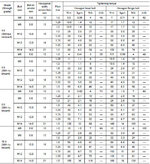
index.43.jpg

Which if I'm reading it right, shows me 10mm fasteners are generally torqued down to 3 foot pounds which is right on the bottom range of these torque wrenches, which makes sense that they'd bottom out at around the smallest fastener you'd use a torque wrench on.

And it looks like 21mm are going to be at 119 foot pounds.

My biggest unknown is, what is the max torque I'm going to need to set a fastener to for a car or pickup truck? And whether I need torque wrenches in all four ranges?

Though if I'm only rarely going to need to go between 150 and 250, I can see having the 30 to 150 making sense, since it's 1 pound lighter and 6 inches shorter in the version I'm looking at.

Based on my research I think the following three make sense:
  • 40 to 200 inch pounds / 3 to 16 Foot Pounds in 1/4 and 3/8 drive
  • 200 to 1000 inch pounds / 16 to 80 Foot Pounds in 3/8 drive
  • 30 to 150 Foot Pounds in 1/2 drive
If I wanted to own the fewest tools, I'd swap the 50 to 250 for the 30 to 150, because that expands my capability, but from the one truck I looked at, 155 was max torque so more is unneeded. Switching to the 50 to 250 tool is another 1 pound heavier and 6 inches longer from the 30 to 150 version. That's 20% heavier and 25% longer. And If I'm almost never going to need to go above 150, I'd be penalizing myself with a clumsier tool 99% of the time for no reason.

If I do wind up needing to go above 150, maybe that's when I drop the money on a very expensive 3/4" drive tool that goes from 100 to 600. If I need to do 155 foot found fastener but only have the 30 to 150, I can probably set to 150, max it out, then switch to a box end wrench and turn it another 1/8 of a turn or even just leave it because 155 is within the margin of error of a 150 foot pound tool anyway.

How does this assessment sound?

Jeez now I'm wondering if I need to go below 3 foot pounds (40 inch pounds) on any car application and then need to switch down to a torque screwdriver in the 10 to 50 inch pound range.
 
Last edited:
To avoid these ads, REGISTER NOW!

humpty

Well-known member
Joined
Dec 4, 2008
Messages
547
Location
Minneapolis, MN
I find 3 to be the sweet spot, so I do think you could get by with that.
Axle nuts and crank pullys will be the spot where the 150 lb ft might limit you. They usually are over 150 lbs.

I have a bunch of wrenches but my main 3 are:
1/4" micro 40-200 in lbs.
3/8" SB 20-100 ft lbs.
1/2" SB 40-250 lb ft.

It covers most everything I do.

Believe it or not having 6 or 7 torque wrenches I still have that gap between 16 and 20 ft lbs, it comes up more often than I would have guessed. So I guess I will be getting another wrench.
 

SRU1436

ALLIANCE MEMBER
Joined
Apr 1, 2017
Messages
571
Location
Bay Area, CA
Tekton has a 1/4“ torque wrench going done to 10 in pounds. I didn’t have but I found I needed when I was installing breakers in a sub panel. I’m a car guy too and work on all my cars, while I don’t recall needing a torque as low as 10 inch pounds on a car, it is nice to have. It was also on sale too. I just checked, it’s still on sale for $43.

TEKTON 1/4 Inch Drive Dual-Direction Click Torque Wrench (10-150 in.-lb.) | TRQ21101​


AEAdam

Well-known member
Joined
May 27, 2023
Messages
2,757
Location
SE PA
Some of the tasks you will want to perform in the future could involve angles. So step one, figure out how you will handle angles. Do you do that on the wrench, or with a gizmo, or with white out (marking the head)?

Next, for the sorts of vehicles most of us encounter, you will be in the 8.8 grade range. Lugs will be around 100ftlbs. But lugs will probably not be your highest torqued fasteners. Under carriage stuff can get up there. I've seen 200ftlb torques before. I think you will eventually need a 250ftlb wrench.

I do not own a 1/4" torque wrench. A digital 3/8" has the advantage that they are accurate across their entire range. Clickers are said to only be accurate from 20%-100% of their range. That would roughly eliminate their use on 13mm bolt heads.
 

TxSteve

Well-known member
Joined
Aug 22, 2023
Messages
121
Location
Granbury, Texas
The tough spot is the low torque nuts and bolts.

For example - replacing the exhaust manifolds on my son's Ram pickup - 15 ft/lbs first round then 18-20 ft/lbs for the final tightening.

The top of many small torque wrenches and too low. I don't trust the very minimum settings on the larger ones.

Luckily, my small wrench goes to 250 in/lbs so it works...
 

dnschmidt

Well-known member
Joined
Oct 3, 2014
Messages
7,279
Location
Phoenix, AZ
On modern cars you much consider angle as torque to yield is taking over from a simple torque value. This automatically gets you into the digital torque wrench world.
 
OP
O

oldschoolcraft

Well-known member
Joined
Dec 31, 2017
Messages
1,829
Location
Bay Area, California
On modern cars you much consider angle as torque to yield is taking over from a simple torque value. This automatically gets you into the digital torque wrench world.
Some of the tasks you will want to perform in the future could involve angles.
I hadn't considered that due to my ignorance of the topic. Based on how @dnschmidt phrased that, does that mean digital torque wrenches handle angle calculations automatically?

I just priced them out, I'd be looking at over $2k for a set of three tech angles. That's more than I'd like to spend at this time. Especially on a digital tool, I dont mind spend as much on traditional tools, they seem to last forever, but anything electronic seems to have a finite life span. The ranges they appear to offer are:


* 1/4" Drive 15 to 300 inch pounds
* 3/8" Drive 5 to 125 foot pounds
* 1/2" Drive 15 to 300 foot pounds

From what I've seen, I'm guessing the 3/8 drive 5 to 125 foot pounds will cover over 90% of anything I'll be torquing on a car. So if I got that single one, then I'd only have to deal with angles manually using old style torque wrenches using whatever other techniques exist?
 
Last edited:

AEAdam

Well-known member
Joined
May 27, 2023
Messages
2,757
Location
SE PA
I hadn't considered that due to my ignorance of the topic. Based on how @dnschmidt phrased that, does that mean digital torque wrenches handle angle calculations automatically?

I just priced them out, I'd be looking at over $2k for a set of three tech angles. That's more than I'd like to spend at this time. Especially on a digital tool, I dont mind spend as much on traditional tools, they seem to last forever, but anything electronic seems to have a finite life span. The ranges they appear to offer are:


* 1/4" Drive 15 to 300 inch pounds
* 3/8" Drive 5 to 125 foot pounds
* 1/2" Drive 15 to 300 foot pounds

From what I've seen, I'm guessing the 3/8 drive 5 to 125 foot pounds will cover over 90% of anything I'll be torquing on a car. So if I got that single one, then I'd only have to deal with angles manually using old style torque wrenches using whatever other techniques exist?
I thought the whole point of you asking all these questions was, to use the time, money, and energy you have now, so that when you need to work on stuff, you have the tools you need.

That being the case, and assuming you want to follow workshop manuals/procedures, you need a way to handle angles. They are all over modern cars, not just head bolts. So your play should be to determine what is the current state of the art for measuring angles - some digital torque wrenches do it, but not all. There are other ways. Use the time you have to research and determine what might be best for you.

Snap On's initial red handled "Techwrench" didn't do angles. My gray handled and newer "TechAngles" do. There are other makers, other offerings, not just Snap On. I would be using the time you have to find Snap On models on FBM, or eBay (as I did) for a small fraction of the list price. One thing I like most about these is the unit conversions.

One advantage Snap On has (ironically) is their short warranty period. Consequently, they offer a "calibration service" for a fee to any customer who owns one of their wrenches. It may be $100 or more. In my mind, that negates the warranty issue with buying used. Just factor a calibration into the purchase price. You should be able to find decent techangles for around $200. I would roll the dice and if they stop working, $100 (or whatever it is) will get them into like new condition.

You would absolutely need the 1/2" drive first. If you want to skip one, I'd skip 3/8". The big difference is the low end. The low end torques are sometimes not as critical as the high end ones. Sometimes engineers specify torques to give manufacturing guidelines instructing what tool to use, stop them from over torquing etc. Sometimes what we want is uniformity.

I think most skilled mechanics can feel the difference between 10ftbs and 20ftlbs. I think there's a bigger risk of damaging joints/fasteners in low torque applications by confidently and improperly using a torque wrench, than a skilled mechanic using his or her feel.

Speaking only about myself, while a 100ftlb torque is no problem for me physically, I don't feel as confident I can feel the difference between 80 and 100 ftlbs. When I get up there, I've got more going on physically. It's not just the weight I feel in my fingers. I may have my back or legs into a high torque so its harder for me to do that repeatedly and sensitively.
 

whateg01

Well-known member
Joined
Mar 13, 2006
Messages
11,339
Location
doo dah, kansas, usa
I thought the whole point of you asking all these questions was, to use the time, money, and energy you have now, so that when you need to work on stuff, you have the tools you need.

...
I've been wondering how many of the tools op has asked about have actually been bought.
 
OP
O

oldschoolcraft

Well-known member
Joined
Dec 31, 2017
Messages
1,829
Location
Bay Area, California
I've been wondering how many of the tools op has asked about have actually been bought.
I dont keep track of everything I've asked but I'd guess so far, I've bought about 1/3 of them, with another 1/3 on my wish list for if I find a good deal, and the last 1/3 people talked me out of wanting to buy them.

Just got a bunch of hammers in last week. A few weeks before that I got some ratcheting wrenches. And I'm planning to buy some torque wrenches this week.

I asked about 3/8 impact sockets last week, I haven't bought them yet, because I'm waiting for the 3/8" M12 Gen 2 Stubby impact wrench to be released and until I have that, I dont have a tool to run the 3/8 sockets. So I'm starting that research now, but not in a rush to buy the sockets since the impact wrench doesnt come out until around September. I'm leaning towards Sunex Mid lengths based on the post responses.
 
Last edited:
OP
O

oldschoolcraft

Well-known member
Joined
Dec 31, 2017
Messages
1,829
Location
Bay Area, California
I thought the whole point of you asking all these questions was, to use the time, money, and energy you have now, so that when you need to work on stuff, you have the tools you need.
Yes, that's my mindset. However in the short-term my actual needs are limited, and in the future I plan to do more work on project cars, and if I'm spending $200 on a ratchet now for occasional use, that ratchet should still be 90% as good as whatever new ratchet comes out in 10 years when I need to use it more. So I dont feel like it's wasteful to buy it now, even though it's just for occasional use.

But electronic things seem to have a shelf life. I'd guess in 10 years, the $800 tech angle wrench I buy today might only be 50% as good as what exists then. Maybe only 10% as good. If I bought a bunch of cordless impact wrenches 10 years ago, they'd be pretty bad compared to what exists today. But a 40 year old Snap On combination wrench still beats many wrenches made today.

So it's a tradeoff for me, where hardline tools get priority of budget. Hope that makes sense.

That being the case, and assuming you want to follow workshop manuals/procedures, you need a way to handle angles. They are all over modern cars, not just head bolts. So your play should be to determine what is the current state of the art for measuring angles - some digital torque wrenches do it, but not all. There are other ways. Use the time you have to research and determine what might be best for you.
I am rewatching the Torque Test Channel video on Torque Wrench Myths that he put out last month, and he seems to disagree that angles are that big of a deal. Especially if the angles are 10 degrees. He showed the math that as long as the head of the torque wrench is square to the fastener, then angling the handle only serves to shorten the lever arm by a distance that you can calculate by measuring the length of the torque wrench (From mid handle to mid end) and writing a ratio to the new length with the head angled.

If that's true, then I guess it's just a matter of how often I find myself doing it, if the math is slowing me down?

You would absolutely need the 1/2" drive first. If you want to skip one, I'd skip 3/8". The big difference is the low end. The low end torques are sometimes not as critical as the high end ones. Sometimes engineers specify torques to give manufacturing guidelines instructing what tool to use, stop them from over torquing etc. Sometimes what we want is uniformity.
Good tip, thank you! Something counter intuitive to me that I wouldn't have guessed.

I'm definitely open to buying the Snap On tech angles right now, it's just kind of a lot of money for something I dont have regular plans in the near future to use often. This might fall under the realm of, get standard mechanical ones now, use them, and when I hit the point that I'm using them a lot and angles matter, then buy whatever the latest and greatest Snap On one is at the time.

Speaking of Snap On, this morning I also watched the Tool Test channel compare the Icon to the Snap On, and the Icon did better. Both at time zero and at 1000 cycles. Though the Icon is still nearly half as expensive as the Snap On, and only currently comes in the 1/2" drive at the moment.
 

AEAdam

Well-known member
Joined
May 27, 2023
Messages
2,757
Location
SE PA
I've been wondering how many of the tools op has asked about have actually been bought.
I mean it's a lot. A lot of tools. But that's why I'm glad he's asking. I don't feel I have a lot of tools. But I guess I do. And with very few exceptions, I use them ALL. So it's good to ask the questions he's been asking. I think people think all they need to fix a car is a 3/8" socket set with no skips, 6pt and 12pt and every possible length then a second set just in case.
 

AEAdam

Well-known member
Joined
May 27, 2023
Messages
2,757
Location
SE PA
But electronic things seem to have a shelf life. I'd guess in 10 years, the $800 tech angle wrench I buy today might only be 50% as good as what exists then. Maybe only 10% as good. If I bought a bunch of cordless impact wrenches 10 years ago, they'd be pretty bad compared to what exists today. But a 40 year old Snap On combination wrench still beats many wrenches made today.
My tech angles are older than that and perfect. I really doubt their utility will decrease over time. They aren't personal computers or cell phones.
I am rewatching the Torque Test Channel video on Torque Wrench Myths that he put out last month, and he seems to disagree that angles are that big of a deal. Especially if the angles are 10 degrees. He showed the math that as long as the head of the torque wrench is square to the fastener, then angling the handle only serves to shorten the lever arm by a distance that you can calculate by measuring the length of the torque wrench (From mid handle to mid end) and writing a ratio to the new length with the head angled.
Please watch that again. He's talking about the angle the head makes with the handle. He was trying to answer the question "Is a flex head torque wrench less accurate than a fixed head model"?

What we're talking about is a manufacturer/service manual torque spec which includes an initial torque, then an angle the bolt head must be rotated to. And they aren't 10 degrees, they are 90-270degrees typically. Example: "60ftlb + 90deg". A tech angle can ratchet and keep track of the angle which is slick. You can also set them to do both - you hit the first (torq), it beeps or whatever, then you doing the angle without touching the controls.
Speaking of Snap On, this morning I also watched the Tool Test channel compare the Icon to the Snap On, and the Icon did better. Both at time zero and at 1000 cycles. Though the Icon is still nearly half as expensive as the Snap On, and only currently comes in the 1/2" drive at the moment.
Check the Icon price. It's a Taiwan tool with a US price tag. You can easily find lightly used US torque wrenches cheaper than the ICON. I'd rather have the model I can send back to a US manufacturer to rebuild, service, recalibrate.
 
Last edited:
OP
O

oldschoolcraft

Well-known member
Joined
Dec 31, 2017
Messages
1,829
Location
Bay Area, California
My tech angles are older than that and perfect. and I really doubt their utility will decrease over time. They aren't personal computers or cell phones.
Fair point. I guess it's not like a cordless power tool where the battery tech and motor tech is still constantly evolving.

What we're talking about is a manufacturer/service manual torque spec which includes an initial torque, then an angle the bolt head must be rotated. And they aren't 10 degrees, they are 90-270degrees typically. A tech angle can ratchet and keep track of the angle which is slick.
Sorry, I may not understand what you're referring to. I thought when you were discussing angles, you meant that there's a fastener that has limited access, and you can only reach it from an angle.

I'm not sure what you mean by the bolded part, can you please clarify that.

Check the Icon price. It's a Taiwan tool with a US price tag. You can easily find lightly used torque wrenches cheaper than the ICON. I'd rather have the model I can send back to a US manufacturer to rebuild, service, recalibrate.
I completely agree. Sorry for not being more clear, I meant the price is half as much for the Icon, which I find silly, I'd much rather buy the Snap On at 2x the price. If the price was 1/10 then buying the Icon to use for next few years would make more sense. But paying half now isn't enough of a savings to justify it.

Just trying to be thorough in my research, if I'm going to drop $800+ on tools I didn't even know existed until today, I need to do more due diligence than if it was under $100. For example, I watched brake job videos and learned that there's some S-shaped hooks you can buy to hang the caliper from the shocks to avoid damaging the brake line. I went online and saw there was a highly rated pair for under $10 made in the US of stainless steel. I performed zero additional research, and immediately bought them.

The research time has a cost, and for $8 I'll roll the dice on something that seems pretty useful even without depth of consideration. But $800 I need to make sure I'm spending my money wisely. I have decent disposable income but it's not infinite.
 
OP
O

oldschoolcraft

Well-known member
Joined
Dec 31, 2017
Messages
1,829
Location
Bay Area, California
You would absolutely need the 1/2" drive first. If you want to skip one, I'd skip 3/8". The big difference is the low end. The low end torques are sometimes not as critical as the high end ones. Sometimes engineers specify torques to give manufacturing guidelines instructing what tool to use, stop them from over torquing etc. Sometimes what we want is uniformity.
I looked at the torque ranges again for the Snap On Tech angles:

* 1/4" Drive 15 to 300 inch pounds
* 3/8" Drive 5 to 125 foot pounds
* 1/2" Drive 15 to 300 foot pounds

And you make a convincing argument If I was only going to have one, I should get the 1/2" drive. I get the benefit of 125 to 300 foot pounds, at the expense of only losing 5 to 15 foot. pounds.

But only having the 1/2" drive there is the "cost" of using a larger and heavier tool for smaller fasteners. The 1/2" drive is 30" long and weighs 4 pounds. The 3/8" drive is 18" long and weighs 2 pounds. So almost half the size/weight.

I have no experience using this, but I am concerned the 1/2' drive will wind up being too big to use in certain places. But maybe this isn't meant to be the only 1/2" drive torque wrench?

Maybe we're supposed to also have split beam and/or micrometer style for fasteners that dont require angular dimensions?
 

dchawk81

Well-known member
Joined
Jul 31, 2014
Messages
14,374
Yes, that's my mindset. However in the short-term my actual needs are limited, and in the future I plan to do more work on project cars, and if I'm spending $200 on a ratchet now for occasional use, that ratchet should still be 90% as good as whatever new ratchet comes out in 10 years when I need to use it more. So I dont feel like it's wasteful to buy it now, even though it's just for occasional use.

But electronic things seem to have a shelf life. I'd guess in 10 years, the $800 tech angle wrench I buy today might only be 50% as good as what exists then. Maybe only 10% as good. If I bought a bunch of cordless impact wrenches 10 years ago, they'd be pretty bad compared to what exists today. But a 40 year old Snap On combination wrench still beats many wrenches made today.

So it's a tradeoff for me, where hardline tools get priority of budget. Hope that makes sense.


I am rewatching the Torque Test Channel video on Torque Wrench Myths that he put out last month, and he seems to disagree that angles are that big of a deal. Especially if the angles are 10 degrees. He showed the math that as long as the head of the torque wrench is square to the fastener, then angling the handle only serves to shorten the lever arm by a distance that you can calculate by measuring the length of the torque wrench (From mid handle to mid end) and writing a ratio to the new length with the head angled.

If that's true, then I guess it's just a matter of how often I find myself doing it, if the math is slowing me down?


Good tip, thank you! Something counter intuitive to me that I wouldn't have guessed.

I'm definitely open to buying the Snap On tech angles right now, it's just kind of a lot of money for something I dont have regular plans in the near future to use often. This might fall under the realm of, get standard mechanical ones now, use them, and when I hit the point that I'm using them a lot and angles matter, then buy whatever the latest and greatest Snap On one is at the time.

Speaking of Snap On, this morning I also watched the Tool Test channel compare the Icon to the Snap On, and the Icon did better. Both at time zero and at 1000 cycles. Though the Icon is still nearly half as expensive as the Snap On, and only currently comes in the 1/2" drive at the moment.
I used a $20 harbor freight clicker for years.

I'd only get an angle wrench if I actually needed to do angles. I wouldn't spend that kind of money just in case I might but may never.

If you actually worked on stuff you'd know what you need and don't need. You're trying to prepare for every single eventuality in the possibility of ever with anything on the planet but so far your only use case was control arms that you never did on a car you don't own for a girl you are only friends with.

Why don't you stop making random threads and wait until you have an ACTUAL project and you're looking at it going "oh I'm gonna need x y and z let me ask which ones are best for this task."
 

bobg03

Well-known member
Joined
Aug 29, 2020
Messages
3,420
Location
conway sc
@oldschoolcraft First off I'm glad you have a sense of humor, I respect you for that.

I think the point you're missing is that for someone that IS NOT doing this for a living (Home Gamer if I may) and to earn a paycheck (the clock and being efficient is important for this) that the tools made today are some of the best technology currently out there and in the "Home Gaming" environment a quality well made tool will still do the job 10 years down the road.

I have 2 Proto torque wrenches that are probably 20+ years old, last calibrated over 10 years ago and checked by my snap on friend about 3 years ago. They are more than close enough for everyday repairs, would I use them to torgue the heads on my friends race car, hell no. I'd use his $$$$$$ snap ons that he uses in the shop. My other torque wrench is a simple beam style, no calibration needed, I use this for torquing lug nuts, if I were being paid by the job I would have a SSSSS snap on one, my time belongs to me not a paycheck and I don't care that the beam wrench takes a bit longer.

I have a couple of SK older socket sets (SAE & Metric) with the original ratchets that are far from state of the art but work extremely well for my needs, a couple of Williams with the thin heads, a couple of Snap-Ons that were a gift from my son. and an older Craftsman flex head with a long bent handle that works really well. Almost all of what I own are 1/4 and 3/8, I own one older Craftsman Long Flex Head in 1/2 and one rail of 1/2 metric sockets. Most of what I did work on the last 20 years were 3 Harleys, but most of my SAE stuff left when the last bike did 5 years ago and with it a lot of SAE.

Even my impacts are only 3/8, I had more than I will ever use again and gifted many things to my "brother" and my step son. I started collecting tools when I purchased my first car at 14, and started downsizing at 60. At almost 66, I have everything I need in one box and my step son gets that when I leave..I better leave now my JD glass needs a refill.

YMMV....
 

bobg03

Well-known member
Joined
Aug 29, 2020
Messages
3,420
Location
conway sc
Why don't you stop making random threads and wait until you have an ACTUAL project and you're looking at it going "oh I'm gonna need x y and z let me ask which ones are best for this task."
Are you saying if he fixed that girls control arms he could give up his "only fans" account and spend more on tools? :ROFLMAO:

Obviously my glass has been refreshed now, where is @PelicanPines when we need him? :cool:
 

richfinn

Well-known member
Joined
Jan 29, 2011
Messages
4,815
Location
Leeds, Yorkshire, England
There's no way on Earth I would buy a Snap-On Tech Angle for DIY/projects, it's a tool for pro techs in a "time vs money" situation and an angle gauge with a reaction arm is perfectly serviceable and cheap (as is a sharpie and common sense).
 
To avoid these ads, REGISTER NOW!

AEAdam

Well-known member
Joined
May 27, 2023
Messages
2,757
Location
SE PA
Just so we're all on the same page:

The angle requirements are all over cars now. I saw them on a 2009 VW suspension. They used to be just on head bolts. The angles are high and not easily converted into a torque "ahh, I just add 10% to the torque value to account for the angle". That won't cut it. The consequences of under (and over) torqued bolts are many and dire, especially on modern cars. I think the decision is either do it right or pay someone to do it right (hopefully). I've not seen a vehicle with angles on routine service items like lugs, oil filters, or oil plugs, etc but I suspect they are either out there or coming. Torque + Angle is a better way to preload a mechanical assembly. If you never plan on doing suspension work, maybe the advice to skip it is acceptable.

For Rich, I bought my first Techangle in the UK. It was on eBay listed as "for parts only, not working". I recall paying about 60GBP for it, then instantly sent it out for "calibration" which cost me 80GBP incl delivery. Calibration stripped off the old handle and electronics and replaced it with new. With that wrench, I was repairing my LR Disco 3 (aka my "Chelsea Tractor" :)). I think I saved a lot of money with that tool. IIRC, that vehicle had brake caliper bolt specs that were like 100nm + 270degrees. That was A LOT of torque. Not sure how I would have done that otherwise. I was working on jack stands on a cobble stone court yard. Couldn't see the bolt head from where I was squatting. Not sure how well an angle pointer thingy would have worked for me. But that's something to consider. Everyone needs a plan for how they will address this requirement. In my mind, its no different from having a code reader.

As to the advice "wait and see", for me that would have been bad advice. I get pulled into car repairs with no time to prepare. That approach pretty much ensures you will either pay too much for tools or will be stuck with poor quality tools because they were all you could get in the time you had.

100% open and honest: even with 2 engineering degrees and a lifetime of working on complex things, car repairs make me a little anxious. What if something goes wrong? What if I can't get the part? What if I can't get this bolt loose? What if I strip it? What then? Will I have to face the expense of towing this vehicle to a service center? How do I get to work tomorrow? The things that give me a little confidence is knowing I have:
1) The right tools for the job. I'm not forced to make do with the wrong tool. If there's a special socket for a timing belt job for example, I want to have that upfront. "Well an Allen can be forced into a triple square and that kinda works" NOPE. Not doing that.
2) The best quality tools. My work is hard enough. Not looking to save a few bucks or even a hundred bucks if there's a chance my tools will let me down. I need to FEEL as though my tools are not going to be the limiting factor for whether this job goes okay.

Some of you will say (have said), you "fixed your Lamborghinis on the side of a dirt road with nothing more than a ball point pen and a set of craftsmen raised panel wrenches". I've actually done that (raised panel wrenches, not the Lamborghini) and it WASN'T FUN FOR ME. Fun for me is opening that pristine frictionless tool box drawer and selecting the perfect gleaming tool and having the job drama free. YMMV
 
Last edited:

Wamsutta

Well-known member
Joined
Jan 8, 2014
Messages
10,876
Location
Amarillo, Texas
There's no way on Earth I would buy a Snap-On Tech Angle for DIY/projects, it's a tool for pro techs in a "time vs money" situation and an angle gauge with a reaction arm is perfectly serviceable and cheap (as is a sharpie and common sense).
37 lb.ft. + 120 degrees of rotation. Those are the head bolts on my Buick 3800. If the engine was completely out of the car, the angle gauge with the reaction arm might work because there would be all the room on Earth to set up the angle gauge with reaction arm.
 

dchawk81

Well-known member
Joined
Jul 31, 2014
Messages
14,374
Just so we're all on the same page:

The angle requirements are all over cars now. I saw them on a 2009 VW suspension. They used to be just on head bolts. The angles are high and not easily converted into a torque "ahh, I just add 10% to the torque value to account for the angle". That won't cut it. The consequences of under (and over) torqued bolts are many and dire, especially on modern cars. I think the decision is either do it right or pay someone to do it right (hopefully). I've not seen a vehicle with angles on routine service items like lugs, oil filters, or oil plugs, etc but I suspect they are either out there or coming. Torque + Angle is a better way to preload a mechanical assembly. If you never plan on doing suspension work, maybe the advice to skip it is acceptable.

For Rich, I bought my first Techangle in the UK. It was on eBay listed as "for parts only, not working". I recall paying about 60GBP for it, then instantly sent it out for "calibration" which cost me 80GBP incl delivery. Calibration stripped off the old handle and electronics and replaced it with new. With that wrench, I was repairing my LR Disco 3 (aka my "Chelsea Tractor" :)). I think I saved a lot of money with that tool. IIRC, that vehicle had brake caliper bolt specs that were like 100nm + 270degrees. That was A LOT of torque. Not sure how I would have done that otherwise. I was working on jack stands on a cobble stone court yard. Couldn't see the bolt head from where I was squatting. Not sure how well an angle pointer thingy would have worked for me. But that's something to consider. Everyone needs a plan for how they will address this requirement. In my mind, its no different from having a code reader.

As to the advice "wait and see", for me that would have been bad advice. I get pulled into car repairs with no time to prepare. That approach pretty much ensures you will either pay too much for tools or will be stuck with poor quality tools because they were all you could get in the time you had.

100% open and honest: even with 2 engineering degrees and a lifetime of working on complex things, car repairs make me a little anxious. What if something goes wrong? What if I can't get the part? What if I can't get this bolt loose? What if I strip it? What then? Will I have to face the expense of towing this vehicle to a service center? How do I get to work tomorrow? The things that give me a little confidence is knowing I have:
1) The right tools for the job. I'm not forced to make do with the wrong tool. If there's a special socket for a timing belt job for example, I want to have that upfront. "Well an Allen can be forced into a triple square and that kinda works" NOPE. Not doing that.
2) The best quality tools. My work is hard enough. Not looking to save a few bucks or even a hundred bucks if there's a chance my tools will let me down. I need to FEEL as though my tools are not going to be the limiting factor for whether this job goes okay.

Some of you will say (have said), you "fixed your Lamborghinis on the side of a dirt road with nothing more than a ball point pen and a set of craftsmen raised panel wrenches". I've actually done that (raised panel wrenches, not the Lamborghini) and it WASN'T FUN FOR ME. Fun for me is opening that pristine frictionless tool box drawer and selecting the perfect gleaming tool and having the job drama free. YMMV
You're not OP though.
 

isb cornbinder

Well-known member
Joined
Nov 3, 2010
Messages
7,073
Location
Pacific South West, BC, Canada
OFF SUBJECT, BUT INTERESTING
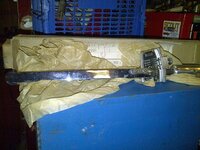
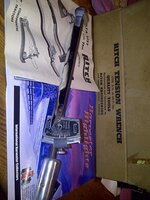
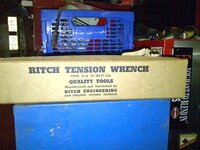
Years ago I bought an interesting torque wrench. It was made in Australia. I have not used it for fear of marking the original finish. When I bought this tool, it was wrapped in oil-paper and in the original cardboard box.
 

Attachments

  • RICH TORQUE WQRENCH.jpg
    RICH TORQUE WQRENCH.jpg
    55.3 KB · Views: 29
  • Rich Torque 2.jpg
    Rich Torque 2.jpg
    49.3 KB · Views: 26
  • RICH TORQUE WRENCH.jpg
    RICH TORQUE WRENCH.jpg
    529.9 KB · Views: 25
  • Rich Tension Wrench1.jpg
    Rich Tension Wrench1.jpg
    53.4 KB · Views: 24
  • RICH TENSION WRENCH.jpg
    RICH TENSION WRENCH.jpg
    63.5 KB · Views: 26

AEAdam

Well-known member
Joined
May 27, 2023
Messages
2,757
Location
SE PA
What are the tolerances on the angle? I can eyeball 90 pretty well I think.
No tolerance that I'm aware of. You can only eyeball it if you can turn it in one motion. The instant you ratchet, you're out. Think about how often you get a nice clean 90 degree swing. For a lug nut you do. Not much else for me, but then again, I don't have a lift. This is the advantage of the tech angle (style) wrenches.
 

AEAdam

Well-known member
Joined
May 27, 2023
Messages
2,757
Location
SE PA
If the book said 90 degrees, I'd be tempted to use a felt tip marker.
You really need a plan. A black sharpie won't show up on most stuff. A silver sharpie, a paint pen or white out all could work. We used white out as torque striping sometimes. But this presupposes you can see what you are turning, which isn't always the case.
 

richfinn

Well-known member
Joined
Jan 29, 2011
Messages
4,815
Location
Leeds, Yorkshire, England
Just so we're all on the same page:

The angle requirements are all over cars now. I saw them on a 2009 VW suspension. They used to be just on head bolts. The angles are high and not easily converted into a torque "ahh, I just add 10% to the torque value to account for the angle". That won't cut it. The consequences of under (and over) torqued bolts are many and dire, especially on modern cars. I think the decision is either do it right or pay someone to do it right (hopefully). I've not seen a vehicle with angles on routine service items like lugs, oil filters, or oil plugs, etc but I suspect they are either out there or coming. Torque + Angle is a better way to preload a mechanical assembly. If you never plan on doing suspension work, maybe the advice to skip it is acceptable.

For Rich, I bought my first Techangle in the UK. It was on eBay listed as "for parts only, not working". I recall paying about 60GBP for it, then instantly sent it out for "calibration" which cost me 80GBP incl delivery. Calibration stripped off the old handle and electronics and replaced it with new. With that wrench, I was repairing my LR Disco 3 (aka my "Chelsea Tractor" :)). I think I saved a lot of money with that tool. IIRC, that vehicle had brake caliper bolt specs that were like 100nm + 270degrees. That was A LOT of torque. Not sure how I would have done that otherwise. I was working on jack stands on a cobble stone court yard. Couldn't see the bolt head from where I was squatting. Not sure how well an angle pointer thingy would have worked for me. But that's something to consider. Everyone needs a plan for how they will address this requirement. In my mind, its no different from having a code reader.

As to the advice "wait and see", for me that would have been bad advice. I get pulled into car repairs with no time to prepare. That approach pretty much ensures you will either pay too much for tools or will be stuck with poor quality tools because they were all you could get in the time you had.

100% open and honest: even with 2 engineering degrees and a lifetime of working on complex things, car repairs make me a little anxious. What if something goes wrong? What if I can't get the part? What if I can't get this bolt loose? What if I strip it? What then? Will I have to face the expense of towing this vehicle to a service center? How do I get to work tomorrow? The things that give me a little confidence is knowing I have:
1) The right tools for the job. I'm not forced to make do with the wrong tool. If there's a special socket for a timing belt job for example, I want to have that upfront. "Well an Allen can be forced into a triple square and that kinda works" NOPE. Not doing that.
2) The best quality tools. My work is hard enough. Not looking to save a few bucks or even a hundred bucks if there's a chance my tools will let me down. I need to FEEL as though my tools are not going to be the limiting factor for whether this job goes okay.

Some of you will say (have said), you "fixed your Lamborghinis on the side of a dirt road with nothing more than a ball point pen and a set of craftsmen raised panel wrenches". I've actually done that (raised panel wrenches, not the Lamborghini) and it WASN'T FUN FOR ME. Fun for me is opening that pristine frictionless tool box drawer and selecting the perfect gleaming tool and having the job drama free. YMMV

Mechanics used to manage before digital torque wrenches existed (I still manage without one)

I'm not saying they aren't a great tool, what I'm saying is I would find a less expensive alternative (time consuming) method if I wasn't employed as a full time vehicle technician.

If they ever issue me at work one I'll take it, but if it were my personal money I would spend it on scan tool and oscilloscope stuff instead and study that. I know how to torque bolts and measure angles using old fashioned skills/tools already. It wouldn't be a sensible investment for me personally.
 

richfinn

Well-known member
Joined
Jan 29, 2011
Messages
4,815
Location
Leeds, Yorkshire, England
37 lb.ft. + 120 degrees of rotation. Those are the head bolts on my Buick 3800. If the engine was completely out of the car, the angle gauge with the reaction arm might work because there would be all the room on Earth to set up the angle gauge with reaction arm.

If you can manage to torque the head bolts to 37lb/ft with the motor installed in the car, I guarantee I can find the extra 120 degrees without a digital torque wrench (but it might not look pretty or cool) 😉
 

richfinn

Well-known member
Joined
Jan 29, 2011
Messages
4,815
Location
Leeds, Yorkshire, England
You really need a plan. A black sharpie won't show up on most stuff. A silver sharpie, a paint pen or white out all could work. We used white out as torque striping sometimes. But this presupposes you can see what you are turning, which isn't always the case.

Mirror/borescope every problem has multiple solutions 😉
 

Wamsutta

Well-known member
Joined
Jan 8, 2014
Messages
10,876
Location
Amarillo, Texas
If you can manage to torque the head bolts to 37lb/ft with the motor installed in the car, I guarantee I can find the extra 120 degrees without a digital torque wrench (but it might not look pretty or cool) 😉
When I took the cylinder heads off the engine in the salvage yard, I remembered my 1/2 drive ratchet head was too big to fit between the rear bolts and the firewall. I had to use a long handle 3/8 drive ratchet to break the bolts free. It sure would've been nice to have the room for my 1/2 drive ratchet.
 
OP
O

oldschoolcraft

Well-known member
Joined
Dec 31, 2017
Messages
1,829
Location
Bay Area, California
The angle requirements are all over cars now.
I never heard of "torque-angle" until this morning, so I'm going to read up more on it tonight.

even with 2 engineering degrees and a lifetime of working on complex things, car repairs make me a little anxious. What if something goes wrong? What if I can't get the part? What if I can't get this bolt loose? What if I strip it? What then? Will I have to face the expense of towing this vehicle to a service center? How do I get to work tomorrow?
We have similar anxieties in life, my friend, and what I suggest doing is using the military PACE contingency plan concept. Have four levels of planning:
  • Primary
  • Alternate
  • Contingency
  • Emergency
As a rough approximation of this strategy into car repairs:
  • Primary: figure out what work needs to be done and the tools and parts involved. Order any tools and parts needed. The parts will arrive on time, and the tools you have, combined with any new additional special tools you may buy, will repair the vehicle in the expected allotted time to go to work the next day

  • Alternate: the parts show up and when you get the car apart you realize they are wrong, or otherwise dont fit. You go to a local auto parts store or dealership to get the parts, via Uber, Taxi, your other vehicle, walk, friend, bus, bike, etc. Or you realize you need another tool, so you make your way to a local hardware store. The store has the parts/tool you need, and you are able to finish the job with an extra 2 hours added to the time.

  • Contingency: Something is wrong, but you can fix it, given enough time to source the parts/tools. You leave the car unfinished in your driveway and you Uber to work the next week or two until you get the car repaired.

  • Emergency: You call a local mechanic that you trust, confirm he has availability and have the car towed there to be repaired.
Here's the beauty of this plan, if you have a few thousand dollars in savings, which I assume @AEAdam does, then the only real loss if the primary plan doesnt work is money. And from a statistical perspective, assuming the primary plans works 90% of the time, and each time the primary plan is successful, you save $500 to $2000, then over long enough time frame, when you must resort to A-C-E in your plan at the cost of $500 to $2000,, you still come up ahead.

If you dont have a few thousand dollars in savings, which I understand more than half of the country is living paycheck to paycheck and I sympathize with you, then yes, it's reasonable to freak out about not being able to fix the car the first time. Because you might not have the money for an uber or a tow. But, there's always buses which are more inconvenient and you might have to wake up one to two hours earlier to get to work, so your PACE planning can still exist, just substitute life hassle instead of spending money.
 

dchawk81

Well-known member
Joined
Jul 31, 2014
Messages
14,374
I never heard of "torque-angle" until this morning, so I'm going to read up more on it tonight.


We have similar anxieties in life, my friend, and what I suggest doing is using the military PACE contingency plan concept. Have four levels of planning:
  • Primary
  • Alternate
  • Contingency
  • Emergency
As a rough approximation of this strategy into car repairs:
  • Primary: figure out what work needs to be done and the tools and parts involved. Order any tools and parts needed. The parts will arrive on time, and the tools you have, combined with any new additional special tools you may buy, will repair the vehicle in the expected allotted time to go to work the next day

  • Alternate: the parts show up and when you get the car apart you realize they are wrong, or otherwise dont fit. You go to a local auto parts store or dealership to get the parts, via Uber, Taxi, your other vehicle, walk, friend, bus, bike, etc. Or you realize you need another tool, so you make your way to a local hardware store. The store has the parts/tool you need, and you are able to finish the job with an extra 2 hours added to the time.

  • Contingency: Something is wrong, but you can fix it, given enough time to source the parts/tools. You leave the car unfinished in your driveway and you Uber to work the next week or two until you get the car repaired.

  • Emergency: You call a local mechanic that you trust, confirm he has availability and have the car towed there to be repaired.
Here's the beauty of this plan, if you have a few thousand dollars in savings, which I assume @AEAdam does, then the only real loss if the primary plan doesnt work is money. And from a statistical perspective, assuming the primary plans works 90% of the time, and each time the primary plan is successful, you save $500 to $2000, then over long enough time frame, when you must resort to A-C-E in your plan at the cost of $500 to $2000,, you still come up ahead.

If you dont have a few thousand dollars in savings, which I understand more than half of the country is living paycheck to paycheck and I sympathize with you, then yes, it's reasonable to freak out about not being able to fix the car the first time. Because you might not have the money for an uber or a tow. But, there's always buses which are more inconvenient and you might have to wake up one to two hours earlier to get to work, so your PACE planning can still exist, just substitute life hassle instead of spending money.
It's just a car, bruh.

You and I are both overthinkers but you are on the level that needs medication.
 

dnschmidt

Well-known member
Joined
Oct 3, 2014
Messages
7,279
Location
Phoenix, AZ
You actually only need one angle digital torque wrench and for that you can get the Quinn from Harbor Freight at a very reasonable price or if you want to go one step better the ICON. The wrench you want angle for is the 20-250 ft-lb model. The reason for this is somewhat complicated to explain but I'll give it a go. The way torque to yield works is that for the initial torque setting you tighten the bolt to something low like 25 ft-lb. The sole purpose of this initial setting is to get the slop out of the system. Next there will be an instruction to turn an additional 90 degrees or whatever. This dramatically increases the torque by as much as 75 foot-lb as you are beginning to stretch the bolt. Then finally you're told to turn an additional 90 degrees which puts you at the yield point and that gets you to over 150 ft-lb. Buying a 1/4 or 3/8 angle wrench is a waste of time as you will overload the wrench the first time you put it into angle mode as they tap out prior to achieving the desired angle (for a 3/8" model this is normally 100 ft-lb). Buy conventional torque wrenches in 1/4" and 3/8" and the digital with angle for the 1/2".
 
Last edited:

VolvoRyan

Well-known member
Joined
Dec 29, 2019
Messages
1,339
Location
Kentuckiana, USA
If you've class 4.8 hardware on a car. Get a better car.

M6 hardware for sure, and usually M8 is tightened by feel.

You mention "contingency" a lot. Rather than buying every tool under the sun for contingencies, why don't you work on reducing contingencies? It's not hard. Do research. If you run into contingencies, you've failed a critical step. If your car needs brakes, there's a manual for that. It'll tell you all the things you need to know.

Oh wait. I just read your most recent post. You're officially nuts.

-Ryan
 

dchawk81

Well-known member
Joined
Jul 31, 2014
Messages
14,374
If you've class 4.8 hardware on a car. Get a better car.

M6 hardware for sure, and usually M8 is tightened by feel.

You mention "contingency" a lot. Rather than buying every tool under the sun for contingencies, why don't you work on reducing contingencies? It's not hard. Do research. If you run into contingencies, you've failed a critical step. If your car needs brakes, there's a manual for that. It'll tell you all the things you need to know.

Oh wait. I just read your most recent post. You're officially nuts.

-Ryan
You read all that? I see a text wall and get the gist.
 
To avoid these ads, REGISTER NOW!
Top Bottom