To avoid these ads, REGISTER NOW!

Trouble Bonding Laminate to Shower Stall Wall

lund

Well-known member
Joined
Nov 2, 2019
Messages
766
Location
Michigan
I replaced the shower/tub fixture in a combined shower/tub assembly. It was a very different configuration so I had to cut another hole pattern in the wall. So I bought some countertop laminate to bond a patch over the area to plug the old holes while drilling out the mounting for the new one. That worked fine BUT I cannot get the laminate to bond to the wall of the shower/tub assembly. I tried:

1) Contact cement for laminate: lost bond on edges and bubbled up. Pulled off very easy.
2)Did more surface prep (sand coarse + acetone after clean off of old contact cement) and used Loctite Tub and Surround adhesive (sold in caulking tubes, like construction adhesive, kinda thick but I spread uniformly and relatively thin then clamped). It is losing bond on the edges before any use.

The tub/shower assembly appears to be fiberglass with a gel-coat surface I am trying to bond to. But it could be some other type of material with fiber in it.

The laminate is standard countertop laminate color matched to the shower walls.

I am sealing the edges with silicone caulk to prevent water infusion in the laminate.

Any good ideas on what might work better? Flexible epoxy resin? Some time of fiberglass resin?

Should I use some other material than laminate? If so what, and where can I get it? I could perimeter screw and seal a thicker panel on the shower surface if I need to. But I would rather stick to the laminate since it would be hard to find something to color match it. I live in Michigan and my kids tend to take hot, steamy showers so the bond and edges get a good work out.

Thanks in advance for the help! I do not want to have to replace the shower/tub assembly over this.

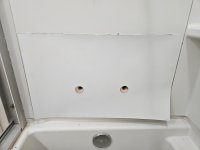
Edit to add pics:

1st two: After 2nd attempt losing bond immediately on removal of pressure pad after adhesive cured. Appears did not bond to laminate. 2nd 2: piece of laminate, front and back.

20251214_100810.jpg20251214_100750.jpg20251214_101027.jpg


20251214_101033.jpg
 
Last edited:
To avoid these ads, REGISTER NOW!

cgrutt

Well-known member
Joined
Mar 4, 2016
Messages
8,250
Pics might help. I would try fiberglass matt with polyester resin to patch holes. If you still have access to back I'd start there then patch front. Assuming it bonds, you can sand out and follow with fiberglass patching and/or fairing compound. Can roll or spray color matched gel coat.

Automotive "bondo" style product may also work but may not hold up to excessive moisture if holes are in area that will be continously wet (while shower is in use).
 

CraigStu

Well-known member
Joined
May 22, 2014
Messages
4,027
Location
Blacksburg, Va
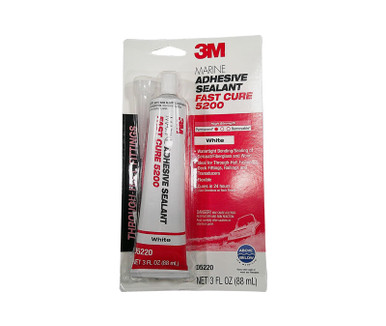
3M 5200 will surely work on the fiberglass but I am not sure about the countertop laminate. This is a crazy price I think but it's the first one that popped up.
5200 is widely used in the boating world. Generally it is thought that, if you want to separate two things bonded w/ it, you will need to destroy one or the other.
 

Stuart in MN

Well-known member
Joined
Sep 8, 2005
Messages
23,089
Location
Minneapolis
Make sure the fiberglass is clean, clean, clean with no soap residue left on it. Shower walls can be famous for being difficult to get it all off.
 

PCustoms

Well-known member
Joined
Jul 23, 2011
Messages
22,712
Location
VT
How big of a hole did you cut?

They make extended trim rings for swapping valves out, probably way easier then trying to glue things together
 
OP
L

lund

Well-known member
Joined
Nov 2, 2019
Messages
766
Location
Michigan
Pics might help. I would try fiberglass matt with polyester resin to patch holes. If you still have access to back I'd start there then patch front. Assuming it bonds, you can sand out and follow with fiberglass patching and/or fairing compound. Can roll or spray color matched gel coat.

Automotive "bondo" style product may also work but may not hold up to excessive moisture if holes are in area that will be continously wet (while shower is in use).
Done on pics.

I was trying to bond a thin sheet of laminate over the previous small holed area rather than patch the wall say like in a boat hull impact repair. I only have very limited access to the back.

I will look up automotive bondo type stuff and consider.

Thanks!
 
OP
L

lund

Well-known member
Joined
Nov 2, 2019
Messages
766
Location
Michigan
3M 5200 will surely work on the fiberglass but I am not sure about the countertop laminate. This is a crazy price I think but it's the first one that popped up.
5200 is widely used in the boating world. Generally it is thought that, if you want to separate two things bonded w/ it, you will need to destroy one or the other.
Thanks. I will see if i can find and i can experiment on a laminate scrap.
 
OP
L

lund

Well-known member
Joined
Nov 2, 2019
Messages
766
Location
Michigan
Make sure the fiberglass is clean, clean, clean with no soap residue left on it. Shower walls can be famous for being difficult to get it all off.


I might have done insuficient prep with round 1 with the contact cement. But in round 2, I sanded the fiberglass surface with coarse grit and then used acetone to clean. Both were cured under pressure pads. Both had bond failures.
 

cgrutt

Well-known member
Joined
Mar 4, 2016
Messages
8,250
I think 5200 would work, or at least seal the joint. Contact adhesive may work to laminate the two parts. I'd scuff up the fiberglass pretty good though. My only concern about that would be water working its way between the two surfaces and causing a mold problem.

ETA Sorry forgot that you tried contact adhesive already.
 
OP
L

lund

Well-known member
Joined
Nov 2, 2019
Messages
766
Location
Michigan
How big of a hole did you cut?

They make extended trim rings for swapping valves out, probably way easier then trying to glue things together


The main circular hole i am plugging is about 7" diameter and a small 3/4" diameter circular hole below.

Your point is good. I may consider this. I will probably want to replace the shower/tub stall with something better in a few years any way. I may do this.
 

PCustoms

Well-known member
Joined
Jul 23, 2011
Messages
22,712
Location
VT
The main circular hole i am plugging is about 7" diameter and a small 3/4" diameter circular hole below.

Your point is good. I may consider this. I will probably want to replace the shower/tub stall with something better in a few years any way. I may do this.

I see you added pics...

That's a huge patch. Of you've already scuffed and covered the shower in various glues then I don't think the trim rings will work.

That's some funny looking spacing on the 2 new holes
 
OP
L

lund

Well-known member
Joined
Nov 2, 2019
Messages
766
Location
Michigan
I see you added pics...

That's a huge patch. Of you've already scuffed and covered the shower in various glues then I don't think the trim rings will work.

That's some funny looking spacing on the 2 new holes
I could probably still scrape off the prior glue and polish the fiberglass. The gel coat is pretty thick. I could make my own lare ring and silicone + clamp. So i may still do it. I am getting exasperated with the bond failures!

On the spacing: It is for a japanese shower/tub fixture. Just two 1/2 NPT female fittings about 6-12" apart (can adjust). So i made the rough seperation of the feeder lines. The fixture mounting is simple and easy to replace or work on when goes bad eventually since the full valve assembly mounts on the pipes.

What you get for ~$175 us in Japan is unbelievably better:
* very heavy brass. Almost no plastic.
* temp adjustment works great
* flow fully adjustable
* can adjust temp independent of flow and it really works
* trivial once setup to replace full assembly. Can swap in 15 min or less. Try that with our in wall ones!

My wife is japanese and i am familiar with their plumbing from trips. My wife and kids go to Japan yearly so i told her to buy a,japanese fixture in their equivalent of home depot. I have done this before and my kids like the japanese stuff better and it is cheap.

Things are so much more expensive in the usa for worse quality it is depressing. Part of that is exchange rate and part japanese buy less junk so all does not get outsouced for profit. Even the higest price fixtures in homedepot and lowes are junk in comparison to low/mid grade japanese. Too much outsourced trash here and american businesses want much higer profits.
 
Last edited:
OP
L

lund

Well-known member
Joined
Nov 2, 2019
Messages
766
Location
Michigan
just an FY, Plam does not like water on the edges . it buckles & swells . only the top face is waterproof really
Yes thanks, I only realized this edge issue after initiating my planed mod due to some comments here. That is why I am carefully running a thin bead of silicone around the perimeter. It is not the best solution, but hopefully good enough. This will be a stopgap repair for probably a few years. I want to eventually rip out the tub/shower stall and make a better tiled version. Hopefully the repair can work for a few years without looking horrible if I solve the bond problem. If I cannot, I may change to some other (thicker) material like high density plastic that is more fully ok in full water immersion and perimeter screw and seam seal. That would not look so hot (color/texture match would be poor ... a reason I went with laminate is that I could order something that matched well enough and be thin enough to glue over a full panel and not to stand out as a hack repair). But the bonding issue is getting frustrating and I want to be done with it. It is not going to look so hot no matter what I do, and being robust might be better than worrying about appearances. This kind of material just does not repair very well.

An update on the bonding: I bought fiberglass resin (a simple bondo kit, probably polyester resin) and did a test: It bonded VERY well to the back of the laminate. But ironically since the surface appears to be fiberglass gelcoat, it bonded much less well to the surface of the shower/tub assembly wall (I could scrape it off without too much difficulty with a razor blade scraper). In spite of the middling bond on the wall, I decided to try it and hope it is good enough (wishful thinking?) since I think air dry and water-soluable stuff bonding a sheet that wants to curl up from the edges is a bad idea here. I presently have it curing under pad + spreader clamp pressure (will let set 24 hours and then seam seal the edge and give it a try if it stays attached enough to that point. Hopefully this can stay bonded enough ...

This is all rather exasperating. Gluing on plastic and fiberglass like materials is no fun. A shower is also harsh environment with frequent temp changes, water, surface contamination from soaps, etc.
 
Last edited:

Bunsen Honeydew

Well-known member
Joined
May 22, 2025
Messages
133
Location
New York State
Build a frame around your patch using Pvc trim boards overlapping the edges of your laminate. Secure to wall with stainless screws. Seal with caulk.
If you use thicker pvc, you could counter sink your screws and fill over them.
It won't be beautiful, but it will be better than what you have now.
 
Last edited:
OP
L

lund

Well-known member
Joined
Nov 2, 2019
Messages
766
Location
Michigan
Build a frame around your patch using Pvc trim boards overlapping the edges of your laminate. Secure to wall with stainless screws. Seal with caulk.
If you use thicker pvc, you could counter sink your screws and fill over them.
It won't be beautiful, but it will be better than what you have now.
Agree. See below. I give up trying to bond. It is hopeless.
 
OP
L

lund

Well-known member
Joined
Nov 2, 2019
Messages
766
Location
Michigan
Update

I GIVE UP!!! : The 3rd round of attempt is failing just as bad. Fiberglass resin bonded great to the laminate but NOT sufficiently to the gel-coat fiberglass surface of the shower wall. The edges started pulling up immediately from modest surface tension after I removed the clamp pad post 24 hours of resin curing. It seems absolutely hopeless.

So I am going to do what Runsen Honeydew suggests above. I will likely buy some thin ~1/2 width metal strip of anodized Aluminum and cut that like a picture frame and put around the perimeter of the panel with small countersunk stainless screws every ~6". I will silicone the full perimeter underneath the aluminum strip and the edge of the laminate and try my best to cleanly wipe up excess and have all sides seam sealed. As Runsen says, it will not look great, but should work. Maybe it will not even look that bad if I can keep the sealing clean enoung since the frame will surround the plumbing fixture.

I easily wasted a day on this monstrosity since I had to get supplies multiple times, cut-trim and bond/clamp/cure 3x and prep the surface each time, clean up .... It seems fiberglass/plastic type tubs and shower stalls cannot be easily repaired. I guess people must just cover any damage or holes with cap type covers or rip the whole thing out and replace the full assembly. I want my day back :( I really am not a fan of these type of shower/tub assemblies now. I realize tile is a lot more work, but wow is the finished product better and if you save some tiles, in principle, it should be much more repairable. Grouting in most any reasonable plug would work for an analogous repair. I guess a pro would not take a request to do anything like this or it would be hard to bill for time and the customer would flip out since it would probably not come out well. So chalk up at least a partial defeat for a dumb DIY effort ...

I have to say I am puzzeled now how fiberglass boat hulls are ever repaired. I am guessing they must sand off the gel coat fully (sounds not fun) with some backing support and then spray some new sort of gel coat over the area. But there has to be better bonding types of fiberglass resin than what I used in this bondo kit :(
 

ez-duzit

Well-known member
Joined
Jun 24, 2013
Messages
5,097
Location
Marina del Rey
...I will likely buy some thin ~1/2 width metal strip of anodized Aluminum and cut that like a picture frame and put around the perimeter of the panel with small countersunk stainless screws every ~6". I will silicone the full perimeter underneath the aluminum strip and the edge of the laminate...
it will not look great...
That will certainly look dreadful, like the hack job it will be.

It is very unfortunate that you have contaminated the area with silicone. However it might be possible to decontaminate and abrade the mating surfaces so that epoxy glue can be used to bond a properly fitted patch. I have successfully done this in the tub and shower area on my boat which, along with the entire bath area, is completely covered with Formica.

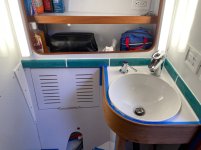
1st Photo shows where the overhung lower panel and right-most vertical panel had debonded since its 1983 manufacture. The large central panel was also replaced.

IMG_1858.jpg

2nd photo shows other additional Formica and epoxy-laminated curved work I completed in that head.
IMG_1854.jpg
 
Last edited:
To avoid these ads, REGISTER NOW!
OP
L

lund

Well-known member
Joined
Nov 2, 2019
Messages
766
Location
Michigan
That will certainly look dreadful, like the hack job it will be.

It is very unfortunate that you have contaminated the area with silicone. However it might be possible to decontaminate and abrade the mating surfaces so that epoxy glue can be used to bond a properly fitted patch. I have successfully done this in the tub and shower area on my boat which, along with the entire bath area, is completely covered with Formica.

1st Photo shows where the overhung lower panel and right-most vertical panel had debonded since its 1983 manufacture. The large central panel was also replaced.

2nd photo shows other additional Formica and epoxy-laminated curved work I completed in that head.
Sheeze: "That will certainly look dreadful, like the hack job it will be." THAT bad? I did not realize I am a hack!!

To elaborate more: I did NOT contaminate the area with silicone. I meant I was going to edge seal the laminate with a carefully placed caulk bead at the last step to prevent water absorption in the laminate cut edge. Most of the bond area outside of two holes never saw silicone and certainly not where the bond was failing worst (near panel edges). I never got to the last step of caulking the edge seam due to immediate bonding failures. By the way, I also tried spot testing 2 part epoxy to use and it also did NOT bond to the shower stall assembly. Not even weakly. It just flaked off. I cannot find anything that bonds well to the show stall wall. I sanded the wall surface coating (gelcoat?) to virgin material using coarse grit sandpaper and cleaned with acetone. So I am pretty sure that I have been trying to bond to virgin material. But nothing I try gets a good bond. Surface tension in the cut laminate (see my original post pics and the small bow on a piece) is enough force to break the bond. So nothing I tried or experimented with (panel tries: contact cement, loctite tub and surround adhesive, fiberglass resin; or experimented with: silicone, 2 part epoxy) is working well enough.

I also note from your pics that you have tiles and some sort of edge molding that may be helping to grip and clamp the bond. I doubt the backing material is similar to what I am dealing with either. Nice work though.

I am not sure if the material in the stall assembly is some "special" composition to aid cleaning or something like that. But I cannot get anything to bond sufficiently well to it to even counteract the modest surface tension on the laminate. So I may be stuck on the perimeter molding + screw approach with caulking underneath. If I cut that well like a picture frame and do a clean job, I do not think it will be *THAT* bad as you theorize. Hell, if I did it with teak, plug capped the fasteners, etc it would be similar to a boat panel like from your manufacturer. But I doubt I will do that since I want to replace the whole thing in time and I need to get it together enough soon.
 
Last edited:

PCustoms

Well-known member
Joined
Jul 23, 2011
Messages
22,712
Location
VT
Epoxy should have stuck...

My guess is you have acrylic or some other material and not fiberglass
 

cgrutt

Well-known member
Joined
Mar 4, 2016
Messages
8,250
I was just about to post the same comment probably acrylic or some other plastic. There are definitely adhesives that bond to acrylic but not sure if they will work with the laminate backing. May want to try primer used on plastic pipes.
 
OP
L

lund

Well-known member
Joined
Nov 2, 2019
Messages
766
Location
Michigan
Thanks PCustoms & cgrutt. I agree the material is not likley standard fiberglass. I was thinking it was at first since it appears to have some type of fiberglass mesh (though not standard density) within.

I may see if I can find some Acrylic cement like Weld-On 16 and see if that will bond to the laminate.

It is possible that my experiment with epoxy was bad: I tried it in a non-visible area without much surface prep in an area that likely had some contamination ... which may have doomed it to failure. I may revisit that with a more complete effort for a proper evaluation since I have plenty of epoxy and I think I need to special order acrylic cement (unless use a mass of super glue which does not seem like a good idea with next to no work time !!!)
 

ez-duzit

Well-known member
Joined
Jun 24, 2013
Messages
5,097
Location
Marina del Rey
...nothing I tried or experimented with (panel tries: contact cement, loctite tub and surround adhesive, fiberglass resin; or experimented with: silicone, 2 part epoxy) is working well enough...
If nothing you've tried works well enough to bond these materials, either you have not tried the appropriate adhesive or you have not prepped the surfaces properly. If you are willing to simply give up and just screw some moldings over it to hold it down, I think it is safe to call that a hack, don't you?
You have not identified the epoxy you're using. And is it possible that you are trying to bond to other than gelcoated fiberglass? Fiberglass resin and gelcoat are most commonly polyester resin. Secondary bonds to polyester, using epoxy, are usually very reliable, providing there was first proper preparation and no contamination. I use WEST System epoxy for all critical secondary bonds.
 

Youngandfree

Well-known member
Joined
Dec 29, 2020
Messages
877
Location
VA
I'd have replaced the faucet with a similar setup personally. It looks like a 3 piece shower wall system. Have you considered replcing the end wall?
 

Leaflessshadetree

Well-known member
Joined
Aug 1, 2013
Messages
7,152
Location
Don't ask.
I'd replace that entire panel. Shouldn't be very difficult or expensive. Big box stores should have sheet materials that would be better than countertop laminat.
 

BillK

Well-known member
Joined
Aug 24, 2006
Messages
9,320
Location
Beautiful Southern Maryland
Thanks PCustoms & cgrutt. I agree the material is not likley standard fiberglass. I was thinking it was at first since it appears to have some type of fiberglass mesh (though not standard density) within.

I may see if I can find some Acrylic cement like Weld-On 16 and see if that will bond to the laminate.
See if you have a local auto body shop supply house. They have some absolutely crazy adhesives now days for "plastic" car parts. I dont know if you mentioned it above but you are really going to need to scuff up the surface well. I would probably use something like 40 grit paper.

Also I would look at a different material than the countertop laminate.
 

PCustoms

Well-known member
Joined
Jul 23, 2011
Messages
22,712
Location
VT
By the time he buys the "correct" glue and gun, he can likely buy a replacement panel
 
OP
L

lund

Well-known member
Joined
Nov 2, 2019
Messages
766
Location
Michigan
By the time he buys the "correct" glue and gun, he can likely buy a replacement panel
Correctamundo. I already want my 1+ days of effort back !!

I now feel the world is going to end in plastic. This stuff eventually breaks down to microfragments that will no doubt repel everything and force all materials to diffuse into a primordial goo that will end the world. Joking, of course ... but it seems consistent with my experience here!

I doubt very much I could figure out the original manufacturer and order a replacement section. At that level of effort, it might be better just to bump up the timeframe and just redo the whole thing sooner than later.

One thing I wish people would do when they make houses: Build in some sort of removable access panel to replace plumbing fixtures in showers etc without the need to demo walls. Our systems in the USA are not made with maintainability in mind. These Japanese style shower/tub fixtures are way better and if they ever go bad you can just bolt another in within 15 minutes with only a crescent type wrench and Teflon tape.

https://wafuu.com/en-us/products/toto-tbv03401j-bathroom-faucet-6-7-inches-170-mm-for-general-use?variant=42817462436003&utm_source=google&utm_medium=organic&utm_campaign=English&utm_content=TOTO+TBV03401J+Bathroom+Faucet+6.7+inches+%28170+mm%29+for+General+Use&utm_source=google&utm_medium=cpc&utm_campaign=&gad_source=1&gad_campaignid=22840129802&gclid=Cj0KCQiAo4TKBhDRARIsAGW29bdfbo5mXzOIe1gpaTYSdGZLwPjz7IWTrXc0OVhJoKiZ7tzra0Q4PzYaAobVEALw_wcB

Above is just a random link of something typical that I could easily find. All you need is 1/2" female NPT pipe outlets for hot and cold and it bolts on with just modest hand tension when using generous wraps of teflon tape.
 
Last edited:
OP
L

lund

Well-known member
Joined
Nov 2, 2019
Messages
766
Location
Michigan
See if you have a local auto body shop supply house. They have some absolutely crazy adhesives now days for "plastic" car parts. I dont know if you mentioned it above but you are really going to need to scuff up the surface well. I would probably use something like 40 grit paper.

Also I would look at a different material than the countertop laminate.
Agree on both points. I did sand aggressively, but with about 100 grit to non-surface material. Did not help much since the bond was so poor: though as mentioned, my epoxy test spot may have been poor.

I was thinking about seeing if I could get a sheet of thicker (1/4 inch say) high density white plastic and cut/router the edge and silicon (for edge seal and a little adhesion at least) + back screw (not good access but maybe can, holes would be hard to drill right depth though) it on. The material might be hard to find unless I can find something like a big kitchen cutting board (think need about 21" x 16") to cut apart.

Thanks for the advice.
 

DGersic

Well-known member
Joined
Mar 12, 2017
Messages
6,301
Location
DeKalb, IL
One thing I wish people would do when they make houses: Build in some sort of removable access panel to replace plumbing fixtures in showers etc without the need to demo walls.

The back of my shower wall is a set of hallway storage cabinets. Someone previous to me turned the lower cabinet in to an access panel for the shower valve.

When I re-did the plumbing, the upper cabinet got opened up to an access panel for the shower riser.

Neither of these was done neatly. The 1/2” plywood back was rough cut, followed by hacking through a plaster & rock lath wall. I then built an inner cabinet and shelves that are removable for access. It’s still a PITA because that means emptying the cabinet of all of her “stuff”.

You can buy an access panel to cover a hole in drywall if you need it.
 
OP
L

lund

Well-known member
Joined
Nov 2, 2019
Messages
766
Location
Michigan
The back of my shower wall is a set of hallway storage cabinets. Someone previous to me turned the lower cabinet in to an access panel for the shower valve.

When I re-did the plumbing, the upper cabinet got opened up to an access panel for the shower riser.

Neither of these was done neatly. The 1/2” plywood back was rough cut, followed by hacking through a plaster & rock lath wall. I then built an inner cabinet and shelves that are removable for access. It’s still a PITA because that means emptying the cabinet of all of her “stuff”.

You can buy an access panel to cover a hole in drywall if you need it.
Your access panel sounds like a good way to go for future flexibility. I also agree having it a clean and easy to open panel cover with enough size to reach all the parts needed is better. Such allows much easier upgrades and maintenance without a lot of grief or risk to evolve into more complete demos. I get the feeling people plan that they are going to blow up bathrooms and rebuild every 20 ish years anyway ... or else few live in one place that long so they figure it is the next person's problem.

When I removed a maybe ~20 year old shower fixture in the present work I could not even get the handle off without drilling it out since it oxidization bonded. It did not look deteriorated from the outside, but the mixer was starting to fail. So that is an example of the thinking that fixtures are maintainable from popping open the front and replacing the mixer valve may be delusional. I was going to have a problem with this regardless of my replacement path leading me to want to plug the prior valve cutout.

If you look at the link in the post above you will see an example of what I am trying to put in with my mod with an easy to replace Japanese style fixture. That is the same layout but a cheaper model than what I have (Toto brand) but the same basic idea. These valves work super and are almost trivial to replace at any time. So they seem like better solutions to me. Japanese quality is also stunningly good for the price. Probably similar or better to the Euro German brands at much lower $.
 
OP
L

lund

Well-known member
Joined
Nov 2, 2019
Messages
766
Location
Michigan
If nothing you've tried works well enough to bond these materials, either you have not tried the appropriate adhesive or you have not prepped the surfaces properly. If you are willing to simply give up and just screw some moldings over it to hold it down, I think it is safe to call that a hack, don't you?
You have not identified the epoxy you're using. And is it possible that you are trying to bond to other than gelcoated fiberglass? Fiberglass resin and gelcoat are most commonly polyester resin. Secondary bonds to polyester, using epoxy, are usually very reliable, providing there was first proper preparation and no contamination. I use WEST System epoxy for all critical secondary bonds.

I tried generic "JB Weld 50240 ClearWeld Professional Grade Epoxy, Clear." I do not know the specific chemistry of epoxy brands (West is likely just a marine supply reseller). Unfortunately, I doubt the material is simple fiberglass from what I am seeing. Maybe some type of fiber reinforced plastic composite. As I said, in my 3 panel bonding attempts (contact cement, loctite tub and surround adhesive, and fiberglass resin), I sanded (100 grit) for virgin material and cleaned with acetone and let dry a long time. Failures were all severe on the shower wall surface. I am not sure what type of composition the shower wall material is. But my small test of epoxy may not have been good for the shower stall material since I may not have prepped the test area enough (was in a rush). I will repeat the test more carefully and reevaluate. But I do not have high hopes. I am no chemist, but I do not think epoxy bonds to polyethylene or polypropylene type plastics. It did not look like those type of plastics though.

Maybe we define "hack" in this non-software context differently. To me, a hack is somebody who does things without plan or care with low workmanship. If you want to declare me that for struggling to find an adhesive to bond on a plastic composite, have at it. Regardless, I am not so sensitive. I more thought it was funny. IF I do frame it, I will do it carefully and I do not think it will look that awful (maybe less bad than a seam seal for the exposed laminate sub-surface on the thin edge). Like I was pointing out, your original boat panels seams where anchored that way and did not look that bad (before deterioration). In my case, I probably should have researched materials better before starting. I just was not expecting such trouble with a significant and flat bonding surface.

In any event, I appreciate the advice. I may see if I can find something other than laminate (thick high density plastic and router the edge) and just carefully back screw with silicone sealing. I do not want to wait a week for parts and I have my day job !!

By the way, years ago I recall needing to mod a large and heavy sewer basin that was some type of heavy plastic (Polypropylene?). EVERYTHING I tried failed (even special glues with suface activators) and I had to fab some special seals. This is getting similarly exasperating for what I thought would be easy.
 

PCustoms

Well-known member
Joined
Jul 23, 2011
Messages
22,712
Location
VT
I bet you wish you re-installed a "standard US" valve at this point
 

ez-duzit

Well-known member
Joined
Jun 24, 2013
Messages
5,097
Location
Marina del Rey
...(West is likely just a marine supply reseller)...
WEST (Wood Epoxy Saturation Technique) Epoxy is formulated by its creators, the Gougeon Brothers. They are not associated with West Marine, who coincidently happen to sell WEST Epoxy (along with countless other generalized marine products).

Regarding your bonding problem, it would help you to correctly identify the material to which you are adhering. Acrylic and polyester have very distinct and easily identifiable aromas, especially when freshly cut.
 
OP
L

lund

Well-known member
Joined
Nov 2, 2019
Messages
766
Location
Michigan
I bet you wish you re-installed a "standard US" valve at this point
Ha! Probably so given the patch grief. But longer range the Japanese assemblies are way better in day-to-day use. I did this before and has worked out very well. Just the damn plastics here !!!
 
OP
L

lund

Well-known member
Joined
Nov 2, 2019
Messages
766
Location
Michigan
WEST (Wood Epoxy Saturation Technique) Epoxy is formulated by its creators, the Gougeon Brothers. They are not associated with West Marine, who coincidently happen to sell WEST Epoxy (along with countless other generalized marine products).
I had no idea on that, thanks. I was thinking it had to be a West Marine brand with the standard distributor rebrandings.

Regarding your bonding problem, it would help you to correctly identify the material to which you are adhering. Acrylic and polyester have very distinct and easily identifiable aromas, especially when freshly cut.
No argument here. I am struggling to type it. I do not have much experience in such matters. It would certainly help to know what approach to best take. I thought it smelled like polyester fiberglass during the sanding, and the fiber strands that I saw in the fixture cut-outs convinced me more and likely biased me. I am now doubting that given the fiberglass resin failure.
 
To avoid these ads, REGISTER NOW!
Top Bottom