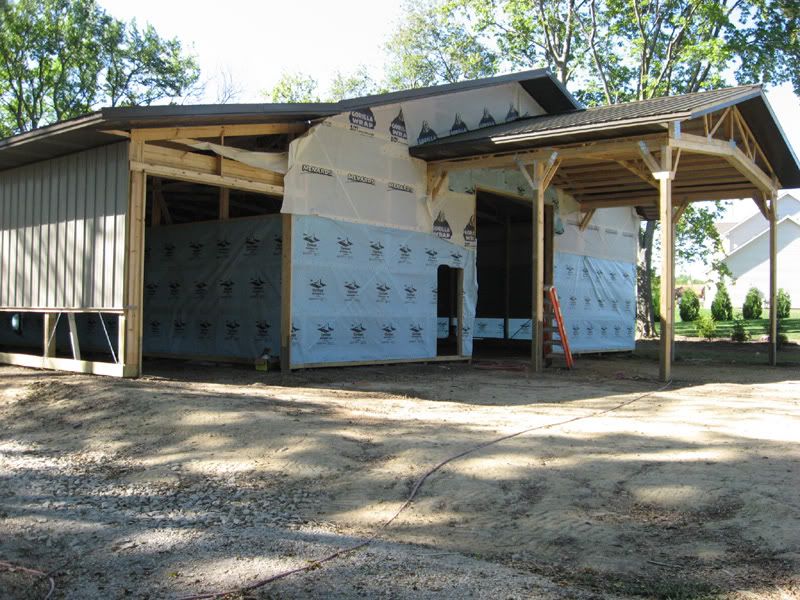
In response to post #12, no, you need to have a weather proof barrier to protect the OSB or whatever your sheathing of choice is. We have gone back to using 15lb black felt.
The DuPont website also addresses felt in their FAQ area. They point out the drawbacks of the felt, the material is not without it's limitations, such as it's a PITA to handle especially alone, it tears easily and it does not have a multi-month life span when left exposed to the elements. However, it is inexpensive, waterproof (until it weathers away from not being covered) and it makes a great air infiltration barrier. It will not transmit water vapor.
Lets use the same assumption that DuPont does... that the source of the water vapor is the interior of the building. The wall insulation if properly installed for an application where heating is the primary conditioning, will be to have a vapor barrier on the inside of the building, behind the wall finish and on top of the studs. Now, where does the water vapor come from??? Add to that the fact that the average painted drywall is a significant vapor retarder and you are getting precious little water vapor coming through from the building interior.
So why does DuPont tout the fact that their product is vapor permeable? If you check their website, they explain that Tyvek products can and are made in different thicknesses for different applications. Tyvek of significant thickness is waterproof and therefore non permeable. Tyvek in a thickness that is sufficient to function as a great air infiltration barrier does pass water vapor. It is my feeling and observation that the vapor transmissive property of the product does nothing to enhance the general thermal efficiency of a structure and I would propose that the vapor permeability of the stuff is nothing more than a manufacturing by-product and, that the marketing guys have used this characteristic to help distinguish it from felt and other house wraps.
In other words...it's a solution looking for a problem.
In response to post #13. You are absolutely correct, water will weep out of the drain holes. It is the water in it's vaporous state that causes the problems here.
To poster #14, in your case, sheet goods applied over the OSB sheathing with the joints being staggered provides an excellent air infiltration barrier. While there is aways the possibility of liquid water entering the joints on any building exterior, if the joints are vertical, you probably have no issues.
To poster #15, since you directed your rude and sarcastic statement to me and not as a general comment, you too qualify for a reply. Unfortunately you took my comment personally... I would suggest, if the shoe fits, wear it.