To avoid these ads, REGISTER NOW!

Underground wine cave building

Joined
Jul 16, 2012
Messages
15
Ok! Here is a project I have been working on for a while but have not pulled the final trigger on.
We have a small vineyard of about 400 vines and produce about 75 cases a year. I have been processing and making wine in a downstairs room at our house (actually a home gym) and it is time to get the space repatriated to official gym uses.
So in comes the idea of devoted wine making and storage space.
I don't really want to incur the added monthly expense of having to cool a building, I have plenty of gently sloping hillside so I had the idea of going underground. Using the natural cooling or really temperature stability of an earth covered structure.
I have been going back and forth as to whether to construct the building one of two ways. Both would be cut and cover essentially. With excavating the hillside, pouring a slab, building the structure and then covering the structure with 18"-24" of dirt for the insulation of you will.
Option 1. A block structure
Option 2. A steel and wire/rebar framed structure with applied gunite.
Amenities that either structure will contain include power, water, center floor drainage for washdown, small storage area and a bathroom that will double as a bathroom for the nearby pool.
Here is a screenshot of my sketchup design (block method)
53a31ff9f6a64f7112fabc0de1ba89de.jpg

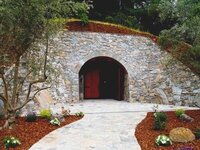
And here is a photo somewhat similar to what the entrance would likely look like. With the addition of a "crush pad" out front for processing coming from the vineyard.
d4b6cbc6e8e1d90f2e5a0cecbecde577.jpg

The entry doorway would be 5-6' wide only to minimize cooling loss/heat entry but large enough to roll through a pallet jack with a double barrel rack.

I would love to hear about anyone's experience in building either type of structure. I have quite a bit of building experience, but not quazy underground building.
Also if anyone has experience with cost differential between the two types of buildings it would also be greatly appreciated.
-Warren


Sent from my iPhone using Tapatalk
 

Attachments

  • 53a31ff9f6a64f7112fabc0de1ba89de.jpg
    53a31ff9f6a64f7112fabc0de1ba89de.jpg
    957.8 KB · Views: 0
  • d4b6cbc6e8e1d90f2e5a0cecbecde577.jpg
    d4b6cbc6e8e1d90f2e5a0cecbecde577.jpg
    75.5 KB · Views: 0
To avoid these ads, REGISTER NOW!

rburke65

Well-known member
Joined
Nov 10, 2007
Messages
12,349
Location
Canfield, Ohio
Once again, this is why this forum is so great. Ya get so many different views and opinions on the problem, idea or thought. Would have never thought of a precast culvert.
 

jimreed2160

Well-known member
Joined
Aug 7, 2016
Messages
3,589
Location
Tallahassee FL
OK. So the big motivation here is keeping things cool.

Before getting out the shovel, I recommend some research on what temperature you can expect from the ground. There are plenty of sources that could help you estimate and plan. Remember that the ground changes temp just like the air but at a different rate and with a different average. Look for seasonal ground water temps for your geographic area. You may find that you need to add supplemental heat/cooling to keep the temperature in its optimal range for your product.

Good luck with your project.
 

LXCam

ALLIANCE MEMBER
Joined
Apr 23, 2013
Messages
19,092
Location
AZ
Count me in with TJ's suggestion. I'm not sure how large you want to go but there are several options for manufactured box drain systems. If something like a 12x12 would work it's a pretty easy installation. Check out some of the offerings here, maybe something might click.

http://www.thompsonpipegroup.com
 

jimindm

Well-known member
Joined
Oct 29, 2011
Messages
2,395
Location
Des Moines, Iowa
Not knowing your location, but in most parts the deeper you go the better off you will be. the deeper you go the better you will be able to plan for temperature fluctuations.

I do not know anything about storing and making wine. I would think a cave only a few feet in the ground would have huge temperature swings, depending where you live.

In Iowa I would guess our home water line is five to six feet in the ground. There is a large fluctuation of the temperature of the tap water, between summer and winter.

If you are only going a foot or two, you could look into a cargo container.

I would search for severe weather shelters for a campground or park. A few years ago a tornado hit a scout camp not far from here and injured several of the campers. Many campgrounds and parks now have some kind of shelter. Most look like a big culvert, or a cargo container buried in the ground with an entrance down into it one on end.
 

Radix2

Well-known member
Joined
May 28, 2014
Messages
1,853
Location
the thumb!, MI
The culvert is an interesting idea. I would be surprised though if it is not many times the cost of a site built structure. After all, these are made for commercial uses with large road loads on top and water flows through the middle ...and strong enough to crane. Takes a lot of steel and concrete to do all that.

I have no actual facts though...it will take quotes to find out.
 
To avoid these ads, REGISTER NOW!

wssix99

Well-known member
Joined
Mar 2, 2011
Messages
5,156
Location
Chicago, IL
It's been a while since I've sat down to design a concrete culvert, but I recall the ground pressures being the controlling factor. I love that idea!

One key thing about the example structure is that it's doors are set back from the entrance to minimize solar gain - this is key. Another challenge will be ventilation. Putting the structure underground will help with insulation, but the space will still need to be vented. You may consider putting the duct work for this system underground, (with concrete plenums, etc.) as well to per-condition the air coming in to the building to similar temperatures as the structure.

I live in a concrete house and one thing we've found/confirmed is that the effect of insulation (EPS) around the concrete is profound - especially in the areas where there are no doors or windows. For this structure, I'd invest some time figuring out where to strategically place EPS or XPS around the structure to take full advantage of the "heat battery properties" of the concrete.

For example:
- Putting insulation on the inside is probably not a good idea since the concrete walls will act as a heat sink and act to quickly bring any air coming in through the doors to the proper temperature. (Inside insulation would slow this process down.)
- Since the lower part of the structure (furthest from the surface) will be the most consistent temperature, this area would probably be best left completely insulated if the goal is to keep the inside the same temperature as the earth.
- Since the tops and sides of the structure will see some fluctuations in seasonal temperatures, it would probably be best to put some insulation around these areas so heat more readily moves through the bottom of the slab, which is the index temperature you'd want to keep the structure to.
 

cpamplin

Member
Joined
Feb 14, 2017
Messages
5
Is that photo Bella Vineyards in Healdsburg? I was there last October and they have an underground wine cave and tasting room built into a hillside much like your plan. I don't recall many details but I asked several questions about its construction at the time and the owners/employees were very forthcoming about their operation. Might be worth a visit if you're anywhere near northern CA.
 
OP
W
Joined
Jul 16, 2012
Messages
15
Is that photo Bella Vineyards in Healdsburg? I was there last October and they have an underground wine cave and tasting room built into a hillside much like your plan. I don't recall many details but I asked several questions about its construction at the time and the owners/employees were very forthcoming about their operation. Might be worth a visit if you're anywhere near northern CA.


Not sure of the vineyard location. It very well may be Bella Vineyards in Healdsburg.
I live in Paradise California about 4 hrs away from Healdsburg. I actually have a wedding to go to in Healdsburg soon. I guess I will be planning a trip to Bella Vineyards!


Sent from my iPhone using Tapatalk
 

cpamplin

Member
Joined
Feb 14, 2017
Messages
5
Definitely worth the drive just to see the cave. Love that area, my wife and I did a very memorable day trip to Healdsburg. Korbel is also worth a look if you're into old world, underground wine cellars.
 

PAToyota

Well-known member
Joined
Jan 20, 2006
Messages
4,366
Location
South Central Pennsylvania, USA
As jimreed say, two feet of cover really isn’t enough to make a huge difference. A precast culvert has the cost advantages of the precast process over site forming and labor, but the transport and crane installation could make it about a wash.
 

wssix99

Well-known member
Joined
Mar 2, 2011
Messages
5,156
Location
Chicago, IL
As jimreed say, two feet of cover really isn’t enough to make a huge difference.

Two feet is significant. In most of the midsection of North America, two feet is enough to keep the soil from freezing in the winter.

It's not a perfect insulator, so adding some foam to the top and sides of the structure will help even more.
 

Stuart in MN

Well-known member
Joined
Sep 8, 2005
Messages
23,034
Location
Minneapolis
I saw something on TV years ago about the wine caves many vineyards have in the Napa Valley. As I recall, they were excavated, a rebar structure was built inside, and then they sprayed it with gunnite. I got the impression there were companies out there that specialized in this sort of construction, maybe ask around to other vineyards to see if they can provide any recommendations.
 
To avoid these ads, REGISTER NOW!
Top Bottom