Hobby_Man22
Well-known member
I noticed a lot of people said to say this. Does that mean you're off the hook if you tell them oh it was already there when I bought the house. They can't go after you or the previous owner?

I have heard of an inspector there for one thing (reinspection) wanting to look around the place to see what they could see. The owner managed to say the rest of it had already been inspected and showed them the door. But I wouldn't be suprised in some places if the inspector was there for something else they might try to look around at least the immediate area to see what else might be an issue. Where I am they don't seem to look for trouble so it really depends on the attitude of the inspectors. What sort of issues are you talking about? If it's not obvious it was new work and it looks reasonable very few places are going to go to the trouble of looking up past permits. Locally I have heard of people adding bathrooms or finishing a basement and getting caught when they sell because it's obvious it was done. But in other areas people have converted a detached garage to a house without a permit and apparently somehow got the records updated - no idea how they managed that.No inspector is going to just walk in & look around, so there's nothing to worry about in that regard. (Now, if the work in question is unsafe, that's a different situation altogether).
On the other hand, if you're doing renovation work, the previous work isn't grandfathered, so you'll be changing it out anyway.
So no matter how you look at it its sort of a moot point, no?
One of the inspectors I had at my place saw a new barn erected on my neighbors property and instantly knew that no permit was pulled and went right over there after he was done at my place.No inspector is going to just walk in & look around, so there's nothing to worry about in that regard. (Now, if the work in question is unsafe, that's a different situation altogether).
On the other hand, if you're doing renovation work, the previous work isn't grandfathered, so you'll be changing it out anyway.
So no matter how you look at it its sort of a moot point, no?
I noticed a lot of people said to say this. Does that mean you're off the hook if you tell them oh it was already there when I bought the house. They can't go after you or the previous owner?
Assuming it doesn't look like pure hackery, or blatantly is against code (current or former) then no inspector is going to notice.
It's not like they pull a list of every permit and have pictures of the entire place at the time of construction to compare to.
Depends on what kind of inspector you're dealing with,and what the violation is.I noticed a lot of people said to say this. Does that mean you're off the hook if you tell them oh it was already there when I bought the house. They can't go after you or the previous owner?
I wonder why they wouldn't.
I can't agree with the first sentence. As to the second, that is exactly what an inspector might do, if they have doubts about permitted/unpermitted work.Assuming it doesn't look like pure hackery, or blatantly is against code (current or former) then no inspector is going to notice.
It's not like they pull a list of every permit and have pictures of the entire place at the time of construction to compare to.
The first sentence, that first phrase is certainly correct. The second, 'pictures don't exist' in south Florida, in many circumstances, is not, if it's visible to the exterior. See below.They have other things to do, and pictures don't exist.
You are over thinking this.
I do not see it as overreach on default and I just deal with it in a solution oriented manner, thats all.I feel sorry for you guys that live in places where this over reach occupies your thoughts and has you living in a state of almost paranoia.
See it however you want, but any kind of restrictions to what I do on my property short of something that will likely cause me to damage my neighbors property is none of the local governments business. They are just like HR and job safety people, a bunch of people overpaid and desperate to justify there existence and exercise the tiny bit of power they feel like they have.I do not see it as overreach on default and I just deal with it in a solution oriented manner, thats all.
So if you sell your house and someone dies from a electrical problem that you wired and never got inspected, you are fine with that? It's your property, you do what you want to?See it however you want, but any kind of restrictions to what I do on my property short of something that will likely cause me to damage my neighbors property is none of the local governments business. They are just like HR and job safety people, a bunch of people overpaid and desperate to justify there existence and exercise the tiny bit of power they feel like they have.
The purpose of a permit/inspection process is to ensure that the owner isn't screwed by a shady contractor performing shady and/or dangerous work. Going beyond that IS overreach.I do not see it as overreach on default and I just deal with it in a solution oriented manner, thats all.
No, I'll disagree with you. As a career firefighter/paramedic fire service instructor and fire inspector, now retired, I've seen many examples of work that was done where the result was life safety issues. It happens in residential, commercial and industrial occupancies. We have to use the permit process because too-many people would ignore proven, safe building practices without them, to save $. Every time I attend in-service seminars there is a focus on what's happened in places like The Station nightclub fire (100 deceased, insufficient means of egress and lack of flame-retardant finishes) in Rhode Island, and the Charleston N.C. Sofa Super Store fire which has brought to light how quickly light bar joist construction can fail catastrophically, which in this case cost nine firefighters their lives when the roof collapsed. They were inside searching for people supposedly trapped inside, which turned out to be bogus.The purpose of a permit/inspection process is to ensure that the owner isn't screwed by a shady contractor performing shady and/or dangerous work. Going beyond that IS overreach.
However, I'll make an exception for certain obvious deficiencies. That deck mentioned above is one good example. Falling decks have killed way too many people, so I can easily understand an inspector taking note of that.
Except that government oversight does not end with a permit, and commercial and industrial locations are subject to more than just a C of O, and annual (or perhaps even more frequently) safety inspections by fire marshals are a thing. Because that works....As a career firefighter/paramedic fire service instructor and fire inspector, now retired, I've seen many examples of work that was done where the result was life safety issues. It happens in residential, commercial and industrial occupancies. We have to use the permit process because too-many people would ignore proven, safe building practices without them, to save $...


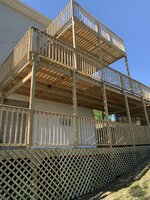
If you bought the house and the previous owner disclosed something done without a permit or was discovered by your home inspection. You are on the hook. If you discovered after you purchased the home that work was done without a permit, you can go after the previous owner and the realtor. You will have to prove the realtor was aware of the un-permitted work.I noticed a lot of people said to say this. Does that mean you're off the hook if you tell them oh it was already there when I bought the house. They can't go after you or the previous owner?
I agree with what you were saying also.No, I'll disagree with you. As a career firefighter/paramedic fire service instructor and fire inspector, now retired, I've seen many examples of work that was done where the result was life safety issues. It happens in residential, commercial and industrial occupancies. We have to use the permit process because too-many people would ignore proven, safe building practices without them, to save $. Every time I attend in-service seminars there is a focus on what's happened in places like The Station nightclub fire (100 deceased, insufficient means of egress and lack of flame-retardant finishes) in Rhode Island, and the Charleston N.C. Sofa Super Store fire which has brought to light how quickly light bar joist construction can fail catastrophically, which in this case cost nine firefighters their lives when the roof collapsed. They were inside searching for people supposedly trapped inside, which turned out to be bogus.
My guess is that they aren't going to care about that as long as it looks like it was done properly. But it's just a guess. No way to tell what your local conditions are. Is this really going to change your plans? Do what you (or the owners) want to do and then you will know if they notice. When I recently built a detached garage here and ran power and gas from the house they didn't even look at the house end of things. But they seem pretty lax here. Then again, I think it was obvious I was doing things better than code.The only thing I did was add an hvac and an extra sub panel about a year ago both are up to code but no permit and I can see why they didn't bother getting permits. I didn't care at the time but now that I'm adding a second building on the property I'm wondering if they will notice these things especially since the hvac is right next to the breaker box. Kind of hard to not see the ac condenser next to the breaker box.
Getting all the permits at once is standard everywhere I have been. It is sometimes cheaper for permits that way and I would think the actual cost of work too. There are time limits on permits - often a year but have seen 6 months so be aware of that. If you really plan to do the electric down the road and put absolutely no electric in now perhaps you could do two permits.I was going to pull an electrical permit after the second building was built but it sounds like they want me to pull the electrical permit the same time that I pull the building permit. Seems kind of dumb. It doesn't matter I guess.
You can insist on anything you want. I know getting our (large) municipal government to do that won't happen around here. And your lawyer will argue it is not worth paying him his $400 an hour to try to get it.I always recommend a prospective property owner to get release of lien letters from all governmental jurisdictions and utilities prior to purchasing a property.
...until you sell your homespun DIY disaster to someone else or a visitor or emergency responder is injured because of your non-compliance. Codes and inspections might not be necessary if everyone was competent and conscientious, but this is a pipe dream. Inspections also protect the non-savvy owner from bad or dangerous work done by an unscrupulous contractor. Unlike ill-considered code changes (such as AFCI that was pushed into the NEC before the hardware was even functional by the manufacturers who stood to gain from it), the only code inspectors that rankle me are the ones that either don't know what they are talking about or have Barney Fife Syndrome.See it however you want, but any kind of restrictions to what I do on my property short of something that will likely cause me to damage my neighbors property is none of the local governments business.
Yes it certainly is 'ad-hoc,' because the definition of that is 'as-necessary.' Code, ordinances and statutes each control requirements for things to be done, i.e., 'if A then B (and in many circumstances C, D, and so-forth.' Home rule says local governments call the shots on many things. However, state statutes for instance determine what chapters of professional associations are used and then what years' adoptions are codified. Periodic review of standards leads to continual updating due to the work of industry professionals as more data becomes available. Things can change over time, and they do. Sometimes it takes years for defects to come to light, but once they do, the standards review committees expend due diligence, and the state legislatures almost-always follow their recommendations.Except that government oversight does not end with a permit, and commercial and industrial locations are subject to more than just a C of O, and annual (or perhaps even more frequently) safety inspections by fire marshals are a thing. Because that works.
But more importantly, you're advocating an ad-hoc inspection regime that's rife for corruption and selective enforcement, because it turns a blind eye to just about every example of unpermitted work, EXCEPT for those rare cases where the owner seeks a permit for something unrelated. And that's why we end up with scumbag owners hiding their work. Because they understand that once you bring an inspector in, you may be opening up a can of worms.
For permits and inspections to be helpful across the board, they must perform a beneficial service to owners, not be a tax.
I always recommend a prospective property owner to get release of lien letters from all governmental jurisdictions and utilities prior to purchasing a property.
If you would post your community in-which you reside, I would be happy to search for the release of lien procedure, including the explanation why it's done, and what is the cost.You can insist on anything you want. I know getting our (large) municipal government to do that won't happen around here. And your lawyer will argue it is not worth paying him his $400 an hour to try to get it.
I get a kick out of guys like the one you quoted, "my property, I'll do what I want to"...until you sell your homespun DIY disaster to someone else or a visitor or emergency responder is injured because of your non-compliance. Codes and inspections might not be necessary if everyone was competent and conscientious, but this is a pipe dream. Inspections also protect the non-savvy owner from bad or dangerous work done by an unscrupulous contractor. Unlike ill-considered code changes (such as AFCI that was pushed into the NEC before the hardware was even functional by the manufacturers who stood to gain from it), the only code inspectors that rankle me are the ones that either don't know what they are talking about or have Barney Fife Syndrome.
Dey jes' be dead.I get a kick out of guys like the one you quoted, "my property, I'll do what I want to"
What happens when I do what I want to on my property and his family member is injured or killed because my half *** electrical work?
Boy, would ya look at the workmanship on that gem.Some places are less on top of things than others. This was a active house listing in Pittsburgh from a flipper. Inside was just as bad. It just gets worse as you look.
Rittman brings up a good point, the inspector only sees inside the house (or around the house depending) if they are asked to inspect. You can violate every code imaginable inside and no one will know.
I have no clue what you are saying.Dey jes' be dead.
Thats what i did. Didnt have money for the GC to do anything but the structure. Building and electrical are 2 different authorities here.If you really plan to do the electric down the road and put absolutely no electric in now perhaps you could do two permits.