To avoid these ads, REGISTER NOW!

Using Pressure Transducers for Automotive Diagnostics

MechanicNamedJohn

Well-known member
Joined
Jun 3, 2010
Messages
1,344
Many of you my be aware that I developed my own pressure transducer kits for oscilloscopes.

I wanted to share a few screenshots of what I was able to see with my scope and transducers.

This is an in cylinder wave form on a 4 cylinder Saturn:

The blue trace is a cranking compression waveform of cylinder #1.
The purple trace is the ignition event
The yellow trace is engine vacuum
Red #s are each cylinders vacuum hump

15%2B-%2B1


Unfortunately this is a perfectly running engine. But, if there was a mechanical issue it would be easily spotted. In this waveform we able to determine major key information like... cylinder compression, ignition timing, cam timing, vacuum, exhaust back pressure, in minutes versus hours.

Demonstration on YouTube:


Here is a 100 PSI transducer on the fuel rail of the same Saturn:

15%2B-%2B1


The yellow trace is a fuel pressure waveform... In the upper screenshot you can see every time an injector opens the fuel pressure drops.

On the bottom screenshot I disabled an injector, you can clearly see in the waveform that there is an issue or interruption in the pattern.

This is a simple way to test if you have an injector stuck open or stuck closed. With a simple injector sync and firing order you can determine which injector is the culprit.

I'm will post more findings with other vehicles as I get them.

If you're interested in getting a transducer kit click on this GarageJournal link:

http://www.garagejournal.com/forum/showthread.php?t=287387
 
To avoid these ads, REGISTER NOW!

Hayzuse

Well-known member
Joined
Apr 20, 2012
Messages
114
I have wanted to get one to try but don't know if I would use it as much as I would hope for the price they cost. Nobody in my shop has one but we have been to a few classes where they talk about them


Sent from my iPhone using Tapatalk
 
OP
M

MechanicNamedJohn

Well-known member
Joined
Jun 3, 2010
Messages
1,344
I have wanted to get one to try but don't know if I would use it as much as I would hope for the price they cost. Nobody in my shop has one but we have been to a few classes where they talk about them


Sent from my iPhone using Tapatalk


Once I started using them, I never want to use anything else. I'm confident that in the near future, they will be a requirement in any shop.
 
OP
M

MechanicNamedJohn

Well-known member
Joined
Jun 3, 2010
Messages
1,344
15%2B-%2B1


2008 Cadi SRX 3.6L... Check engine light on, runs rough, but no missfire codes just a... P0017 Bank1 Exhaust Cam Sensor Correlation Issue

Running compression waveform overlay
Blue Trace: Cyl 5 Bank 1
Yellow Trace: Cyl 6 Bank 2
The red lines are the degree marks where the exhaust valve opens for each cylinder

Bank 1 is approximately 16 degrees retarded. Engine has 3 timing chains, Bank 1's chain is stretched or jumped time. 3.3 hours to remove the valve covers check timing; with my transducers; about 15 mins.
 

cbracer

Well-known member
Joined
Feb 27, 2012
Messages
638
Location
Costa Mesa, CA
oh man, sorry but that's over priced. Your kit for sale in the classifieds is about $300 worth of parts. The sensors are general GM type $35-$60 each, couple of adapters, 5v regulator and some wire. The diagnostic methods are great, especially if you learn how to use a scope. It's probably priced competitively with other lab grade kits, and you're welcome to charge whatever you want. In fact it's probably justifyable for many shops to overpay because it still has value. But ouch, at least include some good quality sensors.
 
OP
M

MechanicNamedJohn

Well-known member
Joined
Jun 3, 2010
Messages
1,344
oh man, sorry but that's over priced. Your kit for sale in the classifieds is about $300 worth of parts. The sensors are general GM type $35-$60 each, couple of adapters, 5v regulator and some wire. The diagnostic methods are great, especially if you learn how to use a scope. It's probably priced competitively with other lab grade kits, and you're welcome to charge whatever you want. In fact it's probably justifyable for many shops to overpay because it still has value. But ouch, at least include some good quality sensors.

I disagree... Compare with the price if just 1 Pico transducer, or Snap On, or AES... Mine are a lot less.

These transducers are a far better quality and material than a GM oil pressure switch etc.
 
OP
M

MechanicNamedJohn

Well-known member
Joined
Jun 3, 2010
Messages
1,344
1999 Lincoln Navigator SOHC 5.4L
Customer Complaint: Intermittent misfire under load.

No DTCs; not even a P1000

Power balance does show a slight misfire on #5 but nothing severe (no screenshot, sorry; next time.)

Obviously we all are going to suspect the coil... So I grab my scope and check the current ramps of all ignition coils. All pass (no need for a sync.)

Bb1VYuj4LHx7yU3RugTjmws_T5W8awrA0-ZBbnOzBcs=w1174-h626-no


Ok... I perform a relative compression test. Pass (no need for a sync.)

vKIMWN4EiDYe42LzKA8eo8CR33qAv3QynKJQ8IYJtQY=w1174-h626-no


Ok... let's check fuel pressure; Pass (38psi KOEO)

I decide I want to see a running pressure waveform (basically an injector balance test, but only takes a few seconds to perform.) Since I have my fuel pressure gauge hooked up... I disconnected just the gauge and installed my 100 psi pressure transducer, with a sync on the #1 fuel injector.

15%2B-%2B1


Found the problem. Injector #5 has a partial clog. Notice when #5 injector opens, the pressure does not drop like the rest.
 

gte718p

Well-known member
Joined
Mar 12, 2009
Messages
3,972
I disagree... Compare with the price if just 1 Pico transducer, or Snap On, or AES... Mine are a lot less.

These transducers are a far better quality and material than a GM oil pressure switch etc.


That you have made is pretty cool. I would not have thought to us pressures in some of the ways you are.

I do have to agree with cbracer. The parts are not that expensive. I could put together the same kit and sell it at a proffit for $500, including an Oscope Comparing it to SnapOn isn't fair. Snappy is selling their brand and customer support as much as their products. I doubt you have either.

Good luck though.
 

404

Well-known member
Joined
Aug 23, 2014
Messages
3,463
Location
Mass
I am a bit confused. The kit has a transducer that screws into a the spark plug hole but still allows the plug to fire the cylinder?
 

bob15

Well-known member
Joined
Dec 8, 2011
Messages
6,863
Location
Northeasten, CT
Who will check the calibration of them in the future?

I'm asking because I use pressure transducers, proximity sensors, mag pick ups, current probes and needle lift packages every day. And yes, calibrations matter.

I use this 8 channel scope at work (around 17k for just the scope):

DLM4000_Large.png
 
To avoid these ads, REGISTER NOW!

sberry

Banned
Joined
Jun 18, 2005
Messages
35,747
Location
Brethren, Michigan
That is cool, something a guy could see vs interpreting codes and all that stuff which seems to be wrong as much as right. I just went thru one on a friends car where she threw about a grand at it, I try to tell them not to go to general shops that advertise oil changes where they fuss with the scanner and come up with guesses, took a few minutes to come up with some gunk in the throttle body didn't seem to show up on any test.
These tools are really good for experts, most of the rest is a hi priced guessing game.
 
Last edited:

Jagmandave

Well-known member
Joined
Nov 6, 2011
Messages
6,303
Location
Overland Park, Ks.
OK, I see putting a pressure transducer in the fuel rail, how do you sync it to #1, so you know which injector is firing when?

How do you use a pressure transducer to measure compression in each cylinder while the engine is running?

You can check all of the coils by hooking to one of them?

This stuff fascinates me.

Your kit requires the purchase of a scope too, right? Would this stuff work with one of the old Sunscopes? Cause I see those every so often for $100, it would be great if you could repurpose one to work with modern cars.....would your kits come with detailed instructions on how to use them and interpret the results?

What about calibration? How do you get a baseline? Do you need to calibrate each transducer before each test? Or is it just the difference between cylinders that you're looking for?
 
Last edited:

GTA Matt

Well-known member
Joined
Aug 30, 2010
Messages
3,148
Location
Zebulon, NC
I am a bit confused. The kit has a transducer that screws into a the spark plug hole but still allows the plug to fire the cylinder?
The cylinder the transducer is screwed into isn't firing. It's the same principle as when you're doing a compression test with a mechanical gauge.

You can sync to the cylinder by backprobing the coil ground signal (or injector in the case of checking fuel pressure drop)
 

ed_v

Well-known member
Joined
Sep 15, 2007
Messages
1,418
Location
Kentucky
Awesome job John!

If you were to make this available for purchase, have you thought of a price point?

Also, which Hantek oscilloscope do you have? Does it work for your needs? I'm interested in picking one up.
 

T_Raven

Well-known member
Joined
Oct 17, 2009
Messages
209
Location
Idaho
I'm interested in learning more and it's something I'd consider buying.


This is the kind of advanced diag stuff that is almost impossible to find.

All of the continuing education in the automotive business is so basic it's frustrating.
 

AV tinker er

Well-known member
Joined
Nov 28, 2012
Messages
851
Location
SoCal
I'm interested in learning more and it's something I'd consider buying.


This is the kind of advanced diag stuff that is almost impossible to find.

All of the continuing education in the automotive business is so basic it's frustrating.
You should watch the Scanner Danner channel on YouTube and consider buying his digital book. He goes over stuff similar to this and his electrical theory is spot on.
 

gte718p

Well-known member
Joined
Mar 12, 2009
Messages
3,972
Who will check the calibration of them in the future?

I'm asking because I use pressure transducers, proximity sensors, mag pick ups, current probes and needle lift packages every day. And yes, calibrations matter.

I use this 8 channel scope at work (around 17k for just the scope):

DLM4000_Large.png

I completely agree calibration is important. My good Ocsope is around ~$40k with a sampling rate of 3.5 GHz. So I understand where you are coming from. The regional maintenance facility that supports me has one that goes to 5 GHz and a 6 figure price.

http://www.tek.com/oscilloscope/dpo7000-digital-phosphor-oscilloscope

However most of the measurements he proposes to make are relative. You do something and the signal changes. It changes the same amount for each cylinder. It is not important that it changes .0000001 PSI.

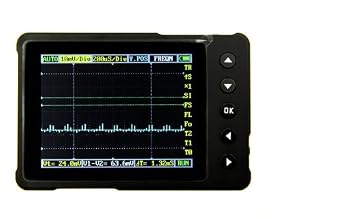
Something like this is more then acceptable for the Oscope:
41dkGOpEB9L._SX342_.jpg


http://www.amazon.com/Seeedstudio-TOL01241P-DSO-Nano-Oscilloscope/dp/B00BB4ETJW/ref=sr_1_3?ie=UTF8&qid=1438604755&sr=8-3&keywords=oscope

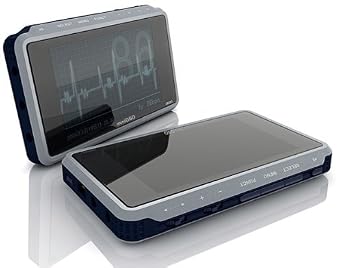
Or for more channels:
41x9G-GLG1L._SX342_.jpg


As long as the transducers are of decent quality and repeatable the system would be extremely valuable. Good sensors can be had in the $25-$100 range.
 
Last edited:

Barrymaxx

Well-known member
Joined
Aug 26, 2014
Messages
86
Love using fuel pressure to determine failed/failing injectors.

What I would really love is a cylinder pressure transducer that is built into a sparkplug. That makes ignition tuning really easy, making max power while ensuring there is no knock. Those are still super expensive last time I checked though.
 

T_Raven

Well-known member
Joined
Oct 17, 2009
Messages
209
Location
Idaho
You should watch the Scanner Danner channel on YouTube and consider buying his digital book. He goes over stuff similar to this and his electrical theory is spot on.

I'll check it out. I watch tons of automotive stuff on youtube, even scan tool reviews, yet some how it never occurred to me I could probably find some advanced diag stuff on there lol.
 

engineer2

Well-known member
Joined
Dec 13, 2009
Messages
11,798
Location
Chicago burbs
We used to do some this in a more primitive way in the 80's, and often the engine analyzer did behind the scenes voodoo to analyze per-cylinder cranking current draw and vacuum. Power balance was done without killing cylinders by looking at cylinder-to-cylinder time variations. See patent# 5,189,907.
I have a tester that will trigger each injector for a fraction of a second and then you read the pressure drop to find the bad injector. The PITA for all systems is having adapters to connect to various fuel systems.
Your method is great for seeing and fixing driveability issues that don't trigger a code. Syncing fuel rail pressure to #1 cylinder is a great idea.
 
To avoid these ads, REGISTER NOW!
Top Bottom