To avoid these ads, REGISTER NOW!

Venting Big Maxx

idleclamp

Well-known member
Joined
Nov 1, 2015
Messages
46
I finally got my Big Maxx heater hung. Now all I need is electricity, gas, and venting.

As far as the venting, I'm doing a vertical vent. It's going to come out the heater, turn 90 degrees up and then going through drywall and then some space before the roof. The space above the garage is not insulated yet, but will be soon. I bought the Big Maxx vent kit, and the instructions ****. I'm in Illinois and want to do it to code. The kit came with a 3"-4" 90 degree elbow, one B-vent pipe, two pieces of single-wall exhaust. It also has the roof flashing and vent cap, storm collar, and another piece called a gas vent fire stopper.

I need some help in figuring out if I need other parts and in what order they need to go in. After the 90 degree elbow, does it go B-vent through the drywall, then a box with gas vent fire stopper on top, followed by single wall duct through the flashing, then the storm collar, then vent cap? Can I secure the pieces together with high temp duct tape (the metallic kind)?

When it comes to wiring, can I install an outlet next to it and plug it in? Or does there need to be a switch to cut the power like a furnace?

Thanks in advance.
 

Attachments

  • Big Maxx install.jpg
    Big Maxx install.jpg
    151.8 KB · Views: 245
To avoid these ads, REGISTER NOW!
OP
I

idleclamp

Well-known member
Joined
Nov 1, 2015
Messages
46

I did read that thread previously, thanks. I'm looking for layman's terms in what the code requirements are and how I can keep it compliant. I hung the heater farther into the garage than I wanted to in order to have clearance straight up for the vent. In doing some reading, I believe the vent through roof needs to be at least 10' from another structure. Well, it's not going to be if I go straight up. Which means I need to go into the attic, angle it 45 degrees to move it farther away from the house. The kit I bought only has one piece of b vent 36" long and 2 pieces of single wall. Does the b vent go through the drywall to the attic? Do I need to buy more b vent or can I use the single wall before or after the b vent (really what does the b vent do that single wall won't?).
 

dfiler2

Well-known member
Joined
Dec 15, 2014
Messages
2,858
Location
NW Minnesota
The 10' rule used to be used as a rule of thumb for wood burning, I believe. Here is the chart you need and here is a link to the code. Keep in mind as you are reading you are installing a vent, not a chimney, people get those terms confused and follow the wrong codes. If you have a standard 4/12 pitch you only need to go up 1'.
 

Attachments

  • ventt.jpg
    ventt.jpg
    87.4 KB · Views: 232
Last edited:

mark11

Well-known member
Joined
Jul 8, 2013
Messages
135
You can use single wall coming out of the unit and transition to double wall before you go through the drywall. You'll need a firestop of some type when you go through the drywall to maintain the 1" clearance for the b vent. Once in the attic it's b vent all the way. it helps reduce condensation by having a cooler outer wall in the cold attic.
 
OP
I

idleclamp

Well-known member
Joined
Nov 1, 2015
Messages
46
You can use single wall coming out of the unit and transition to double wall before you go through the drywall. You'll need a firestop of some type when you go through the drywall to maintain the 1" clearance for the b vent. Once in the attic it's b vent all the way. it helps reduce condensation by having a cooler outer wall in the cold attic.


Awesome thanks! This is what I was looking for. If it needs to be B vent, I wonder why they even bother putting single wall in the kit?

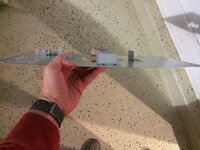
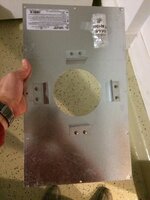
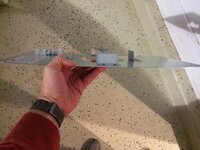
Also, I believe this is the fire stop. Based on the directions, it seems like i need to build a box in the attic and this will attach to the top of it. Therefore, keeping insulation and other things away from it. Right?

Last question (for now), does the hole in the ceiling drywall need to be a certain diameter bigger than the pipe?

faadc3cd00d47792885cbd9bb665972b.jpgdfc8abe93fdf4c14b035a579fce8972f.jpg


Sent from my iPhone using Tapatalk
 

Mr. Roboto

Well-known member
Joined
Dec 11, 2012
Messages
2,159
Location
New Hampshire
Awesome thanks! This is what I was looking for. If it needs to be B vent, I wonder why they even bother putting single wall in the kit?

Also, I believe this is the fire stop. Based on the directions, it seems like i need to build a box in the attic and this will attach to the top of it. Therefore, keeping insulation and other things away from it. Right?

Last question (for now), does the hole in the ceiling drywall need to be a certain diameter bigger than the pipe?

faadc3cd00d47792885cbd9bb665972b.jpgdfc8abe93fdf4c14b035a579fce8972f.jpg


Sent from my iPhone using Tapatalk

They give you a mix and match because the single wall pipe is significantly cheaper than the B vent. You will need to use the B vent in any "unconditioned space" by code. I chose to use B vent for the entire run because I wasn't sure how often I'd be running the heater. If I wanted to fire the heater up in an ice cold shop, I wanted to minimize the condensation.

You need a firestop where the pipe will penetrate your drywall. After you're in the attic space, you are free and clear. You will also need to cut the hole in the drywall to maintain the rating of your B vent pipe, which is usually 1" clearance to combustibles. Those tabs are typically designed to be attacked to the outside of the framing for your opening, therefore maintaining your clearance for you. The firebreak I used had a circular ring around it instead. This same clearance goes for your attic insulation as well. You can either build a box as you described, or there are commercially available UL listed "attic insulation shields" that may be installed.

Are you pulling a permit and having this inspected?
 
Last edited:
OP
I

idleclamp

Well-known member
Joined
Nov 1, 2015
Messages
46
I wasn't planning on getting a permit because I didn't think I needed one. I'm having an HVAC come and hook up the gas line. I might have him do the vent too. I was just trying to A: figure out what other parts for the vent were needed before he got here and B: If it was simple to do (which it seems like it is with the right parts), I might do the vent myself and have him inspect it before anything gets turned on.
 

Mr. Roboto

Well-known member
Joined
Dec 11, 2012
Messages
2,159
Location
New Hampshire
You almost always need a permit when installing these things. I needed 2, one for my gas line and one for the heater. It could really come back to haunt you (God forbid) if it were ever to cause a fire. Your homeowners insurance can decide not to cover you if you don't pull a pert.
 
OP
I

idleclamp

Well-known member
Joined
Nov 1, 2015
Messages
46
You almost always need a permit when installing these things. I needed 2, one for my gas line and one for the heater. It could really come back to haunt you (God forbid) if it were ever to cause a fire. Your homeowners insurance can decide not to cover you if you don't pull a pert.

Then I need to look into it. What category are these types of heaters?
 

dfiler2

Well-known member
Joined
Dec 15, 2014
Messages
2,858
Location
NW Minnesota
Where do you live, not every where requires permits? If I went to the courthouse and asked to get a permit to install a garage heater they would laugh at me.
 

mikescdn

New member
Joined
Nov 27, 2015
Messages
4
Location
Andover, MN
I just installed a big maxx in my garage and had to pull a permit, well didn't necessarily have to just thought it would be worth it as far as cheap insurance goes. it took me longer to fill out the paperwork online to get the permit then the what the inspector took checking it out. I'd say he was there for 30 seconds. anyways, on the b vent, I just downloaded the ameri-vent installation PDF and used that for my specs. it pretty much told me what to do to install it. From what i researched, code just says to use whatever the manufacturer of the b vent specifies.
Good Luck.
 

Steevo

Well-known member
Joined
Aug 18, 2009
Messages
8,738
Location
43.49600, -112.04300
idleclamp,
I used that same metal plate with the brackets on it where my B-vent for my BigMaxx penetrates the ceiling.
i-8Ljf8V4-L.jpg


On top, in the attic, I framed the box just outside those ears, then added a length of 8" single wall that fit snugly down inside the box.
I made the single wall just a little taller than the desired depth of blown-in insulation, and added a second one of those firestop plates (from Home Depot) on top that centered the B-vent in it, and prevented blown-in insulation from getting down inside.
You can see it in this picture:
(sorry about the big image, but to show the setup, I had to use the large size picture.
i-hvwqwzt.jpg


P.S., The building inspector loved it.
 
Last edited:

manwithtools

ALLIANCE MEMBER
Joined
Aug 24, 2015
Messages
13,647
Location
Lebanon, TN
I just downloaded the ameri-vent installation PDF and used that for my specs. it pretty much told me what to do to install it. From what i researched, code just says to use whatever the manufacturer of the b vent specifies.
Good Luck.

First of all, welcome to GJ. I'll expand on your first post a bit and try to clarify this for others looking for this info.

The requirement for venting is determined by the unit heater manufacturer - not the vent manufacturer. B-vent may be okay for some applications, others will require Category III vent. Read the installation instructions for the heater, also be sure you have the latest version of the instructions as requirements have changed. In other words; don't just download any old result Google gives for the PDF of the manual. Go to the manufacturers web site and get the latest version if you don't have the heater yet.
 
Last edited:

fastjohnny

Well-known member
Joined
Sep 3, 2011
Messages
261
Location
SW Michigan
Awesome thanks! This is what I was looking for. If it needs to be B vent, I wonder why they even bother putting single wall in the kit?

Also, I believe this is the fire stop. Based on the directions, it seems like i need to build a box in the attic and this will attach to the top of it. Therefore, keeping insulation and other things away from it. Right?

Last question (for now), does the hole in the ceiling drywall need to be a certain diameter bigger than the pipe?

faadc3cd00d47792885cbd9bb665972b.jpgdfc8abe93fdf4c14b035a579fce8972f.jpg


Sent from my iPhone using Tapatalk


I used 6" or 7" duct pipe (cant remember which) screwed to the tabs on the fire stop, extending up to the bottom of the roof deck, providing me with the 1" clearance around the outside of the B vent. Easier than building a box.
 
To avoid these ads, REGISTER NOW!

mikescdn

New member
Joined
Nov 27, 2015
Messages
4
Location
Andover, MN
Thanks for welcoming me. Wish I had found this place sooner. my install.

Guess I should have turned the pic the right way 'round
 

Attachments

  • 20151220_230621.jpg
    20151220_230621.jpg
    136.6 KB · Views: 180
Last edited:
OP
I

idleclamp

Well-known member
Joined
Nov 1, 2015
Messages
46
77a0d65b666f78fe739823c935f0b97a.jpg51e1f62d67fa77d7b106c5f6870f5ddd.jpg

I finally got my heater up and running. I ended up having my HVAC guy help me hook it up (well, more like I helped him). The thermostat location is temporary, but otherwise it's awesome! Just need to insulate the ceiling and I'll be good to go.


Sent from my iPhone using Tapatalk
 

BCreekDave

Well-known member
Joined
Dec 17, 2015
Messages
206
Location
Dayton, OH
I am currently in the middle of a similar install with a Modine Hot Dawg and most of the posts on here seem to say that the gas flow has to change direction at the sediment trap. Meaning, the flow to the heater makes a 90 degree direction change at the sediment trap to the go to the heater. I think this is so that any sediment in the gas will be more likely to fall out of the gas if it is forced to make an abrupt direction change. Your install doesn't appear to do this. If your HVAC guy is OK with the install this may then vary based on jurisdiction.


Sent from using Tapatalk
 

CNGsaves

Well-known member
Joined
Sep 26, 2012
Messages
13,233
Location
KS and OK
I am currently in the middle of a similar install with a Modine Hot Dawg and most of the posts on here seem to say that the gas flow has to change direction at the sediment trap. Meaning, the flow to the heater makes a 90 degree direction change at the sediment trap to the go to the heater. I think this is so that any sediment in the gas will be more likely to fall out of the gas if it is forced to make an abrupt direction change. Your install doesn't appear to do this. If your HVAC guy is OK with the install this may then vary based on jurisdiction.

^ ^ ^ +1 . . . . that Drip Leg does nothing. It needs fixed.
 
OP
I

idleclamp

Well-known member
Joined
Nov 1, 2015
Messages
46
So a 45 degree change isn't enough to serve the purpose?


Sent from my iPhone using Tapatalk
 

Mr. Roboto

Well-known member
Joined
Dec 11, 2012
Messages
2,159
Location
New Hampshire
So a 45 degree change isn't enough to serve the purpose?


Sent from my iPhone using Tapatalk

Even still, your 45 is after the drip leg. The change in direction needs to occur before the drip leg. I had my gas line Plummed almost the same way yours is now, and I had to change it. You can very easily fix your setup to comply, no sweat!
 

enrare

Well-known member
Joined
Oct 17, 2011
Messages
425
You almost always need a permit when installing these things. I needed 2, one for my gas line and one for the heater. It could really come back to haunt you (God forbid) if it were ever to cause a fire. Your homeowners insurance can decide not to cover you if you don't pull a pert.

This is exactly what I came across after purchasing a practically new HotDawg on Craigs list for a price to good to pass. I was going to DIY the install. After doing some reading here I decided to give insurance agent a call and he talked to the insurance company. In order to maintain my policy coverage my insurance company would require all aspects of the installation to be permitted and pass a city/county inspection PLUS be installed by a certified professional. My home owners insurance would then need all proper documentaion on file (I can't remember all the details but think my agent also had to come take photos...i could be wrong on this) and then re-adjust my policy rates for the "added liabilty". My agent strongly discouraged putting a gas heater in my garage after looking into this. He also said even if I had the heater permited and professionally installed but did not report it to the insurance company to avoid higher insurance rates, if there ever was a fire or ANY other type of claim (ex: hail damage to my roof, etc) and they discovered the unreported gas garage heater they could drop me and I'd be left $hit out of luck. I got quotes for running the gas line and istallation of the heater, etc. and in the end found to do it right and keep in compliance with all codes and be covered by my insurance was cost prohibitive. Plus everyone who gave me quotes all recommended to just install an electric heater due to the complexity and associated costs for installing a gas heater. In my situation there is only one spot in my garage where a gas heater can be installed to meet all the code requirments for heater unit clearances and venting. Plus my garage is on the opposite side of the house where all my gas service is, so to get gas to the heater was going to be very expensive. After running the numbers I figured I could run electric heat for many winters and still be money ahead, so I purchased a Fahrenheat hanging unit and still have the HotDawg sitting in my garage.
 

CNGsaves

Well-known member
Joined
Sep 26, 2012
Messages
13,233
Location
KS and OK
^ ^ ^ Utterly ridiculous !! :lol_hitti

Let's just go hide in corner and tremble like a scared kid.

A hanging NG heater in garage . . . properly installed & vented . . . is no different than any other NG appliance like dryer, stove or water heater.

I'll take your HotDawg NG heater if you want to get rid of it !! ;)
 

SuperD

Well-known member
Joined
Jan 6, 2013
Messages
88
Location
Okanagan BC
It I could please put a like on the Utterly ridiculous previous response I would.

If you think putting a gas furnace in according to to code will cause a "God Forbid" moment with your insurance company, well never mind....
Please install furnaces to code, ask your inspector for advice, he is your friend and will help because chances are he is an experienced installer himself.
 

BCreekDave

Well-known member
Joined
Dec 17, 2015
Messages
206
Location
Dayton, OH
I see that in most of these installations that the final gas connection to the heater is by a flex tube. Is this generally for convenience or is it required now by code? I built my house in 2003 and did the main furnace and water heater connections myself and hard plumbed the final connections. I did the gas cooktop with flex due mainly to convenience. Both types were signed off by the inspector without comment. Have things changed in the last ten years on this? I just like the looks of a well done hard plumb job but I suppose the flex is somewhat better for vibration or movement if the unit is not rigidly mounted?


Sent from using Tapatalk
 
Last edited:
OP
I

idleclamp

Well-known member
Joined
Nov 1, 2015
Messages
46
This is exactly what I came across after purchasing a practically new HotDawg on Craigs list for a price to good to pass. I was going to DIY the install. After doing some reading here I decided to give insurance agent a call and he talked to the insurance company. In order to maintain my policy coverage my insurance company would require all aspects of the installation to be permitted and pass a city/county inspection PLUS be installed by a certified professional. My home owners insurance would then need all proper documentaion on file (I can't remember all the details but think my agent also had to come take photos...i could be wrong on this) and then re-adjust my policy rates for the "added liabilty". My agent strongly discouraged putting a gas heater in my garage after looking into this. He also said even if I had the heater permited and professionally installed but did not report it to the insurance company to avoid higher insurance rates, if there ever was a fire or ANY other type of claim (ex: hail damage to my roof, etc) and they discovered the unreported gas garage heater they could drop me and I'd be left $hit out of luck. I got quotes for running the gas line and istallation of the heater, etc. and in the end found to do it right and keep in compliance with all codes and be covered by my insurance was cost prohibitive. Plus everyone who gave me quotes all recommended to just install an electric heater due to the complexity and associated costs for installing a gas heater. In my situation there is only one spot in my garage where a gas heater can be installed to meet all the code requirments for heater unit clearances and venting. Plus my garage is on the opposite side of the house where all my gas service is, so to get gas to the heater was going to be very expensive. After running the numbers I figured I could run electric heat for many winters and still be money ahead, so I purchased a Fahrenheat hanging unit and still have the HotDawg sitting in my garage.


What insurance company do you use? And are you sure your agent didn't hear you say thermonuclear instead of NG?


Sent from my iPhone using Tapatalk
 
Last edited:

BCreekDave

Well-known member
Joined
Dec 17, 2015
Messages
206
Location
Dayton, OH
Hmmmm this could be interesting. As I said in an earlier post, I am in the process of installing a Hot Dawg in my garage. I built the house in 2003 and in the garage is a small utility room that has the house furnace, water heater and the water softener. To pass inspection, the room had to have a metal door (with fire rating as a fire stop) AND a self closer. The self closer was so the NG water heater could not ignite fumes in the garage. I guess I'll find out.
 

ForceFed70

Well-known member
Joined
Apr 27, 2010
Messages
3,441
Location
BC, Canada
Late to this one - but for anyone researching their own install:

- Don't buy the Mr. Heater vent kit. It's poor quality and expensive. You local HVAC supply house will sell you much better quality components for the same or lower price. Chances are you're going to need to visit them for some extra pieces or something anyway.

- For a vertical vent, I recommend you install a "T" at the heater outlet instead of a 90* bend. Cap the end of the T that would face down. Just as easy to do, very little extra cost and 2 big benefits. 1st benefit is that you can remove the cap at the bottom of the T to inspect your vent. If it's a straight vertical vent you can easily look for any obstructions, etc. The bigger benefit is with moisture control, with the T in place vent moisture flows down and out the capped end of the T rather than back into the heater.
 

manwithtools

ALLIANCE MEMBER
Joined
Aug 24, 2015
Messages
13,647
Location
Lebanon, TN
Late to this one - but for anyone researching their own install:

- Don't buy the Mr. Heater vent kit. It's poor quality and expensive. You local HVAC supply house will sell you much better quality components for the same or lower price. Chances are you're going to need to visit them for some extra pieces or something anyway.

- For a vertical vent, I recommend you install a "T" at the heater outlet instead of a 90* bend. Cap the end of the T that would face down. Just as easy to do, very little extra cost and 2 big benefits. 1st benefit is that you can remove the cap at the bottom of the T to inspect your vent. If it's a straight vertical vent you can easily look for any obstructions, etc. The bigger benefit is with moisture control, with the T in place vent moisture flows down and out the capped end of the T rather than back into the heater.

Better yet, install a tee equipped with the condensate drain tubing connection in lower tee cap.
 
OP
I

idleclamp

Well-known member
Joined
Nov 1, 2015
Messages
46
In hindsight, I regret buying the Mr. heater vent kit. And for every reason forcefed70 said.


Sent from my iPhone using Tapatalk
 

BCreekDave

Well-known member
Joined
Dec 17, 2015
Messages
206
Location
Dayton, OH
I went with Selkirk b vent. Bought most of it at Home Depot. All except the T fitting. They didn't gave it in 3 inch and nobody local had it either. Very strange. Ended up buying it on eBay for 22.85 plus shipping.

I have run this now for about a month and have checked for condensate (popped off bottom cover plug) and have get to find anything. I guess that's a good thing. The county inspector was impressed by the install but actually questioned the tee. When I explained he said it makes sense but it actually isn't covered by any code requirements. He said it could be a potential problem with the bottom plug not screwed or at least taped in place. He let me slide on it.


Sent from using Tapatalk
 
To avoid these ads, REGISTER NOW!
Top Bottom