You are using an out of date browser. It may not display this or other websites correctly.
You should upgrade or use an alternative browser.
You should upgrade or use an alternative browser.
Vise Info Thread
- Thread starter FMC1959
- Start date

CRSINMICH
Well-known member
CRSINMICH
Well-known member
CRSINMICH
Well-known member

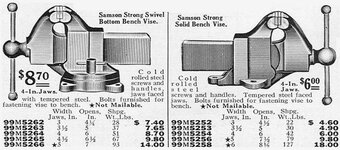
Linked to the brochure tab in the spreadsheet. Thanks Cliff!Might as well add this Franklin info too.
KMScott
Well-known member
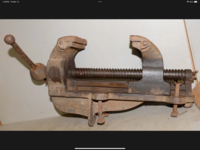
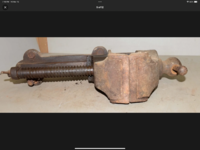
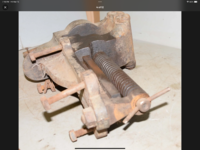
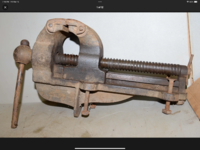
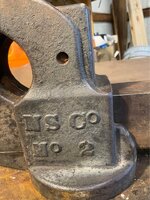
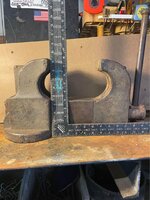
Mystery Vise
Any one seen one like this Before?
from the owner.
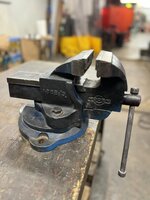
Estate find, never seen this design before, it came out of a rail yard, great restoration project, 7 1/2" wide jaws, opens 11", original mounting screws, opens and closes fine, over 185 pounds, for restoration
Any one seen one like this Before?
from the owner.
Estate find, never seen this design before, it came out of a rail yard, great restoration project, 7 1/2" wide jaws, opens 11", original mounting screws, opens and closes fine, over 185 pounds, for restoration
Attachments




Last edited:
Outlawmws
Well-known member
Looks like the jaw caps swing away? that's an awesome find...
CRSINMICH
Well-known member

CRSINMICH
Well-known member
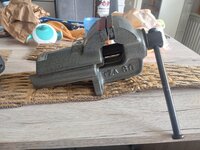
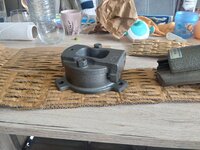
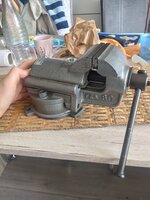
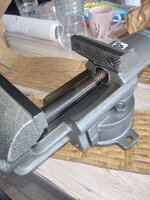
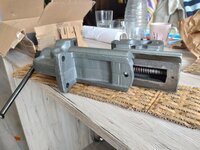
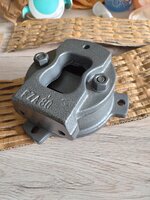
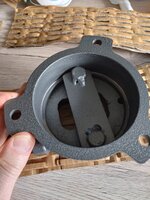
Hier ein Schraubstock aus Italien.
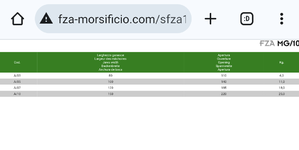
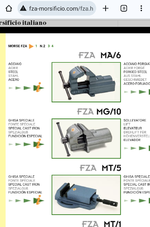
FZA MG/10 80mm Backenbreite.
Dieser Schraubstock wird noch produziert. Es besteht aus Guss Eisen. Nicht aus Guss Stahl.
Der Schraubstock ist gut und präzise, die Backen sind wendbar. Die Spindel ist verdeckt. Die Führung ist sehr präzise. Der Drehteller ist robust, aber eher schlecht konstruiert. Kein deutscher Standard.
FZA MG/10 80mm Backenbreite.
Dieser Schraubstock wird noch produziert. Es besteht aus Guss Eisen. Nicht aus Guss Stahl.
Der Schraubstock ist gut und präzise, die Backen sind wendbar. Die Spindel ist verdeckt. Die Führung ist sehr präzise. Der Drehteller ist robust, aber eher schlecht konstruiert. Kein deutscher Standard.
Attachments
-
 DSC_3374.JPG783.6 KB · Views: 17
 -
 DSC_3375.JPG808.3 KB · Views: 14
 -
 DSC_3376.JPG734 KB · Views: 15
 -
 DSC_3377.JPG796.4 KB · Views: 14
 -
 DSC_3378.JPG843.3 KB · Views: 13
 -
 DSC_3379.JPG734.6 KB · Views: 12
 -
 DSC_3380.JPG545.4 KB · Views: 12
 -
 DSC_3381.JPG725.3 KB · Views: 12
 -
 DSC_3382.JPG784.1 KB · Views: 13
 -
 Screenshot_20240323-130754~2.png39.3 KB · Views: 13
KMScott
Well-known member
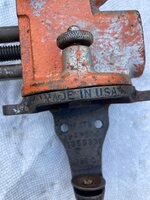
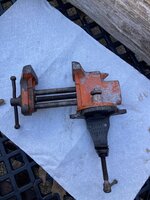
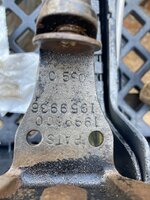
Stanley C-590 Clamp-on. 2-1/2" jaws that opens to 3".
Attachments
-
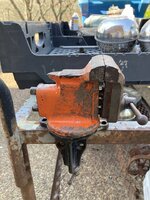 Stanley C-590-1.jpg128.1 KB · Views: 14
 -
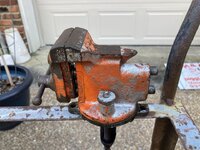 2Stanley C-590-6.jpg117.3 KB · Views: 9
 -
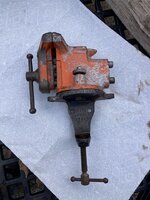 2Stanley C-590-7.jpg148.3 KB · Views: 6
 -
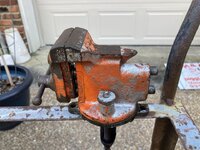 2Stanley C-590-6.jpg117.3 KB · Views: 6
 -
 2Stanley C-590-5.jpg148.9 KB · Views: 6
 -
 2Stanley C-590-3.jpg104.3 KB · Views: 6
 -
 2Stanley C-590-1.jpg153.8 KB · Views: 8
 -
 2Stanley C-590-8.jpg139.9 KB · Views: 22
Outlawmws
Well-known member
Here is a vice from Italy.Hier ein Schraubstock aus Italien.
FZA MG/10 80mm Backenbreite.
Dieser Schraubstock wird noch produziert. Es besteht aus Guss Eisen. Nicht aus Guss Stahl.
Der Schraubstock ist gut und präzise, die Backen sind wendbar. Die Spindel ist verdeckt. Die Führung ist sehr präzise. Der Drehteller ist robust, aber eher schlecht konstruiert. Kein deutscher Standard.
FZA MG/10 80mm jaw width.
This vise is still in production. It is made of cast iron. Not made of cast steel.
The vice is good and precise, the jaws are reversible. The spindle is hidden. The guidance is very precise. The turntable is robust, but rather poorly constructed. Not a German standard.
Outlawmws
Well-known member
One more pictureNoch ein Bild
KMScott
Well-known member
Awesome you can read Italian Outlaw. Thanks for the interpretation.Here is a vice from Italy.
FZA MG/10 80mm jaw width.
This vise is still in production. It is made of cast iron. Not made of cast steel.
The vice is good and precise, the jaws are reversible. The spindle is hidden. The guidance is very precise. The turntable is robust, but rather poorly constructed. Not a German standard.

Outlawmws
Well-known member
I can't read Italian nor much German (which is what it is) (1-1/2 years in HS did not stick...)Awesome you can read Italian Outlaw. Thanks for the interpretation.
But Google translate is my freind
Thank you for translation ! I think it could translated automaticly, but it wasnt.
Your welcome - No, the forum dose not auto translate, at least on Chrome for me...
RTM
Well-known member
Only if most of the page is in a different language, then chrome will offer to translate automatically.Thank you for translation ! I think it could translated automaticly, but it wasnt.
If I select your text, the copy paste ribbon bar that pops up will offer translate as a choice.
KMScott
Well-known member
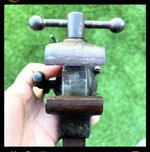
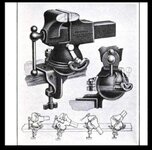
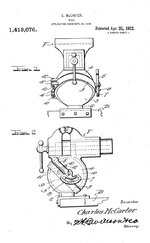
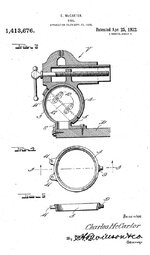
McCarter U2. 2” Clamp-on ball swivel vise.
Attachments



Outlawmws
Well-known member
That's a cool one Dr. Scott!
CRSINMICH
Well-known member
KMScott
Well-known member
CRSINMICH
Well-known member
More Bel-Kel Universal Vise information
Bel-Kel made other items beside vises. Their VELOCIPEDE looked like a thrill.
Attachments
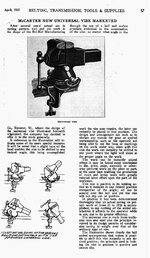
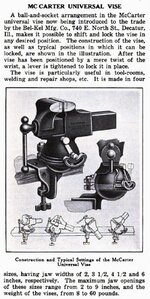
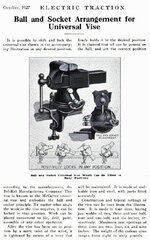


KMScott
Well-known member
Thanks CRS for your research on the McCarver vise. Do you think all 4 models are clamp-ons? I couldn't find anything mentioning that all models are clamp-ons.
CRSINMICH
Well-known member
KMS: It's hard to imagine a 60 pound clamp-on with 6" jaws but there is no mention of any models that were not clamp-ons either. The only items that mention Bel-Kel Universal Vises that I found were from either 1926 or 1927 although the company seemed to have lasted at least a few more years. The Great Depression was about to hit which might have had something to do with that.


Outlawmws
Well-known member
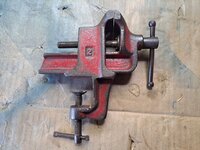
Here is a small Dawn "dawnette" made in australia, clamp on 2 inch jaws
I like that! Not sure its any sort of precision vise, but I like the styling!
CRSINMICH
Well-known member

KMScott
Well-known member
CRS, the drawing is in fractions, I guess another learning tool since machine shop equipment is in decimal. It’s like converting a metric drawing to English. Nice looking vise for sure. I would have ate this project up when I was in Vo-Tech during High School.
12vx2
Well-known member

CRSINMICH
Well-known member
12vx2: I can't identify the maker of that vise but here is some information on the type of vise it is. It's a combination vise (missing it's pipe jaws) based on this 1865 Dart patent. Several other makers used that style too. Notice that it has through-the-bench mounting. I'd say it's worth the asking price just for it's rarity and I already have one of that type. I hope this helps you.
Attachments


12vx2
Well-known member
I can see why someone would remove the pipe jaws, they are so massive they limit the usefulness of the vise except for clamping pipe.12vx2: I can't identify the maker of that vise but here is some information on the type of vise it is. It's a combination vise (missing it's pipe jaws) based on this 1865 Dart patent. Several other makers used that style too. Notice that it has through-the-bench mounting. I'd say it's worth the asking price just for it's rarity and I already have one of that type. I hope this helps you.
neophyte
Well-known member
Missing pipe jaws on the older US style combination vises seems to be very common.I can see why someone would remove the pipe jaws, they are so massive they limit the usefulness of the vise except for clamping pipe.
CRSINMICH
Well-known member
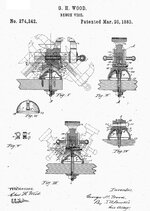
WOOD'S UNIVERSAL VISE
Manufactured by Hinsdale Machine and Tool
Attachments


Outlawmws
Well-known member
Made for the railways
N gauge?
KMScott
Well-known member
Thanks Ranger, getting harder to find vises to add. I should work on the England vices.