

You are using an out of date browser. It may not display this or other websites correctly.
You should upgrade or use an alternative browser.
You should upgrade or use an alternative browser.
Vise Info Thread
- Thread starter FMC1959
- Start date


Beerhippie
Well-known member
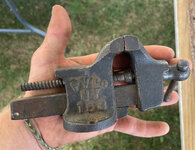
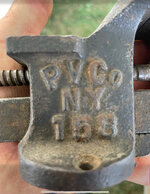
You lifted that with one hand? Duuuude!Prentiss 158. 2” jaws that opens to 2” and weights 2-1/2 lbs.
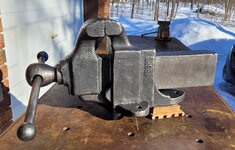
Haven't had time for this lately so catching up on posts.Here's a Rae 105 that I just finished putting back together. There is already one shown in the master spreadsheet, but I noticed that the data for mine is quite a bit different, so thought I would post my values as well.
Rae 105
- Jaw Width 5"
- Opens up to 7-1/2" (versus 6" in the spreadsheet)
- Weighs 70.1 lbs (versus 40 lbs in the spreadsheet)
- Country of Origin = Canada
Here is the vise in its as-found condition from FB Marketplace listing photo:
It was mounted on a workbench in a log cabin type outbuilding located on a homestead farm just south of Ottawa, Canada. The owner didn't know the history, other than it was there when he purchased the property, and that the original farmhouse dated back to the 1860s.
Here are some pictures after a bath in the electrolysis tank. It wasn't actually too rusty, but I find that electrolysis is a good way to remove paint as well as accumulated grease & grime.
I believe that this particular Rae vise dates back to almost the beginning of the company's history in the early 1900s. I found the number "16" stamped (upside down) into the back of the slide, which I believe is likely a date stamp designating that is was manufactured in 1916. The casting is also a bit crude/rough and the model # stamp 105 appears have been a nameplate that was screwed in place on the casting mould rather than being a permanent part of the mould.

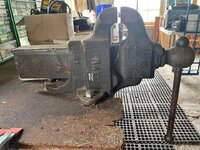

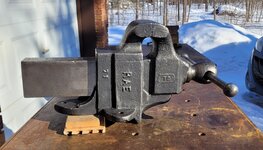
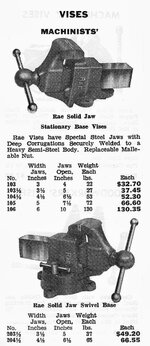
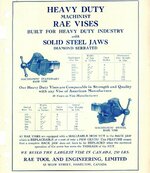
The difference in weight between Rae 105 models is due to the change from regular cast iron to Ductalloy(TM).
The older models were 72 lbs. As the attached cuts show, Rae started making bench vises at least as early as 1917 (Wood, Alexander, James catalog - earliest evidence I have) and the weight remained the same through the well-known 1950 Rae catalog. The 3rd attachment is from here on GJ and is dated 1979, though I don't know the actual origin, and it still shows the 72 lb weight. However, another 1979 catalog shows the Ductalloy version, and the weight for it is 40.5 lbs.
More on the possible 1916 date in a subsequent post.
Attachments

CRSINMICH
Well-known member
PRENTISS 158 - 163
from 1899 catalog

Great eye, @twagler!Just to close off this discussion about the similarity between vises made by the National Machinery & Supply Co. and the Rae Machine & Tool Works, both of Hamilton, Ontario, Canada, I finally got around to cleaning off and reassembling the Rae 104-1/2 which was pictured above in this post from two years ago. In addition to the casting marks being the same, I think I have spotted some "ghost letters" just below the RAE cast-in letters, which unless my eyes are deceiving me, are an N and an A (first two letters of NATIONAL). So, I think definitely made by the same company, just switching around nameplates, which I think has been pretty common practice over the years for many vise manufacturers.
Below are the pictures of what the RAE looks like now, including some shots of the "ghost letters".
Forum member skmbobon has done a lot of research in this rather specialized field of early Canadian vise manufacturers and has posted a lot of information about both Rae and National, both located in Hamilton,Ontario, Canada and both first starting to make vises somewhere in about the 1910 timeframe. National Machinery & Supply Co. was quite a short-lived company that operated only from about 1911 to 1921, and Rae vises were made first starting in 1914 with the original company in Hamilton and final production sometime around 1980 after changing ownership and being relocated to Orillia, Ontario.
One key bit of information that skmbobon discovered was from a Jan. 1922 edition of the Canadian trade newsletter “Hardware and Accessories” which mentioned that “the Rae Machine & Tool Works, Hamilton, who has taken over the manufacture of the National Machinery & Supply Co.’s planes and vises…” So, there is some possibility that this my vise was a transitional model, where the National casting moulds were still in use, but with modified mould nameplate inserted in the mould to strike over the NATIONAL branding and replace it with RAE branding. I’m guessing that this would date this
particular vise right in that early 1920’s time frame when the company transition was taking place.


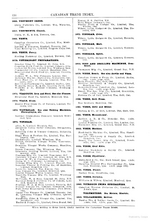
I attached the earliest evidence I have of Rae bench vises in a post just above, a 1917 catalog cut. The 1916 Canadian Trade Index (attached) does not list Rae under Bench vises, only drill press vises, and that is so far the earliest mention of the company doing any vise. Note that National Machinery & Supply is listed under "Bench Vises".
Can't rely entirely on directories though. Despite Rae bench vises appearing in the 1917 Wood, Alexander, James catalog, the 1920 Canadian Trade Index still only lists Rae under Drill Press vises.
All in all, the "16" stamp could very well be the date of production.
Rae and National clearly had some kind of relationship other than as straight-up competitors. The ghost lettering on Tom's vise adds to that assumption, and makes it a (so far) unique historical artifact. Some day, hopefully, I'll get to spend some time digging through archives in Hamilton and find some clear evidence of the nature of the relationship.
Attachments

CRSINMICH
Well-known member
skmbabon: I found this item some time ago but it got misplaced. It nearly escaped my notice that bench vises were one of the products of
Just in case you weren't already aware of it.
THE CHAPMAN DOUBLE BALL BEARING COMPANY OF CANADA
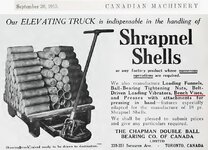
Just in case you weren't already aware of it.
Thanks Cliff! I'd found a similar 1917 ad from the same publication but nothing else so was beginning to think it was a case of marketing outrunning reality. Seeing another ad from 2 years earlier gives me reason to believe a Chapman vise may exist.skmbabon: I found this item some time ago but it got misplaced. It nearly escaped my notice that bench vises were one of the products of
THE CHAPMAN DOUBLE BALL BEARING COMPANY OF CANADA
Just in case you weren't already aware of it.
KMScott
Well-known member

KMScott
Well-known member
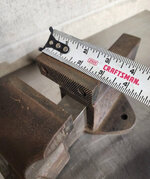
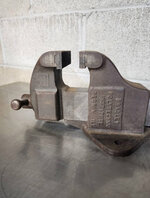
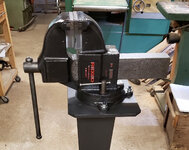
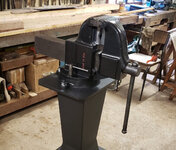
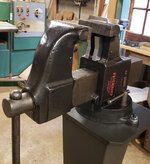
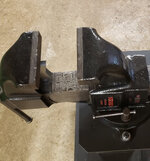
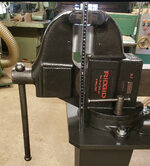
Ridged 60 CPN. 6” jaws that opens 10” and weights 162lbs.
Custom made soft pipe jaws on this Combination vise.
Custom made soft pipe jaws on this Combination vise.
Attachments

You've answered most of my question already, I'm looking at one in a similar condition with the bent slide and was curious if with some heat and pressure it could be safely straightened, seems so looking at your end result, Do you have any pointers on doing this ?Hmmm I seem to have a variant here compared to the one Autopts posted:
Picked up Sunday:
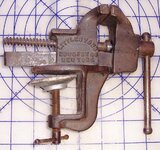
Littlestown HDW FDY CO No. 2
2" jaws and opening (jaw width is fractionally under 2", but no where near 1-3/4" opening is not...
NO cast in pipe jaws, and the anvil is square; not with a horn over the lead screw as Autopts appears to have?
well under 3 lbs, couple of ounces?
Well used compared to Autopts:
FYI that big "washer is aluminum and I left it off for the weigh in, left the 2 smaller cut steel washers.
Autopts:


Ah, I should have clarified , with out buying/using a hydraulic press which would make things easier. may Have to look around for a small cheapy again.
Last edited:
Outlawmws
Well-known member
You've answered most of my question already, I'm looking at one in a similar condition with the bent slide and was curious if with some heat and pressure it could be safely straightened, seems so looking at your end result, Do you have any pointers on doing this ?
Ah, I should have clarified , with out buying/using a hydraulic press which would make things easier. may Have to look around for a small cheapy again.
A press is obviously going to make the job easier. key is if the slide is gray CI or something more maleable. most of these I see can be straightened, a few were made really cheap with gray CI for the slide.
I'd get the slide bridging on the ends, pressure on the high spot. Can you rig a frame and use a bottle jack? with heat it should not be hard.
Thankyou, I've found a few small press's, think I'll just take the plunge and buy one, have been thinking of it for a while, should have bought one before I did all my vices, but was happy just to whack some handles straight - like everything you live and learn.A press is obviously going to make the job easier. key is if the slide is gray CI or something more maleable. most of these I see can be straightened, a few were made really cheap with gray CI for the slide.
I'd get the slide bridging on the ends, pressure on the high spot. Can you rig a frame and use a bottle jack? with heat it should not be hard.
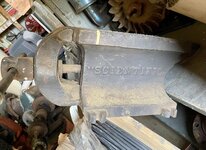
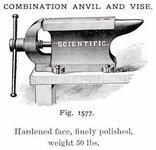
The other side of this model (currently for sale in Ontario) and an ad. More substantial than most combos.Foos Mfg. Co., Springfield, Ohio
"Scientific" anvil-vise.
@twertsy has a thread with a good bit of history.
Photo credit: Aaron Baird at Vintage Machinery.

Franklin Bench Vises
Buffalo, NY
A 1923 announcement of the bench line. See more company history here.
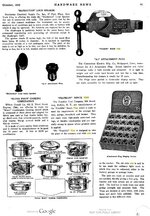
Buffalo, NY
A 1923 announcement of the bench line. See more company history here.
Last edited:

micahd1997
Well-known member
- Joined
- Apr 27, 2022
- Messages
- 271
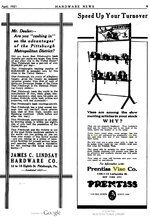
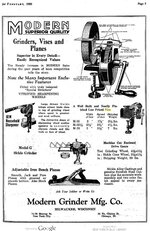
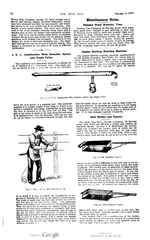
Thanks for sharing those, SK! Those publications definitely have some hidden gems of good information in themShapleigh Hardware
St. Louis, MO
1913 "Diamond Edge" bench vises
Probably a house brand made by someone else.

master Zoda
Well-known member
- Joined
- May 31, 2014
- Messages
- 165
Yankee 992 with 1992 swivel base. 2" jaws that open 2" weight with base 5.2lbs.
I actually acquired the vise a few years ago and the base a few weeks ago. When I bought the base I was sure it would fit my vise. At the time I didn't know the base is specific to the size of the vise so I did get lucky. Also both pieces are from the same period before the company was purchased by Stanley in 1943 I believe lucky again.
The base is pretty cool and I would say much more uncommon than the vise itself. An interesting note is that the base attaches to the bottom of the dynamic jaw. Once attached the dynamic jaw becomes the fixed jaw and the rest of the vise moves around it.
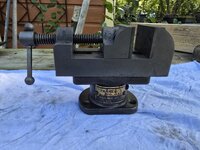
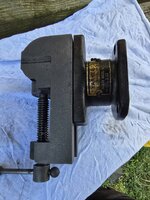

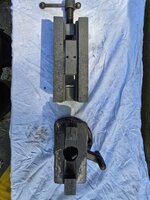

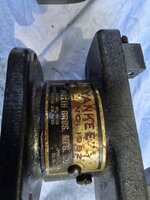


The last picture is the vise before I was motivated to get it cleaned up after finding the base. I am missing the V block pictured below I would like to get one made as I don't think I will be finding one ant time soon.

I actually acquired the vise a few years ago and the base a few weeks ago. When I bought the base I was sure it would fit my vise. At the time I didn't know the base is specific to the size of the vise so I did get lucky. Also both pieces are from the same period before the company was purchased by Stanley in 1943 I believe lucky again.
The base is pretty cool and I would say much more uncommon than the vise itself. An interesting note is that the base attaches to the bottom of the dynamic jaw. Once attached the dynamic jaw becomes the fixed jaw and the rest of the vise moves around it.
The last picture is the vise before I was motivated to get it cleaned up after finding the base. I am missing the V block pictured below I would like to get one made as I don't think I will be finding one ant time soon.
Last edited:
Outlawmws
Well-known member
New one for the spreadsheet Yankee 992 with 1992 swivel base.
That vise has been posted numerous times - did you look under "North Brothers"?
four.cycle
Well-known member
Wasn't Foos Mfg. Co. of Springfield, OH., acquired by Mast-Foos ca. 1880 ?The other side of this model (currently for sale in Ontario) and an ad. More substantial than most combos.
CRSINMICH
Well-known member
Foos Mfg. Co. was listed on p.20 of a 1905-1906 buyers guide as a manufacturer of an Anvil & Vice Combined. It's possible that Mast-Foos continued marketing the previous product. More research is needed.

CRSINMICH
Well-known member
More research has been done
Foos Manufacturing and Mast, Foos & Company are related but not the same company.
Both companies were formed by Foos brothers but were separate entities.
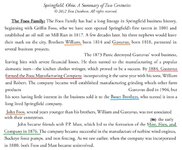
Thanks @micahd1997 . My eyes are peeled for anything about Canadian vise manufacturers but naturally I come across a lot about American makers. Nice when I can fill in a gap in the knowledge base here.Thanks for sharing those, SK! Those publications definitely have some hidden gems of good information in them
Enjoying your posts too, some great finds!
Great to see those big clear photos @master Zoda !New one for the spreadsheet Yankee 992 with 1992 swivel base. 2" jaws that open 2" weight with base 5.2lbs.
Great background as usual, @CRSINMICH
More research has been done
Foos Manufacturing and Mast, Foos & Company are related but not the same company.
Both companies were formed by Foos brothers but were separate entities.

master Zoda
Well-known member
- Joined
- May 31, 2014
- Messages
- 165
Well that makes sense but no I did obviously did not. Foolish mistake I should have know. Thanks.That vise has been posted numerous times - did you look under "North Brothers"?
micahd1997
Well-known member
- Joined
- Apr 27, 2022
- Messages
- 271
Much appreciated, SK! It’s always fun to interact with other folks who enjoy the history. I’ll keep my eyes peeled for any Canadian manufacturers or advertisements on my endThanks @micahd1997 . My eyes are peeled for anything about Canadian vise manufacturers but naturally I come across a lot about American makers. Nice when I can fill in a gap in the knowledge base here.
Enjoying your posts too, some great finds!
KMScott
Well-known member
Your fine Master Z. Remember the spreadsheet is for finding your vise and having the same vise listed in different titles makes it easy for locating the spec:s. Keep up the good work. KevinWell that makes sense but no I did obviously did not. Foolish mistake I should have know. Thanks.
And for anyone searching for a vise on the spreadsheet, trying to answer the classic question "What vise is this?":Your fine Master Z. Remember the spreadsheet is for finding your vise and having the same vise listed in different titles makes it easy for locating the spec:s. Keep up the good work. Kevin
- Use the Ctrl + F keys (on a PC) to open a text entry field near the top right corner of the screen.
- Enter a name or model number, it will show how many instances have been found.

- Use the up and down arrows beside it to navigate to each entry, which will be highlighted in green.
- Mouse over the link in the "Pictures of Vise" column. A little pop-up will appear with the link. Mouse over that and click on it to go to the relevant post.
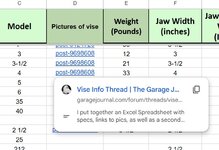
A number of vises will have the manufacturer's name in the "Vise Maker" column, then another name in the "Series" or "Notes" column. It was good knowing this when looking for entries for the Prentiss Shepard and Blake vises I posted recently.
If you haven't discovered the vise spreadsheet yet, it is here.
Note the tabs at the bottom, as there are also sheets listing vise brochures and catalogs, and vise patents.
Big thank you to @FMC1959 for starting the spreadsheet, @KMScott for taking the lead on maintaining it, and everyone else who contributes to such a great resource


Last edited:
CRSINMICH
Well-known member
Even more research on Foos Manufacturing Co.
(This is as far as I'm going to take it)
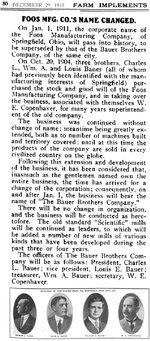
As stated above in post #4585, Gustavus Foos' sons sold the business to the Bauer Brothers.
The name of the business was changed to Bauer Brothers Company on January 1, 1911.
master Zoda
Well-known member
- Joined
- May 31, 2014
- Messages
- 165
No honestly I always get a kick out of finding something that isn't already posted. Rare as it is. I just jumped on the fact that Yankee was listed and there was no no.992. I knew Yankee wasn't the actual manufacturer but I scrolled rite past North Brothers to Yankee because that's what I call it.Your fine Master Z. Remember the spreadsheet is for finding your vise and having the same vise listed in different titles makes it easy for locating the spec:s. Keep up the good work. Kevin
Any who thanks I am still proud of my find and glad to post. I will look closer next time Outlaw thanks for calling me out.

CRSINMICH
Well-known member
"Walkess Off-set Vyce"
GJ member, jopy, posted a photo of this vyce on the main vise thread. Post #94881

KMScott
Well-known member
Thanks CRS. 6 different jaw widths on that offset Vyce. No spec:s on the Marketplace listing.
Something going on there thou, remarkedly similar to the Dawn offset made at Coburg, Vic, within 1km at the same time. Whether they were both licensed to produce the patent or someone was peeking over the back fence would be interesting to know.
"Walkess Off-set Vyce"
GJ member, jopy, posted a photo of this vyce on the main vise thread. Post #94881
CRSINMICH
Well-known member
KMS: The vyce item even gave spindle thread specs. 4 tpi square thread - and a BRONZE nut.
comal: jopy's post mentioned the patent date on the Walkess is the same as a DAWN off-set. I checked and it does match.
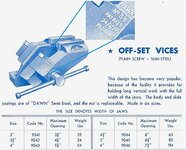
comal: jopy's post mentioned the patent date on the Walkess is the same as a DAWN off-set. I checked and it does match.
In 1942, the patent holder - Daniel Latham, mentioned in court, that he hadn't made enough from it and the patent was subsequently extended to 1945.KMS: The vyce item even gave spindle thread specs. 4 tpi square thread - and a BRONZE nut.
comal: jopy's post mentioned the patent date on the Walkess is the same as a DAWN off-set. I checked and it does match.
Beerhippie
Well-known member
Isn't it hard to use the tail of the slide as an anvil on those offsets?