To avoid these ads, REGISTER NOW!

Waekon patent infringement on Loadpro

Status
Not open for further replies.

MrMark

Well-known member
Joined
Jan 25, 2010
Messages
4,626
Location
Southern Cal.
I'll give you a real serious answer: because you are teaching the most basic possible stuff imaginable and acting like you just discovered where Jimmy Hoffa is buried or that there are martians on Mars. And, you have a dangerous tool in the wrong hands that no manufacturer would recommend its techs using. All those techs out there who have this, what is going to happen when an ECM goes out using it as Sullivan states it's safe? Especially when the warning is right on the Snap-on site and apparently in the directions the thing comes with not to put it on any ECM inputs?

Is there some conspiracy among the 200 engineers who all told you it "didn't work," as you stated?

Why don't you improve the tool by making it computer safe or add some cool bells and whistles?
 
Last edited:
To avoid these ads, REGISTER NOW!

whizzy

Member
Joined
Dec 19, 2012
Messages
17
And, you have a dangerous tool in the wrong hands that no manufacturer would recommend its techs using. All those techs out there who have this, what is going to happen when an ECM goes out using it as Sullivan states it's safe? Especially when the warning is right on the Snap-on site and apparently in the directions the thing comes with not to put it on any ECM inputs?
This is the kind of statement that makes me go round in circles and why i am asking questions about how safe it is to use ? as i am not an electrical engineer just a diyer wanting to learn, and at the same time save myself some money if i have any issues with my car electrically. :dunno:
 

JASTECH

Well-known member
Joined
Oct 21, 2009
Messages
2,671
Location
Gering, NE
Just thinking of what I could have used it on in place of my 1156 and gator clips. I would stick a pin through the insulation and then clip a gator to it. That was a few years ago Dan, don't know if you were around doing electrical. I will look at my local pawn shop and maybe get lucky to find one there.
 

signcrafter

Well-known member
Joined
May 9, 2012
Messages
12,469
No tool is a one tool does it all product. What I don't understand is why would you put the PPIII down when it's a totally different tool than yours? The PPIII is a good tool and has it's uses. Your loadpro is a good tool and has it's uses, but it's not the only electrical diagnostic tool you need in your box. I like your leads and really like your book.

Is your tester safe to use on 5volt computer circuits or not?

Is there anything your tool can do that the voltpro can't?

The voltpro has a glitch mode to measure things like ignition, is there a way to do that with the loadpro?

I can tell you are very passionate about your product, and I don't blame you. But I would rather see you explain why your product is better than the voltpro instead of getting so personal, especially with the post that was edited.
 

Dan_Sullivan

Active member
Joined
Nov 7, 2012
Messages
41
Location
Durham, NC
Why? Because it makes you look bad. I don't think you are here just trying to sell your tool. But if you are who cares you are adding value at the same time. I said in a post in this thread that the waekon guys were nothing but class acts to me. I am local to them and they drove to my shop and swapped out my defective volt pro. I will buy your tool and feel pretty good about it because I am helping out 2 small businesses at the same time. I wish you the best of luck in your endeavors. In my opinion just be a little more tactful in your references to the competition.

This is unquestionably true. I let my frustration get the better of me, which wasn't the best choice. If you factor in the way I was treated at the company when I was there, some of my frustration is understandable. But still...

It's just a really aggravating place to be.
 

whizzy

Member
Joined
Dec 19, 2012
Messages
17
Can either Dan if he is still around here ? or someone who uses the loadpro give me a straight answer please.Like i have said i know a bit about ohms law and how to use a dvm. If i were to use this tester with my dvm to find a fault in a wiring lighting circuit,fuel pump wiring ,central locking wiring on my car or any car with ECU/ECM etc would it be safe if i were to for example disconnect the wiring connector from a component at the headlamp , put my probes in the connector switch on the lights and load the circuit .Could i remove the fuel pump relay in the fuse box and test the fuel pump from the base of the relay the same way or would i need to access the connector at the fuel pump to be more accurate.Would this be safe to do and not cause any problems as long as i don't go shorting anything out.Sorry for such a basic description to most of you guys but i am trying to understand this as all this ECM stuff has thrown me a little. Could someone give me a straight answer please even though my knowledge is basic to you guys .
 

Brownsfan

Well-known member
Joined
Apr 16, 2012
Messages
5,975
Location
Cleveland Ohio
This is unquestionably true. I let my frustration get the better of me, which wasn't the best choice. If you factor in the way I was treated at the company when I was there, some of my frustration is understandable. But still...

It's just a really aggravating place to be.

Completely understand. If you were treated that way(I am not doubting you) next time take the high road and explain your tool with the same enthusiasm. In fact maybe even get rid of that video and start over. Your passion for your tool is what made me call my snap on guy and make sure he has one. I am a little concerned that itmay not be computer safe. Although I am smart enough to know what I am testing but not everyone is. So in the wrong hands it could do some damage? Like I said before I wish you all the success in the world.
 

richfinn

Well-known member
Joined
Jan 29, 2011
Messages
4,817
Location
Leeds, Yorkshire, England
No tool is a one tool does it all product. What I don't understand is why would you put the PPIII down when it's a totally different tool than yours? The PPIII is a good tool and has it's uses. Your loadpro is a good tool and has it's uses, but it's not the only electrical diagnostic tool you need in your box. I like your leads and really like your book.

Is your tester safe to use on 5volt computer circuits or not?

Is there anything your tool can do that the voltpro can't?

The voltpro has a glitch mode to measure things like ignition, is there a way to do that with the loadpro?

I can tell you are very passionate about your product, and I don't blame you. But I would rather see you explain why your product is better than the voltpro instead of getting so personal, especially with the post that was edited.

Dan is not just selling meter leads, its a system designed to make you think about the laws of physics.

1. the leads rely on being hooked up to a good meter (that meter may be capable of glitch capture (I dont know what they mean by that exactly but a Fluke 87/88 will either match or beat it).

2. Load-Pro works fine on 5v/8v ref (I use it all the time and outlined a CTS test earlier in the thread)

3. You can use a DVOM and Load-Pro to measure current/resistance/voltage and load the circuit without swapping tools, and have the benefit of MIN/MAX Hz a diode test and even Duty Cycle and temp all in one test instrument. When you need to test a starter or alternator circuit you can use the voltmeter conventionally to measure volt drop.

As regards logic probes, once you know how to interpret the voltmeter you dont really need a green and red light to tell you what to do. You can use the ammeter function of your DVOM as a 10/20amp fused jump wire (which takes care of the PP3s most useful function.

0.00v is continuity to ground (green)

12.00v (or any other voltage) is supply (red)

voltage "floating" about as you wiggle the test prods is open circuit

Your meter will also tell you the polarity of the leads with a "-" symbol

Imagine one tool in your hands that does it all (very nearly) ,Ok you might want a scope to look at some ECM inputs but you knew that already, and its not hard to unhook both ends of a circuit and use a known power supply at one end and the Load-Pro at the other to test wire integrity if you are worried about popping an ECM (this would be a good test for network twisted pairs etc.)

I,m sure there is more, but I,m still fairly new to the tool. I would sum it up as it helps you get "intimate" with your meter really quickly ;)
 

MrMark

Well-known member
Joined
Jan 25, 2010
Messages
4,626
Location
Southern Cal.
if you remove the fuel pump relay and jump it with a resistor the fuel pump is going to run, albeit slower than normal. If you check the voltage across that resistor jumper you are going to read some drop depending on the total system resistance and the current. Without knowing the total running resistance of that motor the voltage you read isn't going to mean much. If you mean to check the wire for resistance between the pump and the relay then you simply put your voltmeter across that wire with the pump running.

If you were determined to use the resistor to figure out the drop in the wire you could disconnect the pump connector and the relay to isolate the wire and put 12V on the wire and your resistor and read across your resistor.
 

Dan_Sullivan

Active member
Joined
Nov 7, 2012
Messages
41
Location
Durham, NC
All those techs out there who have this, what is going to happen when an ECM goes out using it as Sullivan states it's safe? Especially when the warning is right on the Snap-on site and apparently in the directions the thing comes with not to put it on any ECM inputs?

Actually, I did develop the Ghost and Zero voltage, LOADpro voltmeter-only method. It's in the patent, and Jimmy Hoffa is buried under the fifth stone from the left at Machu Picchu. Aliens did it.

I can't understand why you continuously ignore the fact that there IS NO voltage on an ECM input, so there's no reason to read voltage. The manual says "Not for ECM inputs" - Guys are using this tool on ECMs everywhere, and CAT, Volvo, UPS, Boeing, Air Wisconsin, Kenworth and Toyota have all adopted the tool. After the manual was written - very conservatively - people have figured out how to use the tool.

I've been using it, and teaching/selling it, for 10 years and have never had a single complaint. The amperage draw is voltage-dependent, so the load of 40mA/V isn't remotely dangerous.

I assume your mind's made up. I'll just wait for your comments if you watch the video.
 

richfinn

Well-known member
Joined
Jan 29, 2011
Messages
4,817
Location
Leeds, Yorkshire, England
Can either Dan if he is still around here ? or someone who uses the loadpro give me a straight answer please.Like i have said i know a bit about ohms law and how to use a dvm. If i were to use this tester with my dvm to find a fault in a wiring lighting circuit,fuel pump wiring ,central locking wiring on my car or any car with ECU/ECM etc would it be safe if i were to for example disconnect the wiring connector from a component at the headlamp , put my probes in the connector switch on the lights and load the circuit .Could i remove the fuel pump relay in the fuse box and test the fuel pump from the base of the relay the same way or would i need to access the connector at the fuel pump to be more accurate.Would this be safe to do and not cause any problems as long as i don't go shorting anything out.Sorry for such a basic description to most of you guys but i am trying to understand this as all this ECM stuff has thrown me a little. Could someone give me a straight answer please even though my knowledge is basic to you guys .

Yes you can test the entire circuit from the relay block.

Yes you unhook the headlamp probe the plug/turn on the switch and if you read voltage hit the switch to load the circuit.
 

MrMark

Well-known member
Joined
Jan 25, 2010
Messages
4,626
Location
Southern Cal.
Dan is not just selling meter leads, its a system designed to make you think about the laws of physics.

1. the leads rely on being hooked up to a good meter (that meter may be capable of glitch capture (I dont know what they mean by that exactly but a Fluke 87/88 will either match or beat it).

2. Load-Pro works fine on 5v/8v ref (I use it all the time and outlined a CTS test earlier in the thread)

3. You can use a DVOM and Load-Pro to measure current/resistance/voltage and load the circuit without swapping tools, and have the benefit of MIN/MAX Hz a diode test and even Duty Cycle and temp all in one test instrument. When you need to test a starter or alternator circuit you can use the voltmeter conventionally to measure volt drop.

As regards logic probes, once you know how to interpret the voltmeter you dont really need a green and red light to tell you what to do. You can use the ammeter function of your DVOM as a 10/20amp fused jump wire (which takes care of the PP3s most useful function.

0.00v is continuity to ground (green)

12.00v (or any other voltage) is supply (red)

voltage "floating" about as you wiggle the test prods is open circuit

Your meter will also tell you the polarity of the leads with a "-" symbol

Imagine one tool in your hands that does it all (very nearly) ,Ok you might want a scope to look at some ECM inputs but you knew that already, and its not hard to unhook both ends of a circuit and use a known power supply at one end and the Load-Pro at the other to test wire integrity if you are worried about popping an ECM (this would be a good test for network twisted pairs etc.)

I,m sure there is more, but I,m still fairly new to the tool. I would sum it up as it helps you get "intimate" with your meter really quickly ;)

That one tool is a multimeter. You are lauding a multimeter. The tool adds one simple test to a multimeter's arsenal. Let's keep this in perspective.
 

richfinn

Well-known member
Joined
Jan 29, 2011
Messages
4,817
Location
Leeds, Yorkshire, England
Actually, I did develop the Ghost and Zero voltage, LOADpro voltmeter-only method. It's in the patent, and Jimmy Hoffa is buried under the fifth stone from the left at Machu Picchu. Aliens did it.

I can't understand why you continuously ignore the fact that there IS NO voltage on an ECM input, so there's no reason to read voltage. The manual says "Not for ECM inputs" - Guys are using this tool on ECMs everywhere, and CAT, Volvo, UPS, Boeing, Air Wisconsin, Kenworth and Toyota have all adopted the tool. After the manual was written - very conservatively - people have figured out how to use the tool.

I've been using it, and teaching/selling it, for 10 years and have never had a single complaint. The amperage draw is voltage-dependent, so the load of 40mA/V isn't remotely dangerous.

I assume your mind's made up. I'll just wait for your comments if you watch the video.

Dan, I think the answer they are looking for is that a 5v/8v ref is actually an ECM output to a sensor rather than an input.
 

Dan_Sullivan

Active member
Joined
Nov 7, 2012
Messages
41
Location
Durham, NC
If you mean to check the wire for resistance between the pump and the relay then you simply put your voltmeter across that wire with the pump running.

The LOADpro goes across the load (the fuel pump in your example), because it's a substitute - load. Because there's only one load per circuit, the tool should drop 100% of applied voltage. If it doesn't there's resistance.

What if the wire in question is 120' long in a 400T coal truck?

The whole point is to read voltage, push button, know answer. You're welcome to do it all the hard way, but I can't imagine why you'd want to.


Dan_Sullivan

Active member
Joined
Nov 7, 2012
Messages
41
Location
Durham, NC
That one tool is a multimeter. You are lauding a multimeter. The tool adds one simple test to a multimeter's arsenal. Let's keep this in perspective.

This is the first comment you've made I can say I agree with. It does ONE thing. IMMEDIATE voltage drop without having to predict the problem.

I'm not sure why you've made this personal.

Any help here?
 

Dan_Sullivan

Active member
Joined
Nov 7, 2012
Messages
41
Location
Durham, NC
Dan, I think the answer they are looking for is that a 5v/8v ref is actually an ECM output to a sensor rather than an input.

The instructor at CAT asked for a 5V and 8V resistance chart so I did the calculations and there's no problem. We found a manufacturing flaw in a GM ECM 5V driver with the tool.

There's - no - voltage - on - ECM - inputs - so - there's - no - reason - to - read - voltage...
 

MrMark

Well-known member
Joined
Jan 25, 2010
Messages
4,626
Location
Southern Cal.
This is the first comment you've made I can say I agree with. It does ONE thing. IMMEDIATE voltage drop without having to predict the problem.

I'm not sure why you've made this personal.

Any help here?

Not personal, just didn't like your attacks on the competition and then me.

If that is the first comment I've made that you can agree with you have a serious problem. More exaggeration and hyperbole.
 

richfinn

Well-known member
Joined
Jan 29, 2011
Messages
4,817
Location
Leeds, Yorkshire, England
Just thinking of what I could have used it on in place of my 1156 and gator clips. I would stick a pin through the insulation and then clip a gator to it. That was a few years ago Dan, don't know if you were around doing electrical. I will look at my local pawn shop and maybe get lucky to find one there.

I told you those Old Codgers knew a trick or two :lol_hitti
 

MrMark

Well-known member
Joined
Jan 25, 2010
Messages
4,626
Location
Southern Cal.
Dan, I think the answer they are looking for is that a 5v/8v ref is actually an ECM output to a sensor rather than an input.

It's the current that kills you, not the voltage.

That computer output circuit also has an input too. That transistor driver couples the circuit to ground (so yeah, no voltage on that but that misses the point). How much current can that driver circuit take?
 
Last edited:
To avoid these ads, REGISTER NOW!

whizzy

Member
Joined
Dec 19, 2012
Messages
17
Yes you can test the entire circuit from the relay block.

Yes you unhook the headlamp probe the plug/turn on the switch and if you read voltage hit the switch to load the circuit.
Thank you that's all i needed.I am going to purchase it and the book and if i get stuck i am sure either Dan or anyone on this great forum will give me some pointers.After all everyone has to start from some where :beer:
 

Stick

Well-known member
Joined
Dec 12, 2007
Messages
2,302
Location
Alaska
I can't understand why you continuously ignore the fact that there IS NO voltage on an ECM input, so there's no reason to read voltage. The manual says "Not for ECM inputs" - Guys are using this tool on ECMs everywhere, and CAT, Volvo, UPS, Boeing, Air Wisconsin, Kenworth and Toyota have all adopted the tool. After the manual was written - very conservatively - people have figured out how to use the tool.

I've bitten my tongue in this thread until now, but I was just coming into the thread to post that exact point. I've actually been PM'd by a couple different members asking about that, just because of the drama in this thread (anything over three pages and all...). I've been a big proponent of the Load pro since it was called the TesLite, and was first talked about here on the forums and over at iATN. I've used the tool on wiring connected to ECM's with no failures, and I'll continue to do so during my diagnosis.

It's not rocket science...

Just think to yourself, "is what I'm testing a load?", and work from there. Lighting circuit? That's a load. Injector or coil driver? Again, both are loads. Horn or power window/door circuits? All loads. Coolant temp sensor? Fancy name for a temperature sensitive variable resistor, which would be a load. MAF sensor? That's a digital signal, so you wouldn't be testing it like a load...

The only failure I can see in this thread is two sided. On one side we have a very passionate inventor/instructor who can't let the criticisms go. And on the other side, we have some very vocal forum members who seem to be bashing a quality product because it "isn't safe" or doesn't have enough bells and whistles. I think the beauty of the product is just how simple it is. Sure you can do the same thing with a couple of cobbled together pieces and your existing leads, but for someone doing this type of work daily, the beauty is how it's packaged along with the fact that it cuts down on just how much stuff you have to drag out while testing.

For me, that more than makes it worth the money, for others it might not be, and that's enough said.
 

MrMark

Well-known member
Joined
Jan 25, 2010
Messages
4,626
Location
Southern Cal.
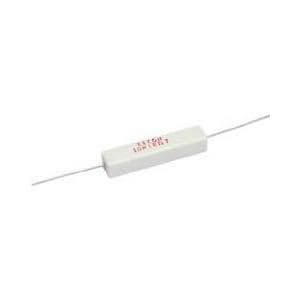
Hey Stick, I'll drag out the 25 ohm resistor when I need it and save the $56.88. Might even put some probe tips on it.


11svywBenGL._SL500_AA300_.jpg
 
Last edited:

whizzy

Member
Joined
Dec 19, 2012
Messages
17
It's not rocket science...

Just think to yourself, "is what I'm testing a load?", and work from there. Lighting circuit? That's a load. Injector or coil driver? Again, both are loads. Horn or power window/door circuits? All loads. Coolant temp sensor? Fancy name for a temperature sensitive variable resistor, which would be a load. MAF sensor? That's a digital signal, so you wouldn't be testing it like a load...
Wished you'd entered earlier :D Just the above quote has helped me understand a little more .Thank you.
 

MrMark

Well-known member
Joined
Jan 25, 2010
Messages
4,626
Location
Southern Cal.
I don't get that Stick. I don't think like that. I'm not testing a load, I'm testing a wire. I'm doing a "load" test on a wire. The actual load is irrelevant other than to predict how the circuit was designed to determine what replacement load should be used.
 

ATTappman

Well-known member
Joined
Apr 28, 2009
Messages
393
There's - no - voltage - on - ECM - inputs - so - there's - no - reason - to - read - voltage...

You mean when the circuit is open, right? Surely you don't mean there's always zero voltage at every input pin of an ECM with key on engine off or key on engine running?
 
Last edited:

JASTECH

Well-known member
Joined
Oct 21, 2009
Messages
2,671
Location
Gering, NE
Dan, Would the LoadPro do ok in my Fluke 45 and maybe another LP plugged into my Keithley 2000?
>
Thanks, JASTECH
 

JASTECH

Well-known member
Joined
Oct 21, 2009
Messages
2,671
Location
Gering, NE
RichFinn, LOL, ok, so I smell like BenGay sometimes and can pull my lower lip up between my eyes, But I can still fart and it's not wet!
 

Toolhorder

Well-known member
Joined
Nov 9, 2009
Messages
5,711
Location
Montana
Who put the rude tags on this thread??? Really not cool. If you don't dig his product don't buy it and go into a thread about something else why beat down the guy?

Tags
loadpro loser, sullivans snake oil
 

Danglerb

Well-known member
Joined
Sep 6, 2007
Messages
9,736
Location
SoCal
>
I should have "splained" it better. Would it benefit those 2 meters to leave them connected? I also use them on computers and HAM.

I don't know why you would need two LP, but until you push the button its just a probe like any other.
 

Stick

Well-known member
Joined
Dec 12, 2007
Messages
2,302
Location
Alaska
I don't get that Stick. I don't think like that. I'm not testing a load, I'm testing a wire. I'm doing a "load" test on a wire. The actual load is irrelevant other than to predict how the circuit was designed to determine what replacement load should be used.

It's not a matter of "thinking like that". It's just an easy way to figure out if supplying a load is safe or not if you're second guessing yourself. You're still testing the wire, but you had to unhook it from somewhere... :thumbup:
 

MrMark

Well-known member
Joined
Jan 25, 2010
Messages
4,626
Location
Southern Cal.
Good point, I see what you are saying now. To add to that the real way to tell if the test is safe, which you kind of hit on obliquely, is to know the resistance of the real load.
 

GeneralDisorder

Well-known member
Joined
Sep 20, 2012
Messages
306
Hey Stick, I'll drag out the 25 ohm resistor when I need it and save the $56.88.

The LOADpro isn't marketed toward people who have that kind of time or wish to keep track of individual resistors in a busy shop environment. Nor do I wish my customer to see me cobbling together a bunch of shifty looking bits to perform a simple voltage drop test. For $60 I can't even spend an hour of my time to put leads on a resistor or shop for the parts to build a LOADpro like device. I have work to do and money to make. Reinventing the wheel is fine for you DIYers but for us pro's its not a viable solution. Saving $60 isn't even on my radar - especially not a one time tool expense. I buy pizza and beer for the guys in my shop and it costs two LOADpro's.

GD
 

JASTECH

Well-known member
Joined
Oct 21, 2009
Messages
2,671
Location
Gering, NE
GD, Thanks, I was trying to reduce what I have I guess. There is still an O-scope space reserved on my bench when a good deal comes about. I need to read up on this LoadPro, PP3 ect. Long leads for tail light to dash with low resistance is needed at times. Hard to make a choice.
 
Status
Not open for further replies.
To avoid these ads, REGISTER NOW!
Top Bottom