To avoid these ads, REGISTER NOW!

Warped panel fix

TCG

Member
Joined
Dec 11, 2013
Messages
10
Location
Houston, Texas
I am currently working on a jeep project and decided to try my hand at fixing all of the rust and years of patch work on the body. I have never done anything like this before and since the jeep body was in such bad shape anything I did would most certainly be an improvement.

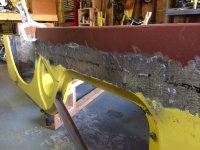
I started by welding in a panel just below the door opening. After reading many posts on the process I thought I could get through it without too many issues. I did everything you can imagine wrong. Welder was turned up to much, went to fast, did not allow for cooling between tacks, tacks were to close together, spent too much time in one area of the panel, bad grinding job on the welds, etc. Needless to say there is some warping.

Is there a remedy for this? Should I just get another panel and start over? Can I apply heat to certain areas?

Note that when I do the other side I will certainly apply lessons learned.
 

Attachments

  • IMG_1342.jpg
    IMG_1342.jpg
    140.2 KB · Views: 328
To avoid these ads, REGISTER NOW!

madosta

Well-known member
Joined
Sep 4, 2012
Messages
807
Location
Michigan
CJ-5? What do you want to achieve? Show/trailer queen? Slab some rock rails on it and wheel it! It's gonna get dinged up anyways (hopefully). Also get some flap wheels!

Sent from my Nexus 5 using Tapatalk
 
OP
T

TCG

Member
Joined
Dec 11, 2013
Messages
10
Location
Houston, Texas
CJ 5 1965, 134 Hurricane. It has been at the farm for a good while. All original, keeping it that way. Plan to use it for a hunting vehicle tooling around the place in E. Texas. Doing this more to learn how to do some body work than anything else. I have a 63 nova Convertible I will start next and wanted to learn a few things before doing this on something that matters.
 

rsanter

Well-known member
Joined
Dec 22, 2007
Messages
18,506
Location
visalia ca
if it was me I would just learn from my mistakes and move on.
wither practice with the bodywork hammer and dolly step and then some bondo now or cover it with diamond plate or bed coating

do better next time

bob
 

Stooge

Well-known member
Joined
Mar 24, 2013
Messages
3,533
Location
South Shore, MA
Hard to tell from the pictures at how much wave you have in there but I can see some gaps and burn through spots, but patch panels are usually pretty cheap, I'd probably just cut it out at the seem and give it another go. Go by the chart on your machine and pretend you are using the next higher (thinner gauge) level to keep your burn through to a minimum and just TAKE YOUR TIME and you should have no problems. Something I do with patch panels, instead of attacking the welds with the grinder disc , get some decent cutting wheels ( so they don't fly apart) and use the edge to grind away the welds. Will take significantly longer but causes a lot less damage to the surrounding material and lessens the chances of warping the panels from grinding heat.
 

stinkity stoink

Well-known member
Joined
Apr 8, 2007
Messages
731
Location
New Jersey
this is what practice is for. Try to hammer on dolly to stretch it back out again. It might be tough to save ,but it won't cost anything.
 

Kevin54

MEMBER EMERITUS
Joined
Jan 12, 2005
Messages
29,341
Location
Urbana, Ohio
Are you using flux wire or do you have shielding gas for your welder?

If it were mine, I would cut the panel out and put another one in. Get a closer fit before you start to weld it up. Look at a few YouTube videos on welding, or ask our resident expert MP&C about it. He has a lot of informative pictures on how to do it correctly.

Next thing......I was just reading on Hemmings yesterday about collectible vehicles, and the Jeep CJ5 is like the third on the list of being collectible. So you may want to take a little extra care when redoing yours. If I can find the article, I will post it up for you to read.

One thing about doing a long welded area like that, it's going to take quite a while to do it. I'm no welder and have to take some lessons myself before I cut out my bedsides to replace them, but I do know that if you go in one direction when welding that you can create some pretty good size waves in your metal. So you want to skip back and forth and let things cool to the touch in between. And if you don't get it all welded today, there is always tomorrow, or day after tomorrow to weld on it.

Good luck, check with MP&C, and make sure you take some pics of the progress.
 

madosta

Well-known member
Joined
Sep 4, 2012
Messages
807
Location
Michigan
There are complete tubs available as well but you say farm use... I'd just make it function well and not worry too much about the looks. BUT since you messed up here and a learning can you afford to do it again? It might save you more on your next project.
 

MP&C

Well-known member
Joined
Oct 21, 2009
Messages
4,403
Location
Leonardtown, MD
It sounds like you are using a Mig? My first question would be do you have full penetration welds on the back side? If you do, I would consider the welds good, and work to eliminate the warping by planishing. If you don't have full penetration welds, then vibration from road travel may likely crack welds back apart a couple years down the line.

Looking at your grinding pattern, this appears to be too coarse a grinding disc, one I would say is better suited for structural steel work. Too much speed, too coarse a disc will add more heat and distortion. Too large a pad will obscure the view of your work, and it is likely you will be hitting either side of the welds and thinning out the panel thickness. So in the future, I'd set that tool aside.

On the distortion you are seeing, the weld is shrinking as it cools, so it draws the metal that is surrounding it. Even on a fairly flat panel like you have, it will pull puckers. What normally occurs on a panel that has a slight crown (most door panels or quarter panels) as the weld and HAZ (heat affected zone) cool and shrink, they will tend to decrease the overall length along the weld. On a crowned panel this will show up as a valley in the panel as the "arc" of the crown shrinks and forms a straight line. This exact defect may not occur with flatter panels as you have there. But as a result of the weld and HAZ shrinking horizontally, and the adjacent unaffected areas above and below having a tendency to resist this movement, the area in between will start to buckle, or cause a wave effect. To visualize this effect, lay a piece of paper flat on a table and using your index fingers, push two corners of the paper toward each other. This simulates the shrinking caused by the weld. You'll notice the paper creates a wave or buckle as you push the corners together. This simulates the buckles in the area surrounding the HAZ. When reading your panel, don't be fooled as these buckles may be misread as a stretch, or high, but it's actually unaffected panel being manipulated/pulled by the adjacent shrinking.

To address these repairs, planish the weld/HAZ to stretch using hammer and dolly, removing the waves/buckles and also restoring the crown, if the panel has any. This repair will also very likely include some metal bumping (off dolly) to raise/lower highs and lows as the metal begins to relax. Hope this helps in reading the panel and some of the secondary effects (waves/buckles) of the shrinking that you'll see. Planishing the welds as you go will help to keep these effects in check, where it will be less likely you'll see all the waves and buckling. It's when you have all these forces/reactions combined (from not planishing) that some may have a harder time reading the panel....

Hopefully all that helps you to realize the forces that took place to get you where you are. My suggestion going forward is to check for full penetration welds. If you don't have it, start over. Re-welding from the back side will only add the problem, introducing more heat and more shrinking.. If you do have full penetration welds, (look at my shop thread in my signature, it shows some fender shaving with good examples of weld penetration with front and back views) then some planishing of the welds should stretch the area to remove the buckling you have between the weld and unaffected panel. I will say it is hard to see the damage in your pictures, so perhaps a straight edge alongside would better show the damage in any future pictures. Rather than discuss better methods here and throw too much at you at one time, let us know if you have full penetration welds so we can focus on the fixing phase of this repair. Once you get to the other side, or worst case replacing this one again, then we can address the fit-up and welding procedures in more detail...
 
To avoid these ads, REGISTER NOW!
OP
T

TCG

Member
Joined
Dec 11, 2013
Messages
10
Location
Houston, Texas
I really appreciate all the feedback. Great info. I am using a MIG with gas. I have decided to work the weld area with hammer/dolly, if I am unable to do some good there I will grab a new panel and try it again. I still have the other side so I want to try and get it right. I also went down to the local wrecking yard and grabbed an old fender that was pretty beat up. I am going to take the "practice" advice before my next attempt. Will cut out a couple of sections of the practice fender and weld them back in. Will also review some of the older posts, especially those from MP&C. I'll give you guys a look at my next go. Thanks much.
 

Zeke

Well-known member
Joined
Aug 13, 2009
Messages
17,176
Location
Long Beach CA, the sewer by the sea.
Whatever you do, you need to get the welds cleaned. Whether you plan on welding over some areas or filling in with filler, it has to be cleaned. I use a portable sand blaster on welds when I'm finished. I also will touch up with brazing rod in order to not keep welding and heating the panel.

If you have waves in the panel, learn how to heat and shrink. Eventually that can be worked out. I wouldn't start over because the metal you ground is pretty hacked up and uneven. It will be tough to weld to.
 

MP&C

Well-known member
Joined
Oct 21, 2009
Messages
4,403
Location
Leonardtown, MD
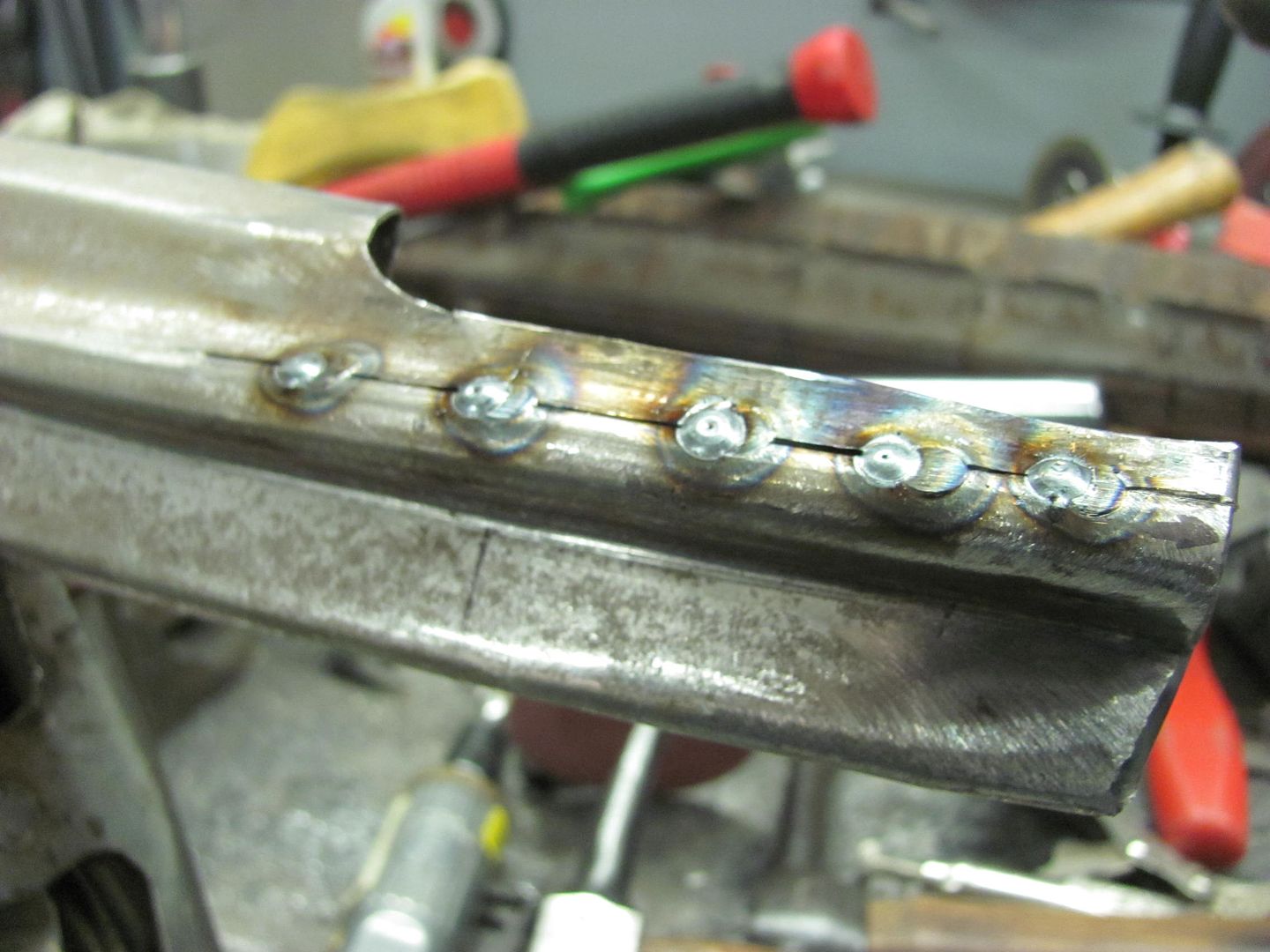
Just to show a sample of the welding with the Mig, and how the full penetration should look, I did this in the shop today:


Front view:

Picture409-1.jpg


Rear view:

Picture410-1.jpg


For your welder set up, I would worry less about turning down the heat for fear of warping. I always set my welder up to provide a full penetration weld first and foremost. This typically means setting the heat hotter than required for the thickness of your metal. If the welder is trying to burn back/blow holes, increase the wire feed speed. If you don't have enough filler going in for the heat applied, it will burn away the parent metal. So don't be so quick to turn down the heat when you're blowing holes, add more filler.. This would be a good starting point, and then fine tune from there. (fine tuning can also include the operators methods) Get a good weld and then worry about fixing any warping by planishing the weld and HAZ.


As an example for welder setup, this panel is 19ga cold rolled steel, and measures out to about .039 thick. These welds are done using ER70S-7, welder is set up for 14ga, or about .74 thick (heat enough for close to twice the thickness of the metal we're using per the machine's chart). Once your welder is set up to provide a full penetration weld, you control the heat and amount of weld by limiting the length of your "ZAP". I'd say these ones I did were just under a second in zap duration. Your welder adjustments and results may vary, but practice will get you there..


Picture407-1.jpg


The misconception to turn down the heat with no regard to weld penetration in an attempt to eliminate warping is going to give you a cold weld that sits up on top of the panel. (note the weld dots in the above picture flows into the parent metal very nicely, not sitting up high) Grind off one of those cold welds and you've lost most of the strength as it doesn't penetrate fully. Expose it to vibrations via road travel or off-roading, and it won't much matter how much weld is left there, with insufficient weld penetration it's coming apart.
 
Last edited:

MP&C

Well-known member
Joined
Oct 21, 2009
Messages
4,403
Location
Leonardtown, MD
Try using a cutoff wheel, it uses minimal contact area for minimal heat build up. Unlike flap wheels and sanding discs, it also gives you a virtually unobstructed view to insure you don't grind down the metal on either side of the weld, which risks thinning out the metal and weakening the panel. Here's a video of grinding a plug weld, shows the process with no heat build up....


Grindingplugwelds.mp4


Once the bulk is ground down to just above panel surface, then switch to a sanding disc to blend it in with the surrounding panel..
 
Last edited:

Jeeper

Well-known member
Joined
Dec 25, 2006
Messages
2,124
Location
Round Rock, TX
Keep at it TCG. This is a good thread and I am learning a lot. Keep us posted on your progress and thanks to the others especially mp&c for all of their teachings.
 
OP
T

TCG

Member
Joined
Dec 11, 2013
Messages
10
Location
Houston, Texas
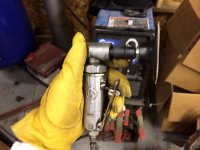
I really appreciate the all of the feed back. I have learned a lot and have seen some big improvements already. (One of the biggest was replacing the dewalt angle grinder with a small air angle grinder and a soft wheel.) I am using a Miller 180 Auto Set. I have put the machine in manual mode and played with the wire feed rate and voltage on both 18 and 22 g steel. Today I will concentrate on the back side of the weld and work on insuring I have adequate weld penetration as mentioned by MP&C. I will post some picks of practice pieces shortly. A couple of additional questions. i am using .030 wire. Would .024 be best for thin stock (<18g)? What adjustments should be considered when moving to lighter filler wire? I have my gas setting at 25. This seems to result in a flow rate of about 21-22 when the trigger of the gun is engaged. Is this about right? Should the flow rate be adjusted between higher and lower temps?
 

MP&C

Well-known member
Joined
Oct 21, 2009
Messages
4,403
Location
Leonardtown, MD
A wise man once told me, when trying to fix something try the cheap fixes first.

You have quite a few adjustments you can make, including technique, that will cost you nothing. .030 is well within the recommendation for 18ga. While many guys use .023/.024, I wouldn't rush out and buy it just because someone else is using it. I would say to hold that as your last resort in fine tuning your technique. Only if your machine is limited in it's adjustments should you need to change wire size. If you are buying new wire, I would suggest EZ grind by ESAB or ER70S-7. Both should be softer for easier planishing and easier grinding. The -7 has better wetting properties than the -6 you normally see, so it flows out better for less weld proud, which results in less grinding.

For your flowmeter, I believe somewhere just below 20 would suffice. I think I have mine set at 18.
 
OP
T

TCG

Member
Joined
Dec 11, 2013
Messages
10
Location
Houston, Texas
OK so here are some examples of what I did today. This is 18g steel panel. The first photo is of my angle grinder, big help. Second pic are some initial tacks with the machine in manual mode and just above the recommended voltage and filler feed rate setting These were quick hits on the trigger and felt much smoother than before. The 3rd pic is the back side. Can see some decent penetration but could likely be a bit better. The 4th pic is after a few more tacks and after an initial grind to insure the tacks connected. The 5th is the back of that. Again not sure I am getting adequate penetration. A bit more duration on the trigger using the same settings may have been better. The last pic is after grinding smooth. Still seeing some joint lines. May need to move the filler under arc a bit more to insure coverage of the joint area. Although its obvious I need significantly more practice, its a great improvement over the first panel on the jeep tub. Speaking of which is a lot straighter/flatter after the planishing.

IMG_1351.jpg

IMG_1352.jpg

IMG_1353.jpg

IMG_1355.jpg

IMG_1356.jpg

IMG_1357.jpg
 

MP&C

Well-known member
Joined
Oct 21, 2009
Messages
4,403
Location
Leonardtown, MD
On this picture from the back side, you can still see too much of the joint. This indicates not enough heat...turn it up just a bit until the weld "dots" make the joint disappear..

attachment.php


This one shows you have plenty of proud on the weld, so I wouldn't add any speed on the wire feed unless the extra heat burns back some of the panel. If all goes well you will get additional weld on the back side to fill the joint. Then control the amount of the weld by the duration.


attachment.php


Are you using an auto darken helmet?
 
To avoid these ads, REGISTER NOW!
Top Bottom