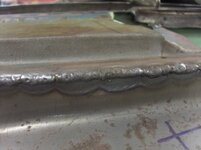
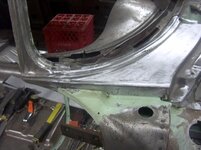
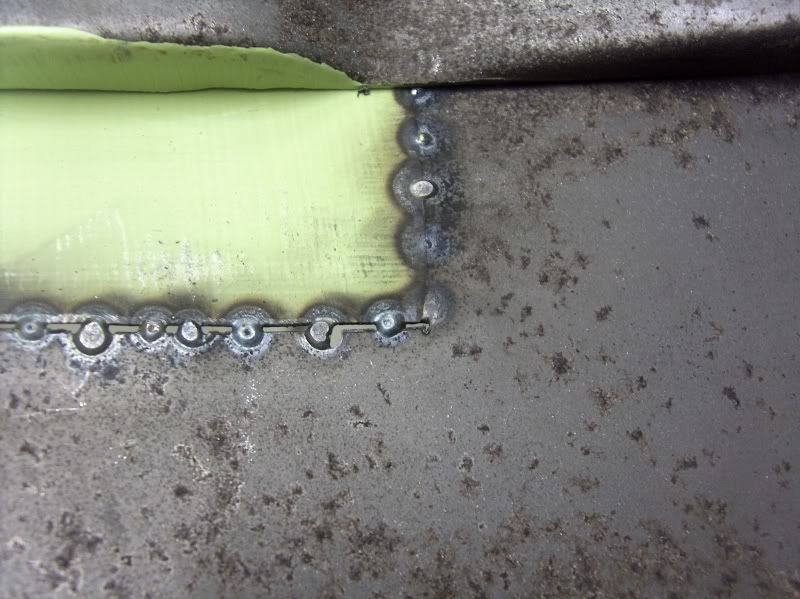
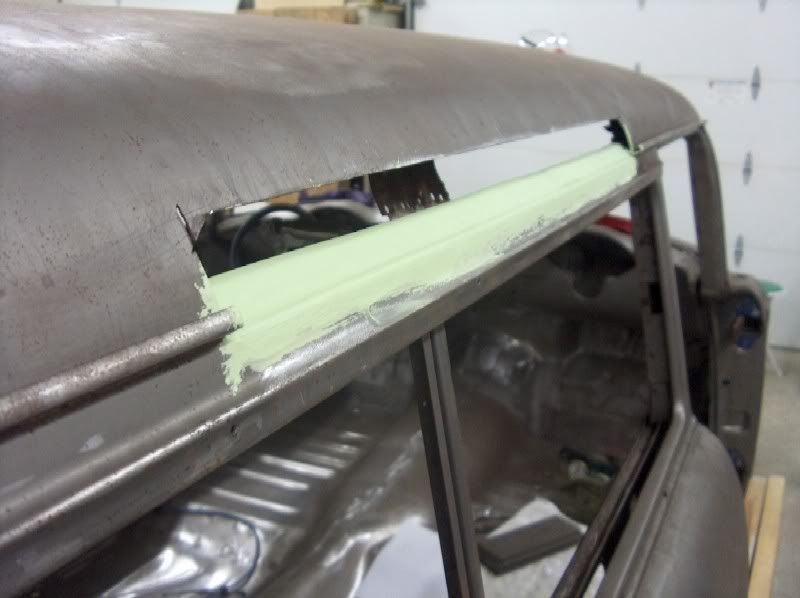
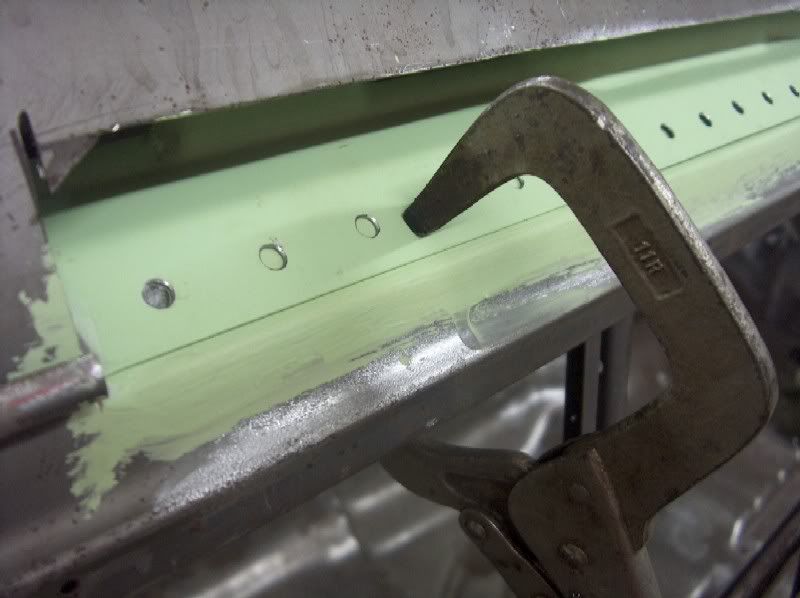
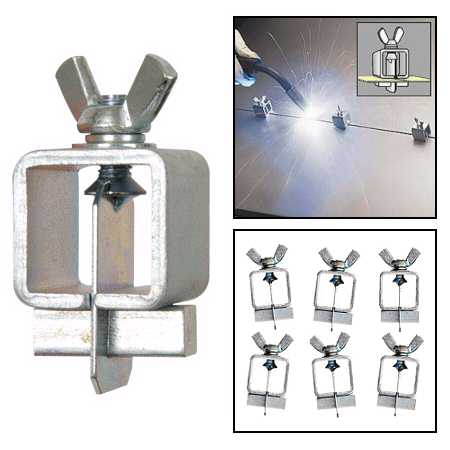
I've used the clamps you speak of, and in some cases find it easier to just use vise grip c-clamps. Depends on the scenario. Here's a couple of different versions I've done:
***************
Time to fix the driver's fender, but this one has more rust action and will need the lower area repaired. It had a galvanized patch spot welded over the rust hole, and we'll get that removed as well.

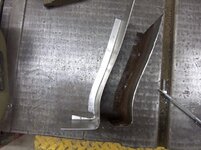
The repair piece is started by bending the rear flange, and cutting the relief for the lower bend.

The lower bend is made using a 1/4" radius die in the press brake, but can be done with incremental bends in a regular brake.


Some shrinking and stretching of the rear flange on the Lancasters will start to shape the rear edge.

Followed by some "gentle" bends in the press brake again to match that contour across the piece.
Test fit:

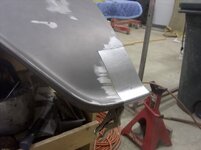
We'll save the welding for another night, need to sandblast the inner stiffener to make sure it's solid and epoxy prime all the stuff that will be hidden.
The inner fender brace was sandblasted, with no holes showing up in the pitted areas. A quick check with an ice pick showed it was plenty solid, so the brace was epoxy primed, as well as the inside of the repair panel.
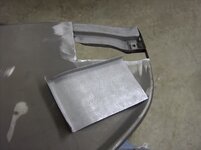

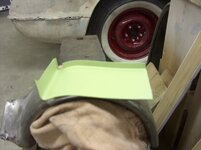
Once the primer has had a few days to cure, we'll start welding and finish the lower fender. The first order of business is to clamp the lower edge flush with the bottom, align the side, and tack weld in place.

It helps to planish out the weld tacks as you go, minimizing any shrinkage issues from the heat

With any welding you are doing, check the back side to insure full penetration, or adjust your machine accordingly. If you need to weld it from both sides due to lack of weld penetration, you just increase your chance of shrinking the area from all the excess heat.

Ground some welds off as I went, gets some of the excess out of the way for planishing the new welds.
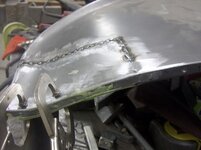


The inner fender brace is pulled in snug and plug welded to the lower fender. The rest of the welds are filled in, skipping around as usual to minimize heat buildup, and then ground smooth.


*******************
Time to continue on up front with the fender eyebrows. These parts were primed when we sprayed the inside of the door skins, so they were ready to go. First, both fenders had repairs done already, and the "caps" were slipped over the existing, and held on with tack welds and sheet metal screws. After removal I saw that part of the contour to the inside of the headlight was mashed in so the "cap" would fit better. (thanks for the favor)


The headlight mounting ring will be the next thing removed, but first, let's take some reference measurements on the holes.

Clamped in place and welded on
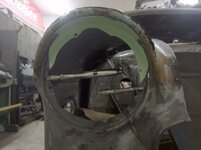
Next, to trim away some of the leftover eyebrow, so the new eyebrow can be
**** welded in place this time around.
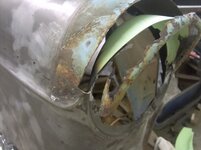
It was fitted and trimmed, fitted and trimmed. Repeat as necessary.


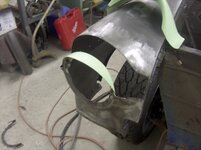


The tighter you can get the gaps, the easier it will be to weld.

All tacked in place, we'll finish it up another day.

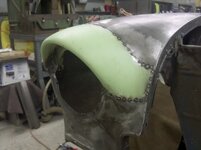
Well it's about time to play connect the dots, or should I say, let's use some dot weld technology! The existing tack welds from the initial install were planished and then ground down until the were just above the metal surface to get them out of the way. Then I tacked in between these again, and then started to fill in the gaps.
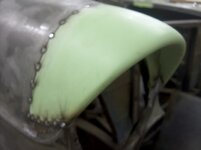

Don't forget to check your welder setup by observing for weld penetration on the back side.
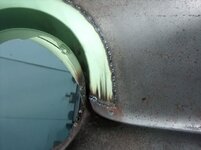
As you weld the heated area of the weld will have a tendency to drop down, almost as if forming a valley. This is caused by the metal shrinking, from the heat. Planish the dot slightly (as needed) using a body hammer with a small dollie pushing up from the inside, and it removes the majority of any deformity.


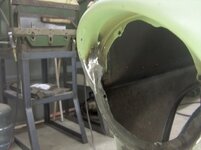

There are a few slightly low areas, but when the fender is removed next time, the welds will be ground smooth from the back side and some hammer and dolly work should straighten things out nicely.
***********************
AS you can see, the clamps worked well in keeping oddball shapes where they should be, especially when the vice grips just won't reach. One thing to keep in mind, heat from welding causes the metal to shrink, so if you tack weld on either side of one of those clamps, the panel may lock down on the clamp and make it difficult to remove. In this case (when using said clamps) start at one end with your tacks and work toward the other, moving/removing the clamps as you go, so they don't get "trapped" from welding on either side. Hope this helps, good luck!