To avoid these ads, REGISTER NOW!

Welding rods

aiellocassie3

New member
Joined
Sep 6, 2025
Messages
3
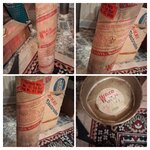
Hey there I am new, and I inherited a whole bunch of welding ro20250910_202033-COLLAGE.jpg20250910_201730-COLLAGE.jpg20250910_201603-COLLAGE.jpgds when I moved into my new home. Can anyone let me know if these are still good, and what a decent price range is if it salavgable? Thank you in advance since I know nothing about tools and the miscellaneous things that go-to them.
 
To avoid these ads, REGISTER NOW!

lilredex

Well-known member
Joined
Apr 29, 2006
Messages
5,949
Location
Toronto
Try out a few to see how they operate. If OK, you might get $1 / LB from an interested party, otherwise scrap price. The size is measured at the bare tip.
 

dr_clyde

Well-known member
Joined
Jan 7, 2009
Messages
6,425
Location
Holland, MI
Chances are good they're toast.

They might light up and leave a bead, but the flux absorbs moisture from the humidity in the air. This moisture will break apart into hydrogen and oxygen when exposed to the arc, causing hydrogen embrittlement in the resulting deposit. Hydrogen solubility in molten metal is higher than solid metal, so as the weld cools, the tiny hydrogen atoms will find their way out of the weld.

This usually will manifest as tiny bubbles or porosity, sometimes as bad as cracks. Aluminum is especially prone to hydrogen entrapment as the solubility difference is very high between the two phases.

You might be able to get a reasonable weld out of them if you bake them in a rod oven or toaster oven for a while before use, but I wouldn't trust them for anything you care about. Basically you need to heat them above the boiling point of water for long enough for any moisture to evaporate out of the flux. Above 220° for an hour or two will usually get them useable.

This is why structural steel welding codes require low hydrogen rods kept in a rod oven. Hydrogen embrittlement and cracks can cause failures in critical welds. 7018 is a rod designed for low hydrogen welding, and are supplied in hermetically sealed canisters. As soon as you crack the seal on the can, you're not supposed to let them fall below the specified temperature or they'll lose their low hydrogen qualities.

That said, if you're just wanting some practice rods, bake 'em and use them. They'll be fine for most non-structural repairs.
 
  • Like
Reactions: Opa

dr_clyde

Well-known member
Joined
Jan 7, 2009
Messages
6,425
Location
Holland, MI
Aa far as selling those rods, you probably will be lucky to get scrap price for them. No welder worth their salt will want old rods of unknown provenance.
 
To avoid these ads, REGISTER NOW!

gmcgeo

Well-known member
Joined
Mar 11, 2019
Messages
3,701
Would be interested to know how they weld.

But, I'm afraid they are no good.

I would not purchase them, better to see if you can use them or scrap them
 

Fixr

Well-known member
Joined
Dec 23, 2012
Messages
9,702
Location
SW VA
Any 7018 rods will no longer be usable for structural welds as mentioned above. But 6010, 6011 and 6013 often sit in farmers barns (or my garage) for years and still do the job well enough for general utility use where a weld failure wouldn't create a serious hazard. and for practice. A professional welder wouldn't want them, but I wouldn't call them junk or scrap.

If the OP has no plans to use them, they could be advertised on FB as "Old welding rods for practice" or something like that.
 

welder4956

Well-known member
Joined
Apr 8, 2010
Messages
3,059
Location
Birmingham, AL USA
The 5P and Fleetweld 37 are cellulose coated, not low hydrogen, so they should be fine. Those actually need moisture to keep the coating from flaking off and should never be stored in an oven or hotbox.

The E308-16 stainless rods and Jetweld 70 are both low hydrogen electrodes and will not perform well when exposed to ambient temps and humid conditions. I would toss those or use them for practice rods.
 

Ultradog MN

Well-known member
Joined
Jan 20, 2024
Messages
746
Location
Twin Cities
I use old rod and don't think anything of it.
The reason you should keep rod in an oven is to keep the moisture level in the flux down. Moisture causes porosity in a weld. I get that.
Worst case scenerio - drop a rod in a pail of water. Now take it out and weld with it. After a half inch of welding the rod will be so hot it will evaporate every bit of moisture out of it. If you are an outstanding welder and you are welding on Nuke submarines where each weld must be Xrayed to be 100% free of porosity don't use old rod or even new rod that has been out of the oven for more than a short time.
If you are welding on trucks, trailers, oil field equipment, gates, farm equipment and a thousand other things, don't use rod that you dropped in the water. But using rod that has sat open in a dry garage - even for years is okay. Because most of us are incapable of laying in a bead that is of Xray quality and don't grind out every start and stop with a carbide burr anyway.
if you are worried about it throw it in the oven in your kitchen and get it up to a couple hundred degrees for half an hour.
It will be better rod than you are a welder.
Jerry - an old stick man who used to be very good at joining metal with 7018 (and can still do it pretty well.)
 
Last edited:
To avoid these ads, REGISTER NOW!
Top Bottom