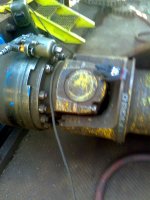
I'm with ya. I've read the reasons....still call ********.
While I'm sure Snap-On makes a good profit at that, I'm actually not sure their margins aren't better on the smaller stuff. I work in manufacturing, and if I was figuring a cost out at work, I'd look at it like this:
- steel cost is basically by the poiunds. Because it's length x width x height that gives volume and thus weight, a 3" socket being 6 times the size of a 1/2" socket would have very roughly 6x6x6=216 times the steel cost in it, assuming proportions are about the same.
- a 1/2" socket will be highly tooled and highly automated. Materials might be a large part of the cost. The volume isn't going to be there for a 3", so labour cost will probably involve a series of manual operations (cutting blanks, maybe some machining, then forging)
- not only is the socket heavier, but there's a good chance that more scrap is created, because low-scrap tooling is less feasible to invest in.
- setup is going to be huge. A 1/2" socket is probably made by the tooling all day long. So an hour to set up the process is divided by thousands of sockets, thus being spread out at a rate of pennies per piece. A 3" socket might be made in a batch of one or two or five. And with the lower amount of tooling, it might take a couple of hours of setup time per socket. Multiply that by $100 per hour.
Basically put 2 oz. of tool steel, chromium plating, and consumables to make a 1/2" socket, and a few minutes of labour, and your cost is going to be measured in dollars. Change that to many pounds of steel, maybe an hour of labour and several hours of setup, and no, it's not unreasonable to say it will cost hundreds or thousands. That's the difference that high volume makes - make it by millions, cost is $1, but the exact same product can be a hundredfold more expensive when made in hundreds.