To avoid these ads, REGISTER NOW!

What electrical code violations do you see the most?

To avoid these ads, REGISTER NOW!

slimpickins

Well-known member
Joined
Mar 27, 2011
Messages
2,404
Location
Canada
Here's an example of what I mentioned earlier. I hate DIY renos. Found this pic from 10 years ago.
Found this when we renovated the basement of a house we bought. That is an interior wall "insulated" with crumpled up newspapers, including around the wiring. The section of wall without newspapers is what I pulled out before thinking to snap a picture. The other side of the wall was a closet and I still wonder why there was a vented opening in the back of the closet.IMG_4062.S.JPG
IMG_4063.S.JPG
 

Jim greengo

Well-known member
Joined
Sep 3, 2018
Messages
7,415
Location
Behind my house
Here's an example of what I mentioned earlier. I hate DIY renos. Found this pic from 10 years ago.
Found this when we renovated the basement of a house we bought. That is an interior wall "insulated" with crumpled up newspapers, including around the wiring. The section of wall without newspapers is what I pulled out before thinking to snap a picture. The other side of the wall was a closet and I still wonder why there was a vented opening in the back of the closet.IMG_4062.S.JPG
IMG_4063.S.JPG
Now I have seen it all! Hahaha
 

freudianfloyd

Well-known member
Joined
Feb 12, 2015
Messages
3,432
Location
Nowhere
At the last house we lived in, there was an above ground pool. We tried to use the pool but it kept tripping the breaker. After a storm, the pool collapsed. When we finally removed the pool, I found regular Romex wire laying directly under the pool, not in the ground, and it was spliced with just wire nuts directly under the liner! This was after it was run from the house to the pool (around 100') and buried only a few inches below the ground. It's a good thing we got rid of it.
 

mark-NJ

Well-known member
Joined
Apr 1, 2019
Messages
773
Location
new jersey
Where do I even begin? Here's a few smiles for a Wednesday...

Some of my electrical buddies and I collect & trade pictures from jobsites. When you think you've "seen it all", something new comes along.

Not sure of the origin of this one, but this one might be my favorite.

1.) the obvious "WTF?" applies
2.) the black wire was long enough to reach the screw, so why the red extension?
3.) the wire is wrapped the wrong way around the screw so that "tightening" will 'walk' the wire off.

drywall screw.jpg


Lug-in-a-lug! Yeah! (no)

IMG_5949.JPG


I surrender.

junction box.jpeg


Now THERE'S an idea!

breaker-wire.jpg
 
Last edited:

Ilikeike

ALLIANCE MEMBER
Joined
Jan 8, 2015
Messages
2,452
Location
Northern Ca.
Here's an example of what I mentioned earlier. I hate DIY renos. Found this pic from 10 years ago.
Found this when we renovated the basement of a house we bought. That is an interior wall "insulated" with crumpled up newspapers, including around the wiring. The section of wall without newspapers is what I pulled out before thinking to snap a picture. The other side of the wall was a closet and I still wonder why there was a vented opening in the back of the closet.
IMG_4063.S.JPG
I've found this a couple of times myself.

According to the newspaper dates, it was common in the early 60s.
Before insulation was readily available at Home Depot I guess. lol.

Cool old adds in the papers too
 

mike93lx

ALLIANCE MEMBER
Joined
Dec 9, 2013
Messages
37,745
Location
Richmond, VA
Where do I even begin? Here's a few smiles for a Wednesday...

Some of my electrical buddies and I collect & trade pictures from jobsites. When you think you've "seen it all", something new comes along.

Not sure of the origin of this one, but this one might be my favorite.

1.) the obvious "WTF?" applies
2.) the black wire was long enough to reach the screw, so why the red extension?
3.) the wire is wrapped the wrong way around the screw so that "tightening" will 'walk' the wire off.

drywall screw.jpg


Lug-in-a-lug! Yeah! (no)

IMG_5949.JPG


I surrender.

junction box.jpeg


Now THERE'S an idea!

breaker-wire.jpg
Those are absolutely fantastic
 

slimpickins

Well-known member
Joined
Mar 27, 2011
Messages
2,404
Location
Canada
I've found this a couple of times myself.

According to the newspaper dates, it was common in the early 60s.
Before insulation was readily available at Home Depot I guess. lol.

Cool old adds in the papers too
IIRC the newspaper dates on these were late 60s, so it confirms your theory.
It's a wonder more places did not go up in flames.
Maybe the electrical code is waaaay over engineered. We could get away with a lot thinner wire and insulation if it didn't have to be engineered to withstand the stupid stuff people do! There would also be a few more Darwin awards that could be given out too! (y)
 

slimpickins

Well-known member
Joined
Mar 27, 2011
Messages
2,404
Location
Canada
At the last house we lived in, there was an above ground pool. We tried to use the pool but it kept tripping the breaker. After a storm, the pool collapsed. When we finally removed the pool, I found regular Romex wire laying directly under the pool, not in the ground, and it was spliced with just wire nuts directly under the liner! This was after it was run from the house to the pool (around 100') and buried only a few inches below the ground. It's a good thing we got rid of it.
There was a good heavy plastic liner between people in the pool and the wiring. So what's the problem???
o_Oo_Oo_O
 

nadogail

Well-known member
Joined
Jan 23, 2009
Messages
32,008
Location
Coronado, CA
And being 50 Hz, means it a mostly 3rd world voltage.
50 Hertz is not necessarily a Third World frequency. We use 60 Hertz in the USA, Canada, Mexico and parts of Japan.

England, and the European Continent run on 50 Hertz and are definitely not third world.
 

nadogail

Well-known member
Joined
Jan 23, 2009
Messages
32,008
Location
Coronado, CA
But, it's Alternating Current - both wires are positive and negative so it doesn't matter which goes where.:shocking:
Electronic Technicians are generally not trained in Electrical Wiring Practices. Marine Systems, in my experience, are not grounded like the systems in buildings.
 

Norcal

Well-known member
Joined
Mar 16, 2008
Messages
13,765
50 Hertz is not necessarily a Third World frequency. We use 60 Hertz in the USA, Canada, Mexico and parts of Japan.

England, and the European Continent run on 50 Hertz and are definitely not third world.
But Africa, the Middle East, China are.
 

bwringer

Well-known member
Joined
Jan 1, 2013
Messages
10,313
Location
Indianapolis
Just an amateur here, but my Mom's house (built in the modern era, 1995) was entirely wired with wildly inappropriate wire.

Weird **** like chunks of extension cord, recycled car wiring, lamp cord, and even thermostat wire carrying 120VAC to fixtures were all over the place. Not to mention all sorts of "creative" solutions. The tuna can junction box would have been a vast improvement, and there were at least three or four circuits with no breakers.

But the worst was that the whole place was wired with ancient 2-wire Romex. No ground conductor; just black and white. Someone apparently got a deal on a trainload of the stuff.

There were no actual grounds anywhere, even though they had installed modern 3-wire outlets and such. No clue how the shack ever passed any sort of inspection, but it was in one of those rural counties where everyone was related to everyone else...

Surprisingly, she and her husband managed to die of more or less natural causes, and not in an electrical fire.

The plumbing was a treat, if you like WTF. After years of unpleasantness related to the septic system, it was discovered that there was a pipe, a septic tank, and... no septic field. Just another pipe from the tank straight to the creek. barfo.gif

Nice place, other than the fact that it was a death trap and you crapped in the creek.
 
To avoid these ads, REGISTER NOW!

Chukster

Well-known member
Joined
Jan 25, 2012
Messages
2,595
Location
Cary, NC
First pic, of the outlets: This was posted in a local Nextdoor forum; the house is in a very upscale neighborhood; built in the late 80's & early 90's. This house owner experienced flickering lights in 2017, things happened, yadda yadda. Then recently outlets on fire. Yeah, look like cheapo outlets, backstabs were used, and not well. Like I said, very upscale neighborhood. Downscale electricians. I'm scared to think what the other houses in that neighborhood are like.

2nd pic: I found this in my daughter's house, built circa 1950, as she was moving in and we were checking out prior to blowing in insulation. Connection was wrapped with cloth electrical tape. Curiosity got the better of me, so I opened it up. Nope, not even soldered, just wires stripped and twisted. The line I cut off goes off to a ceiling box in the living room; I guess they always wondered why the ceiling fan light kit would flicker.

3rd pic is my effort to make life a little safer for daughter.
 

Attachments

  • Burned Outlets.jpeg
    Burned Outlets.jpeg
    62.9 KB · Views: 174
  • K's house electrical before 2.JPG
    K's house electrical before 2.JPG
    104.6 KB · Views: 154
  • K's house electrical after.JPG
    K's house electrical after.JPG
    60.7 KB · Views: 153

TurnipTruck

Well-known member
Joined
Aug 28, 2005
Messages
1,579
Location
Southcentral Alaska
D56B86F6-F865-45A6-9AEE-27003B8D5423.jpeg27B03D9A-26B4-4841-967B-08CF86D9E7AB.jpeg2C3139F7-D676-40D7-8E65-B921805CC7FE.jpeg8D1065A4-7B9B-4552-BF81-4203A1151821.jpegA378E97B-2ED3-45E9-AF1D-A917D66E2E60.jpeg762FDD5B-F470-407E-8442-B9865A9CFAF9.jpegD2C06F29-C385-4C92-87BF-8D0D0A0AB9DD.jpegAF35231E-B6C3-41A4-8F11-C4B3CA837C94.png39255E8E-CD41-40ED-B49D-BFB5C8A3AF4E.png
These are pics of most of what I discovered while remodeling my current house. Not one metal box had a bushing or a clamp. I found a total of three romex staples in the entire house. The aluminum siding was nailed with 2-1/2” nails, narrowly missing some 240v in one of the subpanels and I don’t know how those nails missed any wires. The sheetrockers had better luck; they only hit neutrals.
The outside light wires were run IN the siding, with a few patches.
The stove in the kitchenette had barely-taped split bolt splices under the floor and Polaris splices in the drop ceiling, with some polarity problems.
None of the four bathrooms had receptacles!
No outside receptacles!
 
Last edited:

Norcal

Well-known member
Joined
Mar 16, 2008
Messages
13,765
The reason for 400 Hz in aircraft was that it used smaller iron cores in transformers and windings for weight reduction.
Yeah, a 400 Hz, 7 1/2 HP, motor is about the size of common A/C condenser fan motor.
 

slimpickins

Well-known member
Joined
Mar 27, 2011
Messages
2,404
Location
Canada
This was the ceiling area of part of the old house I renovated a couple of years ago. This area had a false ceiling framed with 2x4s and this is what I found after taking the ceiling down.
How many code violations do you see here? Not just electrical, but plumbing, framing ....
There are so many issues here and you cannot even see them all in the picture. The smaller pipe going off to the left side was a lead drain pipe and it was just caulked into the ABS pipe at the wye.
P.S. the knob and tube wiring is sill in use in this picture. The taped off wires on the left were still live.

20200426_183947a.jpg
 

bwringer

Well-known member
Joined
Jan 1, 2013
Messages
10,313
Location
Indianapolis
First pic, of the outlets: This was posted in a local Nextdoor forum; the house is in a very upscale neighborhood; built in the late 80's & early 90's. This house owner experienced flickering lights in 2017, things happened, yadda yadda. Then recently outlets on fire. Yeah, look like cheapo outlets, backstabs were used, and not well. Like I said, very upscale neighborhood. Downscale electricians. I'm scared to think what the other houses in that neighborhood are like.

This thread is about code violations, but for the life of me, I cannot figure our how and why backstabbing receptacles and switches is NOT a violation. It's just a guaranteed failure, and an enormous risk of a fire waiting to happen.

I started having the same issues in my house a few years ago, and found some truly frightening evidence of overheating in several receptacles (I'm REALLY glad I didn't have any walls stuffed with newspaper as above...). Everything was backstabbed by the builders, so I shut down the whole house and spent a few hours replacing every last switch and receptacle, and making the connections the right way using the terminals. Pretty much every receptacle that had seen much use at all over the years had heat damage.
 

Citation

Well-known member
Joined
Jan 20, 2016
Messages
3,222
Location
Indy
Where do I even begin? Here's a few smiles for a Wednesday...

Some of my electrical buddies and I collect & trade pictures from jobsites. When you think you've "seen it all", something new comes along.

Not sure of the origin of this one, but this one might be my favorite.

1.) the obvious "WTF?" applies
2.) the black wire was long enough to reach the screw, so why the red extension?
3.) the wire is wrapped the wrong way around the screw so that "tightening" will 'walk' the wire off.

drywall screw.jpg
A company I worked for had an issue like that. We moved into a new office building. As part of the setup we had a small shop with a 240V compressor located in a service room. The compressor was purchased/installed separately from most of the new space renovations. So the "electrician" who installed the compressor spliced into the main panel feed. They didn't use a screw but they did slip the 10 gauge wire into the lugs. So now the 10 gauge wires to the compressor were fed by the 200 or what ever amp panel that fed the whole office. But it gets better. The run to the compressor was not in a conduit. Nope, it was supported by the suspended ceiling grid. This all was discovered when the new compressor was having issues (not sure if they were actually wiring related). The person looking at it noticed the wiring and then contacted our guy who ran the shop. I believe this was a subcontractor deal. We reported the whole mess to which ever regulators would be involved.
 

bwringer

Well-known member
Joined
Jan 1, 2013
Messages
10,313
Location
Indianapolis
Now you've all got me wondering... some of you seem to be walking code books, so let me ask: what have you seen that was technically within code but is obviously dangerous and stupid?

Or, to put it another way, what is so utterly stupid that no one even thought to address it in the written codes? The ingenuity of idiots never fails to astonish.
 

sparky 1971

Well-known member
Joined
Oct 9, 2018
Messages
7,982
Location
Central Iowa
Now you've all got me wondering... some of you seem to be walking code books, so let me ask: what have you seen that was technically within code but is obviously dangerous and stupid?

Or, to put it another way, what is so utterly stupid that no one even thought to address it in the written codes? The ingenuity of idiots never fails to astonish.
It's not as much dangerous as it is stupid, but I'm throwing out back stabbed devices.
 

sparky 1971

Well-known member
Joined
Oct 9, 2018
Messages
7,982
Location
Central Iowa
I'm here to learn. What's wrong with back stabbed devices? Prone to wire slipping out?
Yep. Given enough time, there will be enough heat cycles through them that they "let go" and everything on the circuit beyond the point the connection failed will quit working. We don't see it very often on switches, and now that we have LED's, may never see it again. Receptacles are the big culprits.
 

Norcal

Well-known member
Joined
Mar 16, 2008
Messages
13,765
The older backstabbed receptacles were a little more rugged then later devices still don't care for them, took out a large number of circa 1964 & 1968 backstab only receptacles, they were replaced only because the grounding contacts were unable to have proper tension on the plug.
 

Citation

Well-known member
Joined
Jan 20, 2016
Messages
3,222
Location
Indy
I'm here to learn. What's wrong with back stabbed devices? Prone to wire slipping out?
Do note that some outlets have a place where you can put the wire in from the back then use the screw to lock it down. Those aren't at issue. The problem is outlets where the wire goes in the back and is held in place with a spring clip. Lots of cases of those going bad. I discovered the evils of back stabbers in my last house. Once I understood why an unused outlet was overheating I rewired all of the outlets in the house. Most of the time that was little more than releasing the clip then putting the wire into the screw terminal on the side of the outlet.
 

KenC

Well-known member
Joined
Dec 20, 2009
Messages
2,590
Location
oklahoma
IMO, back-stabbed recepts can be OK if installed correctly. My definition of correctly though is more work than most folks using them will do. Pigtail every box. So that the only current seen by a recept is that used by the device plugged in, not any pass through load.

A friend of mine had an experience with them not installed correctly. Making coffee one morning and smelled something in the kitchen. After a few minutes he noticed smoke coming from an outlet that was not in use. You know the rest. Heavy duty coffee maker downstream from that one pulling its 15 amps through a worn out spring connection.
 

slimpickins

Well-known member
Joined
Mar 27, 2011
Messages
2,404
Location
Canada
I'm here to learn. What's wrong with back stabbed devices? Prone to wire slipping out?
Personally, I think those back stab connectors are stupid and dangerous!
I will echo what's been said here above and add my own story of my neighbor who called me because the outlet that his air window conditioner was plugged into was getting hot - not just warm - hot - too hot to hold your hand on for long!
I immediately felt the outlet on the adjacent wall (this was in his dining room) and it was hot too! I found two other outlets upstream that were also hot or warm. This was a fire waiting to happen - soon!
Scared the **** out of him! I spent the next couple of hours with him helping him to replace and rewire all of the outlets in his house. (some were worn out). After this, all the outlets, including the one the air conditioner was plugged into were stone cold.
  • I never use back stab (spring) locks.
  • I never use the screws on the outlets to join two wires. (same problem as back stabs - one loose connection compromises everything downstream, and it also makes it harder to seat the outlet in the box.)
  • I pigtail every outlet, except the last one in the line.
  • Wires get twisted with linesman pliers BEFORE the wire nut goes on.
The extra effort this takes is minimal and the benefits in safety are enormous! And the risks of NOT doing this are likewise enormous!
SP
 

wyliesdiesels

Well-known member
Joined
Aug 14, 2012
Messages
20,041
Location
Modesto, CA
Do note that some outlets have a place where you can put the wire in from the back then use the screw to lock it down. Those aren't at issue. The problem is outlets where the wire goes in the back and is held in place with a spring clip. Lots of cases of those going bad. I discovered the evils of back stabbers in my last house. Once I understood why an unused outlet was overheating I rewired all of the outlets in the house. Most of the time that was little more than releasing the clip then putting the wire into the screw terminal on the side of the outlet.
The outlets woth the hole on the back and a screw clamp are called back-wire

The backstab outlets are called quick-wire or push-wire
 

BMR179

New member
Joined
Aug 21, 2022
Messages
1
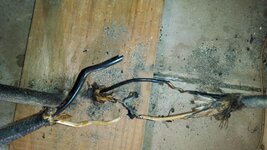
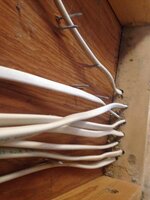
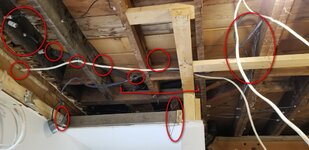
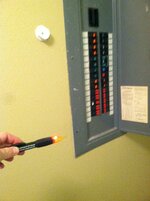
I am a licensed home inspector in Texas. Here are just a few pictures of some stuff that homeowners and contractors do:
 

Attachments

  • 1J1.JPG
    1J1.JPG
    123.2 KB · Views: 60
  • 2A91.JPG
    2A91.JPG
    92.5 KB · Views: 57
  • 2A991.JPG
    2A991.JPG
    92.1 KB · Views: 57
  • 6G2.JPG
    6G2.JPG
    215.2 KB · Views: 59
  • 065.JPG
    065.JPG
    402.7 KB · Views: 62
  • FPE in Shower.JPG
    FPE in Shower.JPG
    164 KB · Views: 61
To avoid these ads, REGISTER NOW!
Top Bottom