To avoid these ads, REGISTER NOW!

What is that numbered dial for on a drill/driver ?

Jacobson

Well-known member
Joined
Jan 11, 2014
Messages
1,482
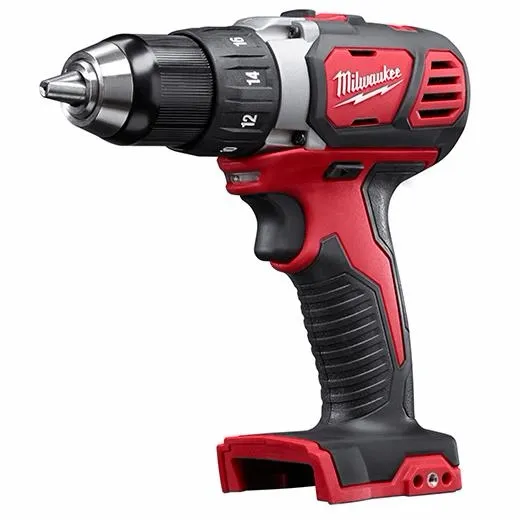
I have this.
What is a drill/driver?

I used it to remove a few screws, and it worked fine.
What is the driver part?

What is that numbered dial for?
I does not seem to do anything.

https://www.milwaukeetool.com/Products/Power-Tools/Drilling/Drill-Drivers/2606-20
2606-20.jpg
 
To avoid these ads, REGISTER NOW!

kctyphoon

Banned
Joined
Jun 9, 2014
Messages
9,102
Location
Jersey/Staten Island
You can basically use it to not overtighten or strip small screws. The drill will hit a predetermined torque setting (you pick it by twisting that ring) and the clutch will begin to slip when the screw hits that amount. The bit will no longer spin, and it will stop driving the screw. A loud clicking noise will be heard.

That's the driver function on a "drill/driver"
 

TalonFE

Well-known member
Joined
Mar 2, 2016
Messages
191
Location
New Mexico
It works just like the button you press at the stoplight when you want to cross the street.....nothing happens. Or the door close button in an elevator, which isn't connected to anything. SERIOUSLY....kctyphoon is exactly on target with an excellent explanation.
 

RKA

Well-known member
Joined
Jun 9, 2010
Messages
1,744
Location
NJ
The tool has two functions with small differences. You can select the function at the top using a switch selector.

Drilling function - Select your speed (usually slow for larger bits and high speed for smaller drill bits) and the chuck will turn without any form of torque limiting (unless you overload the motor and trigger some kind of internal temperature sensor). Use this for drilling holes.

Driving function - used to drive screws. Kctypoon outlined that function. The speeds are typically lower than the low/high speeds in drilling mode. It's helpful when you're performing repetitive operations. You can just pull the trigger and let the drill tell you when it hits the torque setting. For small short screws like those used in a door hinge, you might set it at 3, but if you're running 3" screws into a board on your deck, you might select 12 (the numbers will vary by drill so it can take a little trial and error to adjust for the screw and material you're working with). That longer screw will require much more torque to drive, but you want it to stop when the head goes into the decking. Many people unfamiliar with tools don't understand what this feature is for and just use the drilling function for everything. Those same people are pretty good at stripping out screw heads as well.
 

kbuhagiar

Well-known member
Joined
Dec 27, 2005
Messages
1,748
Location
Escondido, CA
It works just like the button you press at the stoplight when you want to cross the street.....nothing happens.

This is a popular misconception.

When you press a ped (pedestrian) button, you are not asking for a green light, you are notifying the intersection control module that a pedestrian is waiting to cross the street. This does two things: (1) overrides the vehicle activity monitoring devices ('loop detectors' or motion detectors) to provide an extended time period to allow pedestrians enough time to safely cross the intersection; (2) activate the pedestrian ("walk/don't walk") signals the next time the controller cycles over to your direction.

This could take anywhere from 2 seconds to two minutes or longer, depending on the time of day and how busy an intersection you are at, which leads many people to believe that the ped buttons do nothing at all.

Pressing the ped button will NOT (instantly or otherwise) give you a green light, although in most circumstances there will be a green light associated with the "walk" signal.

In all the years I worked with a large municipality's traffic control department, this was far and away the public's most common inquiry.
 
To avoid these ads, REGISTER NOW!
OP
J

Jacobson

Well-known member
Joined
Jan 11, 2014
Messages
1,482
Ok, so what driving a screw, I will keep it on a low number, and see how far the screw goes in. If it stops too early, I need to increase the torque.

I now also see there is a selector from drill to drive mode.
I'm not even sure what mine was on.

What is a hammer drill ?
 

PartsGuy

Well-known member
Joined
Oct 18, 2018
Messages
385
Location
Jamestown, NY
Hammer drill.... combination tool designed for driving nails.
Drill a pilot hole with the pointy end, center nail over drilled hole. Flip tool over and pound the **** out of the nail with the blunt end.
 

kctyphoon

Banned
Joined
Jun 9, 2014
Messages
9,102
Location
Jersey/Staten Island
Ok, so what driving a screw, I will keep it on a low number, and see how far the screw goes in. If it stops too early, I need to increase the torque.

I now also see there is a selector from drill to drive mode.
I'm not even sure what mine was on.

What is a hammer drill ?

A Hammer drill is for drilling into masonry. Brick, concrete, ect.. the function can be turned on or off with small handheld drills that offer this feature. This is an additional feature that a more expensive or a higher tier drill will offer. it applies a percussion force downward towards the hole to help chip and break up what you are drilling into for faster drilling. (Think ‘hitting a chisel with a hammer’) Masonry drill bits are a speciality bit with a chisel on the tip. You wouldnt use that function to drill into on anything else that wasnt masonry. The hammer function offers no benefit for driving screws either. It will just make noise. Even though they may sound similar, a hammer drill and impact driver are completely different tools.

For clarity - a hammer drill is also a “drill/driver”. It just has one more feature (the hammering option).

The difference between a hammer drill and impact driver is the direction the “hammering” force it applied. Hammer drills “hammer” downward towards (into) the hole you are drilling. Impact drivers are just like impact wrenches used to work on cars. They “hammer” in the direction the tool is rotating. Clockwise or counter clockwise only, never down like a hammer drill. Their hammering is meant to apply force to drive or remove a fastener like a screw or nut. The hammering of an impact driver will also not twist your wrist, while a hammer drill can easily twist the hell out of your wrist if the bit suddenly binds up.

There are THOUSANDS of videos on YouTube that can help you learn about tools, and its sometimes much easier to understand with someone actually giving a demo with an explanation.

For the record - you dont ‘NEED’ to use the clutch on the drill to drive screws. You can easily just leave the drill in ‘drill’ mode, and just use the variable speed trigger and your eyes instead.
The real benefit of the clutch is for driving small screws, to protect a powerful drill from stripping the head on a delicate small screw. Or - if you were trying to drive multiple screws (or say a bolt with the use of an adapter) - the clutch setting will keep the drill from twisting the hell out of your wrist when the fastener hits a dead stop. (Picture a nut bottoming out on a bolt). Say also - you were driving multiple fasteners across one surface, and you had a need for every fastener to be about as tight as each other - you ‘could’ use the clutch as a simple way to keep one fastener from being much more tight than all the others. In other words, every screw or nut would be about as tight as each other if you were to use the same clutch setting on all of them.

A drill would not be the ideal tool to use for this - but say you had to install a gasket between two pieces of metal (a rear diff cover say) - and there were 10 bolts holding the cover on, with a gasket underneath it - you ‘could’ run down every bolt with the drill using the clutch - and they would all be ‘ABOUT’ as tight as each other - preventing one bolt from being way too tight that might encourage a leak from the gasket. Again - a drill is not the best tool to use - but you ‘could’ do it..

The clutch setting on a drill is really to protect one of two things - either your wrist from being twisted, or a small screw from being stripped. You’d only really use it when installing a fastener, not removing. It allows you to choose how much maximum force the drill can physically apply at any given time.
 
Last edited:

BarryWells

Well-known member
Joined
May 26, 2019
Messages
647
Location
In the mountains
It's for people who occasionally might run drywall with the wrong tool ( One of those)
I hate the things(but have three).It't like the "impact" portion. Great for a girl hanging pictures in a block wall. Useless for a real carpenter. Thats why God invented rotary SDS hammers.
 

Parrothead

Well-known member
Joined
Apr 27, 2014
Messages
5,346
Location
Earth
It's for people who occasionally might run drywall with the wrong tool ( One of those)
I hate the things(but have three).It't like the "impact" portion. Great for a girl hanging pictures in a block wall. Useless for a real carpenter. Thats why God invented rotary SDS hammers.

Hey now. Haha. Actually I used my 18v Dewalt Hammer Drill to install pallet racking in a factory. Still there and upright 15+ years later. I did use quite a few batteries however.
 

nh_yota

Well-known member
Joined
Mar 10, 2015
Messages
4,077
Location
Seacoast New Hampshire
I don't think I've ever actually used the adjustable clutch on a drill. I guess I have the finesse to drive a screw without stripping it out. On the other hand, one of my buddies doesn't understand that you can vary the drill speed by how much you pull in the trigger.
 

Wamsutta

Well-known member
Joined
Jan 8, 2014
Messages
10,876
Location
Amarillo, Texas
What gets me is the sound the clutch makes when it's slipping is very similar to the sound of a screw head getting stripped. So when you have the appliance repairman over to fix your refrigerator, it sounds like he's stripping all the screws.
 
To avoid these ads, REGISTER NOW!
Top Bottom