

You are using an out of date browser. It may not display this or other websites correctly.
You should upgrade or use an alternative browser.
You should upgrade or use an alternative browser.
What is your preferred vice lube method?
- Thread starter Jacobson
- Start date
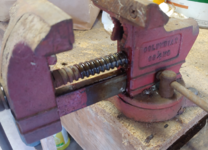
Lucid Moments
Well-known member
isb cornbinder
Well-known member


slowtwitch73
Well-known member
Grease... any...
Lucid Moments
Well-known member
So just out of curiosity what do you think they used when it was made over 100 years ago? Dry lube wasn't exactly common in the early 1900's.I use a dry lube spray. No grease. I have a handed down vice over 100 years old. It was never insulted with grease.
Mashed Yams & SeaweedSo just out of curiosity what do you think they used when it was made over 100 years ago? Dry lube wasn't exactly common in the early 1900's.
jblnut
ALLIANCE MEMBER
It gets lubed with more force on the handle to make it so vise things. Never lubed one yet. Maybe I should 
Walkers
Well-known member
Lube?
PBCampbell
Well-known member
Wax most likely. Less likely to grab onto metal fines from cutting/filing metal and ruining that threaded interface. Dry lube would be a good modern alternative. Vises with a shielded screw don't need these type of considerations.So just out of curiosity what do you think they used when it was made over 100 years ago? Dry lube wasn't exactly common in the early 1900's.
bob15
Well-known member
Zero lube and the Parker is still working fine, for decades.
senlow
Well-known member
I use Molykote GN on enclosed pressure screws. Any extreme pressure grease will work.
For exposed screws, I use Dupont Chain-Saver. It's a wax lubricant, with teflon. This also works well on the sliding parts.
For exposed screws, I use Dupont Chain-Saver. It's a wax lubricant, with teflon. This also works well on the sliding parts.
isb cornbinder
Well-known member
Graphite was mined at the National Graphite Mine, Graphite, Monteagle Township, near Bancroft. The mine operated from 1912 to 1919.So just out of curiosity what do you think they used when it was made over 100 years ago? Dry lube wasn't exactly common in the early 1900's.
Graphite mining and use dates back to 500BC.
Putting fine graphite into a liquid and spraying it from a rattle can likely dates back to the 1950s.
German miners from Keswick in the early sixteenth century had made more progress mining the graphite from this site at Plumbago Mine, Borrowdale, England.
Graphite has been in common use for about 2700 years.
Last edited:
isb cornbinder
Well-known member
removed double
Last edited:
Al Borland
Well-known member
- Joined
- Jan 20, 2016
- Messages
- 1,602
Powdered Graphite.
saltwater4life
Well-known member
- Joined
- Dec 20, 2009
- Messages
- 95
I figured our vice gets enough kroil all over it extracting and drilling broken hardware
Chris Christiansen
Well-known member
I use anti-seize on the stationary, large (covered thread) type vises. Cleanup is horrible, should anti-seize go somewhere unwanted.
Fluid Film on smaller vises and tools that I restore, typically items that I handle or move around easily. Cleanup of Fluid Film just wipes up easily. The links below are the actual products that I use. I like to apply with a brush. The sprays tend to go everywhere for me, so generally, I tend to avoid the sprays.
Permatex anti-seize
Fluid Film lube and protectant
Fluid Film on smaller vises and tools that I restore, typically items that I handle or move around easily. Cleanup of Fluid Film just wipes up easily. The links below are the actual products that I use. I like to apply with a brush. The sprays tend to go everywhere for me, so generally, I tend to avoid the sprays.
Permatex anti-seize
Fluid Film lube and protectant
Nutria
Well-known member
I've used a lot of different stuff, but lately I've been experimenting with SlipKote Chuck-Eez power chuck lube. It's designed for use with power chucks under very high pressure, so it seems like a good fit for vises. I think that the lube has some graphite as a component. Seems to work well.

Mr. Wonderful
Well-known member
Lucas #2 Red "N" Tacky.
Shiftless
Well-known member
IMHO, it’s a good idea to lube a vise with something…anything… to prevent this from happening.
Personally, I use Mobil One red grease. Sometimes 3 in 1.
This is a picture that fellow GJ member Broadie posted in his new thread about wear on a Wilton machinist vise that he recently acquired. This shows SERIOUS wear no doubt from heavy use and inadequate or no lubrication.

Personally, I use Mobil One red grease. Sometimes 3 in 1.
This is a picture that fellow GJ member Broadie posted in his new thread about wear on a Wilton machinist vise that he recently acquired. This shows SERIOUS wear no doubt from heavy use and inadequate or no lubrication.
Lucid Moments
Well-known member
I just climb right in. You should try it some time it's fun. Rubber sheets or a tarp are suggested though.A 55 gallon drum? Whoa!
Coke is my last vice. the soda of course.The only vice I have left is having a glass of red wine after dinner, but on my vises I used green trailer axle bearing grease. It's more than enough for lubrication purposes, repels water and cleans up easily.

Chris Christiansen
Well-known member
Just some more thoughts:
There are different kinds of sliding parts on a vise. The sliding parts between the larger surfaces, such as between the moveable sliding jaw and the base could be "way oil" Mobil Vactra Way Oil or typical multipurpose grease such as Mobilgrease EP series. And the threaded screw, collar and screw nut could be a lubricant designed specifically for threads. Thread lube (anti-seize)
My point is this. Lubricants are formulated for a variety of service enviroments. You can read up on the vise manufacturer to see is a lube is recommended. I doubt most vise mfg even mention lubricants, (my nice new Yost does not) but a practical user like you and me, can read the lubricant product data sheets and review the recommendations for what kind of applications the lube is typically used for. All my old vises, naturally are antiques and recommendations are unknown or information would be outdated. Dry lubes for woodworking vises should be considered as well, especially in the wood shop.
As always, any lubricant is better than none. Where things get tricky is when the parts are rotating fast and then sling lubricants off the parts or operate in extreme service environment (corrosion). [Ask me about my lube fiasco with my 3 jaw lathe chuck!] Anyway, with a typical stationary bench vise, I use thread lubricant on the threaded portions and general purpose grease on other sliding portions.
Just my two cents worth... And your vise will be thrilled that you provided ANY lubricant!
There are different kinds of sliding parts on a vise. The sliding parts between the larger surfaces, such as between the moveable sliding jaw and the base could be "way oil" Mobil Vactra Way Oil or typical multipurpose grease such as Mobilgrease EP series. And the threaded screw, collar and screw nut could be a lubricant designed specifically for threads. Thread lube (anti-seize)
My point is this. Lubricants are formulated for a variety of service enviroments. You can read up on the vise manufacturer to see is a lube is recommended. I doubt most vise mfg even mention lubricants, (my nice new Yost does not) but a practical user like you and me, can read the lubricant product data sheets and review the recommendations for what kind of applications the lube is typically used for. All my old vises, naturally are antiques and recommendations are unknown or information would be outdated. Dry lubes for woodworking vises should be considered as well, especially in the wood shop.
As always, any lubricant is better than none. Where things get tricky is when the parts are rotating fast and then sling lubricants off the parts or operate in extreme service environment (corrosion). [Ask me about my lube fiasco with my 3 jaw lathe chuck!] Anyway, with a typical stationary bench vise, I use thread lubricant on the threaded portions and general purpose grease on other sliding portions.
Just my two cents worth...
And your vise will be thrilled that you provided ANY lubricant!slowtwitch73
Well-known member
No lube on a vise is crazy.
hailwood1965
Well-known member
- Joined
- Nov 28, 2014
- Messages
- 170
My vice is whiskey so I need no lube. Last bottle I bought at Trader Joes. Cheap gas tastes better.
I have two old Craftsman (USA) vises I got at auction. I disassembled them and cleaned everything thoroughly then I believe I used SuperLube. I put a couple coats of Flood Penetrol on them and they haven't stopped working. In hindsight, grease is probably not a good idea but they're working.
I saw the thread title and I was likeFor my vices I use this
but then I saw you beat me to the joke.For your vise or for your vice?Lucas #2 Red "N" Tacky.
Hosed mine down with penetrating oil initially to wash the grime and rust off. Once it was freed up, I put wheel bearing grease on the screw and big blocky bit that hangs out the back. It works good, but I reckon you fellers are right about the grease attracting debris which is inevitable in the vise environment, might consider a dry lube in the future.
bob15
Well-known member
No. Zero lubricant, as in nothing.This one?
Zero Lubricant
seber
Well-known member
Any dry lube will do. I use paraffin for such things.Fancy lubes don't seem to work any better.
Shiftless
Well-known member
Yep…Any dry lube will do. I use paraffin for such things.Fancy lubes don't seem to work any better.
Any lube will work better than no lube. Bacon fat has one or 2 drawbacks but IMHO, that would be better than nothing.
tool_scrounge
Well-known member
Super lube grease on leadscrew threads and thrust bearing
On sliding parts Johnson Paste wax. Parafin wax would also work but harder to apply evenly. Does not attract dirt.
On sliding parts Johnson Paste wax. Parafin wax would also work but harder to apply evenly. Does not attract dirt.
Lucid Moments
Well-known member
Wait a minute. Bacon grease is great to cook with. Ask a southerner.Yep…
Any lube will work better than no lube. Bacon fat has one or 2 drawbacks but IMHO, that would be better than nothing.
anndel
Well-known member
Mission silicone paste on the threads and WD-40 Silicone spray in other moving parts.
Last edited: