

You are using an out of date browser. It may not display this or other websites correctly.
You should upgrade or use an alternative browser.
You should upgrade or use an alternative browser.
What Obscure Tools Do You Have?
- Thread starter engineer2
- Start date
RTM
Well-known member
. The example in the middle is an actual P.S. Stubbs gauge. Above it, with the wooden handle, is a Disston. Below it is a Chesterman.
Lugz, Hate to rain on your parade on this one, but ironically, I think your Disston is a type of saw set called a Saw Wrest.
http://members.acmenet.net/~con12a/saw set website/wrestsawset.htm
None of the Disston Wire Gauges I’ve seen have handles, and all have the normal selection of sizes, not just 6.
https://archive.org/details/Disston1918Catalog/page/n15/mode/1up
Here are a bunch from a 1909 Marples catalog, where they just call them saw sets.

Last edited:
davethorik
Well-known member
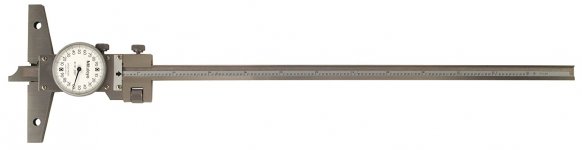
A lot of machinist tools are obscure, relatively speaking. These took the cake. At the time they would have made my life a lot easier for a lot of measurements, mostly no more tearing down depth mics every 5 min to take a new measurement.
Finally found a deal on a used set from a machinist I knew.
The 527 series dial depth gage 0-12", with fine adjustment. Used the piss out of them. They are super smooth and repeatable, just like the Mitutoyo dial calipers they are based on. (pic from Amazon) i dont use them as much now, but i am never getting rid of them.
Finally found a deal on a used set from a machinist I knew.
The 527 series dial depth gage 0-12", with fine adjustment. Used the piss out of them. They are super smooth and repeatable, just like the Mitutoyo dial calipers they are based on. (pic from Amazon) i dont use them as much now, but i am never getting rid of them.
Attachments
Private Lugnutz
Well-known member
Sunny day, RTM. That's what we (LS and I) always figured it was when it was found, but we never could find a reference. Makes much more sense.Lugz, Hate to rain on your parade on this one, but ironically, I think your Disston is a type of saw set.

RTM
Well-known member
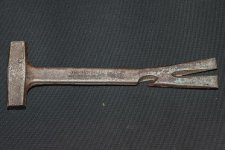
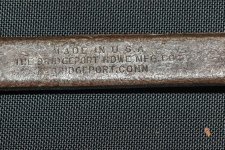
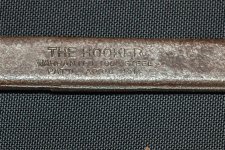
Great tool, never knew what they were til later, but dad had one in the 70s, loved it for renovation and demolition. Was heartbroken when he left it somewhere. I found him 2 or 3 a few years later, he was so pleased. I have 3 or 4 now, including his old ones.
https://archive.org/details/bridgeport-hdwe-mfg-corp-catalog-25-1930
https://archive.org/details/bridgeport-hdwe-mfg-corp-catalog-25-1930
J.A.F.E.
Well-known member
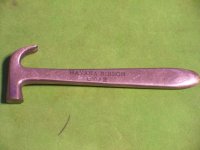
Here's one that's a little more unusual. It's a cigar box hammer. Used to open the old wooden cigar boxes and renail them again.
The company was owned by a relative of my maternal grandfather who worked for them for a while. It is probably close to 100 years old.
The company was owned by a relative of my maternal grandfather who worked for them for a while. It is probably close to 100 years old.
Attachments

J.A.F.E.
Well-known member


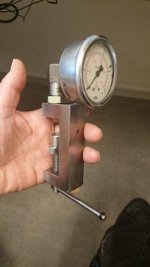
As far as I know it's the only one ever made, so cracking this one might bring some bragging rights
.......

I'll give the answer if someone is curious.
In the case where you have a large bundle of hydraulic hoses and you want to identify which one is used for a specific function you clamp the tool to each hose in turn and activate the function. When clamped to a hose that gets pressurized the needle on the gauge will twitch. It wont give the pressure in the hose but it will indicate a change in pressure.
The tool consists of a small hydraulic cylinder with a small piston that is opposed to the clamping screw. So when tightening the clamp the hose gets squeezed between the piston and the clamping screw and when pressurized the hose will want to expand thus resulting in a pressure increase in the small cylinder that registers on the gauge.
People not concerned with safety can just use a hand to feel the hoses but people has lost their life, and more people has lost limbs, from hydraulic oil poisoning "*********" pressurized hoses.
Attachments
rlitman
Well-known member
I'll give the answer if someone is curious.
In the case where you have a large bundle of hydraulic hoses and you want to identify which one is used for a specific function you clamp the tool to each hose in turn and activate the function. When clamped to a hose that gets pressurized the needle on the gauge will twitch. It wont give the pressure in the hose but it will indicate a change in pressure.
The tool consists of a small hydraulic cylinder with a small piston that is opposed to the clamping screw. So when tightening the clamp the hose gets squeezed between the piston and the clamping screw and when pressurized the hose will want to expand thus resulting in a pressure increase in the small cylinder that registers on the gauge.
People not concerned with safety can just use a hand to feel the hoses but people has lost their life, and more people has lost limbs, from hydraulic oil poisoning "*********" pressurized hoses.
Interesting. I wonder if a belt tension gauge would serve the same purpose.
Hytekrednek
Well-known member
- Joined
- Feb 6, 2015
- Messages
- 373
I have an underscribe router. Not many will even know what that is.
I have one made by Betterly. Great plastic laminate tool. Betterly stuff is top shelf, but very specialized.
Forgottonia
Well-known member


jeffmoss26
Well-known member
most of the tools I use daily for locksmithing would be obscure to the layman!
Private Lugnutz
Well-known member
Nice pocket wrench. Hard to say who made it. The first of its kind, with the milled handle for the dynamic jaw "way", was a Billings, patented (212,298) here in the US in 1879, but they were soon copied and improved etc. The British were fond of them, too. They were still being stocked in Norton, B.S.A., and other motorcycle kits as late as WWII. Some of them are open shaft, others closed. If I remember where I saw your particular design with the through shaft like that I will post it.Not sure how obscure this is, but it's a cute little thing. Bought it at an antique shop a few years back. If there were ever markings on it, they are not visible anymore.
