
You are using an out of date browser. It may not display this or other websites correctly.
You should upgrade or use an alternative browser.
You should upgrade or use an alternative browser.
What ya call it?
- Thread starter nitroracer20
- Start date

pattenp
Well-known member
Used for bolt size identification. AKA .. Nut and Bolt gauge / thread checker.
Last edited:
wyliesdiesels
Well-known member
They have those at home depot
What does this have to do with electrical?
What does this have to do with electrical?
Jim greengo
Well-known member
I think hes talking about the nut/fastener.
pattenp
Well-known member
Thats makes more sense. That's a Slotted Round Nut.I think hes talking about the nut/fastener.

OP
nitroracer20
Well-known member
Sorry for my shortness in the OP.
Thanks - i thought it would be an easy term to search but i struck out!
Any source for SAE slotted round nuts? Didnt see on grainger. Only Metric.
It is indeed a tight clearance fit. A normal socket doesnt have the head room. Before i start slotting / modifying nuts i have on hand id like to put the correct item on.
What an annoying nut to drop!
Thanks - i thought it would be an easy term to search but i struck out!
Any source for SAE slotted round nuts? Didnt see on grainger. Only Metric.
It is indeed a tight clearance fit. A normal socket doesnt have the head room. Before i start slotting / modifying nuts i have on hand id like to put the correct item on.
What an annoying nut to drop!
Attachments

flyingblind
Well-known member
You could buy a metric one and re-tap it? Only metric on McMaster as well
wyliesdiesels
Well-known member
ok why is the neutral from your source (line side) connecting to the load side of whatever that is?Sorry for my shortness in the OP.
Thanks - i thought it would be an easy term to search but i struck out!
Any source for SAE slotted round nuts? Didnt see on grainger. Only Metric.
It is indeed a tight clearance fit. A normal socket doesnt have the head room. Before i start slotting / modifying nuts i have on hand id like to put the correct item on.
What an annoying nut to drop!
nadogail
Well-known member
You just might have to channel your lnner McGiver to make one.
Meursault74
Well-known member
maybe a castle nut if the thread depth is enough
cvairwerks
Well-known member
Try Digikey or Mouser. You could always take a tapped spacer and cut a drive slot in it.
OP
nitroracer20
Well-known member
I just ended up using a 10-24 nut with popeye forearm strength on a needlenose. Not trying to make a mountain out of a molehill.
Wire was just pushed over for the photo - Wylie.
Thanks all!!
I Should start a thread, but does anyone have a recommendation for some sort of 30A / 220V rated knife switch? This is a new- old compressor I got. Itemped into my subpanel, but i have to turn it on with the breaker which i dont like.
Wire was just pushed over for the photo - Wylie.
Thanks all!!
I Should start a thread, but does anyone have a recommendation for some sort of 30A / 220V rated knife switch? This is a new- old compressor I got. Itemped into my subpanel, but i have to turn it on with the breaker which i dont like.
kaymccampbell
Well-known member
Here you go, a 60 amp 220v switch.
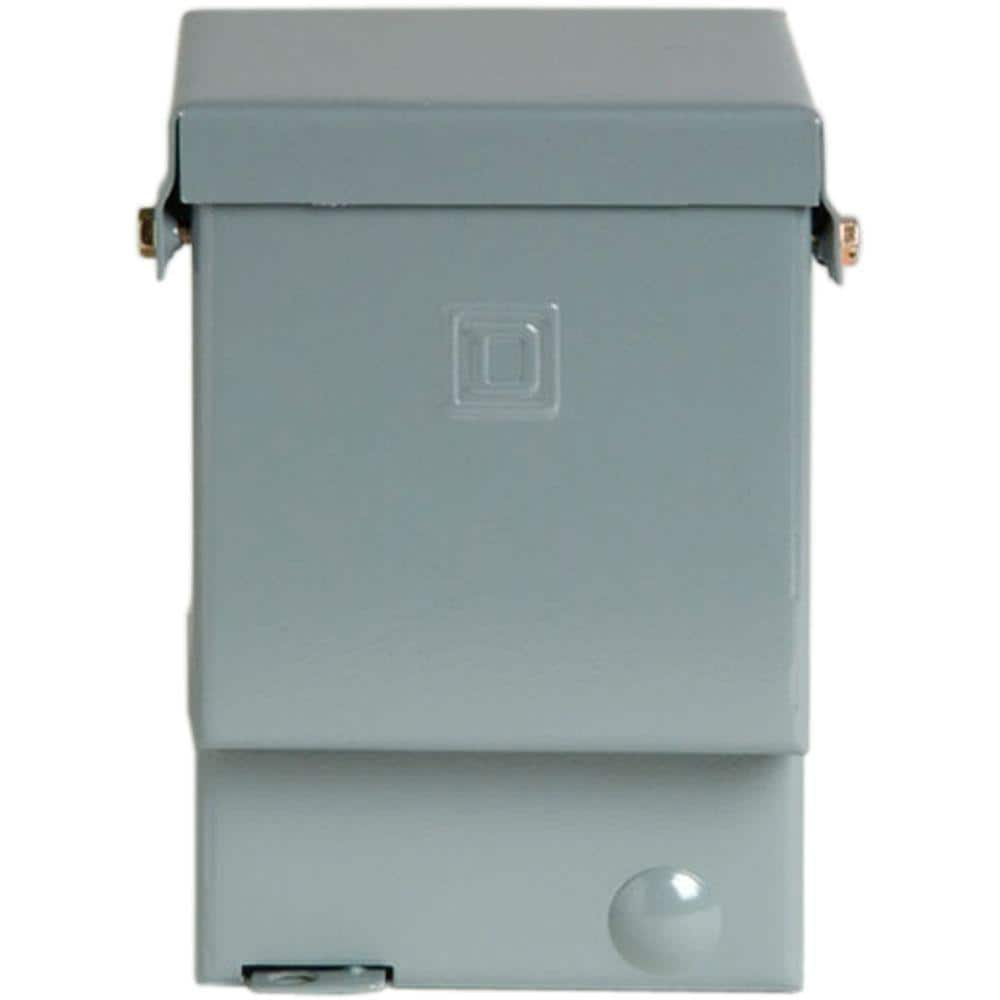
Square D QO 60 Amp 240-Volt 7.4 kW Non-Fuse AC Disconnect(QO200TRCP) QO200TRCP - The Home Depot
For more than 90 years, we've been the unchallenged leader in safety switches. Our Square D brand safety switches are preferred two to one over our closest competitor. We've continued our tradition of
www.homedepot.com
wyliesdiesels
Well-known member
ok so is that a pressure switch?I just ended up using a 10-24 nut with popeye forearm strength on a needlenose. Not trying to make a mountain out of a molehill.
Wire was just pushed over for the photo - Wylie.
Thanks all!!
I Should start a thread, but does anyone have a recommendation for some sort of 30A / 220V rated knife switch? This is a new- old compressor I got. Itemped into my subpanel, but i have to turn it on with the breaker which i dont like.
does the compressor not have an auto-off switch?
whats the HP rating on the motor?
OP
nitroracer20
Well-known member
ok so is that a pressure switch?
does the compressor not have an auto-off switch?
whats the HP rating on the motor?
Yes a pressure switch.
No auto off switch - motor just stops running when the pressure switch reaches its set pop off pressure ~ 135 psi.
5hp.
wyliesdiesels
Well-known member
Does the compressor have a motor starter?
You will need a 5HP rated disconnect.
Compressor needs to be hardwired unles you use expensive pin and sleeve plugs and receptacles...
You will need a 5HP rated disconnect.
Compressor needs to be hardwired unles you use expensive pin and sleeve plugs and receptacles...
OP
nitroracer20
Well-known member
Im pretty green, so im not sure if it has a motor starter? I just know basic wiring.
I just know it runs fine now. I really do Appreciate the extra set of eyes.
I have it on 10 gauge wire. Wouldnt a 30amp knife switch (or the 60amp kay recommended) work fine? Compressor is indeed hardwired - temped now though as mentioned - breaker to unit.
I just know it runs fine now. I really do Appreciate the extra set of eyes.
I have it on 10 gauge wire. Wouldnt a 30amp knife switch (or the 60amp kay recommended) work fine? Compressor is indeed hardwired - temped now though as mentioned - breaker to unit.
wyliesdiesels
Well-known member
Can you post several overall pictures of the compressor?Im pretty green, so im not sure if it has a motor starter? I just know basic wiring.
I just know it runs fine now. I really do Appreciate the extra set of eyes.
I have it on 10 gauge wire. Wouldnt a 30amp knife switch (or the 60amp kay recommended) work fine? Compressor is indeed hardwired - temped now though as mentioned - breaker to unit.
disconnect needs to be rated for the same or higher HP as the motor. doubt that 30a knife switch is properly rated....
also, what kind of #10 wire did you use? if its NM-b aka Romex, its too small. If instead its THWN in conduit, then its fine.
justsam
Well-known member
From your picture, I assume the terminal block is L1, L2, and motor is 240VAC. No neutral required but please provide a ground wire.
OP
nitroracer20
Well-known member
10 AWG NM cable "Romex®" is not code compliant, it is required to size wire based on 125% of the motor currents listed in NEC art. 430 which is 35A, for a 5 HP 1Ø motor based on the info which was posted by wyliesdiesels which is correct, the OP's wiring is undersized.Motors rated 23.5amps. I did run 10 gauge romex from sub panel to compressor. Its only a 15’ run.
based on
Yes sam im grounded. I think…most days.
OP
nitroracer20
Well-known member
You guys are great.
Unfortunately ill size up to be safe. THNN. My electrician buddy is coming in the next few days to help wire up my new garage with surface mount emt. There goes my romex. What say you THNN 6 gauge / 40amp breaker?
Unfortunately ill size up to be safe. THNN. My electrician buddy is coming in the next few days to help wire up my new garage with surface mount emt. There goes my romex. What say you THNN 6 gauge / 40amp breaker?
wyliesdiesels
Well-known member
for the compressor circuit? way overkill. use #10 in pipe or #8 NM-bYou guys are great.
Unfortunately ill size up to be safe. THNN. My electrician buddy is coming in the next few days to help wire up my new garage with surface mount emt. There goes my romex. What say you THNN 6 gauge / 40amp breaker?
OP
nitroracer20
Well-known member
On a 40 breaker?
Wiz02
Well-known member
for the compressor circuit? way overkill. use #10 in pipe or #8 NM-b
 I went with #8 NM-b for a similar application.
On a motor circuit 10 THHN would be fine with a 40A breaker, for branch circuit not allowed.On a 40 breaker?
wyliesdiesels
Well-known member
yeah as a 30a may suffer from nuisance tripsOn a 40 breaker?
exranger06
Well-known member
Yes, you can use up to a 70A breaker using #10 wire if you wanted. I know you're probably raising an eyebrow right now, thinking "how is that safe/up to code? I thought you can only use a 30A breaker with #10." Here's why it's ok:On a 40 breaker?
1. Yes, #10 wire can only safely carry roughly 30A. And your motor only pulls about 23A, according to the nameplate. So the wire can handle this motor no problem.
2. This is a dedicated circuit for this motor only. No other loads will be plugged into this circuit, potentially overloading it and causing more than 30A to go through the wire (unlike a regular receptacle branch circuit, where anyone can plug any combination of devices into receptacles, pulling who knows how much current)
3. If something went wrong with the motor where it's pulling more current than normal (For example, a bearing going bad that makes the motor more difficult to spin), the motor has a built-in thermal overload that will trip before anything bad happens.
4. If something happened to the wiring between the breaker panel and the motor and created a short circuit, even a 70A breaker would trip immediately (a dead short will create several hundred amps of current, much more than 70A).
The whole "#14 wire = 15A breaker, #12 wire = 20A breaker, #10 wire = 30A breaker" thing goes out the window when dealing with hardwired motor circuits. You'll probably want to use at least a 40A breaker to avoid nuisance tripping.