To avoid these ads, REGISTER NOW!

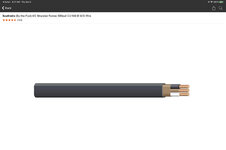
Why would I need 6-3 cable?

katit

Well-known member
Joined
May 5, 2006
Messages
862
Location
St. Louis, MO
In garage I already have sub-panel. I need to run 3 220 runs. One for mini-split, one for my air compressor and one for future lathe. From what I understand they all require just hots, no need for neutral wire.

Any practical reason why I will spend extra for 6-3?
 
To avoid these ads, REGISTER NOW!

sparky 1971

Well-known member
Joined
Oct 9, 2018
Messages
8,112
Location
Central Iowa
You probably don't need 6/2 or 6/3. Wire size is based on amperage, not voltage, and I don't care, but you're gonna get beat up over 220/240. The mini split will probably need 12/2, some only need 14/2. What is the horse power of the compressor? What about the lathe? I've only wired two lathes in home garages, both of those needed a 12/2 but I've also wired a lathe that needed 60 amps of 480 volt three phase. power.
 
OP
K

katit

Well-known member
Joined
May 5, 2006
Messages
862
Location
St. Louis, MO
MrCool 36k says 8ga and 6ga preferred - its like 40ft run so 6/2 it is. Compressor definitely needs 6/2.

Lathe - I don’t know yet which one it will be… I didn’t know they can be 120/240

I was going to buy cable in bulk from amazon so same size it is..
 

Dig Doug

Well-known member
Joined
Apr 16, 2018
Messages
1,151
Well you need to know what each circuit / device uses for power & what is powering your sub panel. Is your sub panel a 100 amp 3 phase panel?

I’m not an Electrician

here in Ca
to the best of my knowledge…

Typical residential electrical grid doesn’t have 3 phase power
commercial / Industrial business parks have 3 phase

is this a trick thread?
it’s so mis leading….

I don’t mean to make fun of your situation but it’s so vague in detail

every UL listed Device will have a plate / sticker on the motor and it states what ever power is required to power up that device, sometimes you get various voltage and amps in commercial applications

I have worked for .. say a Chinese businesses and they purchase machines from China for cheap ( they magically appear in a 40 ft shipping container) these can be difficult when the fire department come in for a yearly inspection in a commercial application


make a list of what you want and plan accordingly, You need to have a solid infrastructure to power your equipment


I have patio heater that use 220 volt and 13.5 amp so 12 gauge wire
I also have a welder that uses 220 and 40 amp that I use 6 gauge wire

they are completely different power usages

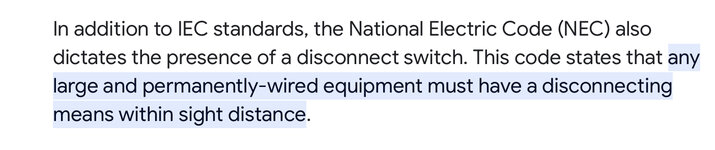
Dont forget Disconnects for each device!
IMG_8962.jpeg
 

sparky 1971

Well-known member
Joined
Oct 9, 2018
Messages
8,112
Location
Central Iowa
MrCool 36k says 8ga and 6ga preferred - its like 40ft run so 6/2 it is. Compressor definitely needs 6/2.

Lathe - I don’t know yet which one it will be… I didn’t know they can be 120/240

I was going to buy cable in bulk from amazon so same size it is..

There's no way I'd use 8/2 or 6/2 for the mini split. MCA is 28 so 10/2 Romex or #12 THHN/THWN in conduit would be fine. There's no reason to give MCA then contradict it with a wire size that doesn't jive. At 40 feet, voltage drop isn't going to be an issue. The MOCP is only 35.

Are you getting a 7-1/2 HP compressor? #10 in pipe or 8/2 on a 60 amp breaker is good for 5 HP.

Can't help you on the lathe other than if it needs #6 it's a big *******.
 
OP
K

katit

Well-known member
Joined
May 5, 2006
Messages
862
Location
St. Louis, MO
Ok, it's getting clearer now.
Sounds like I need /2 wiring (fact). With one mentioning from @The Cobbler of 120/240 lathe

I am coming from "ease" and "little overbuilt" kind of standpoint. I get it, maybe MrCool will be fine with 10ga, 6ga definitely overkill, so 8 IT IS (and it says so in manual)

My compressor is Quincy QT-5, so according to specs it is probably OK with 10Ga, but 8 will work for sure.

Sounds like I will be fine with 8/2 runs for both.

For lathe my "dream" right now is this: https://www.precisionmatthews.com/shop/pm-1340gt/
But if not - will be something in similar size range or little smaller. They say 20A recommended. Little overkill won't hurt.
If, for some reason I will need 120 as well, will it work if I simply have 20A 120 outlet next to it? Because I will have plenty of those going around..

At this point I am OK with going little overboard to make sure I don't have to worry about it later (if I want to go 7.5HP compressor for example)
 

wyliesdiesels

Well-known member
Joined
Aug 14, 2012
Messages
20,186
Location
Modesto, CA
Umm if you want ability to run a 7.5hp motor then you need 50a rated wire. #8 NM-b is not large enough. You could go with #8 THWN in conduit though…
 

dcg9381

Well-known member
Joined
Jun 20, 2018
Messages
11,968
Location
Austin, TX
In garage I already have sub-panel.
Any practical reason why I will spend extra for 6-3?
Depends on the size of your garage and the location of the sub-panel.
I find it very useful to have sub-panels fed by 50A on BOTH sizes of the garage.
 
OP
K

katit

Well-known member
Joined
May 5, 2006
Messages
862
Location
St. Louis, MO
Depends on the size of your garage and the location of the sub-panel.
I find it very useful to have sub-panels fed by 50A on BOTH sizes of the garage.
garage roughly 35x35 and I have 100A sub panel on one side.. Most activity where I might need something will be closer to where panel is.
 

dcg9381

Well-known member
Joined
Jun 20, 2018
Messages
11,968
Location
Austin, TX
garage roughly 35x35 and I have 100A sub panel on one side.. Most activity where I might need something will be closer to where panel is.
I can't define your use cases for you, but for my friends, when I'm helping them build shops of 1k sqft or more, I design electrical with one sub panel on both sides... Does that cut costs? Depends on the application, but sure makes things easier.
 
To avoid these ads, REGISTER NOW!
OP
K

katit

Well-known member
Joined
May 5, 2006
Messages
862
Location
St. Louis, MO
Yes. You use the 60 degree column for NM wire.

Just has to be protected from damage
Can you explain what 60 degree column is?

Why can't I just run it along studs? I did it before and it passed inspection just fine.
This is behind drywall BTW
 

wyliesdiesels

Well-known member
Joined
Aug 14, 2012
Messages
20,186
Location
Modesto, CA
Can you explain what 60 degree column is?

Why can't I just run it along studs? I did it before and it passed inspection just fine.
This is behind drywall BTW
60° column is referring to an ampacity table in the nec not a column in your building

BTW the compressor will need to be hardwired
 

75gmck25

Well-known member
Joined
Jul 21, 2014
Messages
1,336
Location
Alexandria, VA
I don't think this applies to HVAC or tools in the garage, but I've been told that some kitchen appliances need 6/3 (or **/3) because they run on 240 volts, but have an electric timer or controller that still uses 120 volts.
 

Norcal

Well-known member
Joined
Mar 16, 2008
Messages
13,786
I don't think this applies to HVAC or tools in the garage, but I've been told that some kitchen appliances need 6/3 (or **/3) because they run on 240 volts, but have an electric timer or controller that still uses 120 volts.
Ranges, dryers, ovens, require a neutral, cooktops may or may not,
 

exranger06

Well-known member
Joined
Aug 9, 2015
Messages
1,686
Location
CT
Well you need to know what each circuit / device uses for power & what is powering your sub panel. Is your sub panel a 100 amp 3 phase panel?

I’m not an Electrician

here in Ca
to the best of my knowledge…

Typical residential electrical grid doesn’t have 3 phase power
commercial / Industrial business parks have 3 phase

is this a trick thread?
it’s so mis leading….

I don’t mean to make fun of your situation but it’s so vague in detail

every UL listed Device will have a plate / sticker on the motor and it states what ever power is required to power up that device, sometimes you get various voltage and amps in commercial applications

I have worked for .. say a Chinese businesses and they purchase machines from China for cheap ( they magically appear in a 40 ft shipping container) these can be difficult when the fire department come in for a yearly inspection in a commercial application


make a list of what you want and plan accordingly, You need to have a solid infrastructure to power your equipment


I have patio heater that use 220 volt and 13.5 amp so 12 gauge wire
I also have a welder that uses 220 and 40 amp that I use 6 gauge wire

they are completely different power usages

Dont forget Disconnects for each device!

IMG_8962.jpeg
3 conductor cable has nothing to do with 3 phase vs single phase. Single phase circuits use 3 conductor cable all the time. Any appliance that uses both 240V and 120V will need 3 conductors (2 hot legs for 240V, and a neutral for 120V). Electric stoves and clothes dryers run off both 240V and 120V and need 3 conductors, for example. And even if an appliance says how many amps it uses, it's not going to explicitly tell you which size/gauge wire to run to it.
 

exranger06

Well-known member
Joined
Aug 9, 2015
Messages
1,686
Location
CT
I don't think this applies to HVAC or tools in the garage, but I've been told that some kitchen appliances need 6/3 (or **/3) because they run on 240 volts, but have an electric timer or controller that still uses 120 volts.
This is correct. Neutral wires are only for 120V circuits. Anything that runs on 240V ONLY, like an air compressor motor, doesn't need or use a neutral. Just run 2 hot legs and a ground. Only appliances like a stove or a clothes dryer that need both 240V AND 120V need a neutral to run the 120V components, in addition to the 2 hot legs.
 

Dig Doug

Well-known member
Joined
Apr 16, 2018
Messages
1,151
3 conductor cable has nothing to do with 3 phase vs single phase. Single phase circuits use 3 conductor cable all the time. Any appliance that uses both 240V and 120V will need 3 conductors (2 hot legs for 240V, and a neutral for 120V). Electric stoves and clothes dryers run off both 240V and 120V and need 3 conductors, for example. And even if an appliance says how many amps it uses, it's not going to explicitly tell you which size/gauge wire to run to it.
I thought ….

Romex 12-2 white black ground
romex 12-3 white black red ground

6-3 cabe is a 4 wire cable- has 4 wires
6-2 cable is a 3 wire - has 3 wires

in a residential application what would the 4 th wire be used for useing 6-3 cable ?

I just wired my cook top in a kitchen remodel - red black green - 6-2 cable/wire


IMG_8971.jpegIMG_8972.jpeg
 

dave*99

Well-known member
Joined
May 5, 2009
Messages
4,324
Location
Coastal NJ
in a residential application what would the 4 th wire be used for useing 6-3 cable ?

I just wired my cook top in a kitchen remodel - red black green - 6-2 cable/wire
I wired a hot tub that needed 6-3 WG
And a sub panel that needed 6-3 WG
And a generator inlet that needed 6-3 WG
 

wyliesdiesels

Well-known member
Joined
Aug 14, 2012
Messages
20,186
Location
Modesto, CA
I thought ….

Romex 12-2 white black ground
romex 12-3 white black red ground

6-3 cabe is a 4 wire cable- has 4 wires
6-2 cable is a 3 wire - has 3 wires

in a residential application what would the 4 th wire be used for useing 6-3 cable ?

I just wired my cook top in a kitchen remodel - red black green - 6-2 cable/wire


IMG_8971.jpegIMG_8972.jpeg
If that cooktop or range needs 120v then you need the 4th wire (white neutral) as you cannot use the EGC/ground as a grounded/neutral conductor.

Some cooktops only need 240v. However if your cooktop had a 4-wire whip or terminal block then you shouldve used 6/3 NM-b
 

exranger06

Well-known member
Joined
Aug 9, 2015
Messages
1,686
Location
CT
I thought ….

Romex 12-2 white black ground
romex 12-3 white black red ground

6-3 cabe is a 4 wire cable- has 4 wires
6-2 cable is a 3 wire - has 3 wires

in a residential application what would the 4 th wire be used for useing 6-3 cable ?

I just wired my cook top in a kitchen remodel - red black green - 6-2 cable/wire


IMG_8971.jpegIMG_8972.jpeg
A 6-3 cable has the same wires as a 12-3 cable: black, red, white, and bare ground. The black and red wires are the 2 hot legs, white is the neutral, and the bare ground is of course, ground. A cooktop (not a range oven) runs only on 240V, and doesn't need a neutral. Neutral wires are used ONLY for 120V. A range oven is mainly 240V, however there are components that run on 120V (the light bulb inside the oven, for example, runs on 120V). The neutral wire is there to power the 120V components.
 
To avoid these ads, REGISTER NOW!
Top Bottom