To avoid these ads, REGISTER NOW!

Wire type and size for 200’ underground run in conduit

bluedog225

Well-known member
Joined
Jan 31, 2012
Messages
3,373
Location
Texas
Good evening everyone,

I really need to get this right. Any help appreciated.

I’ve got a conex which will house two 5000VA inverters (Victron) and batteries 200 feet from the shop. Between the two, I have 2” schedule 80 pvc conduit buried at 30 inches. A gentle curve with two 90 degree turns-one at the conex and one at the cabin.

My plan is two inverters for split phase to the cabin.

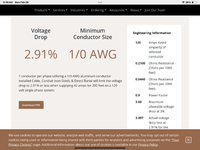
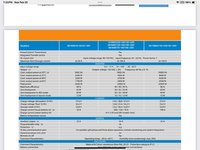
1. Is it 5000 watts divided by 120 volts? Therefore 41.67 amps per line? The spec sheet for the Quattro says “5000 VA.” Then it de-rates to watts based on temperature. I’m not sure how to translate VA into real world wire size needed.

2. Should I calculate a 3% voltage drop? Or would more conservative be better? 2% or 1%? Loads will be household. Biggest load will be the mini split or small air compressor.

3. I’m guessing aluminum is fine, ok, good enough? Or is copper going to give me some advantage?

4. Line one, line two, neutral, and ground. So 4 wires per the electric FAQ, right? And I’m reading that THWN separate strands is preferable for ease of pulling. Is this the right call? Or is there an advantage to going with 4 conductor direct burial underground feeder even though it will be inside the conduit?

5. What temperature rating should I look for on the wire?

6. The wire size calculator is asking me “raceway, cable, buried in earth, or open air.” I’m not sure which one to pick as I’m using buried conduit.

If I can get these pinned down, I can make a decision on the actual wire.

Happy to provide any other information that may be helpful.

Many thanks
IMG_0451.png
 
To avoid these ads, REGISTER NOW!

PCustoms

Well-known member
Joined
Jul 23, 2011
Messages
23,684
Location
VT
This is serving the full load of a dwelling?

I see shop, cabin and household listed in the OP...
 
OP
B

bluedog225

Well-known member
Joined
Jan 31, 2012
Messages
3,373
Location
Texas
It’s a shop with a living space above. 25’x25’. One bath. Off grid. Pretty informal. May live there one day. I see I did mix up the descriptions.
 

mike93lx

ALLIANCE MEMBER
Joined
Dec 9, 2013
Messages
38,398
Location
Richmond, VA
#2 aluminum mobile home feeder. It will easily cover the load plus upsizing for distance and it will all come in one bundle. It will be the same (or essentially the same) cost as aluminum xhhw and wildly less expensive than copper thwn. Copper holds no advantage other than a smaller wire, which you don't need with 2" conduit.

#2 is larger than needed but it's a commonly available size and going smaller won't save you much. Voltage drop will be a non issue at those power levels and you'll have headroom in case you upgrade the inverters
 
Last edited:
OP
B

bluedog225

Well-known member
Joined
Jan 31, 2012
Messages
3,373
Location
Texas
I’m new at this. Do you mean 2 awg or 2/0?

I ask because 2 awg seems to be giving me strange answers on the voltage drop calculator.

And thanks for the practical advice.
 
OP
B

bluedog225

Well-known member
Joined
Jan 31, 2012
Messages
3,373
Location
Texas
ok. I must be doing something wrong with the calculator. I’ll have another look. thanks
 

mike93lx

ALLIANCE MEMBER
Joined
Dec 9, 2013
Messages
38,398
Location
Richmond, VA
I’m sure it’s operator error. Here’s what I’m getting.

IMG_0458.pngIMG_0457.png
Not wrong. If you do the same Calc but to provide voltage drop, it will be over 3%.

Are the inverters connected and actually providing 240v service or is is two separate 120v services?
 

mm08822

Well-known member
Joined
Jan 13, 2012
Messages
6,202
Location
NJ
Since you are planning on connecting the two inverters in a split phase configuration, use 240vac, not 120.
 
OP
B

bluedog225

Well-known member
Joined
Jan 31, 2012
Messages
3,373
Location
Texas
I believe they are providing two separate 120 volt services coordinated into split phase.

Pardon my lack of understanding. I thought split phase was 120 volts on L1 and L2. With a neutral and a ground. So I was calculating based on 120 volts. Put another way, I thought there was 120 volts difference between line 1 and neutral.

And at the subpanel, I could tap into either 120 volt line for loads and use both L1 and L2 for the minisplit at 240 volts.

Am I missing the boat?
 

mm08822

Well-known member
Joined
Jan 13, 2012
Messages
6,202
Location
NJ
If I am reading the conduits details correctly, it is already installed for the 200' run. If so, use 2 - #2 XHHW AL, 1 -#4 XHHW white, 1 - #6 XHHW Green. This wire is rated for 90C but use the 75C ampacity columns.

Copper is $$$, stick with Aluminum.

Buried conduit is ok for the calculator.
 
OP
B

bluedog225

Well-known member
Joined
Jan 31, 2012
Messages
3,373
Location
Texas
If I am reading the conduits details correctly, it is already installed for the 200' run. If so, use 2 - #2 XHHW AL, 1 -#4 XHHW white, 1 - #6 XHHW Green. This wire is rated for 90C but use the 75C ampacity columns.

Copper is $$$, stick with Aluminum.

Buried conduit is ok for the calculator.
I thought the neutral had to be the same size as the hots?

Am I wrong on this?

Thanks
 

Innovate1

Well-known member
Joined
Jul 28, 2014
Messages
4,318
Location
Illinois near St. Louis, Missouri
MHF is basically a cable with all the conductors twisted. It's harder to pull than single strands (still all pulled at the same time). VA is volt amps - if the power factor is 1 then it is the same as watts. But most loads don't have perfect power factor (less than 1.0) so watts are less that VA. You did the original calcs correctly to get 41.7A and voltage drop. You could tolerate a bit more voltage drop. With #2 on 120V it's 4.1% drop. And considering 240V it's less - seems like a reasonable compromise. Neutral can be downsized since the currents from loads on each of the two hot legs cancel in the neutral but some locations don't allow a reduced neutral. If it's allowed it is usually 1 or 2 sizes smaller. But with the voltage drop for 120V loads I might stick to full size neutral. You could do THWN (W for wet locations, most THHN is dual rated for THWN also) or XHHW. many here use wireandcableyourway.com for wire.
 

mm08822

Well-known member
Joined
Jan 13, 2012
Messages
6,202
Location
NJ
I believe they are providing two separate 120 volt services coordinated into split phase.

Pardon my lack of understanding. I thought split phase was 120 volts on L1 and L2. With a neutral and a ground. So I was calculating based on 120 volts. Put another way, I thought there was 120 volts difference between line 1 and neutral.

And at the subpanel, I could tap into either 120 volt line for loads and use both L1 and L2 for the minisplit at 240 volts.

Am I missing the boat?

Neutral can often be downsized as it just carried the imbalance between the legs. #2 MHF is available in 2-2-2-4 and 2-2-4-6 for this reason.
While more specifc calcs can be done, it provides marginal additional information. Generally, the loads are variable and of short durations, and each side of the split phase panel is randomly loaded. With the neutral carrying only the imbalance between the phases.

If you were to load only one side of the split phase, then 120v would be the correct value. But that defeats some of the value in having a split phase service.
If you had a 120v, 40a load on each phase, the neutral would carry zero current and all voltage drop occurs on the phase conductors.
 
OP
B

bluedog225

Well-known member
Joined
Jan 31, 2012
Messages
3,373
Location
Texas
I currenlty have the single 5,000 VA inverter. That one inverter may be sufficient for this little place and my needs.

In terms of installing wire, it sounds like I need to run wire based on 120 volts single phase. With one extra conductor in case I add the second inverter and go split phase.

A little more expensive. But so is proceeding with the second inverter right now.

Do I understand the situation correctly?

And thanks to all for the great advice.
 

mike93lx

ALLIANCE MEMBER
Joined
Dec 9, 2013
Messages
38,398
Location
Richmond, VA
If a second inverter is unlikely, you can always deal with that later, but a 200' piece of #2 is only $72. I'd pull it if it was me.

Yes, your Calc is good. Unless you expect you'll regularly be drawing near that 40a level, I'd say you are fine with #2.
 

Innovate1

Well-known member
Joined
Jul 28, 2014
Messages
4,318
Location
Illinois near St. Louis, Missouri
And you can parallel the two strands of #2 to reduce your voltage drop while doing 120V. Might as well use it. Someone may jump in and say it isn't code but I don't see an issue since one strand can carry the load safely.
 
To avoid these ads, REGISTER NOW!

Innovate1

Well-known member
Joined
Jul 28, 2014
Messages
4,318
Location
Illinois near St. Louis, Missouri
Bluedog, sounds like you are doing a solar setup, possibly off grid. Maybe you could do a thread on what you are doing. I am thinking of doing that, probably smaller, as sort of back up for utility and would be interested in it.
 

mm08822

Well-known member
Joined
Jan 13, 2012
Messages
6,202
Location
NJ
If a second inverter is unlikely, you can always deal with that later, but a 200' piece of #2 is only $72. I'd pull it if it was me.

Yes, your Calc is good. Unless you expect you'll regularly be drawing near that 40a level, I'd say you are fine with #2.
If this becomes a 2 step process, meaning 1 inverter today, 2nd one down the road, you could re-purpose one #2 used as a neutral today to the other phase leg tomorrow. Then connect the original spare #4 as the neutral for the split-phase system.
 
OP
B

bluedog225

Well-known member
Joined
Jan 31, 2012
Messages
3,373
Location
Texas
If this becomes a 2 step process, meaning 1 inverter today, 2nd one down the road, you could re-purpose one #2 used as a neutral today to the other phase leg tomorrow. Then connect the original spare #4 as the neutral for the split-phase system.
I think I understand this. 😂

That’s a good idea. Thanks
 
OP
B

bluedog225

Well-known member
Joined
Jan 31, 2012
Messages
3,373
Location
Texas
Bluedog, sounds like you are doing a solar setup, possibly off grid. Maybe you could do a thread on what you are doing. I am thinking of doing that, probably smaller, as sort of back up for utility and would be interested in it.

Yes. Off grid solar.

Lots of lessons learned.

Ill see what I can do.
 

mike93lx

ALLIANCE MEMBER
Joined
Dec 9, 2013
Messages
38,398
Location
Richmond, VA
If this becomes a 2 step process, meaning 1 inverter today, 2nd one down the road, you could re-purpose one #2 used as a neutral today to the other phase leg tomorrow. Then connect the original spare #4 as the neutral for the split-phase system.
Good idea. Although 2224 is 10 cents a foot more than 2246 right now at wireandcableyourway. For that premium and already having 2" conduit, I'd likely be buying the 2224
 
OP
B

bluedog225

Well-known member
Joined
Jan 31, 2012
Messages
3,373
Location
Texas
I was originally thinking, split phase for the more efficient air conditioner. I didn’t realize all the wiring implications.

One more question for those who have pulled wire. I haven’t. Will I be a lot better off getting individual conductors than going with a bundled group of wires. In terms of how hard it’s going to be to pull?
 
Last edited:

mike93lx

ALLIANCE MEMBER
Joined
Dec 9, 2013
Messages
38,398
Location
Richmond, VA
I was originally thinking, split phase for the more efficient air conditioner. I didn’t realize all the wiring implications.

One Moore question for those who have pulled wire. I haven’t. Will I be a lot better off getting individual conductors than going with a bundled group of wires. In terms of how hard it’s going to be to pull?
With a simple run and good size conduit, I don't think it will matter a ton. I'd rather have the wires bundled to simplify feeding.

Either way, with one person feeding/pushing and one person pulling, I think it will go pretty easily. Some wire lube will help, too
 

PCustoms

Well-known member
Joined
Jul 23, 2011
Messages
23,684
Location
VT
I pulled 4/0, 4/0, 2/0, 4 85' in 2" conduit solo with some lube and a bit of tension from a puller at the end.

Small wires like you have will go just fine.
 

wyliesdiesels

Well-known member
Joined
Aug 14, 2012
Messages
20,171
Location
Modesto, CA
And you can parallel the two strands of #2 to reduce your voltage drop while doing 120V. Might as well use it. Someone may jump in and say it isn't code but I don't see an issue since one strand can carry the load safely.
not code permissive to parallel conductors smaller than 1/0
 

Innovate1

Well-known member
Joined
Jul 28, 2014
Messages
4,318
Location
Illinois near St. Louis, Missouri
It's really not that difficult to deal with individual strands. Wireandcableyourway.com and probably others can give you measured lengths on individual spools. Put them all on some pipe or conduit on saw horses or some sort of support, hopefully sort of aimed at the conduit and the person feeding in the wire can easily handle it. If it needs to go up to get a better shot at the conduit set up a ladder or something as a guide. Prep like that makes a world of difference how difficult the pull is. Unless I made some mistake 2224 MHF is $1.61/ft and the same in single strands of XHHW totals to $1.37/ft. So just go with single strands.
 

Innovate1

Well-known member
Joined
Jul 28, 2014
Messages
4,318
Location
Illinois near St. Louis, Missouri
I did a similar length pull with 1-1-2-4(not sure on the ground size) in 1.5" conduit with two people and had no trouble. I did have long sweep bends at each end which makes things much easier. And I built a tall tripod out of 2x4s with a pulley for the pull rope so I could pull down rather than up - much easier.
 

theoldwizard1

Well-known member
Joined
Feb 22, 2011
Messages
43,489
Location
SE MI
If future-proofing, just buy 2-2-2-4 MHF. It is typically less expensive than the same individual conductors.
 

Innovate1

Well-known member
Joined
Jul 28, 2014
Messages
4,318
Location
Illinois near St. Louis, Missouri
I believe they are providing two separate 120 volt services coordinated into split phase.

Pardon my lack of understanding. I thought split phase was 120 volts on L1 and L2. With a neutral and a ground. So I was calculating based on 120 volts. Put another way, I thought there was 120 volts difference between line 1 and neutral.

And at the subpanel, I could tap into either 120 volt line for loads and use both L1 and L2 for the minisplit at 240 volts.

Am I missing the boat?
Are your inverters designed to be used together to provide 240? Would be interested to know. I just did some reading about inverter generators and some are designed to be paralleled but that only gets more current at 120, not 240 volts.
 

mike93lx

ALLIANCE MEMBER
Joined
Dec 9, 2013
Messages
38,398
Location
Richmond, VA
It's really not that difficult to deal with individual strands. Wireandcableyourway.com and probably others can give you measured lengths on individual spools. Put them all on some pipe or conduit on saw horses or some sort of support, hopefully sort of aimed at the conduit and the person feeding in the wire can easily handle it. If it needs to go up to get a better shot at the conduit set up a ladder or something as a guide. Prep like that makes a world of difference how difficult the pull is. Unless I made some mistake 2224 MHF is $1.61/ft and the same in single strands of XHHW totals to $1.37/ft. So just go with single strands.
That price advantage moves around sometimes.

Ultimately, it's not a huge difference either way, and any benefit or pain from either approach will likely be quickly forgotten.
 

PCustoms

Well-known member
Joined
Jul 23, 2011
Messages
23,684
Location
VT
Guess you missed my post where I gave pricing and individual strands was cheaper... :rolleyes:
When I bought mine last summer wire and cable your way was cheaper for individual wires, and the local supply house was about 75% of their prices and had it cut for me at 7am the next morning.
 
To avoid these ads, REGISTER NOW!
Top Bottom