I wanted to ask what people have done for pulling wire to their intended destinations inside a barage/shed/barn that is stick built. The entire interior will be finished with some type of covering (drywall, metall panel, wood...) I wanted to get your opinions about the most efficient and code compliant method to land wires from the main panel.
Should I go up and lay wires across trusses, go through trusses and down, connect to trusses on top or side, etc...?? Should I try not to drill through exterior 2x6 walls for holes and just go through top plates from above?
One thing to keep in mind, tho' not a big deal really, is that at least on the exterior walls, going in through the top plate then stapling the wire to the side of the stud will make it somewhat easier to lay in your insulation, and to avoid unduly compressing it to fit around wires that are run horizontally through the stud cavity.
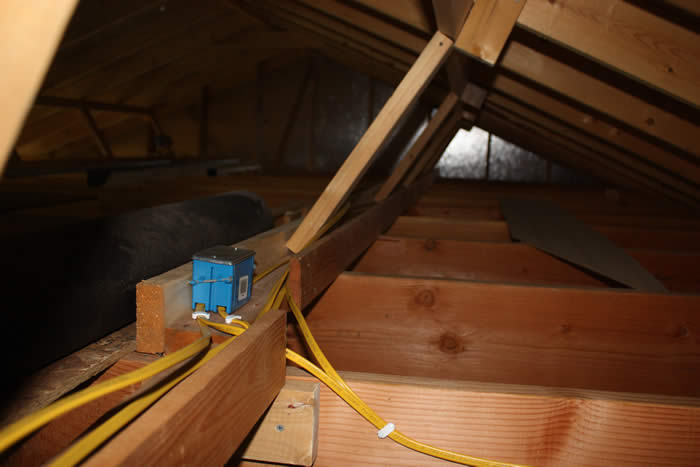
Beyond that, I like the idea of running everything through the "attic" space, for several reasons; chief among them:
1. - Future access for maintenance/upgrades will be relatively easy.
2. - If you live in an area where flooding might be a concern, this keeps the electrical as far out of harm's way as possible.
I would
NOT run the wires atop the trusses, if it can be avoided; stick to the sides wherever possible. You might not be planning on this now; but sooner or later, you (or the next owner) will probably want to put down some sort of flooring (even if that's just loose sheets of plywood) up there, such as to make the space more useful for storage. Having wires (of any sort) sitting atop the joists/trusses will then become a problem.
Try to avoid drilling holes in structural members wherever possible. But if/when you do encounter a spot where it is necessary, make sure that the hole is as small as possible, more-or-less centered in the "small" dimension of the piece, and NOT right at the end length-wise. There are formal specs for this sort of thing if you want to get that fussy about it; but this rule of thumb will cover 99% of the situations you're likely to encounter.
And finally, when in doubt, go one size larger on the wire than you THINK you need. For example, I'd personally never use AWG14 for anything; the marginal cost difference to step up to AWG 12 is just too trivial to worry about in the overall scheme of things. And upsizing the wire will allow you to neatly side-step any voltage-drop issues which might be engendered by long-ish wire runs.


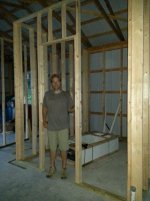
 . I'll post a couple of pictures of my initial framing. 10 foot interior walls. I really like the idea of putting a board across distrances to get the wire out of the way, secured properly, and look clean.