To avoid these ads, REGISTER NOW!

Woodworking 101--Tools and Tips

turbowoodworker

Well-known member
Joined
Mar 18, 2012
Messages
3,524
Location
Apex NC
Hey Jim, that's the one I talked about metal shavings on the drill bit from the **** bushings in a previous post. Good luck there.
 
To avoid these ads, REGISTER NOW!

madison069

Well-known member
Joined
Nov 5, 2010
Messages
4,148
Location
Monroeville, PA
OP
J

jimreed2160

Well-known member
Joined
Aug 7, 2016
Messages
3,589
Location
Tallahassee FL
Hey Jim, that's the one I talked about metal shavings on the drill bit from the **** bushings in a previous post. Good luck there.


Sorry to hear about your experience. Maybe they fixed it or maybe not. I will be able to test both units once I get this table top out of my shop and get my bench back. I have been thinking of worthwhile projects for the test.
 
OP
J

jimreed2160

Well-known member
Joined
Aug 7, 2016
Messages
3,589
Location
Tallahassee FL
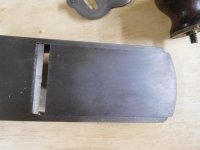
Stanley #62

Well the low temps in the shop did not shut down the Evaporust as it did a pretty good job overnight. I cleaned up the plane, reground the bevel and sharpened the blade. Now this plane really rocks.
 

Attachments

  • DSCN5423.jpg
    DSCN5423.jpg
    143.8 KB · Views: 60
  • DSCN5424.jpg
    DSCN5424.jpg
    128.5 KB · Views: 56
OP
J

jimreed2160

Well-known member
Joined
Aug 7, 2016
Messages
3,589
Location
Tallahassee FL
FrankenKreg

I had a little time in the shop this afternoon so I mounted the HF jig and tested it out. Mounting went well--I only broke one screw and the other three hold pretty well. If I have any problems I will have to move it and remount. The HF screws were too long so I scrounged some from my stock. Gee, you'd think that free screws would be higher quality.?!

The first attempt was awful. I could not drill and I saw metal flakes in the dust. But then I remembered something I read about the HF jig and its crappy drill bit. So I switched to the Kreg drill bit and it worked like a knife in warm butter.

I am not too concerned about the metal flakes. The bushings look OK on the inside but they are only 1 1/4" long. The entire sleeve is 2" and I think the shavings are coming from the end. Once I mill off the excess metal from the jig body I should be fine.

On my last trip to HD I noticed that the single jig with drill bit was on sale for $19, while the drill bit alone was $16. I might pick one of the kits up so I have a spare drill bit.

Otherwise, my FrankenKreg seems to be just fine. The HF jig is sturdy and adjusts for 1/2"--2" lumber. And the Kreg drill bit works great.
 
OP
J

jimreed2160

Well-known member
Joined
Aug 7, 2016
Messages
3,589
Location
Tallahassee FL
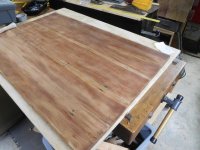
Table top

So the good news is that the learning curve on this burn in knife is shallow and the second fill in went much better than the first. I had lots of overspill on the first one and spent much time in cleanup. The fill in sticks I got were some sort of plastic, not shellac, and they clean up easily. Most of it can be scraped with a knife or sharp chisel. Sandpaper takes the rest but it clogs quickly. That is OK because I have lots.

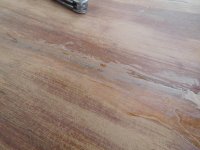
So far I am pleased with the results but must spend much more time sanding and cleaning up. I especially like the color and think it will finish and be much more pleasing than the original dark filler.
 

Attachments

  • DSCN5431.jpg
    DSCN5431.jpg
    139.4 KB · Views: 55
  • DSCN5430.jpg
    DSCN5430.jpg
    135.7 KB · Views: 55
  • DSCN5429.jpg
    DSCN5429.jpg
    143.7 KB · Views: 55
  • DSCN5428.jpg
    DSCN5428.jpg
    142.2 KB · Views: 51
  • DSCN5427.jpg
    DSCN5427.jpg
    139.6 KB · Views: 52
  • DSCN5426.jpg
    DSCN5426.jpg
    139.9 KB · Views: 53
  • DSCN5425.jpg
    DSCN5425.jpg
    142.7 KB · Views: 53

EOC_Jason

Well-known member
Joined
Jun 25, 2012
Messages
11,388
Location
Bentonville, AR
Stanley #62

Well the low temps in the shop did not shut down the Evaporust as it did a pretty good job overnight. I cleaned up the plane, reground the bevel and sharpened the blade. Now this plane really rocks.

Excuse my ignorance, I tried searching the net but could not find any pics or info... What exactly does that cam lever you made in the front do???? I've never seen that on a hand plane before.
 

Duker

Well-known member
Joined
Sep 25, 2010
Messages
10,861
Location
Livingston, TX
Excuse my ignorance, I tried searching the net but could not find any pics or info... What exactly does that cam lever you made in the front do???? I've never seen that on a hand plane before.


Not to speak for Jim but it adjusts the size of the mouth (width of the opening) of the plane. It allows you to fine tune to the thickness of the blade adjustment cut.


Sent from my iPad using Tapatalk Pro
 
OP
J

jimreed2160

Well-known member
Joined
Aug 7, 2016
Messages
3,589
Location
Tallahassee FL
Excuse my ignorance, I tried searching the net but could not find any pics or info... What exactly does that cam lever you made in the front do???? I've never seen that on a hand plane before.

Just what Duker said.

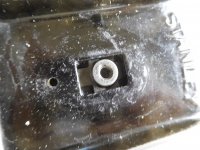
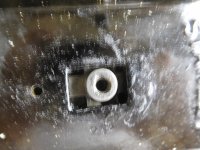
Stanley was granted a patent on Feb 20, 1894 for moveable plane mouth that was controlled by an eccentric lever. The mech was used on their block planes and on the much larger #62. The lever piece I reproduced is held in place by a pivot pin and the slot is engaged by a casting boss on the bottom of the front knob. The knob is attached to a casting boss on the movable front sole of the plane and lateral action of the lever is translated to up and back action on the front piece. It allows the mouth to be adjusted open or tight.

There are many forces of physics and geometry that explain how and why the plane blade cuts like it does in certain cases but the quick answer is that a slight blade setting and a tight mouth will result in a very fine shaving. So the jack plane can have a large mouth and do its job well. But a low angle plane needs a tight mouth to take a wispy shaving. Also, smoothing planes and shoulder planes need a tight mouth to do their best work.

I like the adjustable mouth feature on planes but rarely change it once I find a setting I like. But every woodworker has different styles and sometimes even the wood at hand requires something different. Too tight and the mouth clogs--too open and it is hard to get a wispy shaving. Get it right and leave it alone is my motto.
 

EOC_Jason

Well-known member
Joined
Jun 25, 2012
Messages
11,388
Location
Bentonville, AR
Whenever you get a chance, could you take some pics of the moving part(s)? I feel like there is something on the bottom side I can't see that would really put a visual aid to your explanation. :)
 

rlitman

Well-known member
Joined
Oct 18, 2010
Messages
24,591
Location
Long Island
...I like the adjustable mouth feature on planes but rarely change it once I find a setting I like. But every woodworker has different styles and sometimes even the wood at hand requires something different. Too tight and the mouth clogs--too open and it is hard to get a wispy shaving. Get it right and leave it alone is my motto.

Same here. Though I have found myself tweaking it when working with difficult pieces where the grain runs all sorts of weird ways.
 

Duker

Well-known member
Joined
Sep 25, 2010
Messages
10,861
Location
Livingston, TX
Just what Duker said.


Stanley was granted a patent on Feb 20, 1894 for moveable plane mouth that was controlled by an eccentric lever. The mech was used on their block planes and on the much larger #62. The lever piece I reproduced is held in place by a pivot pin and the slot is engaged by a casting boss on the bottom of the front knob. The knob is attached to a casting boss on the movable front sole of the plane and lateral action of the lever is translated to up and back action on the front piece. It allows the mouth to be adjusted open or tight.


There are many forces of physics and geometry that explain how and why the plane blade cuts like it does in certain cases but the quick answer is that a slight blade setting and a tight mouth will result in a very fine shaving. So the jack plane can have a large mouth and do its job well. But a low angle plane needs a tight mouth to take a wispy shaving. Also, smoothing planes and shoulder planes need a tight mouth to do their best work.


I like the adjustable mouth feature on planes but rarely change it once I find a setting I like. But every woodworker has different styles and sometimes even the wood at hand requires something different. Too tight and the mouth clogs--too open and it is hard to get a wispy shaving. Get it right and leave it alone is my motto.


Note to self..... never answer a question for Jim as he is much more descriptive and eloquent than I am ...lol


Sent from my iPhone using Tapatalk Pro
 
OP
J

jimreed2160

Well-known member
Joined
Aug 7, 2016
Messages
3,589
Location
Tallahassee FL
Whenever you get a chance, could you take some pics of the moving part(s)? I feel like there is something on the bottom side I can't see that would really put a visual aid to your explanation. :)

Of course. Here are pictures of the #62 and its sliding front sole.
 

Attachments

  • DSCN5443.jpg
    DSCN5443.jpg
    128.9 KB · Views: 38
  • DSCN5442.jpg
    DSCN5442.jpg
    131.7 KB · Views: 38
  • DSCN5441.jpg
    DSCN5441.jpg
    136 KB · Views: 37
  • DSCN5440.jpg
    DSCN5440.jpg
    141.4 KB · Views: 37
  • DSCN5439.jpg
    DSCN5439.jpg
    139.8 KB · Views: 35
  • DSCN5438.jpg
    DSCN5438.jpg
    124.5 KB · Views: 36
  • DSCN5437.jpg
    DSCN5437.jpg
    127.5 KB · Views: 35
OP
J

jimreed2160

Well-known member
Joined
Aug 7, 2016
Messages
3,589
Location
Tallahassee FL
More moving fronts

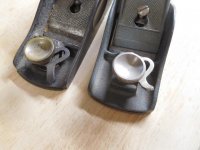
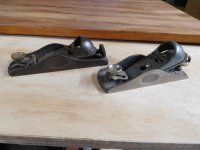
While I was in the shop, I looked at my other planes with sliding front pieces. There is a Stanley low angle block and a Craftsman. Both of them use the eccentric patent.

It is important to note is that these planes have a lower bedding angle. Most plane blades are bedded at 45 degrees and the blade is used bevel up. That means the angle of attack is the plane bed, or 45 degrees. But these planes have beds that are more acute than the bevel so the blade must be used in BEVEL UP position. The Craftsman is bedded at about 20 degrees, but the low angle block and the #62 are bedded at 12 degrees. If the blade is beveled at its usual 30 degrees, then the angle of attack is 42 degrees. A 25 degree bevel yields an attack angle of 37 degrees.

I think this is why all woodworkers need to study geometry in high school.
 
OP
J

jimreed2160

Well-known member
Joined
Aug 7, 2016
Messages
3,589
Location
Tallahassee FL
Pictures?

I keep forgetting. Here they are.
 

Attachments

  • DSCN5444.jpg
    DSCN5444.jpg
    139.7 KB · Views: 43
  • DSCN5445.jpg
    DSCN5445.jpg
    134.4 KB · Views: 43
  • DSCN5446.jpg
    DSCN5446.jpg
    138.7 KB · Views: 42
OP
J

jimreed2160

Well-known member
Joined
Aug 7, 2016
Messages
3,589
Location
Tallahassee FL
Kreg jig tryout

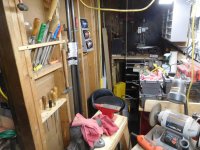
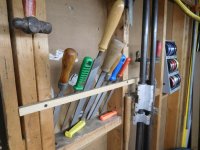
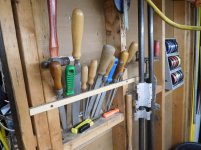
I used the rat tail files while I was working on the eccentric adjuster and got put out by the clutter. Seems there were just too many files in the user area. So I made a holder for the rat tail and square files. It seemed like a good time to try out the Kreg so I used that to attach the holder to the studs. Well, it worked like a champ. Two screws in each end and the thing is almost tight enough to sit on. Best part is the files are less crampy now.
 

Attachments

  • DSCN5450.jpg
    DSCN5450.jpg
    144.8 KB · Views: 90
  • DSCN5449.jpg
    DSCN5449.jpg
    137.4 KB · Views: 94
  • DSCN5448.jpg
    DSCN5448.jpg
    137.3 KB · Views: 97
  • DSCN5447.jpg
    DSCN5447.jpg
    142.7 KB · Views: 93

Gasgt1

Well-known member
Joined
Dec 23, 2013
Messages
996
Location
100 miles SW of Chicago
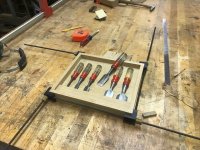
Making a chisel holder from the scraps of quartersawn white oak.


These were my father's chisels, he died a few years ago

Many years ago, my mother bought him this set of chisels one at a time as she could afford them over the course of a year.
She gave them to dad for Christmas .

Dad was not a woodworker
Over the years they were used for who knows what all including opening cans of paint but he never lost any.

I found them scattered in various drawers and tool boxes.

They have been rescued and properly sharpened for the first time ever.

They are now my bench chisels.
Not the fanciest ones out there but priceless to me
 

Attachments

  • chisels.jpg
    chisels.jpg
    134.4 KB · Views: 136
OP
J

jimreed2160

Well-known member
Joined
Aug 7, 2016
Messages
3,589
Location
Tallahassee FL
Gas--Nice save on the chisel set and what a treasure to have in your shop. I bought a 1/4" chisel like that years ago at a Grants store. Remember them? Anyway, I remember that I was not a real fan of the cheesy handles but was really impressed with the steel and the grinding. The blade was as good as any Stanley or Marples blue that I had.
 
To avoid these ads, REGISTER NOW!
OP
J

jimreed2160

Well-known member
Joined
Aug 7, 2016
Messages
3,589
Location
Tallahassee FL
Table top

I finished working with the burn in knife but never posted the pictures. While working in the front, I found that the knife and filler worked well on the cracks because it hardened quickly. But the largest gap up top was not much larger than 1/8". The story on the bottom, however, was much different. both of them were large open cracks from the edge to the patch. I inserted the patch a little over an inch from the end and left a crack on the edge. On the underside, these cracks were deep. Going solid would take a whole stick and I was afraid that would act like a wedge to split the end open if the wood wanted to move.

To solve this dilemma, I cut some soft pine blocks and stuck them into the voids. It took very little filler to make things right. And the best part is that there is at least a little room for movement.
 

Attachments

  • DSCN5432.jpg
    DSCN5432.jpg
    131.2 KB · Views: 69
  • DSCN5433.jpg
    DSCN5433.jpg
    136.4 KB · Views: 66
  • DSCN5434.jpg
    DSCN5434.jpg
    138.6 KB · Views: 64

bubinga

Well-known member
Joined
Jul 26, 2014
Messages
12,744
Location
Bridgeport Ohio. (Across River From Wheeling WV)
Table top

I finished working with the burn in knife but never posted the pictures. While working in the front, I found that the knife and filler worked well on the cracks because it hardened quickly. But the largest gap up top was not much larger than 1/8". The story on the bottom, however, was much different. both of them were large open cracks from the edge to the patch. I inserted the patch a little over an inch from the end and left a crack on the edge. On the underside, these cracks were deep. Going solid would take a whole stick and I was afraid that would act like a wedge to split the end open if the wood wanted to move.

To solve this dilemma, I cut some soft pine blocks and stuck them into the voids. It took very little filler to make things right. And the best part is that there is at least a little room for movement.
looks Great!
 

CRSINMICH

Well-known member
Joined
Aug 15, 2015
Messages
2,397
Location
Southeastern Michigan
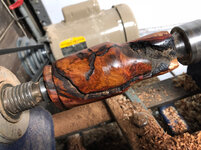
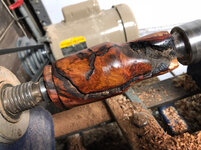
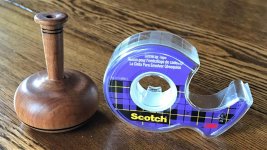
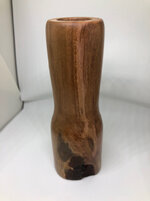
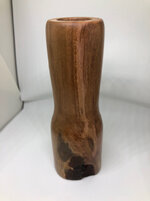
chrislehr: Very nice job on that vase. I like the inclusions. What kind of finish did you use? My brother (a non-posting GJ member) uses small scraps and odd pieces to turn what I call Weed Vases (pronounced vah-zes). The contrast between a dried sprig of something and the elegant shape is striking. Unfortunately, I don't have a picture of a vase with a dried weed but here is one of just the vase. The tape dispenser is only for scale. It wasn't intended as a pairing.
 

Attachments

  • Weed Vase.jpg
    Weed Vase.jpg
    156.4 KB · Views: 57

chrislehr

Well-known member
Joined
Apr 10, 2009
Messages
1,704
Location
Portland, OR
chrislehr: Very nice job on that vase. I like the inclusions. What kind of finish did you use? My brother (a non-posting GJ member) uses small scraps and odd pieces to turn what I call Weed Vases (pronounced vah-zes). The contrast between a dried sprig of something and the elegant shape is striking. Unfortunately, I don't have a picture of a vase with a dried weed but here is one of just the vase. The tape dispenser is only for scale. It wasn't intended as a pairing.


Weed vases is exactly what the wife asked for. :). That insert needs to be painted a dark color imo but yea the inclusions came out beyond my actual abilities to plan these sort of things!

Finish was sand to 400 then sanding sealer then yorkshire grit followed by hampshire sheen. Wood was plum. 100 year old one too.

fbd0627960164b5d17010403fe56cedc.jpg
 

Attachments

  • fbd0627960164b5d17010403fe56cedc.jpg
    fbd0627960164b5d17010403fe56cedc.jpg
    720.5 KB · Views: 2
Last edited:
OP
J

jimreed2160

Well-known member
Joined
Aug 7, 2016
Messages
3,589
Location
Tallahassee FL
Chris--It may be out of plumb but it looks good to me! Oh, wait, PLUM. My bad.

That is an outstanding piece of work. I'll bet you get a special thrill watching what emerges from the blank. One more reason that ww is fun.

Wife should be impressed.
 
OP
J

jimreed2160

Well-known member
Joined
Aug 7, 2016
Messages
3,589
Location
Tallahassee FL
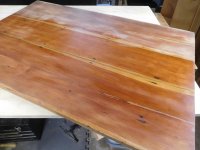
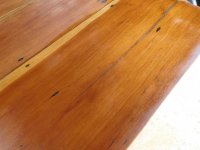
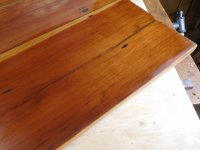
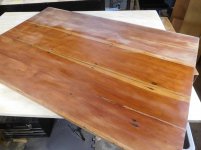
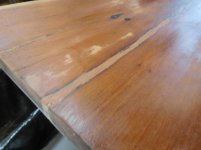
Bubinga--Thanks for your kind words. I did some sanding today and got to try out my redneck air scrubber. I ran it for an hour and it seemed to work OK. At least the motor did not blow up. I noticed that my glasses did not get dusty so that is good news.

I was hand sanding the top and prepping for finish. To that end, I gave it a dust up and wipe down with turps. The beauty is shining through as well as a few random spots of filler. I scraped them with a pocketknife and the filler came right up.

I tried to get a few shots of the cherry surface. It is that dark cherry elegance that is only seen on antiques. I am anxious to get this thing done.
 

Attachments

  • DSCN5452.jpg
    DSCN5452.jpg
    136.3 KB · Views: 63
  • DSCN5455.jpg
    DSCN5455.jpg
    146.6 KB · Views: 58
  • DSCN5454.jpg
    DSCN5454.jpg
    142.7 KB · Views: 60
  • DSCN5453.jpg
    DSCN5453.jpg
    138 KB · Views: 63
  • DSCN5451.jpg
    DSCN5451.jpg
    128.8 KB · Views: 63
OP
J

jimreed2160

Well-known member
Joined
Aug 7, 2016
Messages
3,589
Location
Tallahassee FL
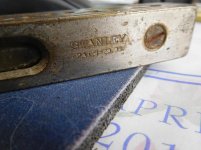
Stanley #39 1/2 Machinist Level

Mr Mailman was good to me today. He dropped off a type I #39 1/2 level that was made at the very end of the Victorian tool elegance days. Stanley made these from 1896 until WWII I suppose. I cannot locate much info on them but I have seen three different types. This early scrolled version was the first one offered and the second type was introduced sometime around 1910, so this little guy is 108-124 years old. It is stamped with the patent date of 6-23-96. There was also a 4" version but I have never seen one of those.

Pleasing to the eye. I think I will keep this one beside the computer.
 

Attachments

  • DSCN5456.jpg
    DSCN5456.jpg
    140.7 KB · Views: 83
  • DSCN5457.jpg
    DSCN5457.jpg
    138.9 KB · Views: 70

chrislehr

Well-known member
Joined
Apr 10, 2009
Messages
1,704
Location
Portland, OR
Chris--It may be out of plumb but it looks good to me! Oh, wait, PLUM. My bad.

That is an outstanding piece of work. I'll bet you get a special thrill watching what emerges from the blank. One more reason that ww is fun.

Wife should be impressed.

She was pretty happy. Less than when I told her at 1:30am that I made it than this morning, but still.

Better yet, I can show her the stump where the tree was - this is stuff a dragged home about a year ago. You rarely see a plum tree get 80+ years old - most are orchard fodder and once the main production years cease they are usually replaced. Portland has some amazing trees so when has fallen and its a nice looking wood, I try to snag some.

Here's one of the cookies still too wet to do anything with (old pic, was VERY wet here)

https://imgur.com/FGEurQC
 
OP
J

jimreed2160

Well-known member
Joined
Aug 7, 2016
Messages
3,589
Location
Tallahassee FL
She was pretty happy. Less than when I told her at 1:30am that I made it than this morning, but still.

Better yet, I can show her the stump where the tree was - this is stuff a dragged home about a year ago. You rarely see a plum tree get 80+ years old - most are orchard fodder and once the main production years cease they are usually replaced. Portland has some amazing trees so when has fallen and its a nice looking wood, I try to snag some.

Here's one of the cookies still too wet to do anything with (old pic, was VERY wet here)

https://imgur.com/FGEurQC

Urban forestry is cool. I was able to snag some dogwood a few years ago and made a table for my friend. Your plum was a good find.
 

chrislehr

Well-known member
Joined
Apr 10, 2009
Messages
1,704
Location
Portland, OR
chris: Anyone who could turn a weed vase out of that section of plum must have other examples of his work. Pictures please?


Im chrislehr on instagram. Im a total noob tho

I doubled down on plum last night

c2dd3f24917c7c1486197c3863d5e0b6.jpg
 

Attachments

  • c2dd3f24917c7c1486197c3863d5e0b6.jpg
    c2dd3f24917c7c1486197c3863d5e0b6.jpg
    481.4 KB · Views: 3

AJE

Member
Joined
Jul 17, 2012
Messages
22
I didn't think this warranted it's own thread, but I have a question about saw blades.

I bought a Freud thin kerf ripping blade for my new SawStop table saw. I bought it primarily for ripping 1x4 pine boards.

I also need to cut out pieces of 5mm underlayment . Should I switch the blade for cutting the underlaymemt or will that make a significant difference in blade life?
 

PCustoms

Well-known member
Joined
Jul 23, 2011
Messages
22,588
Location
VT
I didn't think this warranted it's own thread, but I have a question about saw blades.

I bought a Freud thin kerf ripping blade for my new SawStop table saw. I bought it primarily for ripping 1x4 pine boards.

I also need to cut out pieces of 5mm underlayment . Should I switch the blade for cutting the underlaymemt or will that make a significant difference in blade life?

I always pick up a cheap blade on sale for general purpose cutting, and it stays on the saw until a "real" job comes up.
 

AJE

Member
Joined
Jul 17, 2012
Messages
22
The time it took to post that question you could have just swapped out the blade...

It's not the time it takes to swap the blade, its whether the underlayment will wear the blade out faster or not enough to make a difference.
 
OP
J

jimreed2160

Well-known member
Joined
Aug 7, 2016
Messages
3,589
Location
Tallahassee FL
In my experience, manufactured wood products are very abrasive and unkind to sawblades. I would not use a special thin kerf blade on plywood of any kind.

But as a general rule, I don't like swapping blades. I like to buy good carbide toothed blades and run them until I don't like the cut.
 

turbowoodworker

Well-known member
Joined
Mar 18, 2012
Messages
3,524
Location
Apex NC
A blade made specifically for ripping is then specifically not for use on plywood or underlayment. As earlier stated, an inexpensive multipurpose blade is your best choice for underlayment. Save that thin kerf for ripping only.
 
To avoid these ads, REGISTER NOW!
Top Bottom