To avoid these ads, REGISTER NOW!

Wrong tool (bolt rounding)?

uart

Well-known member
Joined
Nov 17, 2011
Messages
1,226
Location
Australia
So an open end wrench is to be used only when sockets or closed end cannot access the fastener?
An open ended wrench is definitely more prone to slipping than the alternatives, but sometimes you don't have room to get a box end or socket over the end of the bolt and you can only come at it from the side. Then you need your open enders.

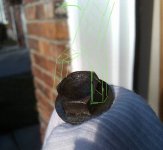
The damage to the drain plug in your photo definitely looks like the wrench wasn't applied square-on to the head. The chance of an open ender slipping increases drastically if you don't have it aligned properly.

It doesn't mean that you can't use an open ended wrench in this case, a drain plug shouldn't be all that tight. But you have to be more careful with an open ender compared with the alternatives, so it wouldn't be my first choice. Basically when you found it was very tight the best thing to do would have been to stop there and go get a breaker bar and socket (either 12 point or 6 point would have worked fine in this case).

Obviously the damaged plug could be replaced, but honestly, for the amount of torque you need with a drain plug, you should still be able to get plenty of grip on it with any decent socket.
 
Last edited:
To avoid these ads, REGISTER NOW!

HandyManny

Well-known member
Joined
Mar 13, 2009
Messages
2,239
Location
Out West
So an open end wrench is to be used only when sockets or closed end cannot access the fastener?

Where and when you can, it's usually best to use the box-end. I usually reserve the open ends for areas I can only slide a wrench head into. Typically though you should be able to losen a hex head with an open end too, done it many times. Sometimes if they are really tight and you have the space (room) it's best to go with the box-end or a socket.
 

HandyManny

Well-known member
Joined
Mar 13, 2009
Messages
2,239
Location
Out West
Thats one of the reasons that a high end wrench really makes a difference, i guarantee if you put a snap on wrench on there and had it positioned correctly that wouldnt have happened because a snap on wrench will not spread the jaws.

That said, whenever dealing with rusted or stuck hardware, a high quality 6 point socket is the best choice, with a 6 point box wrench being the next best, then a 12 point box wrench, etc etc


I've used them all, lost of stuff from the cheap to the high dollar wrenches. Never had a problem with the jaws spreading. But that's just been my experience.

On rusted and coroded fasteners I'll try 12pt box or 6pt box, wichever is handy at the moment and depending on how badly rusted the fastener is. If any of those round the hex, then I move up to the large Channellock Nut-Busters, they always do the trick when space is available. Then replace the hardware with brand new stuff tightened down with the right wrench or socket.
 

Skin

Well-known member
Joined
Feb 24, 2010
Messages
11,713
Location
Boston
Thats one of the reasons that a high end wrench really makes a difference, i guarantee if you put a snap on wrench on there

And that there is why a Harbor Freight wrench is a hunk of ****. Now if that was done with a quality wrench it would be an IO problem.

It has little to do with how "quality" [expensive] a wrench is. Open ends simply **** for stuck and or corroded fasteners. Snap-On, China, Taiwan. Wouldnt matter. Modified open ends [FD+/Opti-torque/Knuckle Saver etc] do help a little by giving a larger area to distribute the load but those arent on every wrench and are still far inferior even to the contact area offered by a 12pt box end.

This is simply a case of wrong tool wrong job. My double box wrenches are my go-to tools for drain plugs under normal circumstances.
 
Last edited:

t1r2u3s4t

Well-known member
Joined
Oct 30, 2011
Messages
250
Looks like the bolt was overly tighten to begin with, and the wrench slipped or the bolt was of low quality (probably the former).
 
To avoid these ads, REGISTER NOW!

HandyManny

Well-known member
Joined
Mar 13, 2009
Messages
2,239
Location
Out West
Looks like the bolt was overly tighten to begin with, and the wrench slipped or the bolt was of low quality (probably the former).

More like maybe the bad quality of fit rather than the bad quality of material. A low quality steel tool would likely be damaged as well. But see how it made a mark on that plug?

A plug that size should not be much more than about 21 ft/lbs - 24 ft/lbs of torque max anyway.
 

uart

Well-known member
Joined
Nov 17, 2011
Messages
1,226
Location
Australia
Yep, also if the wrench is mis-aligned like I've shown (exaggerated) in the attachment then no matter how good the quality it wont stand a chance against a very tight bolt. It will slip over the top and gouge out exactly the damage that is shown in the photo.
 

Attachments

  • wrench.jpg
    wrench.jpg
    30.7 KB · Views: 11
Last edited:

71flh

Banned
Joined
Jun 15, 2011
Messages
379
What logic could lead to the OP thinking 2 points of contact would be better than 6?
 

t1r2u3s4t

Well-known member
Joined
Oct 30, 2011
Messages
250
I think slippage was involved too. Due to the location of the plug I would never use an open wrench, too easy to slip on oily surface...

Yep, also if the wrench is mis-aligned like I've shown (exaggerated) in the attachment then no matter how good the quality it wont stand a chance against a very tight bolt. It will slip over the top and gouge out exactly the damage that is shown in the photo.
 
To avoid these ads, REGISTER NOW!
Top Bottom