To avoid these ads, REGISTER NOW!

Your thoughts on thinning latex paint

Robinson1

Well-known member
Joined
Jun 22, 2015
Messages
834
Location
Kentucky
First of all let me start with, I do alot of painting. I consider myself a professional painter. I run a small construction company and a big part of what we do is residential interior and exterior painting.

Ever since all the major paint companies have went to this ultra thick paint/primer in one paint I've started thinning my paint. Depends on the brand but usually somewhere around 4-8 ounces of water per gallon.

This does two things. It improves flow leaving fewer brush marks. It also breaks the tension on the roller leaving fewer dry spots on the wall and virtually eliminated lap marks near brushed areas.

I've been thinning my paint so long at this point I consider it to be standard procedure. Never had a negative comment and I've often done it while customers watched.

Today my customer walked into the room I was getting ready to paint just as I opened a bottle of water and poured about 4 ounces in the paint. I was immediately questioned. Ultimately accused of being a fly by night hack (even though I've worked in this area for going on 15 years). The customers issue was I was doing a cut rate job by thinning my paint to "make it go farther".

I explained my methods and reasoning or tried to only to be told that they "Didnt think my company's practices were a good fit for their project."

At this point I apologised and packed up and left.

So my question. If you hired me to paint your house and I added a few ounces of water to the paint would you have a problem with it?
 
To avoid these ads, REGISTER NOW!

aka Larry

Well-known member
Joined
May 2, 2012
Messages
8,084
Location
Eastern, NC
Assuming you stand by your work, I'd have no problem with it. That, and the fact I've also done it (for spraying) with no ill affects.
 

rlitman

Well-known member
Joined
Oct 18, 2010
Messages
24,642
Location
Long Island
...So my question. If you hired me to paint your house and I added a few ounces of water to the paint would you have a problem with it?

Well, here's some down-sides:
- The manufacturer may prohibit it, thereby voiding any potential warranty
- Why use water when you can use something better like Floetrol or M-1 Mildewcide (and I see insecticide options now too)?
- Anything you stir in yourself doesn't get mixed in as evenly as you'd think.

For my part, if I'm adding anything to latex paint, I'm doing it at the store and having them put my can on the shaker for a few minutes.

But other than those SMALL issues, I agree that a few ounces of water in a gallon should be just fine. If anything, it might reduce the hiding power of the paint just a little bit, but no paint hides as well as the manufacturer's claim anyway, so I always plan on more coats than the minimum recommended.

edit: I see comments online about the water chemistry potentially being an issue. My water is very soft, and I don't see that being a problem, but maybe if your water is full of minerals...
Also, I always wet my brushes or rollers and then give them a quick spin dry before they touch paint. Water for latex, mineral spirits for oil based, but a bone dry brush or roller never touches paint.
 
Last edited:

Davefr

Well-known member
Joined
Jan 7, 2010
Messages
11,842
Location
OR
Every label I've seen says no more then 10% which implies a little thinning is OK. I agree that Floetrol might be a better choice.
 

ford33

Well-known member
Joined
Feb 26, 2011
Messages
2,118
Location
Chicago, IL. USA
I have used Floetrol with good results. I have thinned with water when spraying but that's only for my own home.

If I was the customer and saw this I might question why thinning the paint when brushing and rolling was necessary. Your answer sounded reasonable. I don't think I would have told you to leave.
 

vavet

Well-known member
Joined
Mar 6, 2012
Messages
5,329
Location
Ashland, VA
Was this a homeowner? Project foreman/supervisor? House flipper? Residential or commercial? New construction?
I'm very curious about the person doing the questioning. Was this person someone who might've done painting themselves but just can't do it because of time or physical constraints?
If you were cutting it with a quart of water per gallon, I could understand the skepticism, but a few ounces per gallon is not going to make a difference in how far that paint goes in a room.

You're far more experienced in painting than I am. I might've questioned you, more out of curiosity than anything else.

I hope this paint wasn't already tinted...or at least you could leave the paint there and recoup your investment.
 

Falcon67

Well-known member
Joined
Jun 11, 2009
Messages
18,371
Location
Merkel, TX
I need to remember your method because I've seen same as you - rolling or brushing straight out of the can seems to leave voids. And the current paints I've used dry damn quick and don't seem to want to lay out well on smooth (door) surfaces. I even chilled the shop and a door down to around 70F over a day to paint a door. The K-M paint laid out "OK" but brush marks were clearly there and it started to set up real dang quick.

So yea - this customer is going off for some weird reason. Thinning for application is why they sell paint thinner and why there are instructions on the side of the can saying what's acceptable as far as thinning. Standard practice.
 
OP
R

Robinson1

Well-known member
Joined
Jun 22, 2015
Messages
834
Location
Kentucky
Was this a homeowner? Project foreman/supervisor? House flipper? Residential or commercial? New construction?
I'm very curious about the person doing the questioning. Was this person someone who might've done painting themselves but just can't do it because of time or physical constraints?
If you were cutting it with a quart of water per gallon, I could understand the skepticism, but a few ounces per gallon is not going to make a difference in how far that paint goes in a room.

You're far more experienced in painting than I am. I might've questioned you, more out of curiosity than anything else.

I hope this paint wasn't already tinted...or at least you could leave the paint there and recoup your investment.

Homeowner, Male, I'd guess late 60s

Never talked to the guy until he called and asked for an estimate. So I dont know what his background is.

Best guess on the house is it was probably built sometime in the 80s. Just a standard no frills ranch house.

As for the paint I'm about $200 in the hole on this job and it's a color I dont see ever being able to use.

Plus 70 mile round trip to the job
 

bradpac

Well-known member
Joined
Sep 8, 2013
Messages
721
Location
Central TX
I agree with you on the consistency of the new paints and the flaws. I have never thought of thinning them with water, but your explanation does make sense. I still prefer a primer coat followed by one or more color coats for the best finish, usually the thicker paint won't flow and you end up with a roller texture with missing blotches with one coat. This is my findings as a non-professional, but experienced homeowner.

For me, if I hired a professional and they had sound reasoning for doing it a way that I found questionable then I would let them do it. If it looks like **** when it's done I'll address it at that point.
 

engineer2

Well-known member
Joined
Dec 13, 2009
Messages
11,823
Location
Chicago burbs
I had a similar reaction the first time I saw my house painter do that. Got a similar explanation. I just let them do their work. The job came out fine.

Might be better to use one of the commercial additives to prevent customer backlash.

I can see where it is a good thing. Thick paint is a pain to roll out, but splatters less. I have thinned with a little water and some denatured alcohol. Tell a customer it's your own secret mixture, LOL.
 
Last edited:

bczygan

Well-known member
Joined
Nov 4, 2009
Messages
22,002
Location
DETROIT! Arsenal of Scrappers
First of all let me start with, I do alot of painting. I consider myself a professional painter. I run a small construction company and a big part of what we do is residential interior and exterior painting.

Ever since all the major paint companies have went to this ultra thick paint/primer in one paint I've started thinning my paint. Depends on the brand but usually somewhere around 4-8 ounces of water per gallon.

This does two things. It improves flow leaving fewer brush marks. It also breaks the tension on the roller leaving fewer dry spots on the wall and virtually eliminated lap marks near brushed areas.

I've been thinning my paint so long at this point I consider it to be standard procedure. Never had a negative comment and I've often done it while customers watched.

Today my customer walked into the room I was getting ready to paint just as I opened a bottle of water and poured about 4 ounces in the paint. I was immediately questioned. Ultimately accused of being a fly by night hack (even though I've worked in this area for going on 15 years). The customers issue was I was doing a cut rate job by thinning my paint to "make it go farther".

I explained my methods and reasoning or tried to only to be told that they "Didnt think my company's practices were a good fit for their project."

At this point I apologised and packed up and left.

So my question. If you hired me to paint your house and I added a few ounces of water to the paint would you have a problem with it?
As a general contractor I would also not have allowed water. But I would instead have required Floetrol to be used.

Bill
 

paulsomlo

Well-known member
Joined
Jul 16, 2013
Messages
3,904
Location
Northern Colorado
The last time I brushed latex, I used Floetrol and still couldn't get it to flow well. I put just a touch of water in it, made all the difference. I suspect your customer never tried to brush latex in 90 deg and 20% humidity. And the $200 and RT gas and time? Customer should have paid you for it; almost sounds like there was something else going on, and he was looking for a reason to get rid of you.

Knowing what I know, if I were the customer and you said "because the paint flows better", that would communicate to me that you actually care about your work.
 

The Cobbler

Super Moderator
Staff member
Joined
Oct 24, 2013
Messages
25,954
Location
Niagara Region, Ontario, Canada
From the customers side, someone that doesn't understand, I totally get his reaction....
you're tampering with a well engineered formula. you're thinning the paint so it goes on thinner & covers more ...
From a contractors side, I get why you're doing it & have no concerns .
 

SGKent

Banned
Joined
Feb 12, 2010
Messages
1,959
Location
Citrus Heights CA
I have thinned paint with water to spray, especially in hot weather. Some paints are too thick to work well as they are. They dry out as they sit in the roller tray also.

Recently I did my doors rather than pay my painter to do them. He is doing the house, I am doing the doors and shed. He recommended a specific primer because one of the doors had to be stripped for checkering and I did not want to replace it at this time. It is 40 years old, the heat to take the old paint off created some waves but it hides behind a screen. Some day I will replace it. Anyway, he also said to get the finish I want, use this specific foam roller. What a mess. The roller skipped and slid. It was awful. Took almost as many hours sanding the door after the primer as it did to strip it. The acrylic color coats went on just fine with the same roller because it was a thinner paint than the primer. Next time I use this primer it will be thinned or sprayed on. The irony is that if you were painting with an oil based paint no one would have said a word if you added a little mineral spirits to it to get the coverage you wanted. I'd rather have 2 or 3 thinner coats than one big gloppy thick one.
 
Last edited:

Daniel Dudley

Well-known member
Joined
Sep 4, 2009
Messages
3,546
The best thing I have used is Benjamin Moore Extender. It flows better and doesn't drag or skin as fast. You can tell it is latex based.
 
To avoid these ads, REGISTER NOW!

NUTTSGT

Super Moderator
Staff member
Joined
Sep 14, 2009
Messages
51,077
Location
Northern Central Ohio
What's the label on the can say ? If it allows thinning with water, cut it off, make copy and send it to the homeowner. Along with a simple letter of this is your standard practice and you'll stand behind your work. Did you purchase what was quoted to do the job ? If so, so him that as well.

If he gets pissy with you, doesn't really matter, you're already out of the job.
 

rburke65

Well-known member
Joined
Nov 10, 2007
Messages
12,349
Location
Canfield, Ohio
I’m just ‘Joe blow’ home over but I’ve done my share of painting...a little wate4never hurt anything n does make it to flow better.
 

Donzi camino

Well-known member
Joined
Sep 5, 2017
Messages
113
Location
new orleans la
typically what I do is pour the whole gallon in a five gallon bucket. Then add an inch of water to the empty can that has a load of paint on the sides, bottom and lid, shake the can to get all that paint off, add it to the other paint and stir.
 

mmb617

Well-known member
Joined
Dec 5, 2010
Messages
4,424
Location
PA
Slightly off topic I guess, and it was a long time ago but this thread reminded me of something and made me chuckle.

My dad was a union painter and in the summer time he had a little side business painting houses (exterior) with his two brothers doing most of the labor. They came back early one day and he asked if they had finished the house they were working on and they said that they didn't because they'd run out of paint. He immediately asked "Didn't they have a hose?"
 

SGKent

Banned
Joined
Feb 12, 2010
Messages
1,959
Location
Citrus Heights CA
Maybe his wife or business partner wanted it professionally painted, and he wanted to do it himself. If that is the case he would have complained you didn't use new brushes, or started on the wrong side of the house, and sent you off regardless.
 

machsnell

Well-known member
Joined
Jun 12, 2010
Messages
942
Location
Northern Virginia
F the guy. Outside of the money and time loss you are probably better off not having started working for a guy like that. Life is too short to deal w customers like that. He knows it all already.

I am no painter but I havent heard anyone mention problems on a job using a little water? Its water based anyway correct?

Sorry it went sour I would have never questioned a pro seeing that unless the job at the end turned out bad.

Sent from my SM-G960U using Tapatalk
 

mike93lx

ALLIANCE MEMBER
Joined
Dec 9, 2013
Messages
37,826
Location
Richmond, VA
Did you have anything in writing for the job? I'd bill him for the paint and offer to drop it off if he pays mileage
 

BD1

Well-known member
Joined
Mar 18, 2007
Messages
4,602
Location
north side
What does the manufacturer label say ?
IF you do it, why wouldn't manufacturer do it in their processing ?


Sent from my iPhone using Tapatalk
 

Git

Well-known member
Joined
May 18, 2008
Messages
6,894
Location
S Cal
^ That is what I always thought.

I try to use the product the way it was made. I really can't see thinning a paint if you're using a roller. Why doesn't the manufacturer just water it down themselves and produce more gallons for the same amount of money?

They make their paint to be thicker for a reason. Try another brand that suits you? I thought 'time was money'. As a pro painter, why would you even want to mess around with thinning the paint at all if you didn't have to? You would need another container, you would have to stir again, etc etc.

"breaks the tension on the roller leaving fewer dry spots" What does that even mean? What tension? If you're having trouble with brush marks (I am assuming your talking about trim) switch to a brand that would work better for you like Benjamin Moore Advance. Or you a product like Floetrol

This is what Sherwin William says about thinning paint:

Most products are ready to go right out of the can with no reduction necessary. Some products can be reduced to some degree. The product's data page will indicate the maximum reduction allowed if any and the correct type of reducer. Please note that reducing a paint product past the recommended levels would produce a solution that may not offer the same performance characteristics as those indicated on the product's data page. Always use the recommended solvent and never reduce past the amounts recommended by the product's manufacturer.
 

Two Speed

Well-known member
Joined
Sep 20, 2014
Messages
1,283
Location
Ontario Canada
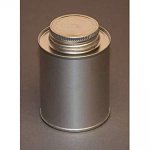
Get a quart/pint/1/2pinr metal screw top can, print out a fancy label "Paint Leveller" and in tiny print "Made specially for water based paints by imaginary paint and chemical company" and call it good. Seeing the water bottle probably was the trigger. And keep it a smaller can, otherwise it'll be 'thinning out the paint to stretch it". Just don't let them see you fill it out in the truck from your water bottle. =-)

Alex.
 

Attachments

  • screw top can.1 pint.jpg
    screw top can.1 pint.jpg
    14.7 KB · Views: 11

BillK

Well-known member
Joined
Aug 24, 2006
Messages
9,353
Location
Beautiful Southern Maryland
I don't have a problem with the paint thinning if the manufacturer allows it. I do have a problem with those who are saying he should disguise the water as something else to deceive his customers. Pretty unethical in my opinion.
 

RKA

Well-known member
Joined
Jun 9, 2010
Messages
1,744
Location
NJ
As a customer, I probably would have questioned it if I spec'd quality paint. It's not something I've done with brushed or rolled paint. However, if it was less than 10% per gallon (and you clearly stated it was far less), I would have listed to your explanation, learned something and let you go about your work. But, if you were defensive in any way, my BS alarm goes off. There are too many contractors out there cutting corners and doing things that are not in my interest. At that point, the only way to talk me down is probably to show me what you're talking about. I hate to say this, but my approach entirely depends how the interaction goes when I ask the initial question.

If you were dumping 1/2 - full quart into the gallon of paint, I would stop you in your tracks and show you the door. There wouldn't be any conversation about why you're doing it.

And Git, I believe he's talking about the dry spots left on the wall after you run a roller over it, not the trim. With thick paint it can take a few passes to get nearly full coverage and often a 2nd coat will get you to >99% coverage. But it is a bit of a PITA and you need good light to see those dry spots. I haven't used tinted primer, so they tend to stand out later if I miss a few.
 

niget2002

Well-known member
Joined
Oct 2, 2012
Messages
11,204
Location
Josephine, TX
The real question is... Did you take a big swig of the water before pouring it :)

I've used water to thin paint I was spraying. I've never thought to thin water I was rolling. I have had issues with the thicker paint from time to time, so this would make sense.
 

frankd

Well-known member
Joined
Aug 5, 2014
Messages
677
Location
Long Island, NY
My father has been been painting houses since the 1970's and has owned his own painting business since the 1980's. He was ALWAYS adding water to latex paint. Sometimes the paint was really thick and hard to apply right out of the can... and sometimes the paint would start to thicken on a hot day. Never had a problem and almost all of his customers were repeat customers towards the end of his career so I'm assuming they were happy with his work.

Was it Sherwin Williams? my dad was just painting some trim on my house and had to dilute it with a bunch of water just to be able to work with the paint. He was always a Benjamin Moore guy but I wanted the trim to match the new Andersen windows and Andersen directed me to a sherwin williams color
 
Last edited:

yeldogt

Well-known member
Joined
Jan 2, 2012
Messages
18,184
BM specifically states you can thin w/ extender OR water ... up to 8oz per gallon.

8oz in a gallon of pint --- is a lot.

Not to ring my own bell ..... I'm a great and finicky painter. I would also lose my shirt as a pro -- I'm slow. I never thin ... but, I'm not production and typically doing it in good conditions.

IMO -- Much of the success in painting comes from practice w/ a particular line of paint. Now, you have to start with a decent product .... but, it's understanding how it going to flow that's a big part of the job.

So ....if you thin with good results .. I would not care. I see a lot of very good painters adding a little water or proper thinner to started cans as they close up for the day .. they mix in with the next batch at start
 
To avoid these ads, REGISTER NOW!
Top Bottom