OP
zmotorsports
ALLIANCE MEMBER
That certainly *****. How is that system pressure regulated mike? Also why do I have a vague recollection of you having the ability of monitoring pressure before and after the filters or was that a conversation we had.
Cam, I am only monitoring the fuel pressure before the injection pump and after the filters.
To be honest, any pressure is good because in stock configuration on the supply side of the injection pump the system was under vacuum, no pressure at all, so any pressure I am able to supply it with is a good thing and ensures the injection pump is getting fuel. In stock form the lift pump only ran for about 30-seconds or until the engine started, whichever occurred first. The factory lift pump also only provided about 4-5 PSI for that initial startup, then the injection pump's suction side is what drew fuel up from the tank, through both filters and the check valve in the OEM lift pump, most of which has now been bypassed. It's not like on the Cummins "B" motors that have a constant supply pressure from a continuous running lift pump. This is why I feel many CAPS pumps failed prematurely in RV's was due to either restricted filters (dirty fuel or just neglect) and the inability to deliver the proper amount of fuel to the injection pump OR, the fuel lines, fittings or filters allowing air intrusion into the system resulting in cavitation and thus destroying the CAPS injection pump. That is probably why I was so **** about changing my filters annually before the FASS installation was to be certain I was never starving the injection pump. By installing a positive pressure fuel delivery system (FASS) it should eliminate the possibility of starving the injection pump and prolong the life plus the added benefit of polishing the fuel for a cleaner fuel upon delivery to the injection pump.
I waffled on installing multiple gauges (either side of filters) and having multiple transducers but opted against it for the simple reasoning that more fittings could lead to potentially more leaks and failure points without really providing me with any more important data than a single gauge would give me and that is that the injection pump is receiving fuel. I felt like just seeing a decrease in fuel pressure from the cockpit would give me the data I needed to suggest I had a filter becoming plugged. Granted, on the RV forums I am seeing people not changing their filters until they are much, much lower pressures but that little drop in pressure was enough to cause me to ponder whether or not I had a filter with a restriction due to debris. Turns out not to be the case and I worried for nothing.



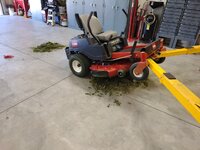










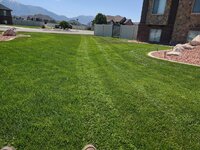




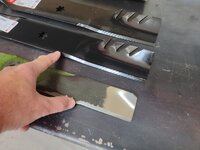
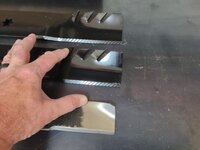

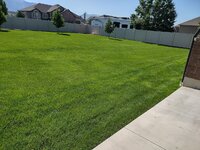


 . So I've learned to live with the fact I get about 2.5 months of nice yard.
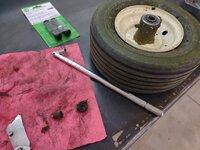
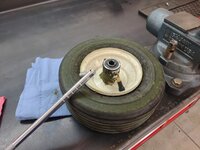
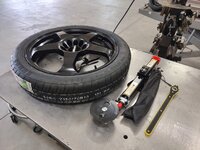
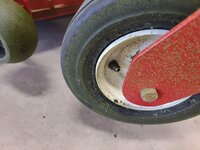
 Time to deflate and clean the bead of the tire and the sealing surface of the wheel a little better.