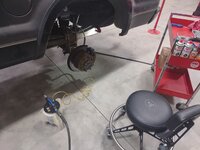
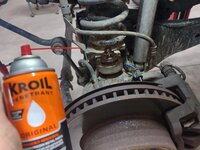
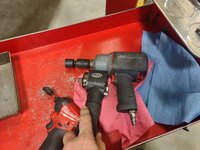
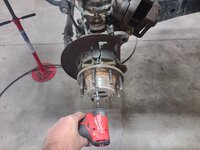
First order of the night was to remove the tires/wheels and orientate them for rotation when reinstalling. I mentioned the irregular wear when he was in my shop the other night and suggested a bit more attention be paid to the tires if he wants them to last.
The owner mentioned that he has not rotated the tires since he purchased the truck and the evidence is obvious.
I explained that on these larger lug, all-season and aggressive tires, the wear to the lugs can be exacerbated due to the large lugs hitting the surface in a heel-toe pattern and therefore inflation pressure is more critical just due to the nature of the tire's design. The wear will also be accelerated being on a turning axle due to scrubbing effect, but the heavily worn ball joints definitely aided in the tire's demise. However, by keeping them properly inflated and ensuring the suspension components are in proper condition and using proper rotation intervals, that even these large lug tires can be made to give decent life. I think he grew up where there was little to no thought of anything vehicle related other than put fuel in and go. He wants to take care of his vehicles, but I think he's feeling a bit overwhelmed by what it actually requires above just fueling and driving.
I walked him into my garage and showed him the wear on my 37" aggressive tires on my Jeep and how well they were wearing with 30k plus miles on them. They have a more aggressive tread pattern than his tires and are wearing true due to the rotation intervals that I stick to. I just wanted to show him it was in fact possible to stretch the tire's life by using preventive measures and keeping an eye on things between service intervals. I also explained that at this point the wear will not be reversible, but to think heavily about it on the next set of tires when the time comes. I mentioned that I will put these on the rear to try and flatten them out but not to expect much.

The rears are wearing pretty true, but that's a bit more expected on a non-turning axle due to the lack of exposure to scrubbing as well as the fact that they were at a more consistent tire pressure compared to the fronts. I also explained that he may experience some wander or what may be described as a grabbing feeling in the steering wheel for the first couple hundred miles on two-lane asphalt roads as the squared off shoulders will want to grab the ruts a bit more until they get rounded off a bit.

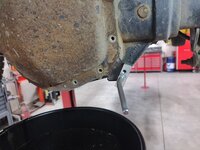
I applied some RTV to the differential covers and I like to allow them to "skin" or set a bit before installing.

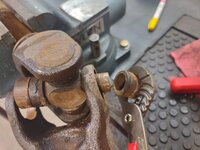
While the RTV on the diff. covers was setting, I prepped the differential cover bolts for installation by taking them to the wire wheel and cleaning the corrosion off the threads as well as the previous RTV.
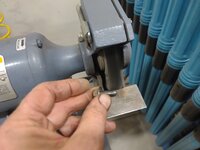
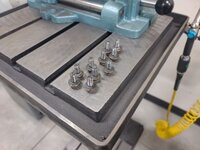
Front differential bolts cleaned and ready for installation.
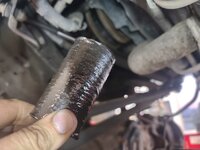
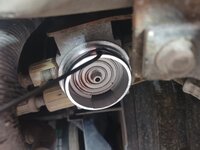
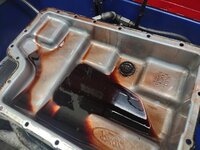
Before installing differential covers, I moved to the transmission and pulled the internal filter down from the body. The seal did not come down with the filter so when you pull the filters, look closely to ensure it didn't stick up in the case, which they generally do.
Yep, there it is, stuck up in the filter bore.

Carefully insert a prybar and grab only the seal's inside surface and give a slight pry to remove. Do not go in any further past the seal as you can easily gouge the aluminum bore and possibly create a path for air to be sucked in past the filter which can result in cavitation. Care here in seal removal is critical.

New filter with seal installed and a bit of Sil-Glyde applied to allow the filter to slide easily into the bore.

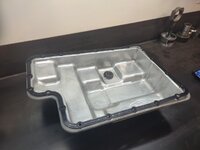
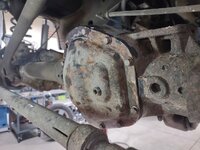
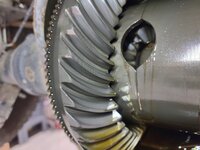
With the transmission ready to accept the pan I installed the front and rear differential covers. I like to very lightly snug them up and let sit for an hour or so before applying final torque to allow the sealant time to skin and not be completely squeezed out of the mating surface.
Stay tuned for more...









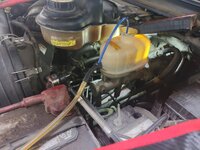
 Either way, these do in fact have internal filter and many have an external canister style filter located behind the front bumper on the passenger frame rail.