leader.jpg

Vintage Craftsman Bandsaw – DC Conversion


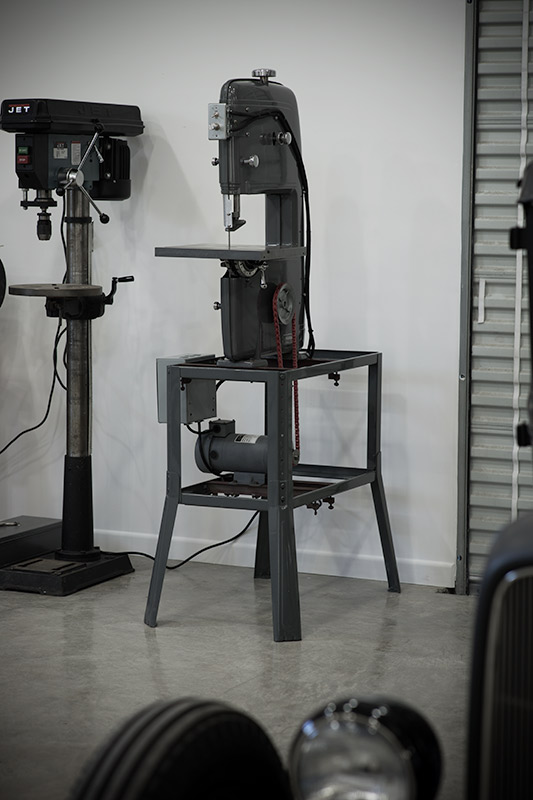
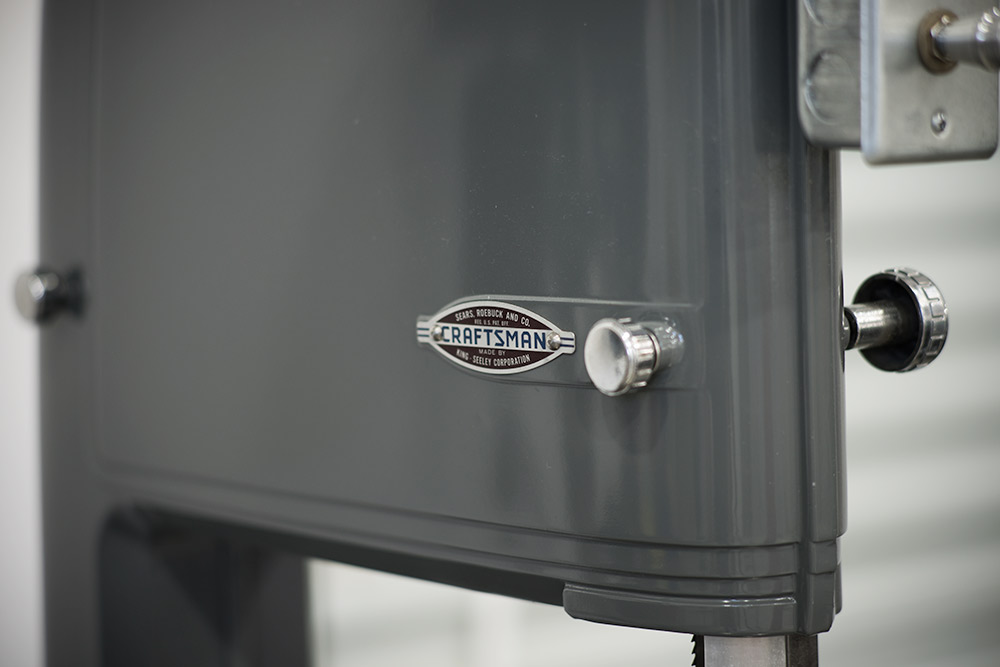
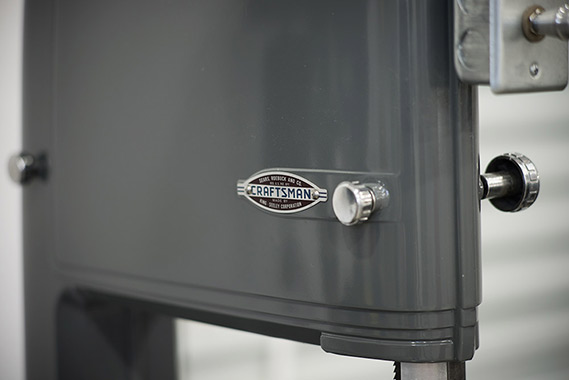
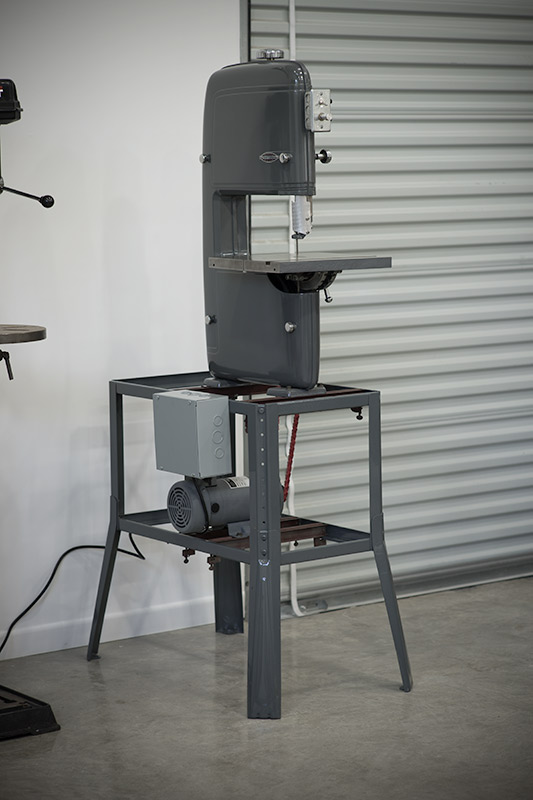
A few weeks ago, I found a beautifully restored Craftsman Bandsaw (103.24280) on Craig’s List. I called the guy and when I went to pick it up, I was greeted by a collection of gorgeous old wood working tools – all restored and all being used. I was mesmerized and taken aback by just how cool this old stuff is. The hook had taken hold… and I’m now fully and completely obsessed.

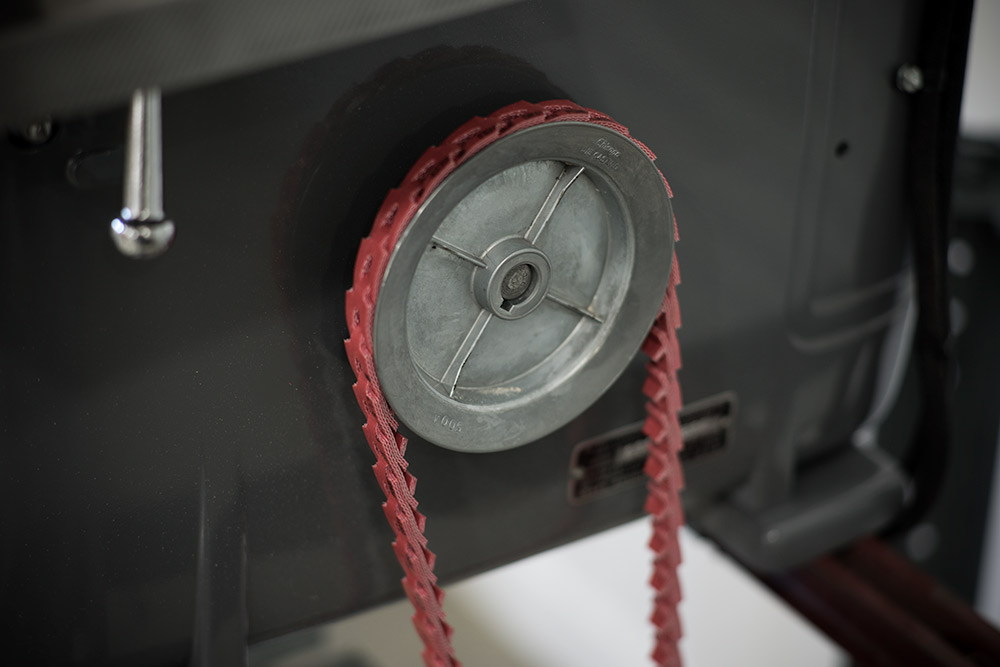
Anyway, I bought the bandsaw knowing that I was going to need to find away to slow it down in order to use  it for light duty metal work. My initial plan was to just go with a smaller pulley  on the original Craftsman motor and a larger pulley on the bandsaw itself, but I quickly figured out that a simple pulley change wouldn’t get me slow enough. I then considered using a jack shaft setup with multiple pulleys, but I wasn’t sure I would like the aesthetics of such a setup. I scrapped that idea when I finally got enough confidence to consider a DC motor conversion.

The advantage of switching to a DC motor is obvious – using a speed control unit, I could control the speed of the bandsaw almost infinitely – from a couple of RPM all the way up to 1800 RPM with a simple twist of the knob. This gives me the versatility to cut everything from steel to aluminum to wood without messing with pulleys at all.

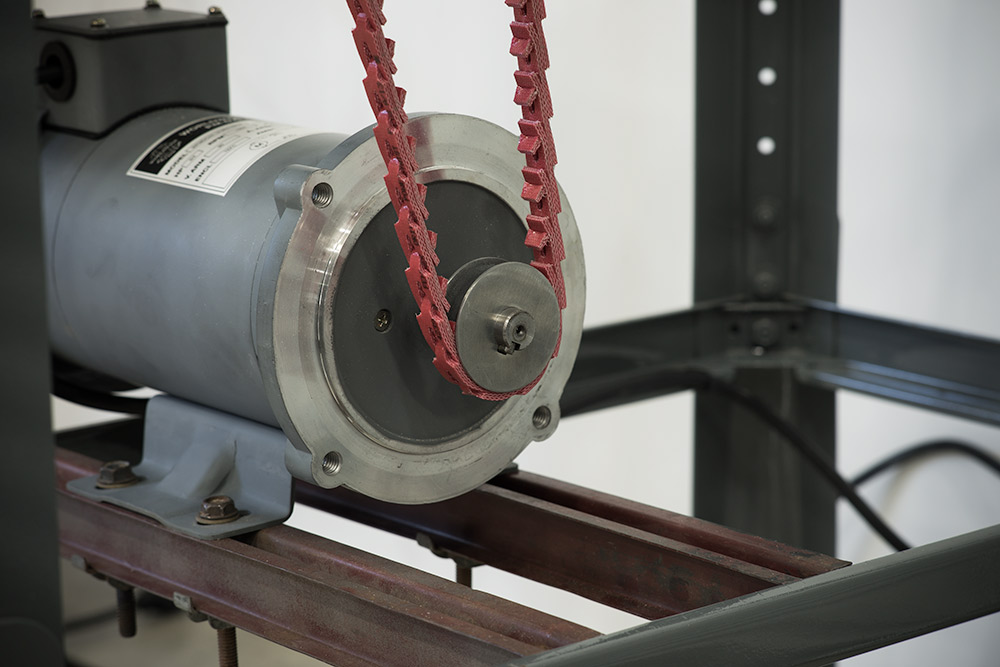
I started by getting on eBay and buying a used treadmill motor for $35. Once it got here, a quick test proved that it was burnt. So again, I got on eBay and bought yet another treadmill motor. This one ran, but not well and seemed to lose torque at lower RPM. Out of frustration, I got on Surpluscenter.com and ordered a brand spanking new 3/4 HP DC motor. It was expensive, but I knew it worked… and, it actually looked a whole lot better than the old treadmill motors that I was messing with.

While I was ordering, I also picked up a speed controller. This intimidating looking electrical device simply pulses the current to the motor allowing you to control how fast it spins. Essentially, it’s the brains of the operation.

Once it was all here, I quickly mocked it up just to see if I could get it to work without blowing up my shop. My first test went swimmingly and out of excitement, I decided to film my second for this very write up. Check it out:


**** like this happens to me all the time… Seriously… You could film a sitcom in my shop and probably get pretty respectable ratings.

Anyway, what happened?

Before we get to that, it might  be a good idea to show you how this thing is wired. It’s a very simple chore.
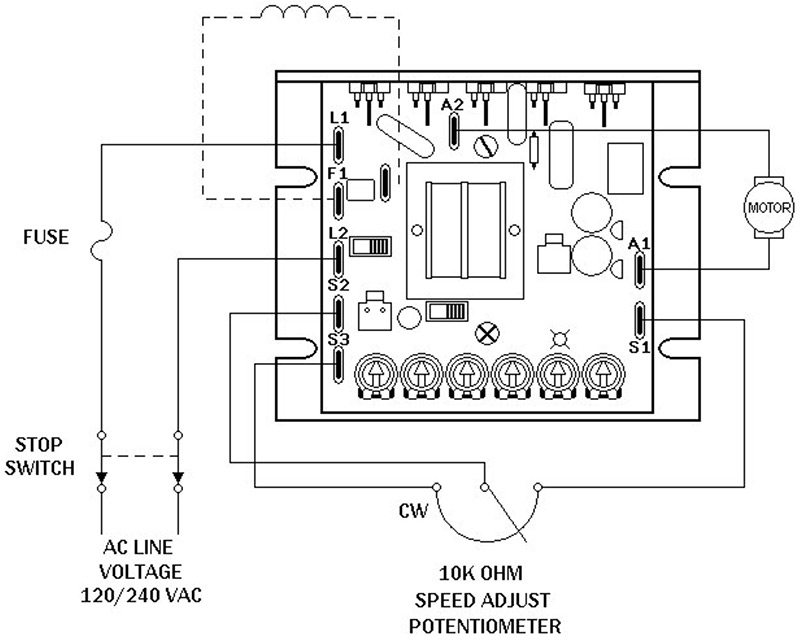


The diagram above (click to make it larger) is all that comes with the speed control when you buy it.  Seems simple enough, right? I was confident that I had it all setup correctly, but I am also an absolute electrical flunky, so I headed to The Garage Journal forums to ask what might be the issue. Before long, I was pointed to the Minarik website (the manufacturer of the speed control) and their more complete directions found here. As it turns out, if you are sending more than 5 continuous amps to the motor, the speed control needs the optional heat sink. Well, I’m sending 7… so, the mystery was solved.

(Editor’s Note: I should also interject here – the more complete directions also give you a lot of helpful hints on how to  calibrate the control to the motor. Before calibration, my motor noticeably pulsed at lower speeds. Adjusting both the torque and the IR Comp solved this issue)

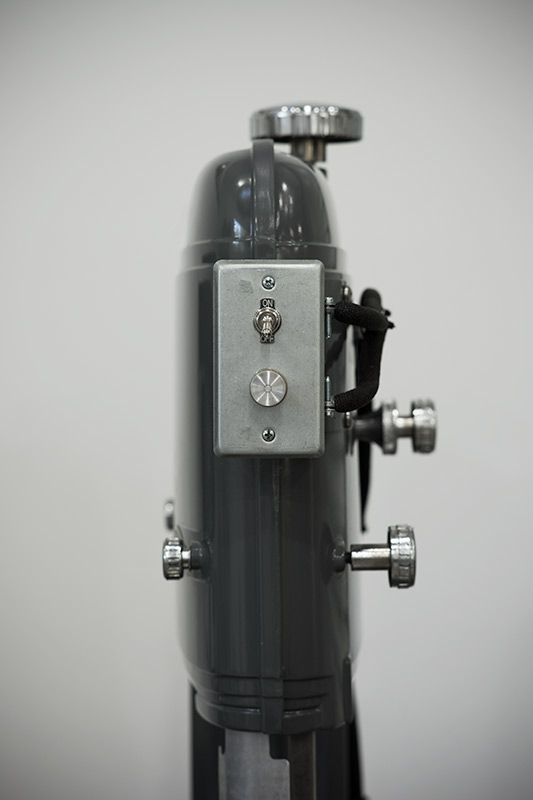
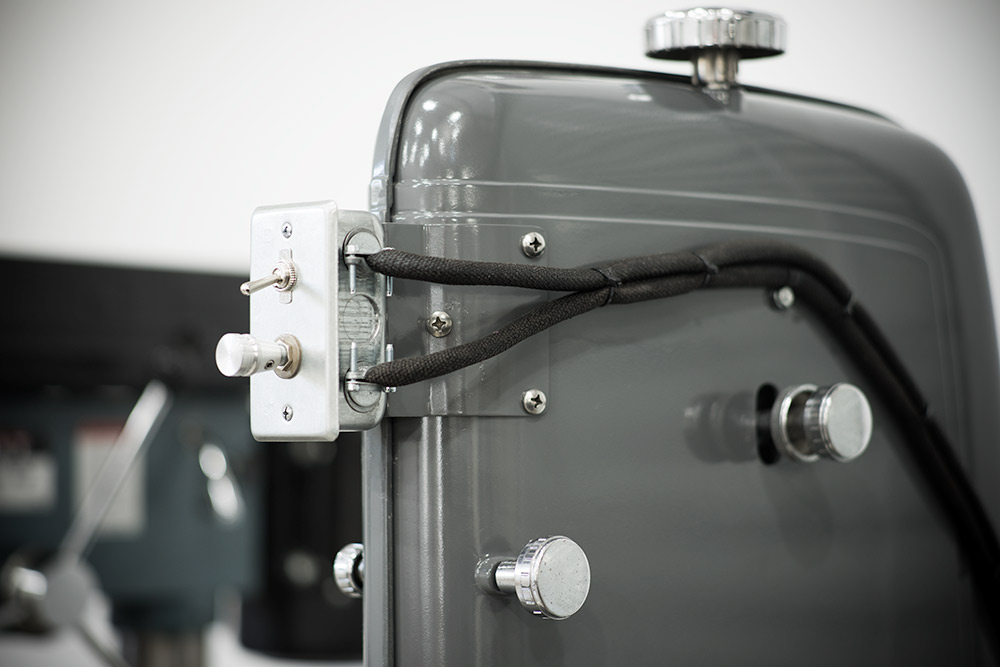
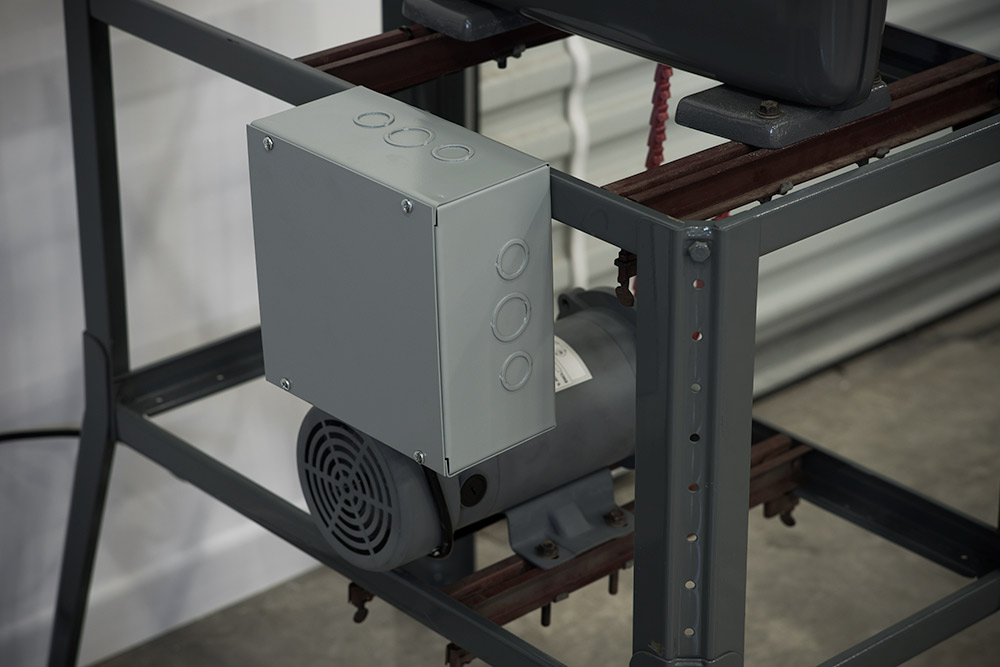
I then went and ordered the heat sink from SurplusCenter.com,  along with a new speed control to replaced the fried unit,  and waited for them to arrive. Once they did, my plans were foiled again. I had planned on hiding the speed control in a double gang box mounted high on the bandsaw, but the heat sink was quite a bit larger than I expected and there was no way it would fit elegantly in my planned box. So, I went to Home Depot  and got an 8″ by 8″ unit and just mounted it on the side of the bandsaw base. It’s not as pretty as I’d like, but it works… and with the hidden knock-outs relieved, I think the speed control and heat sink are both  getting plenty of air circulation.

In any case, the project is now complete and the bandsaw is up and running really well. I’m still waiting on a couple of bimetal blades so that I can demonstrate metal cutting,  but I’ve ran some really hard wood through the machine at it’s lowest speed setting and it didn’t even hint at bogging. I don’t think light metal work is going to be an issue at all, but I will post some video as soon as I get the appropriate blades.

Enjoy the decent photos and the terrible video (updates to come):


………


See Comments on the forum.

Mr. 360

Well-known member
Joined
Nov 23, 2012
Messages
662
Location
Bowmanville, Ontario
I love old tools like this, they put so much thought and care into the design of every piece of it so it had an aesthetic appeal as well as a function. You don't see that so much anymore. I've been looking for a saw like this and doing the same setup. My shop is very small and a tool like this has to be dual purpose, looking forward to the test on metal.

Don't worry about the electrical mishap, I can't begin to tell you the number of times I've gotten a lift off of a spark plug boot or outlet. Bad decisions make good stories.
 

Banjorear

Well-known member
Joined
Jul 22, 2013
Messages
1,879
Location
Essex Co., NJ
Awesome. I've been wanting a metal band saw. I had an old Rockwell-Delta wood and was trying to think how to control the speed. Great solution. Thanks for sharing.
 

BLUE72CAMARO

Well-known member
Joined
Jan 1, 2014
Messages
911
Location
IL
So if you don't me asking roughly how much did you end up having in the conversion? I see wood cutting band saws sell quite cheap on fairly regular basis but ones that run slow enough for metal bring quite the premium.
 
OP
R

Ryan

Administrator
Staff member
Joined
Jan 26, 2006
Messages
5,690
Location
Texas/Hawaii
So if you don't me asking roughly how much did you end up having in the conversion? I see wood cutting band saws sell quite cheap on fairly regular basis but ones that run slow enough for metal bring quite the premium.

More than I should... I mean, I had to buy the speed control twice after frying the first one. I think I have close to $850 in it now? That's a lot of dough obviously, but I like what I have better than some brand new Jet or the like...

You could do this a lot cheaper if you were able to find a cheap used motor (lots around) and you don't mind using a bandsaw that wasn't perfectly restored by a guy that has a really expensive taste for details... I mean, he did a really nice job on this thing.
 

Bob Hall

Well-known member
Joined
Dec 28, 2011
Messages
171
Location
Parkersburg WV
Hey Ryan, You did a great job on the DC conversion and as you said the guy who restored it did top end work. By now I'm sure you know that a lot of us here are old machines guys and also members over at OWWM.ORG and VintageMachines.ORG. I got here by following Dave (RED LEADER) to see his 1950s Craftsman Garage retro remodel. It's great to see "the boss" getting into the same thing!
 
Last edited:

cagullett1

Well-known member
Joined
Sep 29, 2013
Messages
2,203
Location
North Texas
Nice. I was just down in Austin for the week for work. Would have LOVED to see the seller's shop, or better yet, be the lucky individual to buy something from him!
 

Jere

Well-known member
Joined
Oct 26, 2011
Messages
708
Looks amazing! How well does it work any test runs yet?
 

softailgarage

Well-known member
Joined
Apr 20, 2011
Messages
5,153
Location
Bullhead City, Az.
Better watch it Ryan, when that bug bites, it bites hard. Next thing ya know you'll have a shop full of vintage craftsman machinery and more blockhead grinders than you can count. Dont ask me how I know, I believe though it had something to do with this website called, "garagejournal.com" :dunno:
 

bluebolt

Well-known member
Joined
Dec 28, 2008
Messages
5,435
Location
Benton LA
Yes that box is hideous. Ever heard of the Jalopy Journal? Someone over there might be talked into to making a proper louvered and bead rolled box. :lol_hitti

Seriously nice work on the conversion can't wait to see it cut metal!
 

gahrajmahal

Well-known member
Joined
Dec 12, 2008
Messages
2,519
Location
Cincinnati, Ohio
Thanks for showing the sparks flying video. I think most of us would have just left that one out. I have used loads of Baldor DC motors and speed controls in my old career. You will be happy to hear once set up correctly they are bullet proof and will take loads of abuse. I had received many old industrial units used to power fluid pumps on heated tank units still running fine after 10+ years. Thanks for the great writeup!
 

PFSard

Well-known member
Joined
Sep 12, 2013
Messages
2,422
Location
Mesa, AZ
Looking great. Thanks for sharing the progression from start to finish. Looking forward to your new sitcom. Have you decided on a name for the show? LOL
 

airbatica

Well-known member
Joined
Nov 14, 2010
Messages
128
because it's a DC motor. VFD's only work with AC motors (variable frequency drive). DC motors don't have a frequency, since it's direct current.

I know that. I'm wondering why saw the need to purchase a DC motor and controller instead of a using a VFD and retaining the AC motor it came with, if the goal was just to slow it down.
 

zkling

Well-known member
Joined
Jan 23, 2007
Messages
16,939
The stock motor was single phase, not three phase. While they do have methods to control single phase AC motors, the VFD's for them are rather expensive.

Additionally AC/VFD drives, unlike DC drive systems, do not perform very well on the low end of the speed range that is needed for a single reduction drive.

The BEST way to do the conversion is with a gear box directly coupled to the drive wheel shaft. That is how production saws work. This is about the second best way and will be fine given the limitations of the saw itself and intended uses.
 
Last edited:
To avoid these ads, REGISTER NOW!
OP
R

Ryan

Administrator
Staff member
Joined
Jan 26, 2006
Messages
5,690
Location
Texas/Hawaii
The stock motor was single phase, not three phase. While they do have methods to control single phase AC motors, the VFD's for them are rather expensive.

Additionally AC/VFD drives, unlike DC drive systems, do not perform very well on the low end of the speed range that is needed for a single reduction drive.

The BEST way to do the conversion is with a gear box directly coupled to the drive wheel shaft. That is how production saws work. This is about the second best way and will be fine given the limitations of the saw itself and intended uses.

Exactly... As far as I know, single phase VFDs cost around $1500 and up...

Plus, I have a use for the original AC motor that I'll explain a little later.
 

sb7979

Well-known member
Joined
Oct 29, 2012
Messages
112
Location
NW Ohio
A few weeks ago, I found a beautifully restored Craftsman Bandsaw (103.24280) on Craig's List. I called the guy and when I went to pick it up, I was greeted by a collect...
To read the rest of this blog entry from The Garage Journal, click here.

Ryan, very cool. There is an unrestored saw that looks just like that near me for sale. Seeing this makes me want to buy it, as I've been wanting a metal cutting band saw.

I was looking at the motor and controller you used on the SurplusCenter website and wondering, how did you determine which ones to use? There are a bunch of different options.

Have you cut metal with it yet? Was it easy to find metal cutting blades in the correct size?

Thanks.
 
Last edited:
OP
R

Ryan

Administrator
Staff member
Joined
Jan 26, 2006
Messages
5,690
Location
Texas/Hawaii
Ryan, very cool. There is an unrestored saw that looks just like that near me for sale. Seeing this makes me want to buy it, as I've been wanting a metal cutting band saw.

I was looking at the motor and controller you used on the SurplusCenter website and wondering, how did you determine which ones to use? There are a bunch of different options.

Have you cut metal with it yet? Was it easy to find metal cutting blades in the correct size?

Thanks.

Honestly, I just picked a 3/4 HP DC motor and then asked them what controller would work best...

As for metal cutting, I have not yet. I ordered some bimetal blades and they came in but they were sized wrong. The BS takes normal 80" blades...
 

sb7979

Well-known member
Joined
Oct 29, 2012
Messages
112
Location
NW Ohio
Honestly, I just picked a 3/4 HP DC motor and then asked them what controller would work best...

As for metal cutting, I have not yet. I ordered some bimetal blades and they came in but they were sized wrong. The BS takes normal 80" blades...

I was wondering if you could use a small 3 phase motor and VFD? I see on surplus center you can buy a single phase input/3 phase output VFD and a 3/4HP motor for a little less than the parts for a DC motor and speed control.

Anyone know if there would be any downsides to this?
 

zkling

Well-known member
Joined
Jan 23, 2007
Messages
16,939
I read that statement, but I'm not sure what "do not perform very well on the low end" means. Is it lack of torque? Smoothness? Can you elaborate on that?

Exactly, lack of torque, smoothness, cooling --> motor longevity. These obstacles can be overcome, it is not impossible with the right equipment; but for the money that most want to put into a conversion like this, there are better options for the money.

Yes ago I had a belt driven converted saw. It was better than nothing or at the time my jig saw and hack saw. I thought I was really high class.

Fast forward to a 30:1 rototiller gear box in place of the belts, direct connected to lower wheel even better. This setup is now owned by a friend of mine.

I then found a few 14" delta wood metal with an internal gear box. Hot dog is this slick.
Then I got my hands on a 20" delta with internal gear box, now we are cooking.
Finally, I spent extensive time on a med size Do All, purpose built production machine. This really opened my eyes.

My point is, no need to reinvent the wheel. Take a note from the makers of successful bandsaws and use a gearbox to get all the torque you can to the wheel. In recent years with the advancement of DC drive technology and thus lower cost solutions, a DC motor is not a bad method to go for a small saw conversion. Just don't think you are going to start whittling out 1" CRS.
 
Last edited:

sb7979

Well-known member
Joined
Oct 29, 2012
Messages
112
Location
NW Ohio
Thanks for the info zkling. I have been reading a thread over at practicalmachinist about this topic as well. For now I may stick with my porta-band on a SWAG table. I just really like the looks of Ryan's saw, but not the price of the DC drive components.
 

zkling

Well-known member
Joined
Jan 23, 2007
Messages
16,939
If you happen across an old treadmill most of those will work with their DC drive system. Some are better suited than others those, especially in mounting as their frames can be non standard type mounts.

Another hard learned lesson I had was having one bandsaw for metal, wood and plastic. While in theory it is a great idea, in practicality not so much; especially if you care about your wood projects as metal chips will find their way into the wood, no matter how hard you try to keep them off the tires/blade/etc.

Thus, while the internal gear box saws are nice, one can accomplish the same thing with a standard 14" wood saw and an external ~30:1 gear box. What I would like to see is for one of the small off shore companies to put one of their 4x6 horizontal saws into a roll in/marvel style vertical frame for sub $300. That would be a very hot seller me thinks. Hey there is an idea for the swag company. A 4x6 bandsaw upgrade.

Not to knock Ryan, but I personally wouldn't have put the conversion on the saw he did. The ubiquitous 14" delta and its clones are so abundant yet quite a bit more stout than the 12" and smaller class saws. If one wants to do a conversion the 14" delta style is the minimum I would start with. Then again I don't get the impression he will be taxing the saw much so for him it will probably work out quite well.
 
Last edited:
OP
R

Ryan

Administrator
Staff member
Joined
Jan 26, 2006
Messages
5,690
Location
Texas/Hawaii
If you happen across an old treadmill most of those will work with their DC drive system. Some are better suited than others those, especially in mounting as their frames can be non standard type mounts.

Another hard learned lesson I had was having one bandsaw for metal, wood and plastic. While in theory it is a great idea, in practicality not so much; especially if you care about your wood projects as metal chips will find their way into the wood, no matter how hard you try to keep them off the tires/blade/etc.

Thus, while the internal gear box saws are nice, one can accomplish the same thing with a standard 14" wood saw and an external ~30:1 gear box. What I would like to see is for one of the small off shore companies to put one of their 4x6 horizontal saws into a roll in/marvel style vertical frame for sub $300. That would be a very hot seller me thinks. Hey there is an idea for the swag company. A 4x6 bandsaw upgrade.

Not to knock Ryan, but I personally wouldn't have put the conversion on the saw he did. The ubiquitous 14" delta and its clones are so abundant yet quite a bit more stout than the 12" and smaller class saws. If one wants to do a conversion the 14" delta style is the minimum I would start with. Then again I don't get the impression he will be taxing the saw much so for him it will probably work out quite well.

You are probably right... Seems you know a lot more about these things than me anyhow!

In any case, I'm just going to be making brackets and what not and won't be cutting anything thicker than say 3/8" or so.

But really, no idea if this is gonna work well or not yet. I haven't cut a stitch of steel yet - still waiting on blades.
 
OP
R

Ryan

Administrator
Staff member
Joined
Jan 26, 2006
Messages
5,690
Location
Texas/Hawaii
Finally got some metal blades in... Tested with some 1/4" thick scrap and it cut like warm butter. Video next week.
 

GirchyGirchy

Well-known member
Joined
Nov 14, 2011
Messages
9,818
Location
Central Indiana
If the speed controller requires a large heat sink to work correctly, I'm not sure I'd place it inside a sealed enclosure. Some vents on the top and bottom, or an exhaust fan and inlet, might be helpful. I've crammed DC power supplies and HMIs into small non-vented enclosures but neither gives off much heat.
 

jvo

Well-known member
Joined
Mar 1, 2005
Messages
51
Location
Lethbridge, AB Canada
I did this a number of years back on a Yates American J120 band saw. I used a 2 HP Baldor DC motor that I bought cheap, and a corresponding Baldor DC controller. It worked fine at first, but now it pulses up and down speed wise. Still cuts fine, but the speed goes up and down noticeably while cutting.

By the way, it will cut two inch maple like butter. Haven't put a metal cutting blade on it yet, as I also have a Milwaukee port a band I built on a stand that I use for cutting all my small steel brackets.
 

velocette

Member
Joined
Feb 5, 2013
Messages
12
i Thanks for the incentive to repower my vertical bandsaw with a 1.5 hp DC motor and control.
Now have a speed range of 40 to 600 metres per minute at 110 RPM to 1800 RPM on the motor
Yes it is an industrial motor by Baldor.
Tried A Treadmill motor not enough torque low down WOFTAM.

To JVO
"Still cuts fine, but the speed goes up and down noticeably while cutting"
You can remedy this by resetting the maximum torque and adjusting the IR comp on the control anti clock until it stops surging.
To the critics sure a brushed DC motor and SCR control is old technology.
The price was right and it does the job for me so Bandsaw, Mill Drill, Two Drill Presses and A Lathe all on DC Drives
Power feed on Lathe and Mill are 24 volt DC with PWM controls

Eric
 

zkling

Well-known member
Joined
Jan 23, 2007
Messages
16,939
If the speed controller requires a large heat sink to work correctly, I'm not sure I'd place it inside a sealed enclosure. Some vents on the top and bottom, or an exhaust fan and inlet, might be helpful. I've crammed DC power supplies and HMIs into small non-vented enclosures but neither gives off much heat.

They make enclosures with integrated heat sinks on the back side. I don't recall the nema number off the top of my head, but it is what most package sold drive manufactures use.
 

sjones

Member
Joined
Mar 7, 2013
Messages
15
I know that. I'm wondering why saw the need to purchase a DC motor and controller instead of a using a VFD and retaining the AC motor it came with, if the goal was just to slow it down.
You should also be aware that inverter motors are designed specifically for VFD applications. They have heavier insulation to withstand high voltage spikes from the VFD and are designed to handle the heat from running at lower speeds. Standard ac motors may not withstand the heat when run at greatly reduced speeds due to loss of airflow. The motor manufacturer can typically provide minimum allowable motor speeds for each model. Single phase applications for VFDs are more readily available for 240 VAC.
 

driftpin

Well-known member
Joined
Dec 22, 2016
Messages
11,184
Location
Miami-Dade/Broward Co. Florida
A DC motor is an interesting way to approach it. I live in an area where you can usually find something worthwhile if you're patient, and have the $$/time to immediately jump on a fair deal.

I'm waiting on a couple blades I'm having made for my Delta wood/metal bandsaw I bought recently. The guy had a hobby shop, where he takes on small jobs. The place has a Bridgeport mill CNC controlled, a good-sized lathe, welders, drill presses, and much-more. He had two of the Delta wood/metal bandsaws, I bought the older one.

1707572835665.png

Delta 14 inch bandsaw.pngDelta bandsaw metal speeds.jpg

Watching Ryan's video w/the sound off, I was startled when I saw him reach-in and touch the blade with his hand!
 
To avoid these ads, REGISTER NOW!