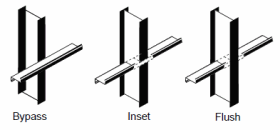
Metal buildings, like anything else, vary in quality of design and construction. There are cheap ones that look good, but the primer is poor and the rust bleeds thru in no time on the fabricated columns and trusses. Wall girts of the bypass type are cheaper to manufacture, but leave the columns sitting inside the building by several additional inches....
Even bypass girts can vary in quality, some, like mine, have horizontal steel tabs welded to the outside of the columns to attach the girts. This holds them horizontal and prevents sag.
Others have no tab, they just drill the flange of the girt and the column itself and bolt one to the other, but the girts sag. Cheapest of designs.
Better wall girt design leaves the wall girt recessed into the column, known as a flush girt. You get more interior room as the column is against the outside sheet and intrudes less on the interior space, but this costs more as more tabs and clips are needed. This can be done with Z or C material, but I suspect C is used more since it is stronger and without the interlocking Z purlins of the bypass design, you need the strength you need.
Another issue is how the sheet is attached at the slab. More expensive and stronger designs run a girt, usually C material, at floor level to attach the bottom of the exterior sheet to. This is a very strong method, and provides a point to attach interior sheet also if desired. The steel building
IN THIS THREAD has a C channel at floor level with the sheet attached to it.
Other options are various types of L and other finish pieces that anchor to the slab (usually nail gunned) that the bottom of the exterior sheet is attached to.
Here is a L angle attaching the sheet, with a piece of finish trim to close the bottom of the sheet that overhangs the slab.
Below is a slightly cheaper variation of closing the bottom of the sheet, and attaching the sheet with the L angle.
Here is L angle that secures the bottom of the exterior sheeting, but with the slab extending past the building line and notched to form the finish for the bottom of the sheet. My building is done that way, as shown in the pic.
Google Images using the search term "steel building wall girt to column" (no quote marks) and you get lots of images.
Another issue is Z purlin overlap. You NEED to be knowledgeable and standing there when the buliding is erected to catch mistakes. They WILL happen. Steel building companies hire who they can, and if the guy is new, or not too bright, then guess what? Things get put together wrong. You are stuck with this forever. Overlapping Z purlins is not a science. They have a wide flange, and a narrower flange. The nesting involves getting the narrow flange inside the wide flange. You can do it wrong, my building is proof of that. I have it in one place and it creates a bulge in the outside of the building skin at that point and looks terrible inside. The holes are slotted and usually will allow the overlap to be wrong and the bolts will still go thru.
Imagine what happens if you get the narrow flange on the outside of the wide one. It cannot nest properly, and its like putting a table spoon and a tea spoon together in the same stack. One way, the spoons nest, the other way you have a huge bulge.
More later as I think of it.
Charles