You are using an out of date browser. It may not display this or other websites correctly.
You should upgrade or use an alternative browser.
You should upgrade or use an alternative browser.
The VISES of Garage Journal
- Thread starter mjozefow
- Start date


dallastide
Active member
Looking to purchase my first vice. I've been considering vintage Wiltons vs a new Yost ADI. Thoughts? Any input would be appreciated.
Mr. Wonderful
Well-known member
Wiltons are nice, I have a few. Be prepared to pay up more than likely. I would also consider many of the other vintage American vises out there. Some are superior in many ways to the bullet vises. You're in the right place to start looking. Good luck.
dannyr
Well-known member

Talking of Wiltons - the derivation from Czech York is well-known, and they're not the only vises with tubular screw housing and somewhat bullet shape, but here's one I've not seen before (not mine - thanks to owner)
This one is by Sambre et Meuse a Belgian/French foundry and vise maker mostly known for rather angular high strength all-steel vises. Looks like an early product of the works which was founded 1930s or a little earlier, so could even precede the York bullet??
Anyone here know more about the early etaux (vises) of Acieries (steelworks) Sambre et Meuse?
Last edited:
Wow…That’s a very rare vise and it looks like it’s relatively good condition. I’ve only seen a handful of these and they’re usually beat up. This scan is from 1914Retreived this from N old camp my grandad had behind house. FoundAnvil as well, its big too.
Attachments
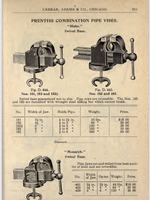
Thanks for posting that page, it helps me get closer to a mfg date. I have a 5" Prentiss similar to the 182 1/2 but, the jaws have a dado thru them. It was as rough as you can get and still function. The model number was chiseled off at some point in time for some reason.Wow…That’s a very rare vise and it looks like it’s relatively good condition. I’ve only seen a handful of these and they’re usually beat up. This scan is from 1914
TheRealZeus
Well-known member
Check on Fb market, OfferUp, and EBay for vises. Be sure to check the tool/vise groups out, on Facebook. There is a thread here for sales, parts, parts requests, as well.
When you configure the online markets, set the local radius as far as you are willing to drive. Assume the worst, and by this I mean, it is already sold when you get there, or even, you get there, and it needs to be unbolted… so take a set of tools/wrenches.
Wilton’s are good vises, but I recommend you peruse what both in your price range, and let your noggin chew on what is available, locally. A used vise, is a tested vise. Scrutinize for damage, and do not compromise.. By this I mean; get what grabs you, as well as meets your needs. If you cannot find one that meet all your needs, that is OK…. You may make room for another one
  ...
...
….And another, maybe
maybe  another…
Regards,
Z.
When you configure the online markets, set the local radius as far as you are willing to drive. Assume the worst, and by this I mean, it is already sold when you get there, or even, you get there, and it needs to be unbolted… so take a set of tools/wrenches.
Wilton’s are good vises, but I recommend you peruse what both in your price range, and let your
noggin chew on what is available, locally. A used vise, is a tested vise. Scrutinize for damage, and do not compromise.. By this I mean; get what grabs you, as well as meets your needs. If you cannot find one that meet all your needs, that is OK…. You may make room for another one ...….And another,
maybe another…Regards,
Z.
fishwatcher
Well-known member
- Joined
- Jan 26, 2023
- Messages
- 764
Wiltons are fun, iconic looking and straight forward to restore. I’ve done two and those are the only vises I’ve restored. I learned it all here and on YouTube. There are plenty of other vises to choose from, and likely at cheaper prices to acquire.Looking to purchase my first vice. I've been considering vintage Wiltons vs a new Yost ADI. Thoughts? Any input would be appreciated.


As far as new, also consider Capri Tools. For less than the cost of a decent used Wilton that you have to restore, you’ll have a great modern vise.
Read up on Capri, the Yost you’re considering, Olsa and Fireball. These use forged steel and are made in Taiwan. They have a good reputation here for the money, as far as I know.

neophyte
Well-known member
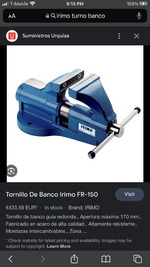
This vise looks very similar to a number of Spanish vises that are still manufactured.
Talking of Wiltons - the derivation from Czech York is well-known, and they're not the only vises with tubular screw housing and somewhat bullet shape, but here's one I've not seen before (not mine - thanks to owner)
This one is by Sambre et Meuse a Belgian/French foundry and vise maker mostly known for rather angular high strength all-steel vises. Looks like an early product of the works which was founded 1930s or a little earlier, so could even precede the York bullet??
Anyone here know more about the early etaux (vises) of Acieries (steelworks) Sambre et Meuse?
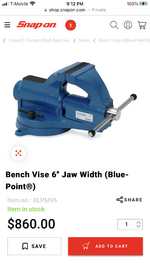
Snap-On actually sells the Spanish style under the Blue-Point name now, since it may be produced by one of the Snap-On Europe manufacturers.
The Spanish term is usually “Tornillo De Banco”.
I’m not sure who the original Spanish producer is.
Irimo is one tool brand that offered the style.
Bahco also does, but it didn’t originate with Bahco.
Palmera was another Spanish tool brand that offered the vises.
Acesa may be the original, since Acesa ones seem to routinely come up with the non-round base that seemed to have been designed before swiveling bases were somewhat common, although Irimo branded vises dhow up in the same style.
As for Sambre et Meuse, they were supposedly purchased by Dolex, who make a similar vise to the older SeM vises, so didn’t need the SeM line.
Attachments




i bough a yost for  , one thing i dont like, if i bump the handle, like with my belly or shirt, it will unload. my cheapy china model, when you clamp something, it stayed clamp. this yost wont, i can walk by and what ever was clamp is now on the floor
, one thing i dont like, if i bump the handle, like with my belly or shirt, it will unload. my cheapy china model, when you clamp something, it stayed clamp. this yost wont, i can walk by and what ever was clamp is now on the floorShiftless
Well-known member
That’s a deal breaker as far as I’m concerned. Sometimes I have some valuable parts clamped in my user vise (Wilton C1) and if they fell 3 feet onto a concrete floor, something would break.i bough a yost for
Do any of the rest of you guys have a new Yost with that issue?
Can't go wrong with either of those. I don't think I'd recommend the fireball hardtail as a first vice thoughLooking to purchase my first vice. I've been considering vintage Wiltons vs a new Yost ADI. Thoughts? Any input would be appreciated.

Everyone has its prefference. My favourite design in that of the Heuer. Unconventional but well thought out and all forged steel instead of castings. Got my vintage 150mm for 90€ and it is a wonderful piece.
Talking of Wiltons - the derivation from Czech York is well-known, and they're not the only vises with tubular screw housing and somewhat bullet shape, but here's one I've not seen before (not mine - thanks to owner)
This one is by Sambre et Meuse a Belgian/French foundry and vise maker mostly known for rather angular high strength all-steel vises. Looks like an early product of the works which was founded 1930s or a little earlier, so could even precede the York bullet??
Anyone here know more about the early etaux (vises) of Acieries (steelworks) Sambre et Meuse?
Interesting to know about the French/Belgian and Spanish production. Also nice to know the steel French vise brand - I know the French made lots of cast steel ones but I never knew the brand, usually just says Tout Acier on them.
But I think the Germans were the first to make this design but obviously it's hard to know. They are common in Germany, and the design with the round guide and a bottom slide is usually called the "System Koch".
Here is my massive 200mm version I restored a couple years back:


One of the original jaws was missing. Originally they had a dovetail fit. I simply used a shaper to make a ledge for the jaws instead, to bring the vice back to life, otherwise it would still be sitting somewhere... It's a really good and solid design. I wonder if the spanish ones are cast steel? Probably not... But their bottom support is a lot weaker, probably so they can be used on a swivel table. The System Koch was meant to be fixed on a table (after all, not much usefulness in swiveling such a large vise).
fishwatcher
Well-known member
- Joined
- Jan 26, 2023
- Messages
- 764
The Fireball vise I was recommending to @dallastide is this one. https://fireballtool.com/products/forged-bench-vise
I don’t have personal experience with it, but it gets good reviews (search YouTube) and is similar to the Capri Tools vise I have and like a lot.
Tough to beat this kind of deal on a new, quality vise I think.
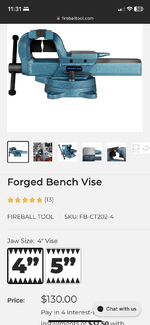
I don’t have personal experience with it, but it gets good reviews (search YouTube) and is similar to the Capri Tools vise I have and like a lot.
Tough to beat this kind of deal on a new, quality vise I think.
Definitely, for general workshop use it's hard to beat that vise. Even has adjustable guides.The Fireball vise I was recommending to @dallastide is this one. https://fireballtool.com/products/forged-bench-vise
I don’t have personal experience with it, but it gets good reviews (search YouTube) and is similar to the Capri Tools vise I have and like a lot.
Tough to beat this kind of deal on a new, quality vise I think.
Seems like it is a Taiwan version of the German Peddinghaus/Ridgid vise (Matador). I think the Peddinghause may have more complex forging procedures so it is assembled from fewer parts (on the Fireball one it looks like it has a few more welds - I know the Ridgid is also welded together but they seem to grind the welds so they aren't visible as much).
My favourite is still Heuer for being forged in a single piece, the only welded part is the protective cover for the spindle which is not a load-bearing part.
I am certain the Ridgid/Peddinghause and even the Fireball designs are just as reliable. I just admire the single-piece forging more.
On the original Ridgid, the nut is also replaceable which is neat. On the Heuer it is part of the housing. Stripping the Heuer nut is not very likely, but in the even that it happened, the replacement would not be as easy (easiest way would probably be to drill out the old thread, buy an ACME nut and equivelant threaded rod, somehow fit the handle-head on the end of the threaded rod, tighten the vise together with the rod and the nut on the other side, then weld the nut on the back of the Heuer housing so it stays there).
Last edited:
fishwatcher
Well-known member
- Joined
- Jan 26, 2023
- Messages
- 764
This is a nice explanation of the differences. The Heuer is definitely the premium version of this style vise. Thx.Definitely, for general workshop use it's hard to beat that vise. Even has adjustable guides.
Seems like it is a Taiwan version of the German Peddinghaus/Ridgid vise (Matador). I think the Peddinghause may have more complex forging procedures so it is assembled from fewer parts (on the Fireball one it looks like it has a few more welds - I know the Ridgid is also welded together but they seem to grind the welds so they aren't visible as much).
My favourite is still Heuer for being forged in a single piece, the only welded part is the protective cover for the spindle which is not a load-bearing part.
I am certain the Ridgid/Peddinghause and even the Fireball designs are just as reliable. I just admire the single-piece forging more.
On the original Ridgid, the nut is also replaceable which is neat. On the Heuer it is part of the housing. Stripping the Heuer nut is not very likely, but in the even that it happened, the replacement would not be as easy (easiest way would probably be to drill out the old thread, buy an ACME nut and equivelant threaded rod, somehow fit the handle-head on the end of the threaded rod, tighten the vise together with the rod and the nut on the other side, then weld the nut on the back of the Heuer housing so it stays there).
I picked up a new-in-box Heuer a few years ago (couldn't pass it up at $100) and felt is was too "springy" compared to my Ridgid F-50. Sold it.This is a nice explanation of the differences. The Heuer is definitely the premium version of this style vise. Thx.
Attachments

That's intersting. Was the Heuer a smaller model perhaps?I picked up a new-in-box Heuer a few years ago (couldn't pass it up at $100) and felt is was too "springy" compared to my Ridgid F-50. Sold it.
Just seems odd... Simply how on the Heuer, the "head" of the spindle sits further away from the jaw so the force can form a straight line while on the Ridgid the jaw kind of curves out away from the nut and then back for the jaw. Also how on the ridgid the spindle sits in the guide while on the heuer ot is between the guide and the jaws... Just seems like the Heuer shouldn't bend as much cause the force spreads further. Mine certainly does not feel flexible but it's a large model so I wouldn't know how the smaller ones are like.
neophyte
Well-known member
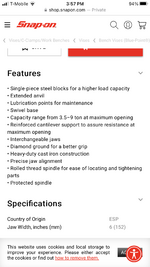
The Blue-Point vises are listed as “Heavy Duty Cast Iron Construction” ,Can't go wrong with either of those. I don't think I'd recommend the fireball hardtail as a first vice though
Everyone has its prefference. My favourite design in that of the Heuer. Unconventional but well thought out and all forged steel instead of castings. Got my vintage 150mm for 90€ and it is a wonderful piece.
Interesting to know about the French/Belgian and Spanish production. Also nice to know the steel French vise brand - I know the French made lots of cast steel ones but I never knew the brand, usually just says Tout Acier on them.
But I think the Germans were the first to make this design but obviously it's hard to know. They are common in Germany, and the design with the round guide and a bottom slide is usually called the "System Koch".
Here is my massive 200mm version I restored a couple years back:
One of the original jaws was missing. Originally they had a dovetail fit. I simply used a shaper to make a ledge for the jaws instead, to bring the vice back to life, otherwise it would still be sitting somewhere... It's a really good and solid design. I wonder if the spanish ones are cast steel? Probably not... But their bottom support is a lot weaker, probably so they can be used on a swivel table. The System Koch was meant to be fixed on a table (after all, not much usefulness in swiveling such a large vise).
but also have “Single-piece steel blocks for a higher load capacity” listed in the description, whatever that means.
The Bahco version of the vise lists “Made of high-grade cast steel”
The Irimo version also lists “Made of high-grade cast steel”
Bahco and Irimo are both brands owned by Snap-On Europe.
Technical terms sometimes get confused when translating from foreign languages, so maybe that happened.
It also might not be that problematic to make models in both cast iron and cast steel, to save costs for some models.
Given destructive tests I’ve seen on vises in both high grade Ductile Iron and steel, I’m not really sure whether one would be much worse than the other.
The anvil would likely be better out of steel,
but cast iron may be better as far as wear and corrosion resistance,
And the high grade ductile iron vises seem to spring back well when over tightened to a high degree.
Attachments


TheRealZeus
Well-known member
I dont know much about visises but seems to be in good shape.
Which one? where?
Attachments

AK4570
Well-known member
Another exemplar of the Ridgid/Peddinghause type vices referenced above is the Italian made FZA... Unfortunately not available on this side of the pond. The only apparent differences between it and a Heuer appear to be the forge markings.
My 150mm version came out of a diesel shop on the North Slope oilfield (see post #82,856 of this thread). How it got there is anyone's best guess.
Best regards,
John
My 150mm version came out of a diesel shop on the North Slope oilfield (see post #82,856 of this thread). How it got there is anyone's best guess.
Best regards,
John
Last edited:
daddyopoppy
Well-known member
We got back from our trip today. Got a chance to get a picture next to a ruler. Still didn’t see any markings. 
 Again very little signs of wear.
Again very little signs of wear.TheRealZeus
Well-known member
I keep a little one made in Indiamy first vice was a china made cheapy, yes i broke it, but it took me 35 year to break it, beating on daily. the china made are good if you plan on beating on them. $100 vice well worth the abuse
 I call it “Gange.” I use it in to secure stuff in containers. mostly to upright hands-on scrubbing work, not submerged duration soaks. The body is cheap, hollow design, poorly cast, but I only use it for light duty wet work in the containers, being cheap and light, it is easy to toss around, and not worry about cracking the containers so much. I do not think they are useless, but use them like they are sacrificial
  tools. Fine to come across, and used hard, but not something to preserve for any manufacturer, or country history.
My Heuer was either a 120 or 140 model. When you clamped something at the end of the jaws the head seemed to flex--the jaws became non-parallel (for lack of a better term). Likely because the narrow slide was not as stiff as the much wider slide on the comparable Ridgid modelsThat's intersting. Was the Heuer a smaller model perhaps?
Just seems odd... Simply how on the Heuer, the "head" of the spindle sits further away from the jaw so the force can form a straight line while on the Ridgid the jaw kind of curves out away from the nut and then back for the jaw. Also how on the ridgid the spindle sits in the guide while on the heuer ot is between the guide and the jaws... Just seems like the Heuer shouldn't bend as much cause the force spreads further. Mine certainly does not feel flexible but it's a large model so I wouldn't know how the smaller ones are like.
TheRealZeus
Well-known member
 and the rest of his pics are great too!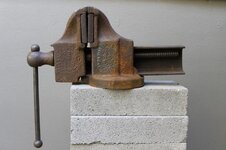

I'd still rather have cast steel mainly just because it is easier to weld than cast iron. Even if you damage it or chip away something, it can be repaired to be practically as strong as new. Probably not the best way to look at new vises hahaThe Blue-Point vises are listed as “Heavy Duty Cast Iron Construction” ,
but also have “Single-piece steel blocks for a higher load capacity” listed in the description, whatever that means.
The Bahco version of the vise lists “Made of high-grade cast steel”
The Irimo version also lists “Made of high-grade cast steel”
Bahco and Irimo are both brands owned by Snap-On Europe.
Technical terms sometimes get confused when translating from foreign languages, so maybe that happened.
It also might not be that problematic to make models in both cast iron and cast steel, to save costs for some models.
Given destructive tests I’ve seen on vises in both high grade Ductile Iron and steel, I’m not really sure whether one would be much worse than the other.
The anvil would likely be better out of steel,
but cast iron may be better as far as wear and corrosion resistance,
And the high grade ductile iron vises seem to spring back well when over tightened to a high degree.
I don't think corrosion is an issue. If you look at really old cast steel vises, they don't have deep corrosion either. For example, a pre-WW2 Heuer:

va.grouseman
Well-known member
F-22, I agree on the cast steel vises for durability and reparation.---I like the 804 Columbian , all steel vises, however they are welded steel not cast.---But I found that most of the Columbians other than the 804s are made of Ductile Iron which can be welded with mild rods, 7018s, and accepts weld relatively easy.---It has to if a jackleg welder like me can do a fairly neat and strong restoration on one.---Ductile is a really durable type of cast.
TheRealZeus
Well-known member
 Your son break his 804 yet?
mdoyle1471
New member
- Joined
- Jul 22, 2023
- Messages
- 2
Hi! I'm new to the thread, and need knowledge that I don't have : ). I have a Desmond Stephen Simplex Machinist's Swivel-Base Bench Vise (G 43). Got it from my dad, who got it from his father. We think that the dynamic jaw used to open with the lead screw rotation, but it does not do so. It will close when needed, but will not open up without pulling the screw handle out, after unscrewing approximately the amount of space we need to release the stock.
Does anyone know if this had a spring of some type that took care of this? We don't see any attachment points or holes, and have not been able to find any diagrams showing the parts of this vice.
Thanks for any help!
Does anyone know if this had a spring of some type that took care of this? We don't see any attachment points or holes, and have not been able to find any diagrams showing the parts of this vice.
Thanks for any help!
RTM
Well-known member
I have a different simplex, there was a clip holding dynamic jaw to the screw. Pull the dynamic out, flip it over, should be fairly obvious where something is missing just inside the jaw, before the threads start.Hi! I'm new to the thread, and need knowledge that I don't have : ). I have a Desmond Stephen Simplex Machinist's Swivel-Base Bench Vise (G 43). Got it from my dad, who got it from his father. We think that the dynamic jaw used to open with the lead screw rotation, but it does not do so. It will close when needed, but will not open up without pulling the screw handle out, after unscrewing approximately the amount of space we need to release the stock.
Does anyone know if this had a spring of some type that took care of this? We don't see any attachment points or holes, and have not been able to find any diagrams showing the parts of this vice.
!
Last edited:
va.grouseman
Well-known member
If he has, he hasn't told me, and if he broke that thing, he'll never get another one from me.
 ---He's 3 1/2 hours away, so I'm assuming it's still intact.
TheRealZeus
Well-known member


CRSINMICH
Well-known member
mdoyle: Here is a cutaway view of a Desmond Stephen's vise. There should be a horseshoe shaped collar where I have indicated. It's held on by a single screw. It's similar to a Parker collar. That's what connects the dynamic (moveable) jaw to the spindle and makes the dynamic move outward when the spindle is turned counter-clockwise. It is possible to fabricate (jury rig) something if that part is missing. It's worth doing.
Also, I added a better picture of the collar and the screw (or bolt).
Also, I added a better picture of the collar and the screw (or bolt).
Attachments


Last edited:
Shiftless
Well-known member
CRS has it right.
I have seen some guys make a collar from a big washer. It’s not ideal but it will get you up and going.
I have seen some guys make a collar from a big washer. It’s not ideal but it will get you up and going.
KMScott
Well-known member
If you get the collar right then the backlash is minimal. Here is how if figure out my collar dimensions if I want a good fit. CRS, that collar is not made right and not an original. Shift washers just are way too sloppy Unless you like a turn of backlash.

 wiltonviseparts.wordpress.com
Charles Parker Collars
Parker Collars like their jaws have to be custom fit. Parker did not make their parts simple. The jaws were all hand fit and stamped with ID numbers to keep them with the right vise where the…
wiltonviseparts.wordpress.com
ViceRoy2030
Well-known member
- Joined
- Mar 12, 2021
- Messages
- 142
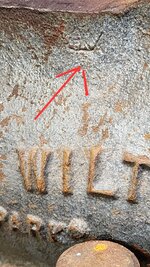
That's my guesstimate, no C3 markings but it looks just like my other C3. I think I may have found a U.S. Navy stamp as well.Sweet!
We are all looking at a C3 right?
ViceRoy2030
Well-known member
- Joined
- Mar 12, 2021
- Messages
- 142
That's my guesstimate, no C3 markings but it looks just like my other C3. I think I may have found a U.S. Navy stamp... not sure.