To avoid these ads, REGISTER NOW!

Hones for small diameter rusty holes.

2ndGearRubber

Well-known member
Joined
Mar 24, 2014
Messages
14,185
Location
Pittsburgh
Caliper bracket pin bores, actually.

Often I have vehicles with frozen slide pins. So after I walk the pin out with an air hammer, I now have a very rusty hole, 8-12mm in diameter, 3" deep or less. I am typically cleaning with something like the link below. Flex hone, silicone carbide abrasive, lower thus more aggressive grit. I've used this brand, and McMaster-Carr, both work well.


I'll fill the bore up with PB Blaster (supplied from employer), cycle the hone up and down for 10 seconds or less, rinse with brake clean. With a fresh hone, one pass like this is normally enough. With a worn hone, sometimes 3 passes isn't enough and rust remains. Problem is as the hones wear out, I need to buy more. And that's where I am in this cycle.


Is there a superior method to cleaning such holes back to fresh metal? Drill bits are a pain and often remove metal, plus the tendency to self-feed and snap off. I need to keep the bore size as close to stock as possible. Would honing oil improve life of the hone? I don't care about keeping the hones clean, they stay dirty in a plastic container and the caliper bore is rinsed with brake clean before new pins/boots/grease. So unless honing oil will significantly extend hone life, I don't see a benefit from moving to that.

This is a very important thing for me, it saves customers a lot of money over buying a new caliper/bracket. I typically make a little money even with my cost of hones, but it keeps quality original calipers on the car and builds trust with the clients that we're looking out for them, which are really the priority here. Even if I broke even I'm still making something on the rest of the job.

I just need to restore the pin bore to clean metal, and am looking for alternatives or techniques which I may not have considered.
 
To avoid these ads, REGISTER NOW!
OP
2

2ndGearRubber

Well-known member
Joined
Mar 24, 2014
Messages
14,185
Location
Pittsburgh
I squirt some PB down the hole and use a slide pin, chucked in a drill, to hone the hole. Rinse with brake kleen. A dab of grease, and we're good to go.

I dislike that method, still leaves rust in the bore. Although the pin will move freely I admit.


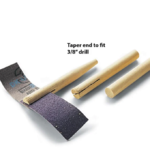
a small rod, say 1/4" with a slice thru it. wrap some garnet paper or sandpaper thru the slot . chuck it in a drill and buff away . some wd-40 or something to wash as you buff helps too

I tried that, and wasn't all that impressed. Maybe I'll try a different sandpaper. I still have the adapter I made for it.
 

AEAdam

Well-known member
Joined
May 27, 2023
Messages
2,795
Location
SE PA
You could maybe run a reamer thru. Could be the air hammer caused some galling. I’m assuming you are replacing the pins. Greasing this joint is pretty important for this reason.
 

Steve_P

Well-known member
Joined
Sep 15, 2010
Messages
5,186
I also use the brush research hones like in the OP. McMaster sells Brush Research as well, at least in wire brushes.

You could try a reamer, as said in the above post, but that's only a step above a drill bit. If you want to try and extend the ball hone life, you can try to wrap it with some coarse sandpaper for the initial cleanup.
 

cannuck

Well-known member
Joined
Nov 30, 2021
Messages
4,658
Location
Rural SK
if you have the hole cleaned up enough for the pins to slide in you might re-consider further honing to remove rust. When you get deeper into the parent metal you are just exposing more fresh iron to corrode more. I would recommend that once you have it clean enough for pins to work put some anti-seize in the hole and call it quits.
 

GrayFlattop

Well-known member
Joined
Jan 18, 2018
Messages
1,051
Location
Chicago
Amazon has a neiko set with hex shank round wire brushes from 8-19mm in stainless, brass and fiber brushes. I found it useful when replacing an ABS wheel speed sensor. It was b!tch coming out as the iron casting had swelled/corroded and the new one wouldn’t fit without forcing. A few passes - done.
 

rustyzman

Well-known member
Joined
May 7, 2015
Messages
772
Location
Chicagoland
I had the same issues when I was still pulling wrenches professionally. Wire brushes don't really work, they just polish the rust. Hones wear fast, but at least cut a bit for a while. The abrasive loads up with rust and they cut poorly then. The oil should help clear the pores in the stones to reduce that issue, but it might require a different oil.

Cutting oil will probably work a little better than PB as well, but the PB is free... Most of my old bosses used to consider stuff like Roloc Discs, nitrile gloves, propane, sandpaper, wire brushes, etc as "disposable Tech tools" (some did not even really provide heat sometimes), so I understand wanting to use whatever they actually will provide.

If you can figure out the most common sizes you run into, I would suggest a HSS Straight Flute reamer first. Stay away from Cobalt (M42) or carbide as they will be brittle, even though they would last longer otherwise. They won't grab and self feed like a drill will. Maybe even try reaming by hand at first, so it does not grab a booger in there and break. You will have to play with that concept as it may be impractical to do in a quick timeframe by hand on flatrate. It will wear out and maybe chip, but if you buy one a bit undersized, maybe .005/.010" under you can get it in, clean out the majority of the flaky dusty **** and do a quick finish pass with a ball hone. You can use it worn too (at least for a while), because it is just being abused into removing the majority of rust and not making a finished machined hole.

I had my own drill press (that I brought in) at the last shop which would have worked nicely for this situation.

Maybe buy one reamer and try it? Not a terribly big investment and might really save you some trouble. Link to a .465" or .007" under 12mm

If you do and it works, let me know? I was out of the field professionally before I got to set this idea up...

Other possibility would be make a split mandrel for the drill, sorta close to size and use sandpaper wrapped around it. Cheap to use for sure, but it might take a couple sandpaper refills to get it clean.
 

Firebrick43

Well-known member
Joined
May 12, 2015
Messages
14,209
Location
West central Indiana
Caliper bracket pin bores, actually.

Often I have vehicles with frozen slide pins. So after I walk the pin out with an air hammer, I now have a very rusty hole, 8-12mm in diameter, 3" deep or less. I am typically cleaning with something like the link below. Flex hone, silicone carbide abrasive, lower thus more aggressive grit. I've used this brand, and McMaster-Carr, both work well.

At cat we used those small diameter ball hones by the gaggle to deburr block and crank oil galleys. When your spending 10,s of thousands of dollars a year on them they looked and tried everything available to try and improve results and reduce cost by hopefully get more life out of something else.

After 6 months of trials,

They continued using the brush research flex hones just as you posted.
 

GRB

Well-known member
Joined
May 6, 2014
Messages
828
Location
SoCal
PB Blaster is a waste of time. Zepreserve is much better. I don't know if that will help make the hones last longer but there isn't any reason to use a product like PB Blaster.
 

MushCreek

Well-known member
Joined
Jan 14, 2015
Messages
9,829
Location
Upstate South Carolina
I use expandable barrel laps for stuff like that, along with abrasive paste. I agree that if you take all of the rust out, you may make the hole too loose.
 
OP
2

2ndGearRubber

Well-known member
Joined
Mar 24, 2014
Messages
14,185
Location
Pittsburgh
This is what I do. Emery cloth holds up longer than sandpaper.

I tried this with emery cloth and had trouble removing enough rust to have the pin fit properly. Same deal with the stainless brushes, lots of brush wear, plenty of rust left.

I am ignorant of Emory cloth, do you have a link or product description of specifically what you're using? The level of rust I'm seeing you nearly want 80 grit sandpaper.


Removing just enough to get the pin back in and leaving rust has had me doing the job over on the next brake job a few times. My cut off for these jobs is the torch. If I can't battle it out with an air hammer, there's usually so much rust the bore will be damaged or unreasonable to clean. I use a flat chisel blade with a dull edge and stick it under the wide part of the pin. 3050b usually wins.

I will make some measurements of good condition factory brackets to investigate the reamer or barrel lap options.
 
Last edited:
OP
2

2ndGearRubber

Well-known member
Joined
Mar 24, 2014
Messages
14,185
Location
Pittsburgh
PB Blaster is a waste of time. Zepreserve is much better. I don't know if that will help make the hones last longer but there isn't any reason to use a product like PB Blaster.

It's "free" to me from my employer.

I am confident to say I have $75,000 in tools I have purchased to do my job. I buy CRC freeze off and specialty chemicals myself. But if I can use their stuff, I will.

I just spent $65 on roloc discs with hollow centers for cleaning hubs. If what little they supply will get the job done, I'll use it.
 

charbar

Well-known member
Joined
Feb 6, 2021
Messages
2,001
Location
Midwest
I also use emery cloth wrapped around an old pushrod that I put a slit in and then chuck up in a drill. Cleaned many caliper brackets that I had to heat and beat the pins out of. Takes more than one or two passes like your hones but it is basically free, especially if your employer is providing the emery cloth. 80 grit emery cloth can be found about anywhere, and that is what grit I use.
 
To avoid these ads, REGISTER NOW!

rustyzman

Well-known member
Joined
May 7, 2015
Messages
772
Location
Chicagoland
I've used the flap wheels when they fit the bore. You get one or two calipers and they are done. Again, that was on my dime not the shop's. Gets to be too expensive to do when you are only making a little money on the job in the first place.

I would generally torch pins if I could get a caliper boot kit or if I had a suitable spare of my own. Those kits used to be much much harder to come by. They are available nowadays though. Then hone them out and properly re-lube. I have a Wurth organizer drawer that is filled with used brake parts to use as donors on this sort of thing.
 

Zewnten

Well-known member
Joined
Jun 11, 2017
Messages
1,841
No much difference to my method other than I use a multi step process. Usually my stuff is rusty and full or dirt, not sure if your rust is owrse than mine but I'm sure it could easily be. First is chucking up a plumbers steel bristle round brush in a drill on high to clean the loose stuff. Then the split rod with a strip or two of aggressive sandpaper/emery cloth, then switch to a finer grit to finish. Rinse with brake clean. I could see a dull-ish reamer doing a good job for cleaning the majority of it followed by the flex-hone making the hone last longer, hopefully a lot.

Would something like this work in place of a reamer? https://www.amazon.com/dp/B00004T7WM/?tag=atomicindus08-20
 

Kurt4440

Well-known member
Joined
Jun 3, 2009
Messages
2,481
Location
Western New York

I did 3 complete brake jobs in the last 9 days. No, I don't do this for a living as I would starve to death. The rust removal process on a proper brake job takes most of the time here in Western New York. I often wonder how much more a brake job costs in the rust belt vs Arizona.
Over the last 45 years I have tried every method mentioned above. Now, I just hit it with emory, and finish up with a wire brush. I clean before and after each step.
I make up an assortment of Emory sanding rods in advance.
 
OP
2

2ndGearRubber

Well-known member
Joined
Mar 24, 2014
Messages
14,185
Location
Pittsburgh

I did 3 complete brake jobs in the last 9 days. No, I don't do this for a living as I would starve to death. The rust removal process on a proper brake job takes most of the time here in Western New York. I often wonder how much more a brake job costs in the rust belt vs Arizona.
Over the last 45 years I have tried every method mentioned above. Now, I just hit it with emory, and finish up with a wire brush. I clean before and after each step.
I make up an assortment of Emory sanding rods in advance.

I clean the caliper surfaces where the pad slides with a cutoff wheel. It creates so much airborne dust it can become difficult to see, so I bought an m12 fan to blow at the workpiece to minimize this. Do one brake job cleaning properly and you'd blow straight black into a tissue when blowing your nose.


I think it's simply less profitable. You're getting an hour, end of story. That's why I see so many **** quality brake jobs. Even my stuff could be improved frankly, but the added tear down for shimming and runout testing is too much, plus my cost for shims I'd be buying. I just clean the hub of all rust and install the white-box rotor which likely isn't flat anyways.
 

Kurt4440

Well-known member
Joined
Jun 3, 2009
Messages
2,481
Location
Western New York
I think it's simply less profitable. You're getting an hour, end of story. That's why I see so many **** quality brake jobs.
My neighbor wasn't even getting 18 months out of a brake job when he was taking his cars to a local garage as the pins or slides would seize. Since I have been helping him, the brakes last until the pads wear out or the rotor rust.

If I were paying for a brake job, I would certainly pay extra to get a better job.
 

rustyzman

Well-known member
Joined
May 7, 2015
Messages
772
Location
Chicagoland
Cutoff wheel is a good idea. I used cup wire brushes and a mini needle scaler. Love that needle scaler for so many things.

Used to tell the apprentices, if the new pads don't fit in and you think you need to grind them down to get them in, stop and get the rust out of the bracket, because it is still there. The new pads are almost never the problem, at least not with quality parts.

I always put the effort into the brake job. Even if it cost me. The customer got a much better, safer car from it. Everything was cleaned and greased. Came apart like butter next time around and was a pleasure to work on. I still teach my nieces and nephews how to do it that way.

My first boss had us time him with a stop watch to see how fast he could get new pads on a car. Literally flip up the caliper and slam them in. He was so proud of his speedy achievement. Could only shake my head...
Do it right, or not at all. Give it to a hack tech if they want to cut corners. No Pad Slap jobs!
 
OP
2

2ndGearRubber

Well-known member
Joined
Mar 24, 2014
Messages
14,185
Location
Pittsburgh
Cutoff wheel is a good idea. I used cup wire brushes and a mini needle scaler. Love that needle scaler for so many things.

Used to tell the apprentices, if the new pads don't fit in and you think you need to grind them down to get them in, stop and get the rust out of the bracket, because it is still there. The new pads are almost never the problem, at least not with quality parts.

I always put the effort into the brake job. Even if it cost me. The customer got a much better, safer car from it. Everything was cleaned and greased. Came apart like butter next time around and was a pleasure to work on. I still teach my nieces and nephews how to do it that way.

My first boss had us time him with a stop watch to see how fast he could get new pads on a car. Literally flip up the caliper and slam them in. He was so proud of his speedy achievement. Could only shake my head...
Do it right, or not at all. Give it to a hack tech if they want to cut corners. No Pad Slap jobs!

The pads are usually rusted solid the next time regardless.

We tell the new guys we're trying to maximize the life of the brakes. The rust WILL win. But our goal is to make it take as long as possible. We actually "downgrade" most customers into a more standard pad, simply because OE stuff or nice stuff like akebono has no point. Unless the customer is driving 20k a year or getting things disassembled yearly, everything will be frozen and rusty before the pads are junk.

Doing a top notch job really takes less than 20min. Buff the hub clean, grind the caliper bracket clean, torque the anchor bolts, etc.
 

theoldwizard1

Well-known member
Joined
Feb 22, 2011
Messages
43,250
Location
SE MI
Caliper bracket pin bores, actually.
.
.
.
Is there a superior method to cleaning such holes back to fresh metal? Drill bits are a pain and often remove metal, plus the tendency to self-feed and snap off. I need to keep the bore size as close to stock as possible.
Just go easy with the drill ! Use a bit that is about 2 size under. Still probably the cheapest and easiest solution.
 

theoldwizard1

Well-known member
Joined
Feb 22, 2011
Messages
43,250
Location
SE MI
I did 3 complete brake jobs in the last 9 days. No, I don't do this for a living as I would starve to death. The rust removal process on a proper brake job takes most of the time here in Western New York. I often wonder how much more a brake job costs in the rust belt vs Arizona.
Over the last 45 years I have tried every method mentioned above. Now, I just hit it with emory, and finish up with a wire brush. I clean before and after each step.
I don't do many brake jobs either, but I have found that it the pins are tight, the easiest solution to to buy reman caliper brackets.

If the pin bores are good, use this file Mueller-Kueps 460 202 Thin Brake Caliper File

Capture.JPG

Pricey, but it will get you to bare metal fast.
 
OP
2

2ndGearRubber

Well-known member
Joined
Mar 24, 2014
Messages
14,185
Location
Pittsburgh
I don't do many brake jobs either, but I have found that it the pins are tight, the easiest solution to to buy reman caliper brackets.

If the pin bores are good, use this file Mueller-Kueps 460 202 Thin Brake Caliper File

Capture.JPG

Pricey, but it will get you to bare metal fast.

Those take forever. I only use that if there is no other possible way to clean the area. It's not wildly better than a sharp file.
 

rustyzman

Well-known member
Joined
May 7, 2015
Messages
772
Location
Chicagoland
The pads are usually rusted solid the next time regardless.

We tell the new guys we're trying to maximize the life of the brakes. The rust WILL win. But our goal is to make it take as long as possible. We actually "downgrade" most customers into a more standard pad, simply because OE stuff or nice stuff like akebono has no point. Unless the customer is driving 20k a year or getting things disassembled yearly, everything will be frozen and rusty before the pads are junk.

Doing a top notch job really takes less than 20min. Buff the hub clean, grind the caliper bracket clean, torque the anchor bolts, etc.
We used nice Akebono Pro ACT or top line Centric on most American and Japanese stuff. Noise complaints were what we were trying to avoid the most. North Shore folks were very particular at times and honestly, I would not be happy with dog whistle brakes either. Euro got Euro parts from WorldPac or the dealer.

The pads would rust in place eventually, certainly. But the rest of the cleanup and lube made it all much easier next time. Greasing under the bracket hardware as well as above helped a lot.

The last shop I worked at (independent) had a 3/36 warranty on everything. The tech was responsible for all labor in the 1st 12 months of that warranty no matter what, even if it was a part issue that the tech could not have any control over. Boss told us all we could choose to quote whatever parts we felt were best, but in reality he would sometimes make it so we had to buy from his preferred supplier, even if we knew there would be problems. So especially with those less than stellar parts, we all did a lot of free labor work on item failures that we could not have controlled. That pushed all of the techs to start demanding that we use only the best parts we could source, to avoid redoing it for free. Pads were one of them. Any noise issue, you did a new brake job for free. Flat rate shop, that got old fast.

My legit comeback rate for things that I made a mistake on was about 1 every 2 years. I take the hit on that, no problem, but BS part issues, not gonna fly. (my bay neighbor was about 3 legit comebacks a week...) Pushed the boss hard on not using Walker cats because they were all failing in under a year (at that time). Finally said I refuse to use them if I am responsible. Got him to agree on a Cadillac to absolve me of that 12 month rule. Car was back in under a year with a bad cat and when he told me I had to put it in for free I reminded him of our conversation those months prior. He was pretty hot about that, and having to pay me, but he relented and I never had to put another Walker in.

The only brake jobs that took longer were the ones like the later model Cougars where the rust on the rotor was so bad in the hub that we had to shatter the rotors off in pieces or on the older jeeps where the pad bracket was part of the knuckle and would have Deep grooves worn in them. I usually brazed those up and resurfaced them true.
 
OP
2

2ndGearRubber

Well-known member
Joined
Mar 24, 2014
Messages
14,185
Location
Pittsburgh
We used nice Akebono Pro ACT or top line Centric on most American and Japanese stuff. Noise complaints were what we were trying to avoid the most. North Shore folks were very particular at times and honestly, I would not be happy with dog whistle brakes either. Euro got Euro parts from WorldPac or the dealer.

The pads would rust in place eventually, certainly. But the rest of the cleanup and lube made it all much easier next time. Greasing under the bracket hardware as well as above helped a lot.

The last shop I worked at (independent) had a 3/36 warranty on everything. The tech was responsible for all labor in the 1st 12 months of that warranty no matter what, even if it was a part issue that the tech could not have any control over. Boss told us all we could choose to quote whatever parts we felt were best, but in reality he would sometimes make it so we had to buy from his preferred supplier, even if we knew there would be problems. So especially with those less than stellar parts, we all did a lot of free labor work on item failures that we could not have controlled. That pushed all of the techs to start demanding that we use only the best parts we could source, to avoid redoing it for free. Pads were one of them. Any noise issue, you did a new brake job for free. Flat rate shop, that got old fast.

My legit comeback rate for things that I made a mistake on was about 1 every 2 years. I take the hit on that, no problem, but BS part issues, not gonna fly. (my bay neighbor was about 3 legit comebacks a week...) Pushed the boss hard on not using Walker cats because they were all failing in under a year (at that time). Finally said I refuse to use them if I am responsible. Got him to agree on a Cadillac to absolve me of that 12 month rule. Car was back in under a year with a bad cat and when he told me I had to put it in for free I reminded him of our conversation those months prior. He was pretty hot about that, and having to pay me, but he relented and I never had to put another Walker in.

The only brake jobs that took longer were the ones like the later model Cougars where the rust on the rotor was so bad in the hub that we had to shatter the rotors off in pieces or on the older jeeps where the pad bracket was part of the knuckle and would have Deep grooves worn in them. I usually brazed those up and resurfaced them true.

I'd like parts that nice. I basically don't do converters anymore. Waste of time. 4 dogshit aftermarket converters later...... Blaming your "bad diag" etc. It just needs a non-junk converter. Dealer sells them, but our 10% discount means you can't mark them up like a set of brake pads. So obviously they're not usable. I've bet my own cash on a $1000+ OE converter, if it doesn't fix it I will personally pay for it. Oh wow, it's perfect now, who'd have thought?


I'd love to track my actual comeback rate. My last "comeback" was yesterday. Replaced a valve cover gasket for a leak and removed destroyed undertray to clean oil. Half bolts missing, random fasteners swapped around and screws run into m6 holes, tattered pieces hanging down, the standard.

"Hey, let them know this thing ain't long for this world. Should I just cut most of it off, it's barely attached?"


COMEBACK rolls in yesterday. Guess what fell off and was dragging on the road. Well duh, I told you that 4 days ago.
 

rockettauto

Well-known member
Joined
May 12, 2023
Messages
745
Fill up the $110 gun with recovery system, pull the trigger a few times, done? Don't tell me it's that quick/clean/easy?
Yeah, takes about 6-7 seconds usually. You have to run the gun a bit on the light side on media feed or itll fill up portions of the hole without doing the job.
 
To avoid these ads, REGISTER NOW!
Top Bottom