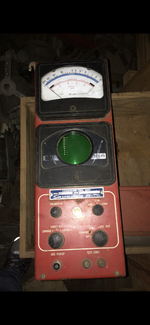
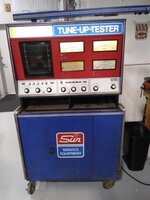
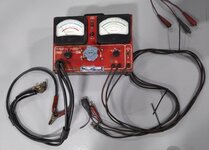
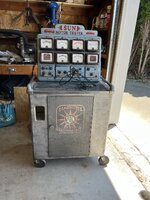
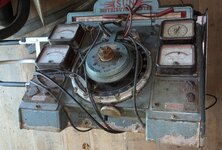
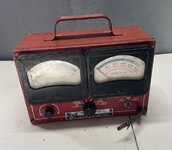
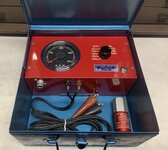
Starting in the '60s (I believe) the unit serial numbers started with two numbers, and possibly a letter. For instance, the unit serial numbers in my 947's components start with "27" and "37". My understanding is that those numbers show the month, and the last digit of the year of manufacture. Inside the machine, I found "inspected by" stamps that show the year 1977. I also have a model 600 distributor machine that starts with "22", and it shows up in a 1961 catalog. A letter after these numbers indicates a revision as running changes were made.
Inspired by this post, I started checking my own units, as well as taking dataplate screenshots of units being for sale in eBay and other platforms.
Neither attempting to proove anybody wrong, nor having decoded the data plate.
Made The following observation: The serial number prefix of a two digit number followed by a letter was only to be found on units, manufactured in the Harlem and Avondale plant (Chicago) or Amsterdam, Netherlands.
I saw numbers up to 49, but never greater. The letters were mostly A, some B and one C.
Regarding the numbers, the first digit might reflect the quarter of the year.
The second digit might really stand for the year. But it goes over a period of approximately two decades. So how to identify the decade?
Regarding the letter, I feel it was not indicating revisions of the units. Taking the VAT-28 as example. Having Seen VAT-28-4 and VAT-28-7. To me the -4 and -7 are Standing for revisions. I would assume the Letter has a different meaning than a technical revision. But I cannot offer an explanation.
Units manufactured at Kings Lynn, England show a completely different style of serial number.
One Letter, followed by a three digit number, dash a two digit number.
Seen this with the small red sixties design testers like the 212 vacuum tester or they TDT-12. But it continues up to the blue eighties testers like the VAT-38 oder the big 1010.