Thanks Quinn. I appreciate the feedback on the Toyo's.
I can actually say in the 32+ years of RV'ing and more than a quarter million miles on 3 different coaches I have only been very unhappy with the Goodyears. I wouldn't have Goodyears again on anything I own if someone paid me to run them.
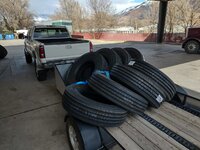
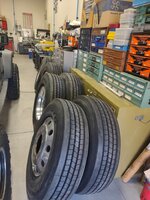
That being said, I really have nothing but good things to say about the Michelin's. They have been a GREAT tire and the pictures below should prove how well they've lasted. They have worn well and not developed any weird or adverse handling characteristics nor wear patterns. My ONLY complaint about them is the price discrepancy between them and anything else. Anyone who knows me can testify that I don't mind paying for quality, when that quality is justified. But also I can say that I don't throw money away either and try to be frugal with my spending. At work our Michelins have been equally impressive. Even after several recaps for our trailers, the casings still look good up to the 10-year mark where we have to take them out of over the road service. We still have some in the 12+ year range on yard trailers that are just barely beginning to show signs of weather or UV cracking and those are sitting without any exercising.
Now, I may get flamed about this, but hey it seems to be a common theme here lately with people beating up on me, but the tires I am running on my coach's drive and tag axles are ten years old. They have a code date of mid-2014 and show absolutely no signs of weather cracking, checking or any adverse tread or especially sidewall deterioration.
Quinn, you've been around RV's long enough to know as well as I do that in the RV world there is a LOT of misinformation. One of those commonly spread lines is that tires should be replaced every 5 years. Some will even argue that the manufacturers state that and anyone running anything older than 5 years of age on tires is just asking for problems happily murdering innocent puppies. Some even tout that THEY are the only responsible people on the road because they replace their tires like clockwork every 5 years. My feelings are is they have that kind of money, then great, go for it. But basically, many are just ignorant to the facts and keep repeating this misinformation over and over again thinking that if they repeat it enough it will become true.
Most manufacturers, Michelin in particular, do state very consistently and boldly that at the five year mark, they begin thorough inspections and looking for cracking, weathering, rivering, and any abnormal wear that can result in a failure. In the Michelin training that I've been through at work, they even have a specification for the depth of the crack at which they should be replaced which means they expect and accept cracking to "some" degree. Personally, I look to replace when I see any initial signs of cracking and don't run any and feel I'm probably overly **** about it. Now I won't run tires past 10 years as that is what DOT deems end of life for a tire but when I mention I have routinely ran 7+ year old Bridgestone R250's on my last coach and now 9+ year old Michelin's I get chastised before anyone has even looked at my tires. Now the Goodyears were junk well before the 5-year mark as I bought the coach at 4 years of age and they were absolute garbage by that time.

No evidence of checking or a single weather crack. The insides look as good if not slightly better than the outside of the tire.

And these are coming up on 10-years old.
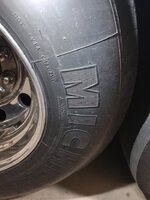
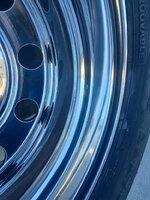
The drive and tag axles look every bit as good as my steer tires pictured here.
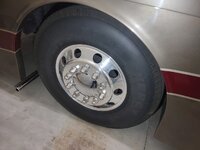
Which are now 5 years old.
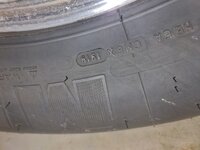
If someone didn't look at the code dates, I don't think they'd be able to tell the difference between the 5-year-old steers and 10-year-old drives or tags.
Bottom line, keeping the tires clean is the best thing for them and second best is to run them down the road and keep them exercised. Tires sitting for extended periods of time is the worst thing for them. Even the few months in the winter of inactivity of our coach bothers me to let them sit for that long. Driving during a weeklong trip once a month or so in the 8+ months of our RV'ing season has worked to keep the tires exercised and then a good wash before parking upon arriving home. I don't use any treatments or chemicals on my tires, just a thorough washing with a mild bristles brush upon arriving home.
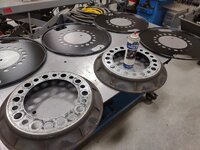
I am quite proud of how long I've been able to make my tires last with no signs of checking or weather cracking. The water spots on my wheels, not so proud of. Very much in need of a polish job as I missed my annual polish last year.