To avoid these ads, REGISTER NOW!

12V DC microswitch amperage rating.....

tlmartin84

Well-known member
Joined
Apr 23, 2012
Messages
1,085
Location
West Virginia
I have a 12V DC motor:

3 amps - no load
6amps - running
11amps - loaded
20 amps stalled

Manufacturer claims they use a 16 amp switch that will allow using it to direct wire the motor to the switch on a 15 amp fuse.

In another paragraph they state to use a relay for a motor over 10 amps.

Their tech line is no help....this is over their heads.

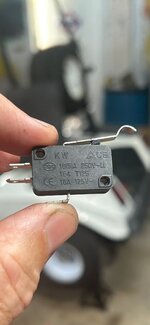
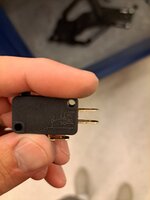
Here is the switch supplied:

125V dc .6 amps
250V dc .3 amps

125V AC 16 amps
250V AC 16 amps

I would love to not use a relay, even if it means replacing these switches....

1000006551.jpg
 
To avoid these ads, REGISTER NOW!

johnre

Well-known member
Joined
Dec 1, 2016
Messages
1,050
Location
Portland, OR
AC ratings are always going to be higher than DC on a given switch design.

You may want to consider a DC PWM controller; the overall cost may be less:
 
Last edited:

BillK

Well-known member
Joined
Aug 24, 2006
Messages
9,321
Location
Beautiful Southern Maryland
There should be a part number on the switch, probably on the side away from your picture ? Look it up and see what the ratings are.

Exactly what type of motor is it and what is the application ?
 

rlitman

Well-known member
Joined
Oct 18, 2010
Messages
24,600
Location
Long Island
AC ratings are always going to be higher than DC on a given switch design...
That's the case the great majority of the time, though I've seen some weird exceptions.

The big difference in this switch's ratings is due to arcing. Clearly, it's not designed for sustained arcing at 125VDC, but has no problem with the short arc you get at a much as 250VAC.

Knowing this, I'd venture to guess that the switch contacts should be fine with the same 16A at a voltage low enough to prevent arcing. So, most likely it's fine beneath 24V or so.
 

whateg01

Well-known member
Joined
Mar 13, 2006
Messages
11,303
Location
doo dah, kansas, usa
I have a 12V DC motor:

3 amps - no load
6amps - running
11amps - loaded
20 amps stalled

Manufacturer claims they use a 16 amp switch that will allow using it to direct wire the motor to the switch on a 15 amp fuse.

In another paragraph they state to use a relay for a motor over 10 amps.

Their tech line is no help....this is over their heads.

Here is the switch supplied:

125V dc .6 amps
250V dc .3 amps

125V AC 16 amps
250V AC 16 amps

I would love to not use a relay, even if it means replacing these switches....

1000006551.jpg

There should be a part number on the switch, probably on the side away from your picture ? Look it up and see what the ratings are.
Why does op need to look it up? The ratings are right in his hand. 🤦
 

rlitman

Well-known member
Joined
Oct 18, 2010
Messages
24,600
Location
Long Island
:headscrat

What does THAT have to do with the price of eggs in China? :dunno:

.
whateg01 said that the information needed by the OP was visible in the picture. It is not, as the information in the picture is pretty irrelevant to the tlmartin84's needs. Clearly my answer went over your head, so I'll start over.
The information in the picture is as useless for the question in this thread as the ratings on my tires.

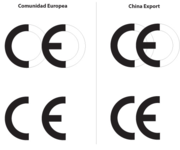
I will add though that the CE mark in the picture is for "China Export", and not the similar "Conformité Européenne" marking, so good luck trusting the ratings on the datasheet.
 

dlwilson

Well-known member
Joined
Jan 3, 2009
Messages
200
Location
West Palm Beach, FL
That switch looks very similar to the switches in Club Car 48v DC golf carts. I've had two carts in the past week with blown switches because of a bad diode across the solenoid coil terminals. I realize this is a total thread hijack, but I've been wondering a lot how putting a diode across the control terminals protects the switches that send current to those terminals. All I find when I google is that it prevents the field from collapsing.
IMG_1824.jpeg
 

PCustoms

Well-known member
Joined
Jul 23, 2011
Messages
22,803
Location
VT
I will add though that the CE mark in the picture is for "China Export", and not the similar "Conformité Européenne" marking, so good luck trusting the ratings on the datasheet.

What? How can you determine that?

Edit: went down that rabbit hole for a few minutes, seems this is a misconception (as vetted by parliament in 2008 and 2017) related to sloppy formatting of the logo.
 
Last edited:

Steve W.

Well-known member
Joined
Mar 27, 2019
Messages
1,247
Location
Southwest oHIo
whateg01 said that the information needed by the OP was visible in the picture. It is not, as the information in the picture is pretty irrelevant to the tlmartin84's needs. Clearly my answer went over your head, so I'll start over.
The information in the picture is as useless for the question in this thread as the ratings on my tires.
Let's just say that you are assuming quite a bit. Your 'answer' was not even close to my head height, let alone over it.

A simple "the information printed on the switch is not what you need", followed by some relevant information would be a LOT less confusing than bringing up off-the-wall and totally irrelevant information about tires.

/out
 

MBfreak

MEMBER EMERITUS
Joined
Dec 10, 2010
Messages
2,301
Location
Linkoping , Sweden
tlmartin
Controlling a 12 VDC electric motor directly with a microswitch could be a problem.
Starting the motor is not difficult, provided that it is not mechanically overloaded.
IF you have access to an Ameter that stores the peak current ( ie a good Fluke and a 25 A /100 mV shunt)
that would be helpful . Measure starting current.
Switching of a DC load ( ie the DC motor) that in effect is an inductor when deenergized can cause high peak voltages over the
microswitch contacts when opening. This will erode the contacts over time. For AC this is much less of a problem,
( For the nerds, the famous Lentz law e= - dfi/dt applies to the DC circuit).
Provided that the motor is not reversed , ie plus and minus always fed to the collector in the same polarity, a damping diode
( rated 10 A 400 V, cost $5 ) across the rotor with anode to minus and cathode to plus will effectively remove the transient voltage at switch off.

Another improvement would be to let the microswitch control a 25A/400 V MOSfet to the motor collector circuit, with the above described clamping diode over the motor collector circuit.

Will last forever.

Best regards

Ola
 

lund

Well-known member
Joined
Nov 2, 2019
Messages
768
Location
Michigan
AC ratings are always going to be higher than DC on a given switch design.

You may want to consider a DC PWM controller; the overall cost may be less:
Not trying to be snarky here and you may be correct, but do you understand why AC ratings for *current* would be higher than for DC?

I am having a hard time understanding why this would be true from a materials standpoint for a mechanical switch. Dissipation is P = I^2*R, where I is the current and R would be the junction resistance. The formula would apply to AC with current and voltages measured rms (root mean square). 60 Hz AC is also very slowly varying by a materials science standpoint. So I would naively expect that current limits from switches resulting from junction resistance would be the same AC (with current measured rms) and DC.

Voltage holding for the switch when open or opening might be somewhat better even at 60 Hz relative to DC. But that is a different issue.

Anyone understand why a mechanical contact switch would have these radically different DC and AC current ratings?
 
Last edited:

dogdog

Well-known member
Joined
Nov 15, 2011
Messages
12,711
That switch looks very similar to the switches in Club Car 48v DC golf carts. I've had two carts in the past week with blown switches because of a bad diode across the solenoid coil terminals. I realize this is a total thread hijack, but I've been wondering a lot how putting a diode across the control terminals protects the switches that send current to those terminals. All I find when I google is that it prevents the field from collapsing.
IMG_1824.jpeg
you can google back emf.

 
To avoid these ads, REGISTER NOW!

johnre

Well-known member
Joined
Dec 1, 2016
Messages
1,050
Location
Portland, OR
Not trying to be snarky here and you may be correct, but do you understand why AC ratings for *current* would be higher than for DC?

I am having a hard time understanding why this would be true from a materials standpoint for a mechanical switch. Dissipation is P = I^2*R, where I is the current and R would be the junction resistance. The formula would apply to AC with current and voltages measured rms (root mean square). 60 Hz AC is also very slowly varying by a materials science standpoint. So I would naively expect that current limits from switches resulting from junction resistance would be the same AC (with current measured rms) and DC.

Voltage holding for the switch when open or opening might be somewhat better even at 60 Hz relative to DC. But that is a different issue.

Anyone understand why a mechanical contact switch would have these radically different DC and AC current ratings?
You're applying linear circuit theory to a phenomena that is inherently nonlinear - arcing across a narrow gap. All else equal, a DC arc can be sustained much longer than AC, simply because of the zero crossings inherent in AC sinusoids.

Also look at the link that @dogdog posted above about back EMF; while that can be dealt with using diodes as suggested, if the diode itself fails, the switch will likely follow suit pretty quickly.

As a result, much more damage can be done with DC, and because of this, manufacturers typically derate the DC current carrying capacity significantly.
 

lund

Well-known member
Joined
Nov 2, 2019
Messages
768
Location
Michigan
You're applying linear circuit theory to a phenomena that is inherently nonlinear - arcing across a narrow gap. All else equal, a DC arc can be sustained much longer than AC, simply because of the zero crossings inherent in AC sinusoids.

Also look at the link that @dogdog posted above about back EMF; while that can be dealt with using diodes as suggested, if the diode itself fails, the switch will likely follow suit pretty quickly.

As a result, much more damage can be done with DC, and because of this, manufacturers typically derate the DC current carrying capacity significantly.
What you say is true for high (RF) frequencies, but I am not not convinced it is relevant for 60 Hz (usual sense of AC) time variation. The duration of a half-cycle is ~0.008 sec. A one eV electron (kinetic energy of electron dropping just one volt in potential difference) is about 600,000 m/sec. The electron in this cycle travels 4,750 meters in the half period. That is a LOT of small switch transit periods. Arced electrons from higher voltages will have much higher speed than I am quoting too.

The derrating factor quoted by the manufacturer is also very large for DC vs AC (more than factor of 10). I would be very surprised if this was substantiated by measurements. 60 Hz AC is very slow.
 

no704

Well-known member
Joined
Apr 27, 2016
Messages
5,217
Solid state relays are a thing now and pretty affordable.
 

Max

ALLIANCE MEMBER
Joined
Jun 16, 2018
Messages
3,329
Location
Georgia
What you say is true for high (RF) frequencies, but I am not not convinced it is relevant for 60 Hz (usual sense of AC) time variation. The duration of a half-cycle is ~0.008 sec. A one eV electron (kinetic energy of electron dropping just one volt in potential difference) is about 600,000 m/sec. The electron in this cycle travels 4,750 meters in the half period. That is a LOT of small switch transit periods. Arced electrons from higher voltages will have much higher speed than I am quoting too.

The derrating factor quoted by the manufacturer is also very large for DC vs AC (more than factor of 10). I would be very surprised if this was substantiated by measurements. 60 Hz AC is very slow.
I think that you’re missing several points.

1. With DC the arc is always in the same direction. This will wear one contact and build up on the other which very negatively affects switch life. AC doesn’t have this problem.
2. Switches don’t arc once per state change. They ”bounce” so there are multiple arcs per switch operation. This extends the effective duration of the arc. I don’t have numbers handy but I’d expect much more than .008 second.

The is no “big switch” conspiracy. Switch manufacturers rate their switches as high as they can and still meet their reliability requirements. If that switch says .6A max for DC you can bet that is the real maximum. The OP - if he has to use that switch - should add a relay. He doesn’t have to though - the switch will happily fail all by itself over time if he grossly exceeds the specs.
 

MBfreak

MEMBER EMERITUS
Joined
Dec 10, 2010
Messages
2,301
Location
Linkoping , Sweden
Max answer is fully correct.
To calculate the voltage occuring across opening contacts in a DC circuit that has Inductance(L), resistance(R) and stray capacitances ( Cstray) is difficult even for a very well educated and mathematically competent person.
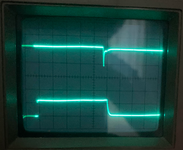
I have made an amateurish scope pic ( Analog 20 MHz scope and camera) .
Coil L=0,16 H, R=82 Ohms, Cstray not even guessed at) Coil L/R = 2 ms.
6 V relay coil driven at 6 V / 12 Hz.
The upper trace shows the voltage over contacts, the negative peak is around -200V over maybe 25 µs.
The lower trace is the relay contact +6V closed, +-0 V open

This peak will erode the driving contact.
 

Attachments

  • Oscilloscope - No diode cropped(5).png
    Oscilloscope - No diode cropped(5).png
    309.5 KB · Views: 11
Last edited:

lund

Well-known member
Joined
Nov 2, 2019
Messages
768
Location
Michigan
I think that you’re missing several points.

1. With DC the arc is always in the same direction. This will wear one contact and build up on the other which very negatively affects switch life. AC doesn’t have this problem.
2. Switches don’t arc once per state change. They ”bounce” so there are multiple arcs per switch operation. This extends the effective duration of the arc. I don’t have numbers handy but I’d expect much more than .008 second.

The is no “big switch” conspiracy. Switch manufacturers rate their switches as high as they can and still meet their reliability requirements. If that switch says .6A max for DC you can bet that is the real maximum. The OP - if he has to use that switch - should add a relay. He doesn’t have to though - the switch will happily fail all by itself over time if he grossly exceeds the specs.
I am not saying there is any "conspiracy". Things get labeled for odd reasons sometimes. I do not think current limits of all switches for 60 Hz AC and DC are that radically different. The specific example here given was quite large (factors of 10). I was just curious why since it does not make strong sense to me for *slowly* varying currents.

I am involved at work with RF cavities that can break down. For such devices the field holding for oscillating fields is substantially higher than it would be for DC due to the oscillations snuffing out cascade processes when electrons liberate. BUT those devices operate on the 100s of MHz (10^7 Hz) range to 10s of GHz (10^10 Hz) that is 6 to 9 orders of magnitude faster oscillatory variation than 60 Hz AC power. 60 Hz AC power is typically modeled electromagnetically as quasi-static.

A discharge arc generates a plasma with various species and the fast moving electrons have essentially an infinity of transit time to cross, interact and scatter with materials into which they are driven and liberated particles and gas can flow back. These are not simple processes so damage thresholds are often set via measurements. Sometimes ratings are conservative (even very much so) since they want to avoid complaints of things not working. But the plasma discharge is likely "active" on very long time scales for the characteristic process in just one part of a single AC cycle even. Characteristic particle transit times and collective (plasma) frequencies set scales and all those (as in the quick example I generated) will be very fast. Arcs may persist for a long time over many AC cycles too. There are a lot of what ifs including the characteristics of the circuit connected to (inductance, capacitance, resistance etc) since that can limit current being drawn in by the arc. The gas in the switch can matter a lot too along with contact materials, shields, etc.
 

lund

Well-known member
Joined
Nov 2, 2019
Messages
768
Location
Michigan
Max answer is fully correct.
To calculate the voltage occuring across opening contacts in a DC circuit that has Inductance(L), resistance(R) and stray capacitances ( Cstray) is difficult even for a very well educated and mathematically competent person.
I have made an amateurish scope pic ( Analog 20 MHz scope and camera) .
Coil L=0,16 H, R=82 Ohms, Cstray not even guessed at) Coil L/R = 2 ms.
6 V relay coil driven at 6 V / 12 Hz.
The upper trace shows the voltage over contacts, the negative peak is around -200V over maybe 25 µs.
The lower trace is the relay contact +6V closed, +-0 V open

This peak will erode the driving contact.
I am not fully sure what you are illustrating here. But it is not surprising that a (dc?) voltage switched across an inductor shows a spike associated with trying to maintain constant flux. That characteristic details of the pulse profile at the switch (even if ideal) will depend on the circuit inductance, capacitance and voltages likely fairly consistent with circuit theory IF the transient switching arc is negligible. If it is not negligible, then it will probably impact the waveform, perhaps significantly -- especially close to the switching time.

Regardless, there is a BIG difference with slowly varying AC/DC and high frequency responses (100s MHz to GHz range).
 

Max

ALLIANCE MEMBER
Joined
Jun 16, 2018
Messages
3,329
Location
Georgia
Regardless, there is a BIG difference with slowly varying AC/DC and high frequency responses (100s MHz to GHz range).
That switch is a hot mess well before 100 MHz or above. If you're familiar with RF switches then you know that the switch under discussion isn't one and could never be one. Therefore talking about its RF performance is rather useless.

Edited to add:
I think that you're making a fundamental mistake here. I agree with you 100% that there is a huge difference between say 60 Hz and 100 MHz circuits. But you're looking at 60 Hz as effectively the same as DC, and it absolutely is not.

I am not saying there is any "conspiracy". Things get labeled for odd reasons sometimes. I do not think current limits of all switches for 60 Hz AC and DC are that radically different. The specific example here given was quite large (factors of 10). I was just curious why since it does not make strong sense to me for *slowly* varying currents.

Most switches do have a big difference between their AC and DC ratings and 5 to 10X is not uncommon. If it doesn't make sense to you, you can start here: https://www.mouser.com/blog/which-switch-who-cares-if-its-ac-or-dc

I don't have access to the IEEE paper repositories any more, so if you want to go further you'll have to research things yourself. But you're arguing a fact that has been quantified by countless switch manufacturers, so I'm pretty much done at this point.

A discharge arc generates a plasma with various species and the fast moving electrons have essentially an infinity of transit time to cross, interact and scatter with materials into which they are driven and liberated particles and gas can flow back. These are not simple processes so damage thresholds are often set via measurements. Sometimes ratings are conservative (even very much so) since they want to avoid complaints of things not working. But the plasma discharge is likely "active" on very long time scales for the characteristic process in just one part of a single AC cycle even. Characteristic particle transit times and collective (plasma) frequencies set scales and all those (as in the quick example I generated) will be very fast. Arcs may persist for a long time over many AC cycles too. There are a lot of what ifs including the characteristics of the circuit connected to (inductance, capacitance, resistance etc) since that can limit current being drawn in by the arc. The gas in the switch can matter a lot too along with contact materials, shields, etc.
I'm a EE and I've got absolutely no idea what you are trying to say there.
 
Last edited:

lund

Well-known member
Joined
Nov 2, 2019
Messages
768
Location
Michigan
That switch is a hot mess well before 100 MHz or above. If you're familiar with RF switches then you know that the switch under discussion isn't one and could never be one. Therefore talking about its RF performance is rather useless.

Edited to add:
I think that you're making a fundamental mistake here. I agree with you 100% that there is a huge difference between say 60 Hz and 100 MHz circuits. But you're looking at 60 Hz as effectively the same as DC, and it absolutely is not.
Hey Max, Ok. Educate me and I will be happy. But put aside the snarky stuff please. The questions I am posing are not so stupid as you seem to be assuming.

Yes, in the GHz range there are not simple mechanical conductor switches like in circuits. The EM energy flows as waves and is often structured (source drives) to be primarily single frequency drive.

See below for some more ...

Most switches do have a big difference between their AC and DC ratings and 5 to 10X is not uncommon. If it doesn't make sense to you, you can start here: https://www.mouser.com/blog/which-switch-who-cares-if-its-ac-or-dc

I looked over. Very little info, but yes, I am sure there is mass volumes to read online.

Something humorous though: in the very picture on the link you give:
1724277870948.png

They use a switch with the *same* 15 A rating AC and DC. It is the voltage rating that is different. Yes, the voltage amplitude ratings are different by large factors (250/30 ~ 8, and I would assume AC is rms period average measure here).

So yes, I may be part wrong on the clearing being different @ 60 Hz and DC in spite of many many transit times in any half sine wave cycle or physical switching interval. If so, it might be more logical that the threshold issue correlates more to voltage being held on the switch cycle. I would also not be surprised if manufacturers are putting ratings based on what is often being switched since if the switch damages they get complaints but that might not be intrinsic to the switch component by itself on a resistive type load. Inductive loads I would presume will be more problematic in generating high voltage spikes across contacts that need to be held to avoid breakdown damage. The light article you cite below makes no estimates and emphasizes the load aspects not in the switch contacts themselves.
https://www.mouser.com/blog/which-switch-who-cares-if-its-ac-or-dc
I don't have access to the IEEE paper repositories any more, so if you want to go further you'll have to research things yourself. But you're arguing a fact that has been quantified by countless switch manufacturers, so I'm pretty much done at this point.


I'm a EE and I've got absolutely no idea what you are trying to say there.


Ok, no need to be snarky. I am a research scientist by the way and do not work on EE but do work on charged particle dynamics including intense beams ... though not breakdown discharges. Granted, maybe I am a dumb one, but hopefully I can be enlightened. What I was describing was characteristic scales of plasma (collective wave) and particle transit factors that would be associated with discharge breakdowns emitting charged particle streams. They are impacted by many effects including surface finish and materials, geometry, scale, voltage, density, etc. It is not a simple topic. But I am pretty sure from the respect of a discharge strike 60 Hz is not fast variation. As I pointed out initially, it is likely even 1eV electrons can transit switch gaps many million times in ony half swing of a single period of harmonic variation. The 1/60Hz period will also likely be fast on the physical time scale the physical switch contacts open.
 
OP
T

tlmartin84

Well-known member
Joined
Apr 23, 2012
Messages
1,085
Location
West Virginia
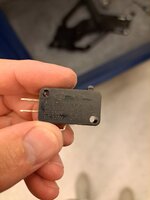
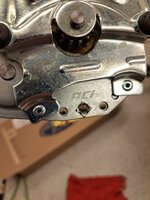
This is the switch...no names, no model, even on the side...

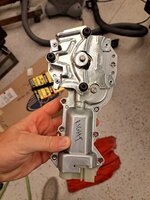
Here is the motor...no model anywhere.

Manufacturer of the product it is in says it is good for 10 amps at 12v dc.

20240821_193326.jpg20240821_193137.jpg
 

Max

ALLIANCE MEMBER
Joined
Jun 16, 2018
Messages
3,329
Location
Georgia
Hey Max, Ok. Educate me and I will be happy. But put aside the snarky stuff please. The questions I am posing are not so stupid as you seem to be assuming.
It certainly wasn't my intention to be snarky. You wrote a lot of stuff and I simply don't know what you were trying to say. Is it me? Is it you? I don't know. All I can tell you is that I didn't understand what you were trying to convey in that paragraph.
I looked over. Very little info, but yes, I am sure there is mass volumes to read online.
I agree that the article is on the lightweight side, but it did make some key points. Here is a different quote for something that you were questioning before: "When the switch is closed, the two contacts actually separate and reconnect, typically 10 to 100 times over a period of about 1ms." ("The Art of electronics", Horowitz & Hill, Second edition, pg 506.)" So the switch bounce period is much longer than the uS that you expected before.

Something humorous though: in the very picture on the link you give:
1724277870948.png

They use a switch with the *same* 15 A rating AC and DC. It is the voltage rating that is different. Yes, the voltage amplitude ratings are different by large factors (250/30 ~ 8, and I would assume AC is rms period average measure here).
Sure. I'm not telling you that there is a hard and fast rule that AC current is always higher than DC current in a switch. What I am telling you is that switch manufacturers do rate their switches for what they expect that switch will handle over a certain number of operations with a certain reliability. There is not some special huge margin for what they specify. So if a switch is rated for 10A AC and 2A DC then I expect that is what it will work correctly too. If it could do 10 A DC then it would be rated that way, and since it isn't rated for that current isn't it won't work, or it will work for a bit and then fail.

The switch you note is interesting. My take would be that they are trading off DC voltage - which will obviously reduce the internal arcing - in the interest of keeping the current the same. I expect that what they say about the rating is correct, and you that could run 10 A DC through it reliably - but not at say 100V DC. So it's trading off voltage for current for what they presume is an important spec. for their customers.

In general, if you run a part outside the manufacture's specs then you are completely on your own if there are issues.

So yes, I may be part wrong on the clearing being different @ 60 Hz and DC in spite of many many transit times in any half sine wave cycle or physical switching interval. If so, it might be more logical that the threshold issue correlates more to voltage being held on the switch cycle. I would also not be surprised if manufacturers are putting ratings based on what is often being switched since if the switch damages they get complaints but that might not be intrinsic to the switch component by itself on a resistive type load. Inductive loads I would presume will be more problematic in generating high voltage spikes across contacts that need to be held to avoid breakdown damage. The light article you cite below makes no estimates and emphasizes the load aspects not in the switch contacts themselves.
https://www.mouser.com/blog/which-switch-who-cares-if-its-ac-or-dc
I am not a materials engineer nor am I a physicist. I can't explain to you the details about a DC or AC arc at 60 Hz that would convince you on how they work. What I can tell you is that it's in a manufacturer's best interests to specify a part as broadly as they can as it will increase sales. So if a switch spec says 2A for DC and 10 for DC then that is what it is.
Ok, no need to be snarky. I am a research scientist by the way and do not work on EE but do work on charged particle dynamics including intense beams ... though not breakdown discharges. Granted, maybe I am a dumb one, but hopefully I can be enlightened. What I was describing was
I don't think that anyone is dumb here. Like I said, I've got no idea what your long paragraph said whereas one of your peers may have just nodded his head and said "sure".

characteristic scales of plasma (collective wave) and particle transit factors that would be associated with discharge breakdowns emitting charged particle streams. They are impacted by many effects including surface finish and materials, geometry, scale, voltage, density, etc. It is not a simple topic. But I am pretty sure from the respect of a discharge strike 60 Hz is not fast variation. As I pointed out initially, it is likely even 1eV electrons can transit switch gaps many million times in ony half swing of a single period of harmonic variation. The 1/60Hz period will also likely be fast on the physical time scale the physical switch contacts open.
I think our difference is that you are looking for a fundamental physical explanation in detail whereas I am talking about believing the manufacture's specs and understanding the very basic principles as to why the specs can be different. If you want the detailed theory you'll have to start going through old IEEE papers and textbooks.
 

American Locomotive

Well-known member
Joined
Jan 8, 2017
Messages
10,957
Location
Rhode Island
This is the switch...no names, no model, even on the side...

Here is the motor...no model anywhere.

Manufacturer of the product it is in says it is good for 10 amps at 12v dc.

20240821_193326.jpg20240821_193137.jpg
When you have a switch, typically they DC voltage rating will be much lower than the AC voltage rating, but the current rating will be the same or similar. For your switch, the AC and DC voltage ratings are the same, so the DC current rating is much lower.

At 12vDC, the switch will likely work okay at 10-15A of current.

Ok, no need to be snarky. I am a research scientist by the way and do not work on EE but do work on charged particle dynamics including intense beams ... though not breakdown discharges. Granted, maybe I am a dumb one, but hopefully I can be enlightened. What I was describing was characteristic scales of plasma (collective wave) and particle transit factors that would be associated with discharge breakdowns emitting charged particle streams. They are impacted by many effects including surface finish and materials, geometry, scale, voltage, density, etc. It is not a simple topic. But I am pretty sure from the respect of a discharge strike 60 Hz is not fast variation. As I pointed out initially, it is likely even 1eV electrons can transit switch gaps many million times in ony half swing of a single period of harmonic variation. The 1/60Hz period will also likely be fast on the physical time scale the physical switch contacts open.
You're really over-thinking this.

Switch contacts start closed. When the switch turns off, the contacts start moving away from each other. An arc always forms no matter what. Mechanical switches are pretty slow devices, as is AC mains frequency. Once the AC sinewave hits a 0 crossing, any arc that forms will generally self extinguish (with normal inductive loads). With DC, there is no 0 crossing, and any arc that establishes is far more likely to continue burning. So switches typically have a huge voltage or current de-rate on DC.

Here's a good video:
 

LukeOresk

Well-known member
Joined
Mar 20, 2016
Messages
183
Not that I’ve messed around with a lot of 12V DC circuits but normally you want a motor rated switch. If the manufacturer supplied it I’m sure it’s fine.

What is this for out of curiosity?
 

Max

ALLIANCE MEMBER
Joined
Jun 16, 2018
Messages
3,329
Location
Georgia
I've replaced multiple windows and that convinced me that if I've got to take a door apart once to fix it I really don't want to do it again. @American Locomotive thinks that switch will be ok at 12V and he may be right. Unfortunately the switch itself doesn't say that and you don't really know for sure. Keeping with my theory of only having to do things once, if it was me I'd add a 12V relay and use the switch to control the relay.
 

American Locomotive

Well-known member
Joined
Jan 8, 2017
Messages
10,957
Location
Rhode Island
What is the purpose of the switch in this setup? How is the direction reversed?

I would agree that after actually "seeing" the motor and knowing that its for a power window application, that the switch may live a short life.
 

tool_scrounge

Well-known member
Joined
Jul 20, 2010
Messages
4,189
Location
Southern California
In previous posts, a relay was recommended. Now that we know this is for a forward/reversing application, what type of snubbing circuit would be recommended to protect the relay contacts? A single diode across the motor will not work more than once When reversed.
 
To avoid these ads, REGISTER NOW!
Top Bottom