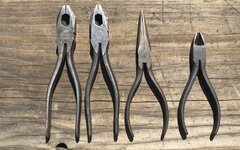
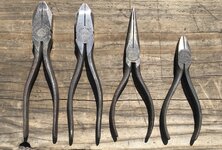
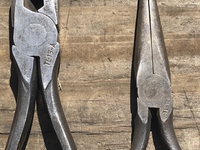
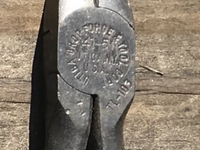
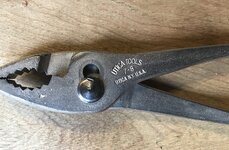
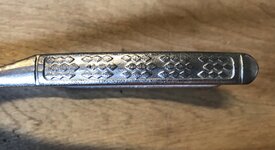
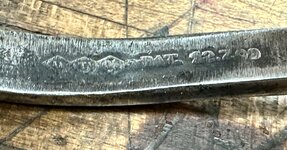
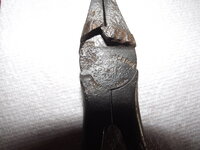
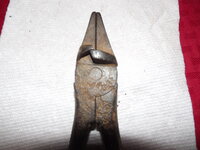
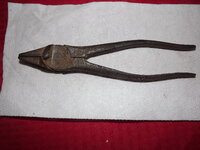
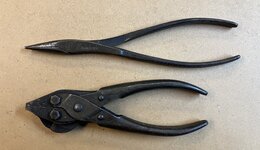
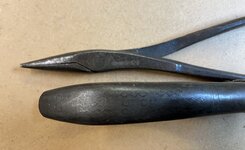
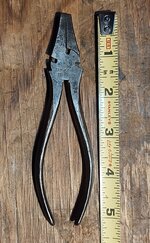
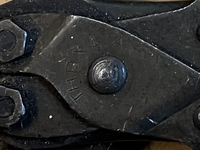
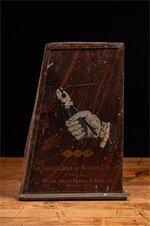
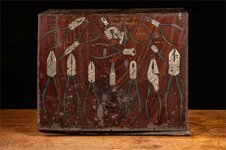
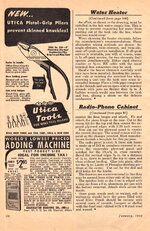
I think Utica was making them for Schollhorn. It's similar to the Krieger-Bonney DOE wrenches situation, discussed
here.
I had no prior knowledge of this arrangement. Not that I'm a huge Utica collector (I have a few things, as witnessed by this thread, some of them wartime, mainly Signal Corps, and some of them NOS wartime), but I am a huge Schollhorn collector, and I have never noticed or run into this before when talking about either mfgr, or in wartime collector circles. Granted, it's not a jeep tool or a GTMK tool, but a few of us have gone a little wider, and it's just never come up before as far as I know. It's amazing that facts like this still manage to turn up in our hobby, and even more amazing that it turned up in two different places, with two different collectors,
on the same danged day!
Here's the story, told with WPB Contracts Books excerpts...
This contract...
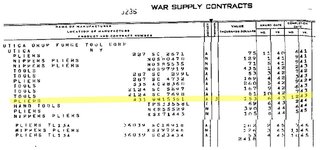
...is
not a Utica contract.
See that "3" in the FOOTNOTE column? Here's the footnote.
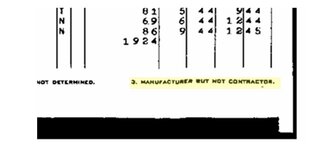
My hunch is that's a Schollhorn contract.
A paragraph in the Introduction to the WPB books emphasizes the intent and importance of identifying the manufacturer and the location of the manufacturing, but there aren't actually too many of these instances, and they flat out say they did not track subcontracts and subcontracting.
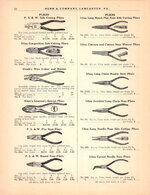
Schollhorn had plenty of contracts and were definitely supplying their side-cutting compound pliers to the Army. Unhelpfully, though, that particular contract is not
also listed in the Schollhorn entry.
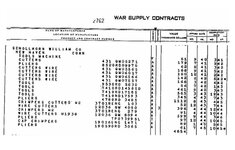
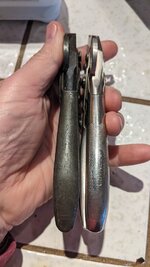
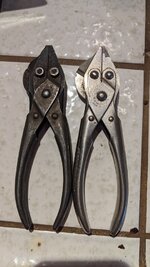
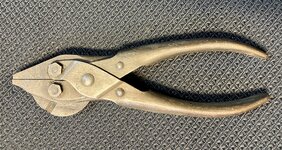
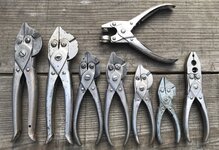
Obviously they didn't want to double-tabulate. And from their perspective, it was irrelevant. The actual contract would show the contractor. From our perspective, every one of these "3" footnotes would mean we would not know who owned the actual contract without physical identification. In this case, as well as the Bonney-Krieger case (which was a subcontracting situation), it's very easy to discern from the unmistakable physical features.








 www.garagejournal.com