Dave455
Well-known member
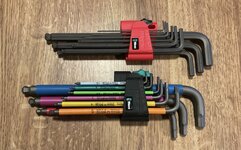
It’s a rainy day here in the U.K. so I decided to write a post I’ve been meaning to write for a while, and write about hex keys.
Now, I know this isn’t the most exciting of topics to some (flip to the next thread if that’s the case) but over the years it’s become apparent that most of the big manufacturers products all offer something different, and there might be a few guys here who can use what I’ve learnt.
Full disclosure here - in my past I’ve worked extensively with machine tools. One of the members here wrote that hex keys are to a machinist what wrenches are to a mechanic. That is so true, and I’ve done that.
I’ve also worked in the defence industry, and that’s an environment which sorts the “wheat from the chaff”. If you’ve got to assemble a hundred widgets with 4 small button head screws, each torqued to a high value, and no way to access with anything other than a ball head hex key, you soon find out what works and what doesn’t.
The early days - British and German
Growing up, I never had my own hex keys, I just used Dad’s. I don’t think he was bothered about the manufacturer, certainly not the way he would have been about a wrench or screwdriver.
I notice though, that they were all British made, and to the relevant British Standard. That’s important, and was even more so then. Some people will tell you that you’re a “country of origin snob” if you’re bothered about this, and anything can be made to the same standard anywhere. Well, that’s not the case now, and certainly wasn’t then. But If it was British made, it was going to be acceptable.
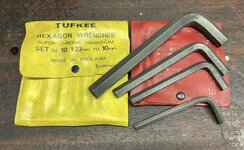
Many of Dad’s hex keys were “Unbrako”. I only realise now, after the passage of many years, how good these tools were. Even heavily used ones show little wear. I still acquire these if I see them used, and have a drawer full of miscellaneous sizes. Sadly, back then even long series were rare, and ball hex unknown, so I seldom find these.


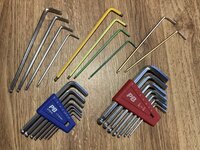
When I came to buy some hex keys for myself, my first need was some small keys to leave by my machines. I bought some “CK” (Carl Kammerling) which is actually a British brand, although many if their tools are made in Germany. The same principle applies. I don’t even know the actual maker of these, but “Made in W.Germany” was all I needed to know.
And I was right. These little keys have had the finish worn off through use, yet still the tips remain good. Quite an advert. I’d have bought a few more sets if I’d known…!
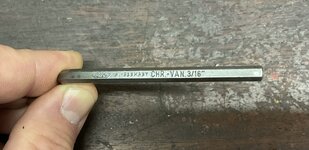
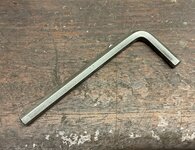
There’s much more to follow - but bear with me and I’ll break it up into bite size posts.
I know you’re desperate to tell me about your favourite maker, but bear with me and I’ll probably get to them!
Now, I know this isn’t the most exciting of topics to some (flip to the next thread if that’s the case) but over the years it’s become apparent that most of the big manufacturers products all offer something different, and there might be a few guys here who can use what I’ve learnt.
Full disclosure here - in my past I’ve worked extensively with machine tools. One of the members here wrote that hex keys are to a machinist what wrenches are to a mechanic. That is so true, and I’ve done that.
I’ve also worked in the defence industry, and that’s an environment which sorts the “wheat from the chaff”. If you’ve got to assemble a hundred widgets with 4 small button head screws, each torqued to a high value, and no way to access with anything other than a ball head hex key, you soon find out what works and what doesn’t.
The early days - British and German
Growing up, I never had my own hex keys, I just used Dad’s. I don’t think he was bothered about the manufacturer, certainly not the way he would have been about a wrench or screwdriver.
I notice though, that they were all British made, and to the relevant British Standard. That’s important, and was even more so then. Some people will tell you that you’re a “country of origin snob” if you’re bothered about this, and anything can be made to the same standard anywhere. Well, that’s not the case now, and certainly wasn’t then. But If it was British made, it was going to be acceptable.
Many of Dad’s hex keys were “Unbrako”. I only realise now, after the passage of many years, how good these tools were. Even heavily used ones show little wear. I still acquire these if I see them used, and have a drawer full of miscellaneous sizes. Sadly, back then even long series were rare, and ball hex unknown, so I seldom find these.
When I came to buy some hex keys for myself, my first need was some small keys to leave by my machines. I bought some “CK” (Carl Kammerling) which is actually a British brand, although many if their tools are made in Germany. The same principle applies. I don’t even know the actual maker of these, but “Made in W.Germany” was all I needed to know.
And I was right. These little keys have had the finish worn off through use, yet still the tips remain good. Quite an advert. I’d have bought a few more sets if I’d known…!
There’s much more to follow - but bear with me and I’ll break it up into bite size posts.
I know you’re desperate to tell me about your favourite maker, but bear with me and I’ll probably get to them!