To avoid these ads, REGISTER NOW!

Hex Keys - The Whole Story

Beerhippie

Well-known member
Joined
Oct 13, 2023
Messages
9,915
Location
Far NE Oregon
Company DFL historical extract

1958:
Deepak Fasteners is established with two manual nut manufacturing machines in Ludhiana (India) By Kailash Chander Kalra

2008:
Acquired the brands Unbrako®, Durlok® & Sel-lok® from SPS Technologies, along with the Shannon (Ireland) manufacturing unit & the Melbourne (Australia) Warehouse. Shannon plant today also serves as Distribution and Engineering Support Centre.

Jack
There's some poetic justice in an Indian company buying up British manufacturing....

Now, someone want to explain why I grew up referring to hex socket-head fasteners and keys as "Allen head screws" and "Allen wrenches"?

Also, why do these damned Bimba pneumatic cylinders use 3.5 mm socket screws? No key set I've seen includes a 3.5 mm, nor does any socket set!
 
To avoid these ads, REGISTER NOW!

four.cycle

Well-known member
Joined
Oct 19, 2015
Messages
29,008
Location
Tacoma, Washington
I had to look at those twice to check I really saw what I thought I saw!
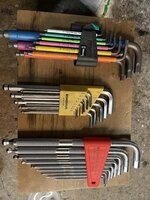
No idea what I was thinking when I ordered those. That one on the right is huge.
Again: as I said, the only time I use "hex key" is fixing a faucet or assembing IKEA furniture for somebody.
I have a full set of 3/8" drive hex bits, but I'm not sure I've ever used any of them.
 

four.cycle

Well-known member
Joined
Oct 19, 2015
Messages
29,008
Location
Tacoma, Washington
Now, someone want to explain why I grew up referring to hex socket-head fasteners and keys as "Allen head screws" and "Allen wrenches"?
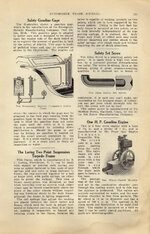
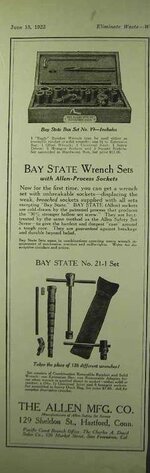
Allen / Allen Mfg. Co., 135 Sheldon St., Hartford, CT / Apex Tool Group, LLC / https://www.crescenttool.com/hex-keys / http://alloy-artifacts.org/allen-manufacturing.html / https://wrenchwiki.com/allen-manufacturing-company/ / https://www.garagejournal.com/forum/threads/c-1920s-allen-bay-state-set-no-19.426398/ /

1912 Automobile Trade Journal Allen Set Screw Manufacturing Co. ad pp 135.jpg
1912 Automobile Trade Journal Allen Set Screw Manufacturing Co. ad pp 135


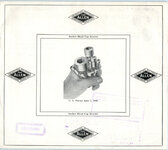
1917 Allen Mfg. Co. advertisement pp.jpg
1917 Allen Mfg. Co. advertisement pp
patent 960244 Jun 7 1910 William G. Allen
 

Attachments

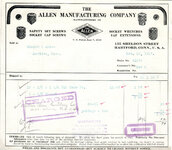
  • 1917 Allen Mfg. Co. invoice.jpg
    1917 Allen Mfg. Co. invoice.jpg
    724.5 KB · Views: 23
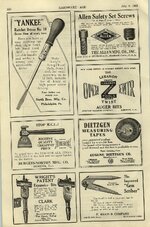
  • 1919 Hardware Age Allen Brais Burgess-Norton Connecticut Dietzgen Lebanon North Bros. Yankee a...jpg
    1919 Hardware Age Allen Brais Burgess-Norton Connecticut Dietzgen Lebanon North Bros. Yankee a...jpg
    690.5 KB · Views: 8
  • 1922 Allen Mfg. Co. ad pp .jpg
    1922 Allen Mfg. Co. ad pp .jpg
    73.6 KB · Views: 5
  • 1924 Hardware Buyers Catalog Allen Mfg. Co. ad pp 605.jpg
    1924 Hardware Buyers Catalog Allen Mfg. Co. ad pp 605.jpg
    797.1 KB · Views: 4
  • 1925 Hendricks' Commercial Register of the U.S. Part 3 (Bay State).jpg
    1925 Hendricks' Commercial Register of the U.S. Part 3 (Bay State).jpg
    152 KB · Views: 4
  • 1939 Hardware Age Allen ad pp 67.jpg
    1939 Hardware Age Allen ad pp 67.jpg
    810.9 KB · Views: 4
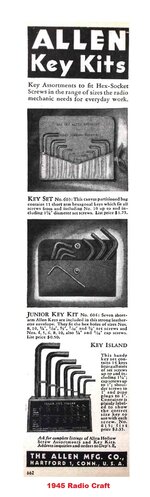
  • 1945 Radio Craft Allen Mfg Co. ad pp 662.jpg
    1945 Radio Craft Allen Mfg Co. ad pp 662.jpg
    241.6 KB · Views: 3
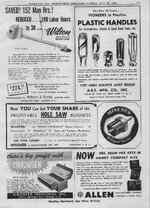
  • 1946 Hardware Age Allen Carlson & Sullivan Eagle ad pp 325.jpg
    1946 Hardware Age Allen Carlson & Sullivan Eagle ad pp 325.jpg
    906.8 KB · Views: 6
Last edited:

four.cycle

Well-known member
Joined
Oct 19, 2015
Messages
29,008
Location
Tacoma, Washington
Allen Mfg. Co., Hartford, CT
 

Attachments

  • 1946 Hardware Age Allen Fletcher Terry ad pp 338.jpg
    1946 Hardware Age Allen Fletcher Terry ad pp 338.jpg
    834.2 KB · Views: 6
  • 1954 Hardware Age A.B.S. Allen Misener Simonsen ad pp 855.jpg
    1954 Hardware Age A.B.S. Allen Misener Simonsen ad pp 855.jpg
    742.3 KB · Views: 10

RoninB4

Well-known member
Joined
Jul 22, 2020
Messages
3,590
Location
Under My House
Also, why do these damned Bimba pneumatic cylinders use 3.5 mm socket screws?
-Because you prefer them?
No key set I've seen includes a 3.5 mm, nor does any socket set!
-Not my preferred brand but do recall that size being made.


bongkar_YES_pasang_NO

Well-known member
Joined
Aug 3, 2017
Messages
53
Location
Indonesia
Very interesting.

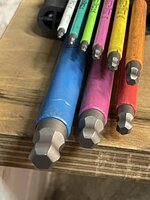
While there are significant, but small, differences between the flat end hex keys, it’s becoming apparent that th e biggest differences are in the ball end - some offering strength, some a high working angle, some other features.

Worryingly for me, despite having hex keys from a dozen different manufacturers, there are still some major ones I haven‘t tried, some of which might even be the most suitable for some applications.

I can’t believe I’ve been so casual in my hex key choices…
this thread praised that Eight Tapered Ball quite highly
 
Last edited:

F-22

Well-known member
Joined
Jan 23, 2022
Messages
1,830
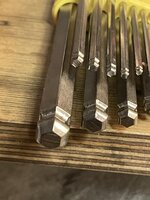
The ends are sheared because the material is fed into the press off a large coil and must be cut to length, the "L's" are cut, bent 90°, and stamped (size and brand) in one stroke of the press. It's quite likely that all brands are made the same way as it's an efficient method for mass production as long as the shear station of the die is kept sharp and the die clearance is correct.

Really cool that it is such an optimized production. Although the ones made from bar stock (certain models of Wera and PB Swiss) must have a very different procedure. Probably the bar is cut, then both ends forged or machined (?) to final shape, and I assume bending is the last process before finishing (easier to work on a bar). Never took the time to check, but maybe checking the orientation of the faces of the hex on these keys would give a clue as to how they are made - probably same indexing on both sides?

The coloured finish seems to be more durable than some.

The finish on my rainbow Vessel drivers is a very thick paint coat for sure. Hard to speak of durability yet but it seems it won't go off easily.
 
OP
D

Dave455

Well-known member
Joined
Mar 19, 2013
Messages
5,822
Location
Sussex, England
There's some poetic justice in an Indian company buying up British manufacturing....

Now, someone want to explain why I grew up referring to hex socket-head fasteners and keys as "Allen head screws" and "Allen wrenches"?

Also, why do these damned Bimba pneumatic cylinders use 3.5 mm socket screws? No key set I've seen includes a 3.5 mm, nor does any socket set!
Hate to tell you, but Deepak didn’t buy the British factory - that had already been closed by then.

They did buy the rights to the formerly AMERICAN brand “Unbrako”, from the AMERICAN company SPS…

Indian companies have ended up controlling some other, formerly British, manufacturing. In the case of Enfield motorcycles, for example, it came about because the parent company collapsed, but the Indian subsidiary survived.

Personally, I take the view that if a company can be run successfully in India, with a vibrant domestic market and a sympathetic government, good luck to ‘em!

As has been pointed out above, hex keys are often referred to as “Allen keys” as both the screws and keys were originally invented by the Allen Manufacturing Company.

In the U.K, and in many other parts of the world, the term ”Allen Key” is generally used. Given that, I found it surprising that the company who owned the rights to that name elected to discontinue it. I wouldn’t have done that.
 
OP
D

Dave455

Well-known member
Joined
Mar 19, 2013
Messages
5,822
Location
Sussex, England
No idea what I was thinking when I ordered those. That one on the right is huge.
Again: as I said, the only time I use "hex key" is fixing a faucet or assembing IKEA furniture for somebody.
I have a full set of 3/8" drive hex bits, but I'm not sure I've ever used any of them.
I’m not a great fan of Ikea fasteners, but all too often they are proprietary and can’t easily be replaced. They usually capitulate if even threatened with a Snap On ratchet and bit socket!

One thing that is obvious, is that some folks, such as machinists, use hex keys an awful lot, some much less so! I suspect most folks on this forum are somewhere in the mid ground, using them essentially for automotive, where most often a bit socket is more appropriate.

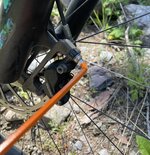
While I associate hex key use with machinists, and the tool / die industry, there are other activities I hadn’t considered where they seem to see a lot of use. Cycle maintenance seems to be a big one.
 

Private Lugnutz

Well-known member
Joined
Mar 30, 2012
Messages
30,629
Location
The Authentic Jersey Shore
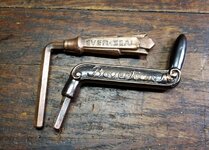
Coffin keys?
Ding ding ding ding ding!

Crane and Breed ("Everseal") and Boyertown Casket company were prominent casket makers in the late 1800s through the 1940s. Abraham Lincoln is buried in an Everseal coffin.

The key, made of bronze, was used to lock the mechanical gasket that seals the casket from air, moisture, and pests. The locking mechanism is hidden in the structure of the casket, except for a small opening, usually at the head or the foot of the casket, where the casket key is inserted. Turning or cranking to the right or left to lock or unlock the mechanical gasket or seal. Usually the keys were presented to the family after the service as a memento and keepsake.

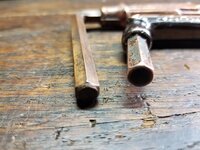
Believe it or not, I pulled both of those out of oldtimer's toolboxes, a few years apart, at two different flea markets in two different towns, both of the boxes just burgeoning with all kinds of cool old mechanics' hand tools. As macabre as it may seem, I have no doubt they were being used as hex keys by two different guys who had the same practical idea about the tool used to physically and metaphorically secure their dearly departed's bones into perpetuity.

I can picture them both in a felt lined box in a drawer in a parlor or sitting on some mantle and eventually, after the sentimentality was gone and nobody else knew what to do with it, in the hand of a young man in overalls, a cowlick, and the same thought: Hmm. I wonder what size this is? Oh, 5/16". I can use this.
 
Last edited:

F-22

Well-known member
Joined
Jan 23, 2022
Messages
1,830
Vintage Italian bikes from the 60's on like Moto Morini, Gilera, Moto Guzzi, MV Agusta and Ducati used allen keys a lot, especially on the engines. That's my main use for them.
 

Odd-job

Well-known member
Joined
Aug 13, 2017
Messages
2,292
Location
SF Bay Area
While I associate hex key use with machinists, and the tool / die industry, there are other activities I hadn’t considered where they seem to see a lot of use. Cycle maintenance seems to be a big one.
Probably need to add 3d printers to the list as well. I think I need to up my <3mm game now. Although think I am going to gravitate towards drivers and t handles more so.
 

Samuel D

Well-known member
Joined
Apr 9, 2019
Messages
638
High quality bicycle components are moving more and more to Torx.

Since even expensive bicycles are often worked on by their clueless owners (“it’s just a bike – how hard can it be?”), I am not convinced this is a good thing.

The reason is that (excepting daft things like the 3.5 mm size mentioned above), Allen keys of standard sizes do not engage the next size up of socket head cap screw. A 3 mm key will spin loosely in a 4 mm hex head, provoking even the clumsiest mechanic to find a key of the right size.

Not so with Torx. A T25 key will grab a T27 head just firmly enough to destroy the screw (as will plenty of other close but wrong sizes).

Add in screws made of silly materials for imaginary weight benefits and you get a lot of stripped heads on modern bicycles.
 

RTM

Well-known member
Joined
May 13, 2019
Messages
13,214
Location
SF Bay Area
Allen keys of standard sizes do not engage the next size up of socket head cap screw. A 3 mm key will spin loosely in a 4 mm hex head, provoking even the clumsiest mechanic to find a key of the right size.
As I’ve said before, you can jam two smaller sized hex keys into a socket head when things are desperate. Not a practice I recommend, just like using an Allen key to turn a Torx, but it can be done.
 

Beerhippie

Well-known member
Joined
Oct 13, 2023
Messages
9,915
Location
Far NE Oregon
-Because you prefer them?

-Not my preferred brand but do recall that size being made.


No, I don't get to chose what a manufacturer uses on their equipment. This is our canning line, made in Lincoln, Neb. It's frustrating as hell to work on as it is, sine all the main frame uses SAE fasteners, while all the controls, pneumatic valving and cylinders use metric.

I have several 3.5 mm wrenches--key and 1/4" socket--but it is frustrating that they have to be purchased separately.
I’m not a great fan of Ikea fasteners, but all too often they are proprietary and can’t easily be replaced. They usually capitulate if even threatened with a Snap On ratchet and bit socket!

One thing that is obvious, is that some folks, such as machinists, use hex keys an awful lot, some much less so! I suspect most folks on this forum are somewhere in the mid ground, using them essentially for automotive, where most often a bit socket is more appropriate.

While I associate hex key use with machinists, and the tool / die industry, there are other activities I hadn’t considered where they seem to see a lot of use. Cycle maintenance seems to be a big one.
Most of our brewery equipment uses Allen fasteners, both metric and SAE.
 
To avoid these ads, REGISTER NOW!

RoninB4

Well-known member
Joined
Jul 22, 2020
Messages
3,590
Location
Under My House
Really cool that it is such an optimized production. Although the ones made from bar stock (certain models of Wera and PB Swiss) must have a very different procedure.
-Why would you contend that their process is different? I suppose anything is possible but I see no reason to do it differently. Which models? Show examples please.
Probably the bar is cut, then both ends forged or machined (?) to final shape,
-I can't see them being forged, there's no advantage to forging them and it would be absurdly time consuming to do so. Hex stock is extruded to shape/size and coiled for production purposes. Eklind used to buy extruded hex stock in 12 foot lengths and fed by hand into the presses. One of Howard Eklind's buddies told him it couldn't be run off a coil as an auto-fed process, we proved him wrong.
and I assume bending is the last process before finishing (easier to work on a bar).
-Not necessarily true, the ball drivers on the "L" keys have the ball finish last, it's all about the loading/feed and how that's done.
Never took the time to check, but maybe checking the orientation of the faces of the hex on these keys would give a clue as to how they are made - probably same indexing on both sides?
-Indexing is how Bondhus made theirs with opposing broaches. Eklind and the German company developed a superior/faster method of making the ball. Other companies soon followed by, presumably, using the same method. Eklind was the first as far as I know. I could likely determine the method by inspecting under magnification.
 

dutchgray

Well-known member
Joined
Sep 28, 2014
Messages
6,468
Location
Dorset. England.

F-22

Well-known member
Joined
Jan 23, 2022
Messages
1,830
-Why would you contend that their process is different? I suppose anything is possible but I see no reason to do it differently. Which models? Show examples please.

-I can't see them being forged, there's no advantage to forging them and it would be absurdly time consuming to do so. Hex stock is extruded to shape/size and coiled for production purposes. Eklind used to buy extruded hex stock in 12 foot lengths and fed by hand into the presses. One of Howard Eklind's buddies told him it couldn't be run off a coil as an auto-fed process, we proved him wrong.

-Not necessarily true, the ball drivers on the "L" keys have the ball finish last, it's all about the loading/feed and how that's done.

-Indexing is how Bondhus made theirs with opposing broaches. Eklind and the German company developed a superior/faster method of making the ball. Other companies soon followed by, presumably, using the same method. Eklind was the first as far as I know. I could likely determine the method by inspecting under magnification.
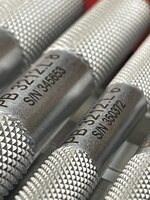
Sorry, I think we misunderstand each other here, I am not talking about standard all hex keys but keys like these:

DSC_6572_2048x2048.jpg


Made from a round bar stock. I agree after looking at them, the ends are probably not forged at all and just directly machined out of the bar stock.

I assume Allen keys like these are an order of magnitude more expensive to manufacture :LOL:

The advantage to these is that they do not bend or flex much at all because the round stock is thicker than the equivalent hex stock. The ends are machined so probably also tighter tolerances (?). And they are marginally more comfy in the hand (but mainly because they do not flex).
 

YesIHaveAHammer

Well-known member
Joined
Jun 1, 2025
Messages
848
Over the years I acquired a good deal of Bondhus, and came to value it’s quality.
Any view on Bahco? Bought a set years ago, they seem about the same price.

If you have never seen or used the Wiha Ergostar holder, all the keys fan out with the twist of just one, same for closing, and retention is just right.
I see they're available aftermarket, but can't find any for sale anywhere https://www.wihatools.com/pages/search?q=ergostar holder
 
OP
D

Dave455

Well-known member
Joined
Mar 19, 2013
Messages
5,822
Location
Sussex, England
Any view on Bahco? Bought a set years ago, they seem about the same price.


I see they're available aftermarket, but can't find any for sale anywhere https://www.wihatools.com/pages/search?q=ergostar holder
Originally, Bahco tools were pretty decent. Since the buyout however, and the transfer of most manufacturing to Spain, they have not maintained the quality. Generally, I’d consider them “mid grade” at best.

With regards to hex keys, they seem to offer two types.

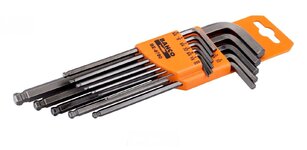
These, are made in Germany (I suspect by one of the usual suspects) and seem to be reasonable quality, though with no outstanding features.
IMG_1864.jpeg

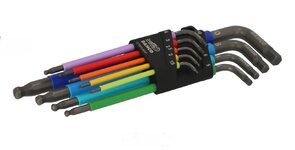
Lately, I’m seeing these, which appear to copy the style (but not the features) of the Wera. These are made in Spain, so presumably in house. I’ve never tried them, so quality must be considered “unknown”.
IMG_1865.jpeg
 

Jack Ryan

Well-known member
Joined
Jun 2, 2022
Messages
340
Location
Adelaide, South Australia
Hate to tell you, but Deepak didn’t buy the British factory - that had already been closed by then.

They did buy the rights to the formerly AMERICAN brand “Unbrako”, from the AMERICAN company SPS…

Indian companies have ended up controlling some other, formerly British, manufacturing. In the case of Enfield motorcycles, for example, it came about because the parent company collapsed, but the Indian subsidiary survived.

Personally, I take the view that if a company can be run successfully in India, with a vibrant domestic market and a sympathetic government, good luck to ‘em!

As has been pointed out above, hex keys are often referred to as “Allen keys” as both the screws and keys were originally invented by the Allen Manufacturing Company.

In the U.K, and in many other parts of the world, the term ”Allen Key” is generally used. Given that, I found it surprising that the company who owned the rights to that name elected to discontinue it. I wouldn’t have done that.

The Indian company seems to disagree:

In 2005, an agreement was signed with SPS Technologies to manufacture & market Unbrako in the Indian subcontinent. In 2008, Deepak Fasteners acquired the brand Unbrako from SPS Technologies, along with sub-brands Durlok & Sel-lok, Ireland manufacturing unit & the Melbourne warehouse.


It was obviously not clear who the purchaser was at the time but the sale of an operating concern is clear.


2008 was a busy year, Tata bought Jaguar and Land Rover that year

Jack
 
Last edited:

neophyte

Well-known member
Joined
Apr 23, 2012
Messages
9,725
Location
Pennsylvannia
The Indian company seems to disagree:

In 2005, an agreement was signed with SPS Technologies to manufacture & market Unbrako in the Indian subcontinent. In 2008, Deepak Fasteners acquired the brand Unbrako from SPS Technologies, along with sub-brands Durlok & Sel-lok, Ireland manufacturing unit & the Melbourne warehouse.


2008 was a busy year, Tata bought Jaguar and Land Rover that year

Jack
In all likelihood, SPS figured there was too much competition in the hex key and fastener market, and that most future business would be about lower cost, so an agreement was made for manufacture and marketing of of Unbrako products in India, were labor cost are significantly lower, and were hand tools are probably more commonly used even in industrial settings, and then after Deepak showed they could do the manufacturing, the whole entity was sold to Deepak.

Making a manufacturing agreement or partnership for a few years, with another corporation seems to be somewhat common before a complete sale is officially done.
AEG for instance made a few tools for Milwaukee, before Milwaukee became part of Atlas Copco along with AEG.
Chervon was making some cordless tools for the German FLEX tool brand, before purchasing FLEX, and Chervon was also likely making tools for Bosch, such as Skil Saws, before arranging to purchase the Skil brand from Bosch.
Chervon may still be making some of the similar Bosch tools.
 
OP
D

Dave455

Well-known member
Joined
Mar 19, 2013
Messages
5,822
Location
Sussex, England
The Indian company seems to disagree:

In 2005, an agreement was signed with SPS Technologies to manufacture & market Unbrako in the Indian subcontinent. In 2008, Deepak Fasteners acquired the brand Unbrako from SPS Technologies, along with sub-brands Durlok & Sel-lok, Ireland manufacturing unit & the Melbourne warehouse.


It was obviously not clear who the purchaser was at the time but the sale of an operating concern is clear.


2008 was a busy year, Tata bought Jaguar and Land Rover that year

Jack
Still no British factory involved in the deal!

The Coventry Unbrako factory was gone by then.

Pretty certain it shut in the 70’s.
 

RoninB4

Well-known member
Joined
Jul 22, 2020
Messages
3,590
Location
Under My House
Sorry, I think we misunderstand each other here, I am not talking about standard all hex keys but keys like these:
-Perhaps my misunderstanding as well, it's the limitations of the font format. Appreciate the photo.
Made from a round bar stock. I agree after looking at them, the ends are probably not forged at all and just directly machined out of the bar stock.
-Forging also wouldn't produce the tolerances needed for size/shape that a hex key requires.
I assume Allen keys like these are an order of magnitude more expensive to manufacture :LOL:
-A quick price check confirms your assumptions. Hoo boy they're proud of them. I can see where you may be correct about the process to make them. Can also see where I might be correct too. What is certain is the knurling and double ended shapes dictate a different or additional process than what's used on standard keys made from hex stock in a stamping die. The ball end appears to be made from the automated process/machine developed by Eklind and now used by almost everybody else. The short arm hex could also be made by the same process with a different programed cycle, even in the bent state. The feed magazine, shuttle, and presence/absence of live tooling are critical to determining how it was made.

I can't be certain about that because:

1) I'm not there to observe how it's done and am limited by my imagination
2) The Swiss are rather clever with machinery and may have developed a hybrid machine, the price suggests that's so
3) What I suggest is either pure speculation or my biased opinion
4) I'd really need to examine both ends under magnification for tooling marks as clues to how these were made
The advantage to these is that they do not bend or flex much at all because the round stock is thicker than the equivalent hex stock.
-I'm less concerned about flex in the tool and more concerned with excessive torque values in the fastener that ruin it. JMO
The ends are machined so probably also tighter tolerances (?).
-There is also less concern for concentricity using over-sized round stock. It was/is a big concern when using hex stock, less when using round stock. As for tighter tolerances on the profile, that's just a matter of programming the cutter.
And they are marginally more comfy in the hand (but mainly because they do not flex).
-Perhaps so but the service life is now limited by wear/deformation on the ends. When either end goes bad on the round stock type they're now rendered useless. With the hex stock type I can grind off the worn/deformed part and still have a functional hex key. That's just personal preference and doesn't mean I'm right.
 

F-22

Well-known member
Joined
Jan 23, 2022
Messages
1,830
The ball end appears to be made from the automated process/machine developed by Eklind and now used by almost everybody else.
Thank you for your replies, it is very interesting for me to read about the manufacturing behind it.

I managed to dig out the photos of my own set and a comparison with Bondhus and Wera. The unique thing about the ball ends is that they actually end in a perfect point while others seem to grind that point off. I assume it is likely more consistent and easier to finish off by grinding off that point but PB Swiss keeps it. The details all around the PB Swiss keys are on the highest level of manufacturing (even when compared to other market leaders).


1 - naatBvT.jpg

2 - 2hlMWNI.jpg

3 - 2cqIsLW.jpg

4 - DKhTx35.jpg5 - 9RB7Ooq.jpg
6 - RBHCfVv.jpg7 - ftQ7D90.jpg8 - t9yQLzM.jpg
 

RoninB4

Well-known member
Joined
Jul 22, 2020
Messages
3,590
Location
Under My House
Thank you for your replies, it is very interesting for me to read about the manufacturing behind it.
You're quite welcome, this would bore other people so I don't talk about it much.
I managed to dig out the photos of my own set and a comparison with Bondhus and Wera. The unique thing about the ball ends is that they actually end in a perfect point while others seem to grind that point off.
-They don't "grind" off the point at all. The ends of standard hex keys are rather crude looking, by comparison, because they're sheared off a long coil in the stamping press. The sheared ends are the same on ball drivers as well but appear to be different because of the CNC controlled machine program. They're cut in a machine that's similar to a lathe with live tooling. The ball profile is cut with a single point insert that's rotating in time to the headstock rotation. This produces features that are nearly flat in cross section but also faceted, in this case 6 facets. The ball profile is just a matter of programming movement of the single point cutter in the shape of a ball. The point is generated by the "flat" beginning at the center or not. Most other makes decided to eliminate the point in order to reduce the cycle time, the point has no real function anyway other than esthetics/appearances.
I assume it is likely more consistent and easier to finish off by grinding off that point but PB Swiss keeps it.
-It's a matter of where on the ball radius we start the cut. Less cutting is less cycle time.
The details all around the PB Swiss keys are on the highest level of manufacturing (even when compared to other market leaders).
-I will readily concede that the features/details on the PB Swiss are quite good and the finish is very clean looking. For the very high cost of these I would certainly expect them to look exceptional, they are. Even the knurling looks very good with no mashed teeth or swarf in the valleys. Too expensive for me to justify the purchase of a perishable tool but they are indeed nice.
 

F-22

Well-known member
Joined
Jan 23, 2022
Messages
1,830
The ball profile is cut with a single point insert that's rotating in time to the headstock rotation
I have seen that before (even on a manual lathe with a fixed gear rotation, making a cube) but I somehow completely forgot it exists. For sure, that is how the transition from the bar stock into the hex ball has a neat radius as well. Very informative, thank you!
 

Gebirgekind

Well-known member
Joined
Oct 5, 2020
Messages
134
Location
Montana
A lot of insightful conversation here, thanks @Dave455 for starting it. There have been a few comments about new innovations - I just picked these up from PB Swiss, their new 90/100 deg. stubby keys that allow a range of standard to 100 deg. access without losing strength like a ball end.
IMG_5838.jpeg
IMG_5839.jpeg

As a bike mechanic I mainly use sliding t and “p” handles, but occasionally you need a good old hex key for certain jobs.
IMG_5842.jpeg
IMG_5843.jpeg
 
OP
D

Dave455

Well-known member
Joined
Mar 19, 2013
Messages
5,822
Location
Sussex, England
this thread praised that Eight Tapered Ball quite highly
Yes, I think I am going to have to try some of those.
Most of our brewery equipment uses Allen fasteners, both metric and SAE.
Could be worse, you could have Whitworth as well!

In case anybody is worried, cap screws with Whitworth threads use the same Imperial sized hex keys as those with American / Unified threads.
I managed to dig out the photos of my own set and a comparison with Bondhus and Wera. The unique thing about the ball ends is that they actually end in a perfect point while others seem to grind that point off. I assume it is likely more consistent and easier to finish off by grinding off that point but PB Swiss keeps it. The details all around the PB Swiss keys are on the highest level of manufacturing (even when compared to other market leaders).


6 - RBHCfVv.jpg7 - ftQ7D90.jpg8 - t9yQLzM.jpg
Thanks. I was going to show some comparative pictures of the ball ends, but you saved me the trouble.

Interesting quite how much variation there is, in turn leading to considerable variation in strength and maximum useable angle.

These are by no means standardised products.
You're quite welcome, this would bore other people so I don't talk about it much.
Although this forum borders on the exceptional with regard to the level of knowledge of many of it’s contributors, there are still relatively few posts that have contributions from someone directly involved in the design and manufacture of the tools in question. Let alone the politics and back story!

Such contributions are both fascinating (for me at least) and invaluable.
A lot of insightful conversation here, thanks @Dave455 for starting it. There have been a few comments about new innovations - I just picked these up from PB Swiss, their new 90/100 deg. stubby keys that allow a range of standard to 100 deg. access without losing strength like a ball end.
IMG_5838.jpeg
IMG_5839.jpeg
I saw these, but have had no feedback regarding their effectiveness.

My gut feeling was that there was probably a specific situation / problem that PB had developed these to solve,
 

Private Lugnutz

Well-known member
Joined
Mar 30, 2012
Messages
30,629
Location
The Authentic Jersey Shore
Classic scene at the flea market this morning. I am going through toolboxes on tables, pulling out drawers, lifting removable trays, to paw through the detritus. That's where the abandoned, neglected, crusty hex key sets are always found. :)
 

Attachments

  • 20250612_074655.jpg
    20250612_074655.jpg
    915.3 KB · Views: 53

KnurledNut

Well-known member
Joined
Jan 28, 2011
Messages
8,166
Location
n/a
This thread is all over the place! Historical tools, old but not vintage tools, current tools, new innovations, and from all different countries. Gotta love the smorgasbord!

There could be a whole nother thread on Craftsman branded keys, but since this thread is becoming a compendium, it would be unfair to not at least give them a mention here.
I have seen so many of them over the years. The clear front plastic envelopes with loose keys and a snap closure were plentiful and a common household and shop item. The keys were generally high quality. Lots of these still around and in use to this day.
:beer:

54586124290_136cf002a3_b_d.jpg

And just for your coffee-sipping viewing pleasure, here’s a random key that has no name but proudly wears a stamp defining the grade of steel!
54586124415_af1cb6c0ce_b_d.jpg

And an old tattered but still solid chrome Eklind for @RoninB4:
54586000689_7b2ae9b800_b_d.jpg

Oh, and some keys with pilot pins for due diligence:
54585849191_c9b875e5f2_b.jpg
 
Last edited:

F-22

Well-known member
Joined
Jan 23, 2022
Messages
1,830
Oh, and some keys with pilot pins for due diligence:
54585849191_c9b875e5f2_b.jpg
For anyone wondering - these make working on those shallow head allen screws a lot easier. Those screws are not too common though, and not sure if all standard shalow heads have the pilot hole, but if you go at them without these keys you need to be very careful to to strip them.
 
To avoid these ads, REGISTER NOW!
Top Bottom