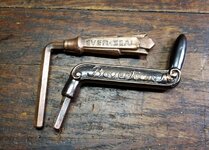
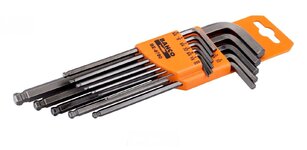
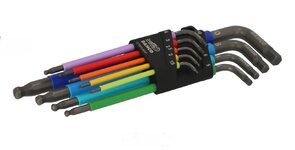
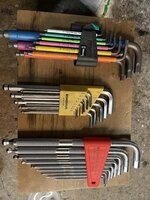
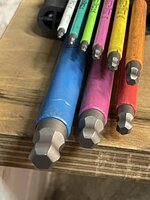
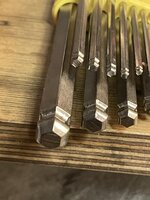
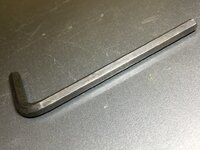
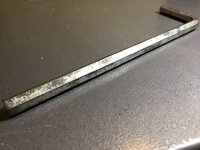
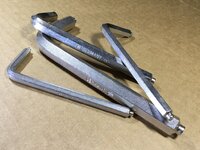
Sorry, I think we misunderstand each other here, I am not talking about standard all hex keys but keys like these:
-Perhaps my misunderstanding as well, it's the limitations of the font format. Appreciate the photo.
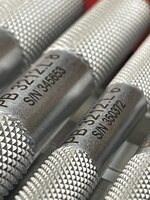
Made from a round bar stock. I agree after looking at them, the ends are probably not forged at all and just directly machined out of the bar stock.
-Forging also wouldn't produce the tolerances needed for size/shape that a hex key requires.
I assume Allen keys like these are an order of magnitude more expensive to manufacture

-A quick price check confirms your assumptions. Hoo boy they're proud of them. I can see where you may be correct about the process to make them. Can also see where I might be correct too. What is certain is the knurling and double ended shapes dictate a different or additional process than what's used on standard keys made from hex stock in a stamping die. The ball end appears to be made from the automated process/machine developed by Eklind and now used by almost everybody else. The short arm hex could also be made by the same process with a different programed cycle, even in the bent state. The feed magazine, shuttle, and presence/absence of live tooling are critical to determining how it was made.
I can't be certain about that because:
1) I'm not there to observe how it's done and am limited by my imagination
2) The Swiss are rather clever with machinery and may have developed a hybrid machine, the price suggests that's so
3) What I suggest is either pure speculation or my biased opinion
4) I'd really need to examine both ends under magnification for tooling marks as clues to how these were made
The advantage to these is that they do not bend or flex much at all because the round stock is thicker than the equivalent hex stock.
-I'm less concerned about flex in the tool and more concerned with excessive torque values in the fastener that ruin it. JMO
The ends are machined so probably also tighter tolerances (?).
-There is also less concern for concentricity using over-sized round stock. It was/is a big concern when using hex stock, less when using round stock. As for tighter tolerances on the profile, that's just a matter of programming the cutter.
And they are marginally more comfy in the hand (but mainly because they do not flex).
-Perhaps so but the service life is now limited by wear/deformation on the ends. When either end goes bad on the round stock type they're now rendered useless. With the hex stock type I can grind off the worn/deformed part and still have a functional hex key. That's just personal preference and doesn't mean I'm right.