dr_clyde
Well-known member
The shop I work at occasionally cuts these big stainless ducts.
This is an example of said ducting:
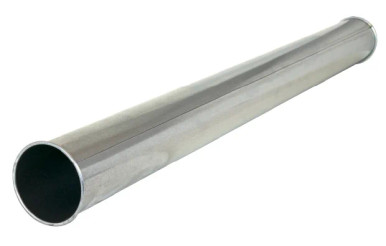
 nordfabductwork.com
They vary in diameter, the smallest we deal with is around 6" up to 16" or so. They are very thin wall, only 20ga which is about .035 wall and they're stainless steel.
We have to cut them to length and occasionally weld flanges on the end. Unfortunately they are too large to fit in our tube laser, and even if they were small enough, the wall thickness is so thin the hydraulic chuck would just distort the tube badly.
They are a HUGE pain in the kiester to cut. We currently lay out the cut with a pipe wrap and a sharpie and hand cut them with a 6" cut-off wheel. This works well enough, but it very skill dependent. One wrong move and you've scrapped a $380 duct. It is also LOUD, makes a huge burr and makes a mess.
We have put them on a welding positioner and cut them standing upright with a plasma torch. This is much faster, but the plasma makes a huge could of sparks and fumes on the ID of the duct that requires cleaning. You can catch a lot of the dross with a shield, but not all of it. It can also get a bit dicey when the length of the cut off part is more than a few inches.
I have considered a horizontal positioner laid out like a lathe, but that still doesn't solve the messy dross on the ID problem.
The overall length tolerance isn't super fussy, but we really want a square, clean cut that requires minimal deburring.
If anyone has a cool tool or idea on how to best cut these ducts, please let me know. We cut enough of them to look at a dedicated tool, but it would have to be highly adjustable as we deal with a variety of sizes.
This is an example of said ducting:
16" QF Pipe Stainless Steel (304) 20ga
8040206807 Pipe 304SS 20ga 16 QF L= 58.75 - 3200-1600-200000
nordfabductwork.com
They vary in diameter, the smallest we deal with is around 6" up to 16" or so. They are very thin wall, only 20ga which is about .035 wall and they're stainless steel.
We have to cut them to length and occasionally weld flanges on the end. Unfortunately they are too large to fit in our tube laser, and even if they were small enough, the wall thickness is so thin the hydraulic chuck would just distort the tube badly.
They are a HUGE pain in the kiester to cut. We currently lay out the cut with a pipe wrap and a sharpie and hand cut them with a 6" cut-off wheel. This works well enough, but it very skill dependent. One wrong move and you've scrapped a $380 duct. It is also LOUD, makes a huge burr and makes a mess.
We have put them on a welding positioner and cut them standing upright with a plasma torch. This is much faster, but the plasma makes a huge could of sparks and fumes on the ID of the duct that requires cleaning. You can catch a lot of the dross with a shield, but not all of it. It can also get a bit dicey when the length of the cut off part is more than a few inches.
I have considered a horizontal positioner laid out like a lathe, but that still doesn't solve the messy dross on the ID problem.
The overall length tolerance isn't super fussy, but we really want a square, clean cut that requires minimal deburring.
If anyone has a cool tool or idea on how to best cut these ducts, please let me know. We cut enough of them to look at a dedicated tool, but it would have to be highly adjustable as we deal with a variety of sizes.