To avoid these ads, REGISTER NOW!

Any tools you buy NEW and immediate upgrade or modify or polish or whatever??

mikey03

Well-known member
Joined
May 17, 2024
Messages
2,100
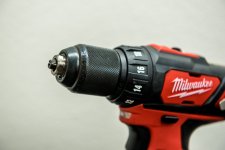
I bought a m18 drill last and before I even used it I took the original factory chuck off and put a Rohm chuck on that cost almost as much as the drill. $65 on I think like a $90 drill

I saw a thread a while back about polishing pliers if there rough when new with some paste and working them open and closed.

Maybe upgrading a handle or sharpening a chisel from the factory that wasn’t too sharp or whatever like that kinda thing.
 
To avoid these ads, REGISTER NOW!

Twisted Sid

Well-known member
Joined
May 23, 2013
Messages
762
Location
CA
Two that I have posted before but fit in here. They both work awesome


Nutria

Well-known member
Joined
Jun 23, 2015
Messages
798
Location
Eastern Sierra
Mikey, you mentioned chisels-- I don't think that I've ever purchased a new one, but all except (maybe) the Gucci brands will need work even if new.

And, yeah, I did buy a new M18 drill, and I couldn't believe how bad the chuck was. I didn't buy a Röhm. I just grabbed a chuck from a nothing-special parts Dewalt that was about ten years old and installed that-- way better than the Milwaukee.
 

MushCreek

Well-known member
Joined
Jan 14, 2015
Messages
9,775
Location
Upstate South Carolina
I guess I've been lucky. My three cordless Milwaukee drills have had good chucks. I'm a retired tool maker, and know what a good keyless drill chuck is. Maybe not Albrecht quality, but they all run true and hold the drill bits just fine. Most chisels and hand planes need a bit of a touch-up, as do lawn mower blades. I also take all of the tacky badging off HF tool boxes right away.
 

i84x

Well-known member
Joined
Nov 1, 2024
Messages
95
Location
Earth
I sand paper wood hammer handles, i think they feel better to hold with the lacquer off.

Also I slice the stop off of adjustable wrenches teeth so they open wider then they should (or let you wind the jaw out without removing the screw).
 

sarcastoplasm

New member
Joined
Apr 4, 2026
Messages
2
You’ve got me thinking about running 600 grit lapping compound through some tight pliers that I just got. Not sure how to get it all out once I’m ’done’ though… worried it would cause excessive wear.
 

ecotec

Well-known member
Joined
Oct 5, 2010
Messages
5,444
You’ve got me thinking about running 600 grit lapping compound through some tight pliers that I just got. Not sure how to get it all out once I’m ’done’ though… worried it would cause excessive wear.
I see no real reason to do this. As an electrician, I like my pliers really loose. First, I work penetrating oil until the joint until no more dirty dark grease comes out of it. After that, I spray the joint with Fluid Film. It is plenty good enough after this.

I think that lapping compound will cause more wear than is necessary.
 

Chasedtoast

Active member
Joined
Jun 12, 2025
Messages
39
Location
Metro Detroit
I see no real reason to do this. As an electrician, I like my pliers really loose. First, I work penetrating oil until the joint until no more dirty dark grease comes out of it. After that, I spray the joint with Fluid Film. It is plenty good enough after this.

I think that lapping compound will cause more wear than is necessary.
I've done something similar with the pliers that I get new, either using 3-in-1 or some other penetrating oil. Recently I've found that ATF works really well to wick itself into the joint. After that it's about 15 minutes of wiggling the pliers back and forth like an idiot then they're good to go.

I'd be worried about the grit in the lapping compound hanging around and causing the joint to feel sticky where the grit hasn't totally worn down yet.
 

YesIHaveAHammer

Well-known member
Joined
Jun 1, 2025
Messages
828
Treat any untreated wooden handle with e.g. boiled linseed oil. Did it with a file brush recently.

Also saw someone drill a hanging hole in a similar model of brush which didn't have one already.
 

AEAdam

Well-known member
Joined
May 27, 2023
Messages
2,753
Location
SE PA
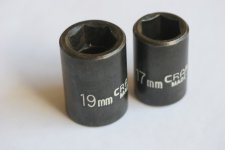
I typically clean, oil, wax and color in the size markings of all my impact sockets.

These aren't new, but this is what I shoot for. These are oiled and waxed and marked with crayon. I don't like my impacts to be all rusty and nasty.

IMG_1100.JPG
 

AEAdam

Well-known member
Joined
May 27, 2023
Messages
2,753
Location
SE PA
All my tin snips are dressed so they don't have an over-bite. If I'm cutting metal and close them all the way they don't leave a distorted end cut. This is for doing vinyl siding J trim.
I think I know what you mean, but can you post a picture of this? I’m doing flashing right now
 
To avoid these ads, REGISTER NOW!

alwaysFlOoReD

Well-known member
Joined
Sep 24, 2013
Messages
2,398
Location
Airdrie, Alberta, Canada
I think I know what you mean, but can you post a picture of this? I’m doing flashing right now
Ok, the snips I have are getting worn, so I was able to force the tips past the normal range which you will see in the first pic. The second pic is how I want then to be when closed naturally. You may also notice that I round over all the edges so that I can get into tighter spaces like J-trim, both vinyl and aluminum.
Also I would never totally close them when cutting sheet metal anyway as that leaves indentations even with the work I've done to the snips. It's when I'm cutting trim for siding that I need to close them fully. If they have an overbite a crack can form on vinyl J when it's cold out.

PXL_20260605_231154039.jpgPXL_20260605_231203601.jpg
 

Sumboodie

Well-known member
Joined
Mar 20, 2021
Messages
10,693
Location
AK
I do the same upgrade on drills. Remove the plastic POS and replace it with a Rohm.

The last one I did was on a Milwaukee m12 Drill.
i-fSRrSL7.jpg

i-rhXJzrs.jpg

i-rRG4KjW.jpg

I have them on my 20v and 12v DeWalt drills as well.

i-WJ22bcB.jpg
Plastic?

The chucks on my Milwaukee drills are metal.
 
OP
M

mikey03

Well-known member
Joined
May 17, 2024
Messages
2,100
I typically clean, oil, wax and color in the size markings of all my impact sockets.

These aren't new, but this is what I shoot for. These are oiled and waxed and marked with crayon. I don't like my impacts to be all rusty and nasty.

IMG_1100.JPG
What cleaner do you use and what kinda wax? one time I cleaned off some impacts that came with lots of oil and I accidentally took off most of the black oxide finish and I felt real dumb
 
OP
M

mikey03

Well-known member
Joined
May 17, 2024
Messages
2,100
One idea I got that honestly isn’t a new tool upgrade since I’ve had this tool a while but i might do it and if I ever get a new one I’d do it right away. On my digital caliper case on the inside make a label for decimal to fraction inches. Since I always got to look it up on my phone but it should be in the case tbh.

Also while I’m making mods to the case maybe figure out to attach sae and metric thread gauges inside the cause because honestly that’s what I use the caliper for the most is finding the diameter and then using gauges to find the thread pitch.

I think it’s called metroidology I need to learn more about that I bet you guys got some sweet setups. I’m not a machinist honestly but I’m always finding a need to order some replacement nut or bolt and needing to find the pitch of the piece I do got.
 

KnurledNut

Well-known member
Joined
Jan 28, 2011
Messages
8,136
Location
n/a
One idea I got that honestly isn’t a new tool upgrade since I’ve had this tool a while but i might do it and if I ever get a new one I’d do it right away. On my digital caliper case on the inside make a label for decimal to fraction inches. Since I always got to look it up on my phone but it should be in the case tbh.

Also while I’m making mods to the case maybe figure out to attach sae and metric thread gauges inside the cause because honestly that’s what I use the caliper for the most is finding the diameter and then using gauges to find the thread pitch.

I think it’s called metroidology I need to learn more about that I bet you guys got some sweet setups. I’m not a machinist honestly but I’m always finding a need to order some replacement nut or bolt and needing to find the pitch of the piece I do got.
Starrett used to have free printed conversion charts, including small cards. Might do a search and see if they still offer them.
 
OP
M

mikey03

Well-known member
Joined
May 17, 2024
Messages
2,100
Also
I typically clean, oil, wax and color in the size markings of all my impact sockets.

These aren't new, but this is what I shoot for. These are oiled and waxed and marked with crayon. I don't like my impacts to be all rusty and nasty.

IMG_1100.JPG
also wondering how do you do the crayon trick. I tried it a while back and just made a mess
 

T45

Well-known member
Joined
Nov 20, 2014
Messages
3,252
I now face all my hammers for metalworking from new. Even my little 8 oz ball pein. It has a finished ball and face. This ensures you don't scratch/score/mark your work when its used as intended.
 
OP
M

mikey03

Well-known member
Joined
May 17, 2024
Messages
2,100
I now face all my hammers for metalworking from new. Even my little 8 oz ball pein. It has a finished ball and face. This ensures you don't scratch/score/mark your work when its used as intended.
Do you mind showing a pic and say how you do it? For those of us not familiar.
 

BobsYourUncle69

Well-known member
Joined
Dec 21, 2023
Messages
418
Location
Westchester New York
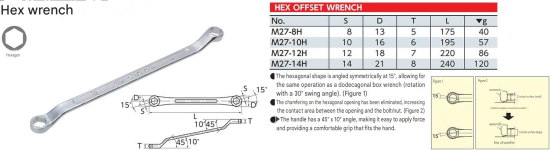
I sand away the chamfer on wrenches(when /if needed ) as they'll round a perfectly good nut/bolt thats tight just simply because the chamfer sees the wrench gripping only 1&2mm of the bolt head in some cases, like with my Tacoma seat belt bolt.
I was too lazy to go inside and get something else so tried to break it loose with the wrench set I kept in the car at the time, a set of KT pro, stupid stupid me. I now have a set of 1B's that I keep in my car as well now as the 12 point design is also better in addition to having no chamfer so no sanding required.

my SAE blackhawks needed the sanding treatment though.

Some companies list chamfer as a feature but I think it's just laziness in the finishing process. My opinion.
 

YesIHaveAHammer

Well-known member
Joined
Jun 1, 2025
Messages
828
I sand away the chamfer on wrenches(when /if needed ) as they'll round a perfectly good nut/bolt thats tight just simply because the chamfer sees the wrench gripping only 1&2mm of the bolt head in some cases, like with my Tacoma seat belt bolt.
I looked for chamferless wrenches recently for that same problem on a bike, all I found were these KTC M27s. Photos here. Got them and they worked. Koken Zeal 1/4" sockets also had very little chamfer.

1781824008585.png
 
OP
M

mikey03

Well-known member
Joined
May 17, 2024
Messages
2,100
I sand away the chamfer on wrenches(when /if needed ) as they'll round a perfectly good nut/bolt thats tight just simply because the chamfer sees the wrench gripping only 1&2mm of the bolt head in some cases, like with my Tacoma seat belt bolt.
woudnt that ruin the chrome finish and make it start peeling there
 

BobsYourUncle69

Well-known member
Joined
Dec 21, 2023
Messages
418
Location
Westchester New York
woudnt that ruin the chrome finish and make it start peeling there
Sometimes yes , sometimes not. Depends on the chrome plating, I want to say that it's only or mainly the shiny mirror chrome that does it and that the satin doesn't but I can't 100% recall. I usually avoid mirror chrome but sometimes have to get a something in mirror chrome.
The set I did it to , I since replaced but sometimes I need a wrench I don't have and can't get the usual , then I do it. If it's a wench I'll use a lot , then I'll eventually replace it with the brand/series I like when/if I can.
When I say I do this , Ive maybe done it to maybe 6 or 7 wrenches

Another thing I do , is my 3/4 sockets , I file a notch into the square drive on one of the sides because my Gedore 3/4 ratchet has a pin that works like a door lock and needs that notch to actually go into the socket easily .
I really should get a different 3/4 ratchet.
 

Ohio Andy

Well-known member
Joined
Jul 31, 2024
Messages
2,291
Location
Columbus, Ohio
I had to break in a factory fresh snap-on pliers that were really stiff. They broke in really well, but I don't own a lot of snap-on pliers so I didn't expect it new. Got lots of help here telling me how to do it.

If it's a knife, I might sharpen it pretty quickly after getting it.

Something like a chisel or hand plane. I am likely to just immediately polish the back of the blade and sharpen it.

One of my socket sets I bothered to use paint pens to make it easier to read the socket size. I did that pretty quickly after I got them, meaning before I even used them. Surprise to me it held up and I can still read them.

The older I get, the more likely I am to spend more money on a tool to reduce the time I will need to spend to tune it up. That statement mostly applies to things like chisels and hand planes, but, it also means I'm more likely to spend more money on a tool that will feel more comfortable in my hand; pliers and wrenches for example
 

FTG-05

Well-known member
Joined
Oct 11, 2012
Messages
1,536
Location
TN
I recently got two GR Icon ratchets (1/2" ans 3/4"). Both were dry as a bone inside. I filled them both with Superlube; now they are silky smooth.

All I got.
 

neophyte

Well-known member
Joined
Apr 23, 2012
Messages
9,663
Location
Pennsylvannia
With woodworking tools it’s sort of standard to do certain basic maintenance before using the tool.
Tools such as plane blades made by Stanley used to require the lacquer coating on the blade be stripped, before lapping and sharpening.
Lapping plane soles also used to be sort of standard, although with better makers like Lie-Nielsen it isn’t completely necessary, although Lie-Nielsen blades usually require sharping, and maybe a bit of lapping, just way less than tools from many other makers.
German chisel such as Two Cherries need a lacquer coating stripped off the entire chisel, and then a lit of back lapping and sharpening.
A lot of pliers need a bit of oil, then opening and closing of the jaws 1000 times to get the plier opening and closing nice and smooth, although with initially tight pliers, the tolerances seem to be perfect after this treatment.
Plunge routers almost always need their plunge posts cleaned and waxed, which can also make the plunge action smoother. (I recommend Renaissance Wax quickly buffed on and iff, it dries hard though so may sure to buff it quickly).
 

AEAdam

Well-known member
Joined
May 27, 2023
Messages
2,753
Location
SE PA
With woodworking tools it’s sort of standard to do certain basic maintenance before using the tool.
Tools such as plane blades made by Stanley used to require the lacquer coating on the blade be stripped, before lapping and sharpening.
Lapping plane soles also used to be sort of standard, although with better makers like Lie-Nielsen it isn’t completely necessary, although Lie-Nielsen blades usually require sharping, and maybe a bit of lapping, just way less than tools from many other makers.
German chisel such as Two Cherries need a lacquer coating stripped off the entire chisel, and then a lit of back lapping and sharpening.
A lot of pliers need a bit of oil, then opening and closing of the jaws 1000 times to get the plier opening and closing nice and smooth, although with initially tight pliers, the tolerances seem to be perfect after this treatment.
Plunge routers almost always need their plunge posts cleaned and waxed, which can also make the plunge action smoother. (I recommend Renaissance Wax quickly buffed on and iff, it dries hard though so may sure to buff it quickly).
A lot or most woodworking hand tools are essentially “partially assembled tool kits”. I’ve bought very few new woodworking tools but the few I have were in pretty poor condition from the factory.

I knew a pro furniture-maker who famously said “anything you buy that is sharpened can be made sharper by you”. I began sharpening coping saw blades (even coping saw blades) after that. Every time I do it, I think of him. Wise advice.
 
To avoid these ads, REGISTER NOW!
Top Bottom