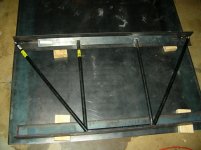
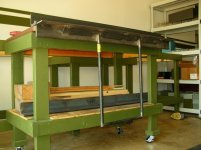
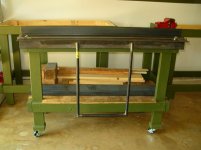
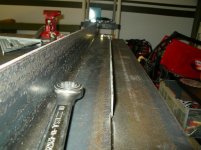
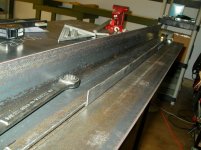
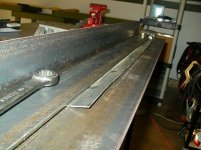
Looking good! you have done a good job analyzing the different tool limits and adjusting!
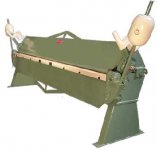
On the bend, you may not need to groove it. There are two factors on bending. One, the bend resistance of the metal, and two, FRICTION!
Even on factory made brakes,and even with lighter material, unless the brake is both damn strong and hydraulically powered, you bend and back off, bend and back off, bend and back off, bend and back off... Put some tool boxes or other heavy stuff on the bottom shelf of the bench to help keep it on the ground.
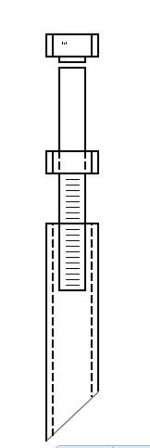
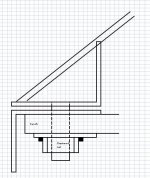
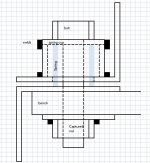
You can also put in two carriage bolt "pins" from the outside and extending inside on the bottom of the legs, drill a couple of matching hols on a piece of scrap 2X4 and stand on it as you lift. If that puts you too far off center, do one on each side, and another cross piece laying on top of the two extenders; that should plant the bench with your own weigh.
The only thing you should have to watch for after that is twisting the bench apart. a couple of 1/4" plywood side on the bench should take care of that as a sheer wall" to keep the frame from flexing.
If it still turns out you have to groove, set up the 2X4 guide, and take the saw's height adjuster and leave it loose. Once you get setup for the "cut" you can use hand pressure to determine the "weight" of he blade, and this should give you more control.
I learned that trick from a mason for cutting a concrete block by taking many passes instead of trying to cut straight through. I did exactly as you are, using a cheap plastic case circular saw and not worrying over much if I wore it out. 23 years later, its still running strong and all I have used in it is abrasive blades, mostly for tile, adobe pavers, etc.
Again, excellent work and looking good!