To avoid these ads, REGISTER NOW!

The Aerodrome Studio - Machine_Punk

OP
M

machine_punk

Well-known member
Joined
May 14, 2011
Messages
2,540
Location
Napa Valley, California
Re: DONE - Custom Tool Board - Squeezer Rivet Sets

Man, I hear ya there. Only trouble is on my end I usually end up doing that to the good
part I did spend hours on:D

I'm very slowly 'getting it.' Every time I rush, I end up regretting it and spoiling several hours of work. I was 'this close' to being done yesterday, when I had to leave for work, to cover someone who was sick (not a normally-scheduled day or shift for me). I was almost done, just needing to actually install the 8 rivets. I could have gone ahead and done it, but I would have messed it up. As frustrating as it was, I waited for today, after work, to install the rivets. I was able to take my time, practice adequately first, and the rivets came out perfectly, without ruining my hard work (first time for that...see the smilies on my aluminum picture frame). It is so hard to have patience with this stuff, but it is the only way to put out quality work.

I was just over in your thread...great cabinet find!
 
To avoid these ads, REGISTER NOW!

schwalby

Well-known member
Joined
Feb 25, 2011
Messages
242
Location
New Hampshire
You sir do great work. And you have a ton more patients then I do :\

Are you going to take the out let stripp one off and round the corners on it also?
 
OP
M

machine_punk

Well-known member
Joined
May 14, 2011
Messages
2,540
Location
Napa Valley, California
You sir do great work. And you have a ton more patients then I do :\

Are you going to take the out let stripp one off and round the corners on it also?

Why thank you! I appreciate you taking the time to tell me.

I'm sure I will go back and touch up the outlet strip tool board. At the time, I just wanted one tool board to get posted on GJ. I have already gone back and drilled and tapped the hole for the ground screw, then gone back and put the star locking washer on the ground screw. The issue with going back to basic fabrication is that I have to redo the finishing (while I'm not painting them, I am using surface conditioning disks in an air angle grinder and a Scotchbrite pad to give an even matt finish.) Once I disturb that, by filing, I have to go back and deburr and go through the surface conditioning steps again.

Overall, though, I'm not opposed to leaving it the way it is and just saying, "See how my work gets better as I go? Look how rough this first one was." All of these are prototypes--and as such, only the 'first time' I've ever built that item. I'm still learning and improving as I go. I've only been building this stuff for about four months. If I was building them as a business, I'd be a little more standardized.
 

Frank The Plumber

Well-known member
Joined
Feb 19, 2011
Messages
2,644
Location
Chicago.
I prefer Steam Punk to Machine Punk. They are similar yet Steam requires the items to be of the Victorian Era design base with modern functions.
 
OP
M

machine_punk

Well-known member
Joined
May 14, 2011
Messages
2,540
Location
Napa Valley, California
I like the term 'Steam Punk' too. It has even passed up my other favorite theme...Art Deco. I've had a lot of experience developing brands lately, though, and it is just tough to take a term as common as steam punk and use it as a personal moniker.

The 'machine' in Machine Punk comes from the term, "machine shop," not just from the idea of machines in general. It still doesn't relate back to the 'steam-powered' from steam punk, but it was as close as I could get and still have a term I could use as a trademark.

The 'punk' in my name, Machine_Punk is a nod to steam punk. So, the two terms together mean 'machine shop' (at least the concept of primarily working in metal, instead of wood) and 'steam punk' (a tribute to my favorite design style and a reminder that I am not just building functional items, but also working hard to include my own design style in everything I do.

Overall, though, I'd have to agree with you. I love all things Steam Punk...the idea of making modern technology look like it COULD plausibly be steam powered from the Victorian era. I certainly intend to use 'Steam Punk' as a major theme for my metalworking studio, even if it is too popular of a term to use as a trademark-able name. A lot of people can claim 'steam punk.' I am the only one (so far, that I know of) to use Machine_Punk. If you do a search for steam punk online, you will find dozens, if not hundreds of sites. While a quick search shows that I am not the first to use 'machine' and 'punk' together, I am the only one out there with the '_' (underline) between them...and the only metalworking artist so far.

Thanks for taking the time to post on my thread!
 
OP
M

machine_punk

Well-known member
Joined
May 14, 2011
Messages
2,540
Location
Napa Valley, California
I know what you are saying regarding the feel and keeping it simple. Have you thought of something more retro? It would kind of play to your theme. I was prior Air Force, so I am going to go 1920's Air Corp pursuit colors with your theme.

That looks good. Thanks for taking the time to contribute to my thread. I still think I need something a little less detailed...since I plan to emboss the shape into aluminum sheet.

I spent 10 years in the Air Force myself.

I'm pretty set on my basic colors--fudgescicle brown and pale yellow (both in a classic, 1950's, NON-clear-coat, enamel-type finish). I'm kinda set on the wind sock design too, if I can make a simple outline which is instantly recognizable. The 'bird wing' design sort of implies 'pilot' (I HAVE solo'ed in a general aviation aircraft...but no longer fly). I want to conjure up the concept of the aircraft as a machine filled with rivets, or the aerodrome as a place to see aircraft--since I plan to build aircraft-inspired furniture.

I am pleased to see you taking an interest in what I am trying to do in The Aerodrome Studio!
 
Last edited:

smschriefer

Well-known member
Joined
May 28, 2009
Messages
841
Location
Yorktown, VA
I just found the coolest site and I know you will like it. If I had tons of spare cash, I would so buy stuff from this guy. He does steam punk inspired computers and accessories. Heck, just a keyboard stand is around $700, but it is sweeeeet! He also has an awesome laptop that costs $7000! Yes, I would buy it. :)

http://www.datamancer.net/
 

Red Leader

Well-known member
Joined
May 15, 2011
Messages
2,688
Location
Denver, CO
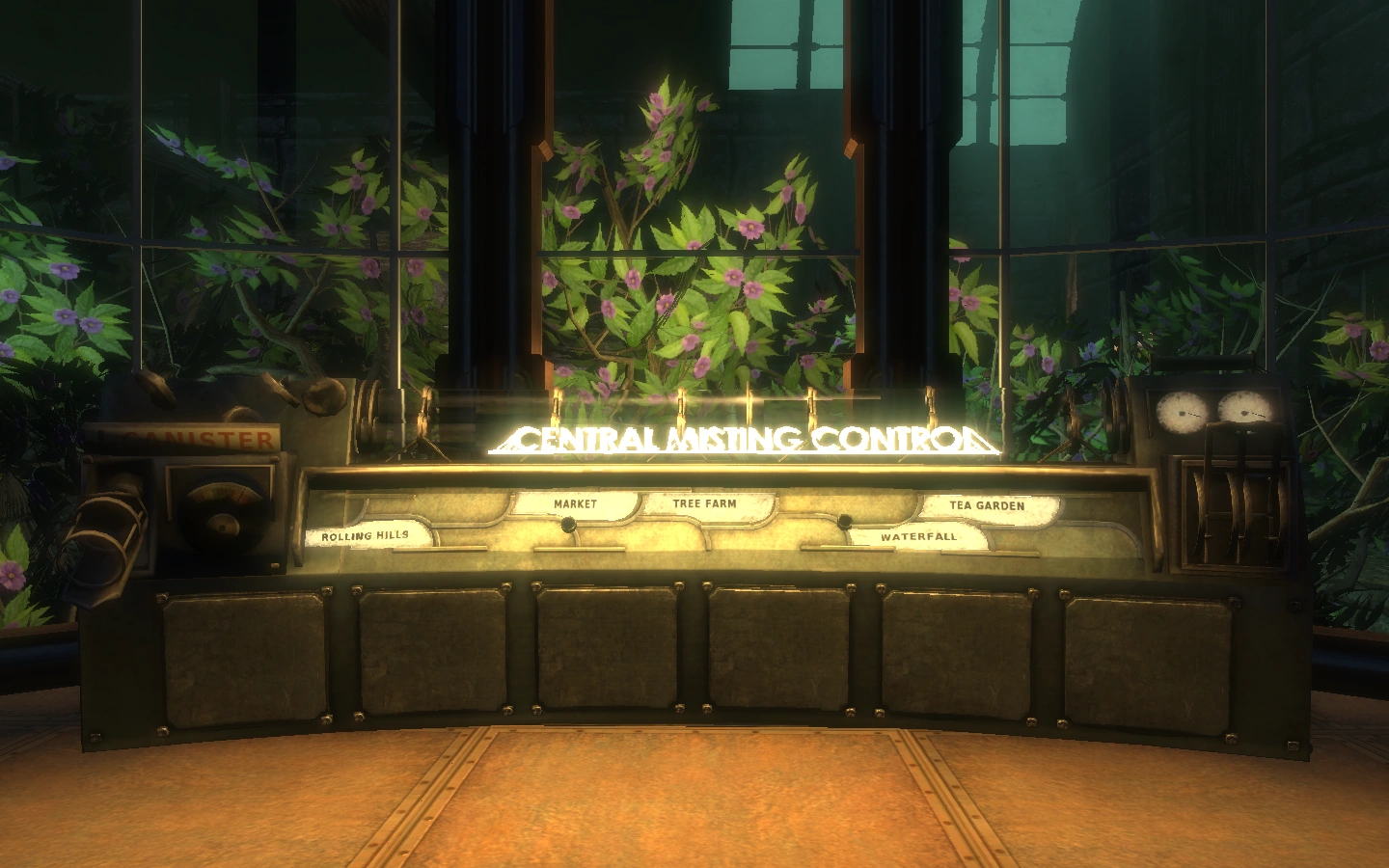
I know this sounds silly, but if you want some amazing inspiration for the art deco/steampunk design, go pick up a copy of Bioshock for xbox 360 and play it start to finish, making note of the design of the environment. It will blow your mind.

40516_0_org.jpg


e3-2008-bioshock-screens-20080716024604173_640w.jpg


Bioshock+portal+building+copy.jpg


bioshock-ss16.jpg


Central_Misting_Control.png


The level design and layout is phenominal. Even better than those pictures show. Even if you are not a gamer, it is worth it to pick it up and play for the sheer beauty:)
 
OP
M

machine_punk

Well-known member
Joined
May 14, 2011
Messages
2,540
Location
Napa Valley, California
I had to sit down...Red Leader...that was awesome. That is exactly the stuff which inspires me! Now I have to figure out how to translate that into 'real life.'

Steve--I've been watching that guy for a while and he makes really cool stuff (and I have figured out a MUCH easier way to do the desktop computer keyboard than the way he does it...so many ideas, so little time.)

Thanks for the great ideas, guys!
 
Last edited:
OP
M

machine_punk

Well-known member
Joined
May 14, 2011
Messages
2,540
Location
Napa Valley, California
A Bike Rack -- Wood is Non-Ferrous

After getting a couple of Custom Tool Boards built, I felt like the Reconfigurable Tool Rack was well on its way. I know there are a LOT of tool boards left to build, but I have made enough to show you where I am heading with that project.

As you can see, from previous pictures, I am suffering from a severe lack of space in my garage (which seems to be a common syndrome on this forum). Most of that is from the pile of 'Stuff' (capital 'S' Stuff) clogging up the garage right now. All my storage shipments hit me at the same time, when moving back to the US from my six years overseas. I had them unload all the boxes and I was knee-high in Stuff.

As I slowly sorted that out, the garage became a repository of Stuff, 'just until I could sort it out,' while I got the inside of the house put together. To add to that, I got married and my wonderful wife and two step sons moved in, with their pile of Stuff. I am, really, slowly making progress on that.

The cool thing is, that clearing out the Stuff gives a direct benefit to me now. The more Stuff I get out of here, the more Room I have in the metalworking studio. I made a little more progress on that over the past few days.

Some Stuff, which just isn't going to go away, are the bicycles for the family. I have two. My wife has one. The boys each have one. Five bicycles to store. They were taking up the maximum amount of room possible in the garage...very nearly 1/3 of the available space on the half of the garage I can use for the studio...
View media item 14652
Before I installed the Reconfigurable Tool Rack, my two bicycles were mounted on a bracket (which I bought while living in England, from their version of a big box hardware store, called Home Base), on this blank spot on the wall. While installing the top strut for the RTR, I had to take the bracket down, because it was in the way...
View media item 14651
The overall problem is that the bicycles are turned the wrong way. If I could turn them the other way (across the front of the garage, instead of across the wall, they would be more compact and give me more length in the studio. The problem with turning them sideways is that I was using the wall to mount my two bicycles above the rest of the family's bicycles. Now, I have to figure out how to hang those bicycles above the others, without a handy wall to help...
View media item 14654
Here is the bracket I used to mount my bicycles. The arms flip up, out of the way, when there are no bikes on the bracket. It is mounted on the new 'Freestanding Bike Wall' I built, to hold the bicycle bracket...
View media item 14655
Here is the back of the Freestanding Bike Wall. I have been thinking about this for a couple of months now. I just finally got the time to work on it. I think I spent about $40 in materials.

I believe the 2x6's are a bit 'overkill,' but I'd rather just build this once. I've gone back to wood here, for this project. I'd love to spend the time to build an aircraft-inspired bike rack, and just might go back and do that some day, but for now, I just want the silly bikes out of my way and available for the family to use...
View media item 14656
Here is a good overall front picture of the Free-standing Bike Wall...
View media item 14657
And the back again...
View media item 14658
It is NOT a trick of the camera that the backing boards look angled. They are...
View media item 14659
Which allows them to match the mounting holes on the front of the frame, which are not 'plumb' to each other...
View media item 14660
A side shot, allowing you to see why I have those backing boards there. They let me use longer screws on the mounting brackets. I suppose I could have used some sort of bolt for this, but this is the way I chose--to stick with the same fastening method for the entire project. This way also lends a little bit more stiffness to the back board (although the entire thing is way over-engineered)...
View media item 14661
Some pictures of the base. My primary goals here were to
- be steady enough in all directions,
- to be simple (elegant/using the least amount of material), and
- to stay out of the way of the bicycles stored on and near it...
View media item 14662
View media item 14663
View media item 14664
View media item 14665
Some pictures of all five bikes, stored in a relatively small area...
View media item 14666
View media item 14667
View media item 14668
View media item 14669
A shot of how much room I recovered (length-wise), by turning the bikes the other direction...
View media item 14670
The bikes go pretty much all the way up to the garage door, with the door up...
View media item 14671
There you have it. A short, but satisfying project, which will allow me to free up a little more room in the garage for the metalworking studio. I've still got some work to do...sorting and reorganizing and moving stuff, but progress is being made.

Happy New Year, everyone on GJ. I hope everything is well with you and your loved ones.
 

Red Leader

Well-known member
Joined
May 15, 2011
Messages
2,688
Location
Denver, CO
More room is always a good thing and always seems like a hot commodity among non-giant garage space users like us:D
 
OP
M

machine_punk

Well-known member
Joined
May 14, 2011
Messages
2,540
Location
Napa Valley, California
Big Green Button - a Freelance Piece

I don't particularly feel like I've got a lot done in the garage lately. After the big push to get the Reconfigurable Tool Rack and a couple of Custom Tool Boards done, I've been doing light stuff and trying to decide what I want to work on next. It's certainly not that I don't have enough projects I WANT to work on, just deciding which one to start next.

After getting the back of the house painted last month, I decided it was time to put the new light on the back patio. I bought this light a couple of years ago, when I bought all the supplies to paint the house. Now that the back of the house is painted, (and I have dug through enough of the garage to find this light again) I can put the light up. It was a bit more fidgety than I thought it would be to fit this light. In the end, it looks great, it just turned out to be a LOT more than 'unscrew two machine screws and screw on the new light fixture.'...
View media item 14831
I've also started on a new project, which bumped its way up to the top, simply because there is a time element involved. It is sort of a commission-freelance piece. A commission, because I am building it for someone else. And a freelance piece, because I haven't actually officially been asked to build it.

I am a leader in a local non-profit organization. We have started some fundraising lately to build a new building and really increase our impact on the community. As the senior leader of the organization was talking to us about this, he talked about the next step, where a large chunk of the funding was in place, and he could press 'the Big Green Button.' to start the building program. As the focus of our organization over the next few months, until late spring, I though it would be nice to build him and actual Big Green Button, to use in fundraising events and to actually 'push the Big Green Button' at the ceremony where we actually start the building program.

You know me. I build pretty much everything with sheet aluminum and solid rivets. After much thought, I think I have the design down for the housing of the button (essentially just a big box, with part of the front panel covered in opaque plastic, so I can make the button turn on a light). I started hunting up something for the BGB (big green button...you will just have to get used to my acronyms, if you want to read this thread).

While I wouldn't mind just fabricating it out of aluminum, I wanted:
- something quick. I don't have a lot of time to get the whole project done
- something that looks more like the power buttons you see on machinery, only much larger (a big green BUTTON).
- something light in weight, but stiff enough to not need internal bracing
- something large enough to that you would press it with both hands (a BIG green button)
- something which could be painted (a big GREEN button).
- something I could easily make trigger an actual switch, to turn on a light and perhaps another, momentary switch, to make a buzzing sound, while the button is actually depressed.

I wanted something which looks kinda like these, only on a MUCH larger scale...
View media item 14847
View media item 14849
View media item 14848
I initially thought of using the bottom of a water jug--you know, the kind you turn upside down onto the office water cooler. After looking closely at it, though, I didn't actually like the shape of the bottom of the jug and most of them were a bit larger than I wanted to go.

I finally settled on the bottom of a 5-gallon bucket. The only criteria it doesn't seem to meet right of the top is the actual shape...but that is because you have never looked closely at the bottom of a five-gallon bucket. (For some odd reason, I HAVE). The bottom of a 5-gallon bucket is not a 'straight angle.' It is, in fact, a rounded over shape, with a ridge built up to support the weight of the bucket. I suspected that if I removed that ridge, I could get very close to the 'machinery button' shape I wanted. My suspicion proved to be true. In fact, if you look at the picture, there is actually a fairly large radius hidden under the ridge at the bottom of a 5-gallon bucket. On the left is a non-molested complete 5-gallon bucket. On the right is a bucket with the bottom ridge removed and cut away from the top (bottom in the picture) of the bucket, to form a nearly perfect, super-large, machine power button...
View media item 14832
Here, you can see where that large radius is hiding behind the ridge on the bottom of the bucket...
View media item 14833
Some more pics of the standard and modified buckets...
View media item 14834
View media item 14835
The modified bucket sitting on top of the unmodified bucket, with the 'bottoms' of the buckets right next to each other, for comparison...
View media item 14836
The tools used to make this change: An air saw (body saw) to cut a majority of the ridge off the bottom of the bucket (with the white ridge I removed underneath. A 90-degree air grinder, with ROLOC surface-conditioning and sanding discs...
View media item 14837
You really wouldn't believe the piles of white, plastic powder all over the studio right now...
View media item 14838
That's all for that test piece right now. I found that I was not careful enough on the first one and I ended up with a fair number of gouges. I'll go back and cut up that second bucket to make the actual Big Green Button. (I do a lot of test pieces in my studio, to see if a concept will work and make all the mistakes on the test piece, then try to get it right on the final piece.)
 
Last edited:
OP
M

machine_punk

Well-known member
Joined
May 14, 2011
Messages
2,540
Location
Napa Valley, California
Power Extension Revisited

I had some time in the studio last week (the boys are at their dad's house and I have days off during the week, since I do shift work), but didn't really feel like taking on any major projects. I've even recently spent some time cleaning, organizing, and moving back the clutter in the studio, so I didn't even feel like I needed to do a lot of cleaning. So, I just went out to the studio and piddled around, until I saw something which grabbed my interest.

It really bothers me that I didn't get this power-outlet-strip mounted behind the face of the aluminum Custom Tool Board. So, I set about seeing what it would take to build a template to route the cutouts for the electrical sockets--the part which stumped me in my quick attempt to build this tool board a couple of weeks ago...
View media item 14216
I've thought of a few solutions to the problem of forming perfect cutouts:
- I think the ideal solution for me would be to have a punch made exactly for the electrical sockets. I'm pretty sure these already exist for manufacturers, but the closest thing I've seen to it goes for several hundred dollars--and I don't have a shop press yet.

- Going the super-cheap direction and just drilling out the 1-3/8" holes for the receptacles. Easy. Would work. Would look like dog doo. Not an option for me.

- Just mount it on the front, with a couple of screws. I did this and it is certainly serviceable. Just not quite the stunning craftsmanship I am looking for in a studio designed to inspire me to excellence in form and function.

- CNC or water jet--pay someone else to do it. Well, that's hardly me showing off my craftsmanship, is it?!?!

- Use a router, with a pattern-following bit, to cut the basic shape in the metal, then finish up with files. Hmmm. This has merit. I just sorted through several more boxes, which gave me several more square feet of room in the studio--and, more importantly, I finally found my router. I already have a few nice router bits, including a pattern-cutting bit...
View media item 14839
I've certainly got enough scraps of wood to get a template together. Lets see what I can cobble together. This isn't the final template (to cut the entire face plate), but just a test-of-concept piece...let's see what it takes to build this template.

There we go. A top piece to act as a spacer, with enough clearance cut out to prevent the router bit from touching the spacer. An actual template (metal electrical outlet cover) clamped between the top and bottom pieces--for the router bit ball bearing to ride on. A bottom piece, which is stiff enough to support the whole thing and give the router bit some clearance on the bottom...
View media item 14842
Oh no...just figured out that the only problem with this is that the whole template needs to be bigger than the router base...but I've got so much effort into it now, let's see if we can make this work...
View media item 14843
A couple of screws to help keep the faceplate in place...
View media item 14845
View media item 14844
A side view of all the layers, from top to bottom (these pieces are straight...the bend is an effect from the camera lens):
1. The faceplate or work piece...the plate I am actually cutting the hole in
2. The spacer
3. The metal outlet cover plate...the template for the ball bearing
4. The template base, drilled out with Forstner bits to give me clearance under the ball bearing.
View media item 14846
The final plate, with several test trials on it...
View media item 14840
1. The hole I tried to cut freehand, with a large drill bit, then with a hand-held Dremel cutter.
2. The first hole I tried with the router and the template. Not too bad, but the template moved and the hole isn't right. I'll need to address that problem in the final template.
3. The perfect hole, on the second try. I thought I'd need to file these down some (where the flat part meets the curve), but they fit perfectly, as cut. This would still need to be deburred, but the hole is perfect. I think we have a winner!
4. Points to the holes I drilled to give the router bit a place to start...
View media item 14841
 
Last edited:

A_Pmech

Well-known member
Joined
May 8, 2007
Messages
8,002
Location
IL
You're getting rather practiced with your aluminum routing, the final version looks goo!

For better performance, try using a template guide that fits on the router (your base is designed to fit one) and clamp the template above the work. 1/4" Masonite makes very good templates, as does 1/8" 6061 aluminum for substantially longer runs. Sand the edges of the Masonite with 220 sandpaper before routing.

In the router, use a 1/4" carbide up-spiral 2-flute router bit. Perceived cutting force using the up-spiral bit will be much lower and finish quality will go up substantially.

As always, be aware of the kickback.

:thumbup:
 
OP
M

machine_punk

Well-known member
Joined
May 14, 2011
Messages
2,540
Location
Napa Valley, California
It's like Christmas, all over again.

WOO HOO. I got a box from Brown Tools, chock full of new tools.

First out of the box, a set of new Williams SAE wrenches. Only $40 for the set and they were new in the box...
View media item 14862
A couple of the wrenches have 'supercombo' written on them. I'm not sure if that's normal or not...
View media item 14863
I'm guessing that what makes it a supercombo wrench are these grooves in the open end...
View media item 14864
I also got six more of these Stahlwille 1/2" wrenches (series 14). They were surplus and I only paid $1.50 each for them...
View media item 14865
A few weeks ago, I used one of them as a new handle on my service cart. I suspect I'll use most of these new ones for handles too...
View media item 11608
On to some rivet-specific tools. I bought a couple of dozen of these clecos. All of the clecos I already have are the standard ones, for thinner material. These are specifically built to grip in the range of 1/2" through 3/4". I need them for the light brackets I am building for the dental lights I am going to put in the garage. Unlike most of my projects, they are built with 1/4" plate, instead of thinner sheet aluminum...
View media item 14866
So that I can hold this thicker material together, during assembly...
View media item 13066
For mounting these...
View media item 12624
And some more new riveting tools. Clockwise from the bottom left:
- more drill bits (I drill a LOT of holes, then fill most of them with rivets). These drill bits are in the sizes I need for the tap and die set I got a couple of weeks ago.

- drill stops to keep me from punching through too far on the back of the panel I am drilling--to keep me from damaging anything behind the panel.

- dovetail deburring tool. This deburrs the both sides of a fresh cut on a sheet of aluminum.

- chip chasers. When you drill a hole through two panels that you cannot disassemble to deburr, you use these to get all the chips out from between the two panels.

- a couple of deburring bits for a dogleg deburring tool. These are essentially fancy countersink bits, used to deburr round holes after drilling. They attach to the tool with 1/4-28 thread, which is the standard for tools used in aircraft manufacturing and repair...
View media item 14867
 
Last edited:
OP
M

machine_punk

Well-known member
Joined
May 14, 2011
Messages
2,540
Location
Napa Valley, California
Template - Tool Board - Wall Power Extension

Whew...I was out of commission for a little over a week there, from a pretty nasty case of the flu. I only missed a couple of actual work days, but I didn't want to do anything but sleep on my days off. I also like to be feeling 100%, when working with power tools, so I gave myself a couple of extra days, before hitting the garage.

I've been wanting to move forward on a couple of new projects, but I kept feeling defeated by the power strip I mounted on my Reconfigurable Tool Rack. Here is the cheater way I ended up mounting the outlet strip--just mounted on the surface, like a wall...
View media item 14319
I really wanted to mount the commercial 6-outlet-strip BEHIND the faceplate, but did not have any good way to make accurate holes for the actual outlets (an unusual shape to cut...1-3/8" hole with flattened ends. It is a very difficult shape to cut accurately with tools available to the average garage. Anyway, of all the options I thought of (go back a few posts...I won't repeat them here), I just had to pick one and try it...I was feeling defeated and I wanted a re-match.

Here is the previous practice piece (things become a 'practice piece' after you mess up on them--hee hee). You can go back a few posts and see the details of how I got each of those holes...
View media item 14841
#3 actually worked out well. It came from this template I built for test-of-concept. So I knew the technique was good, but I wanted a template which required a LOT less work to line up each time...
View media item 14842
Fast forward to tonight's 3 hours in the metalworking studio. I felt like a woodworker again (my wife even stepped out and said, "It looks like you are building a cabinet, but I cannot imagine you doing that in wood, instead of metal." I told her that I was actually working on a template. I spent a little time working with a cabinet builder and he was particularly impressed with my template-building skills and the detail I put into them. I like MDF for templates. It machines so easily, it stays flat, and lets you create nice, crisp shapes. Fortunately, I had a piece of MDF in the garage, which I bought exactly for whenever I needed to build a template. Here is the finished template, with a blank faceplate loaded (aluminum sheet, 0.125", 2 rack spaces in size (19" x 3.5")--fits in the RTR)...
View media item 15428
View media item 15429
I use a pair of Vice Grip 11" locking C-clamps with the swivel pads and a small block of wood to keep the piece of aluminum secured in the template...
View media item 15430
As soon as I cut both pieces of MDF to size to build the template, I drilled four holes in the corners and inserted dowel pins, to make sure I had good indexing between the parts. It turns out I didn't need these (or even a 'bottom' board for the template) I ended up building all of the parts which really mattered in to the top piece of MDF...
View media item 15434
So you can understand why the template is built the way it is, here is a the template-following router bit I am using for this project. It has a ball bearing to follow the template, which is located below (when the router is in your hands) the cutting edge of the bit. So, the accurate template needs to be below the piece you are cutting. Yes, that is a woodworking router bit (1/4" diam shank, 1/2" diam cutter, ball-bearing, template-following router bit)...
View media item 14839
Here is the template again, completely assembled and loaded with a blank piece of aluminum...
View media item 15430
Here is the complete template without any aluminum loaded. I routed the bottom and left edges straight to index the piece of aluminum. I just free-handed the top and right edges, since they are less critical. I also notched out an area at the 'squared off' corner, so that no sawdust or metal chips would keep the aluminum from indexing correctly...
View media item 15431
View media item 15438
A close up of the top of the template. I started with a 1-1/2" Forstner bit to cut the ends of the clearance holes, because, well, I have Forstner bits and I like to make things with craftsmanship whenever I can. In the end, it wasn't quite enough clearance on one spot, so I hacked it out with an air body saw...
View media item 15433
Looking at the bottom of the whole template, with both the top and bottom sheets of MDF in place. This routed out area was an 'ooops.' It is in exactly the right spot, just on the wrong side of the board. Oh well, this piece is not critical. It is just there to give the ball bearing clearance...
View media item 15432
The reverse side of the top of the template. This piece indexes the aluminum to the correct location on one side, and holds the actual hole templates on the opposite side. The bottom piece of MDF is routed out to clear all of this hardware and ends up being just more support to the template (and allows you to set the template on a flat surface and still have clearance for the ball bearing at the bottom of the pattern-following router bit)...
View media item 15435
A close up of the actual templates. I figured that I might as well use something already available, instead of making my own. These started life as metal outlet covers. I cut off the tops and bottoms, flattened them out, marked a center line on them, and drilled two 1/4" holes in them to mount them. It looks like this one is off the center line, but that is just parallax error (you are not looking straight down at it) The way these are set up now, I can cut the entire faceplate without moving anything (all three double outlets at the same time)...
View media item 15436
Continuing the tour with a picture of the bare base plate. I routed an area to clear the metal faceplates.
View media item 15437
The routed faceplate. I still need to cut the holes for the switch and the LED, but that template does an amazing job of cutting the 6 outlet holes in exactly the right place. Three hours of building a template and now I can create as many of these face plates as I need. It only takes about 10 minutes to drill the initial holes and rout out the 6 outlet holes...
View media item 15439
View media item 15440
View media item 15441
View media item 15442
The new, perfectly-cut faceplate, next to the old practice piece...
View media item 15443
Now, I just need to cut the hole for the switch, drill the hole for the LED, cut the four mounting slots, and drill and tap the hole for the ground wire, stamp the lettering, and put a uniform finish on the aluminum. I'd love to go ahead and finish it up tonight, but 5:30AM comes awfully early. Final score: Faceplate 1, Machine_Punk 'as many as he wants to make'...
 
Last edited:

EdT

Well-known member
Joined
Sep 21, 2010
Messages
1,104
Location
North Georgia
Looks good!! I have a similar router set up used mostly for woodworking and, while my router is a different brand, I have had an unusual problem several times. Simply, the switch on the router gets so full of wood dust that it no longer works and must be disassembled and cleaned out. You would think if you're making a router this would be a primary concern since they make dust; but I digress. My concern is that the aluminum dust may have a more dramatic effect if it gets into the switch or other motor bits. I now run my router off a switched power strip with the switch on the router taped "ON" and covered. This also means that I don't have to hunt for the switch under the table. Keep up the good work!!
 
OP
M

machine_punk

Well-known member
Joined
May 14, 2011
Messages
2,540
Location
Napa Valley, California
Thanks! That MDF sure does make a lot of fine dust when routing, doesn't it? I make sure to wear an N95 dust mask, whenever I am cutting wood. The aluminum makes (relatively) larger chips. I'll try to take a picture of the chips it makes, next time I am out in the studio working. So far, I haven't had a problem with the router, but it has been in storage for a few years and I only found it again a few weeks ago.

I've been thinking about getting a new router, specifically a plunge router, but this one serves it's purpose and it used to be my dad's--so I am pleased to use it as long as it lasts.

Thanks for taking the time to post what you are thinking...
 
OP
M

machine_punk

Well-known member
Joined
May 14, 2011
Messages
2,540
Location
Napa Valley, California
The Boys Start Their Toolboxes

I've been wanting to include my (step) sons in my work out in the Aerodrome Studio. Like pretty much everything else, they thought it would be boring, until they got to see what the rest of you already know (tools are COOL!). I work very hard to make my house a place the boys and their friends want to hang out (so I can keep track of what they are doing).

My older son has a friend who hasn't had a lot of advantages in life and tends to eat dinner or spend the evening with us a couple of nights a week. He seems like a good kid, who doesn't always have the best influences in his life. So, we've kind of accepted him into our family and I'd like to be a good example to him.

Right about now, you are probably wondering what on earth this has to do with the Aerodrome Studio (my garage metalworking studio). I thought it might be nice, if all of us built something together, to give the boys some self-confidence, when they hold something in their hands which they have built. Of course, some of it is just to spend time with the boys too. The younger son didn't seem too interested, but I convinced R (my son's friend, I won't use his name, to protect his privacy) that it would be fun to build a project together and that convinced my older stepson, C, that it might be alright to build something with his dad, as long as his friend was doing it too.

So, what to build? I definitely wanted to use aluminum and solid rivets, since that is what I work with. I remembered that one of the home-built aircraft sites had a couple of projects for people to practice on. One of those kits is a toolbox, which seemed like a perfect first project for the boys. Here is the picture from the Van's Aircraft site...
View media item 12216
The kits are about $25 each and include all the material and supplies you need to build the tool box. The whole point of this kit is to give you practice with the techniques you will need to build their aircraft from the kit parts. The picture shows using some countersunk rivets (flush head...where the head of the rivet is flush with the surface, like the wing of an aircraft). We won't be using those...we like our rivets to show, thank you very much. So we will use round head rivets everywhere on the tool boxes.

Here is a picture of the kit I will be building. They come already cut out (looks like die cut or laser cut), already pressed to shape, and pilot holes already drilled/punched (they still need to be drilled out to the correct drill size for the rivets you will use). There are parts, like the hinge, which will need to be correctly drilled, using the pre-drilled holes on the body of the tool box as a guide...
View media item 15524
View media item 15523
So, here is C, with the ends of his box secured with clecos and drilling out the pre-drilled pilot holes to the final size...
View media item 15521
View media item 15519
And here is R, doing the same...
View media item 15520
That just about does it for the pictures. So far, they have deburred the edges of all the sheet metal parts, drilled the holes in the ends to final size, and deburred the holes. I teach shop safety as we go and specific techniques for the tools we are using, before we use them. I watch them both closely when we are learning new things, then watch a little less often as they get the hang of a technique. I don't let them use any power tools without me present.

I'm looking forward to spending some time in the shop with them and, hopefully, being a good example to them. I hope they do well on their projects and feel a sense of pride in work well done.

.
 
OP
M

machine_punk

Well-known member
Joined
May 14, 2011
Messages
2,540
Location
Napa Valley, California
More Wall Power Extension

Between going in to work for a meeting, getting dinner with the family, and helping the boys with their projects in the studio, I haven't had much time for my projects in the studio today. I did get a little time out in the garage this afternoon, though. Most of it was just working on layout to finish the Wall Power Extension Custom Tool Board. The new template makes easy work of cutting the six outlet holes, but there are still other holes to cut, including the three holes for the screws to secure the outlets, the square hole for the power/reset switch, the hole for the power LED, and a couple of threaded holes for the ground screw.

I use the ultra-fine-point Sharpie for layout on aluminum, since you don't use a scratch awl, like with steel. Here, you see the layout lines for the holes and the words I will stamp on the front of the Custom Tool Board. I make sure the center letter of the word (or a space, for words with an even number of letters) lands right on the center line of the item, so I don't have to think too hard, while stamping information on the aluminum...
View media item 15522
That's it...told you I didn't get much time to myself out there tonight. It only gets down to about 57 degrees in the garage, but it feels bitterly cold, with the big concrete heat sink. I'm going to have to think about some heat out there, even if it is just one of those heaters you stick on the top of a propane bottle.

M_P
 
Last edited:
To avoid these ads, REGISTER NOW!

GirlnAgarage

Well-known member
Joined
Jan 21, 2011
Messages
4,668
Location
Texas
MP, your jigs and way of thinking is just excellent. I'm still back here on pg3 looking this rack your setting up.

Anyway, back to reading. Just had to be certain I got subscribed.
 
OP
M

machine_punk

Well-known member
Joined
May 14, 2011
Messages
2,540
Location
Napa Valley, California
Why thank you! That means a lot from you, I've been following your excellent garage reorganization with interest. I appreciate you taking the time to post what you are thinking on my thread.

M_P
 
Last edited:

mdbeck1

Well-known member
Joined
Mar 7, 2010
Messages
2,297
Location
Norman, OK
Re: More Wall Power Extension

That's it...told you I didn't get much time to myself out there tonight. It only gets down to about 57 degrees in the garage, but it feels bitterly cold, with the big concrete heat sink. I'm going to have to think about some heat out there, even if it is just one of those heaters you stick on the top of a propane bottle.

M_P

Good to hear/see that you're working with the boys out there. I've done the same thing with my son and his friends from time to time.

Drop the idea about the propane bottle. They leak and when the heaters run they put off carbon monoxide. Go pick up a small electric heater. I got one from the local farm store called a "milkhouse heater". It works just fine for the garage (25X25) until it gets really cold outside. ...and my garage isn't insulated. That little heater will keep the garage around 60F. I usually turn it on when I get home, go make/eat dinner and the garage is usually warm enough to work in.
 
OP
M

machine_punk

Well-known member
Joined
May 14, 2011
Messages
2,540
Location
Napa Valley, California
Hmmm. I'll have to think about the heater situation. I'm probably just being a wimp, since it is 57-60 degrees out there. It just feels so bitterly cold, compared to the 68 degrees in the house. I have the insulated garage door and drywall on the garage walls (not sure if there is insulation, but there is at least a trapped air pocket). It probably wouldn't take much more than a couple of more degrees warmer to feel much better.

I have natural gas in the house and the furnace is right next to the garage. If I could find an inexpensive way to run a small gas heater, that would probably be ideal (I REALLY like those gas heaters which look like a big pipe in the ceiling, with a reflector on top...the gas is combusted inside the tube and it radiates heat)...
View media item 15554
I would certainly not leave the propane bottle in the garage and I wouldn't probably even have the heater on while working...just to heat up the space before. Well, lots to think about, and since I've been doing OK with a hoodie for the past few weeks, that's probably all I'm going to do for this winter...just add layers.

Thanks for the ideas and taking the time to post!
 
Last edited:

EdT

Well-known member
Joined
Sep 21, 2010
Messages
1,104
Location
North Georgia
If I remember correctly, when you burn a gallon of LP or natural gas you get 4-5 gallons of water vapor. Unless the heater is vented to the outdoors, all that moisture is in the building and will condense out on cold surfaces like tools and other metal stuff. Probably not good. This can be a real problem in an occasionally heated space since all your stuff is cold when you turn on the heat. Different if its vented outdoors. I have been doing a renovation recently and I've been surprised at how effective a small electric heater can be to take the chill off. Simple and cheap. I have found it especially effective when placed under the bench I'm working at and the heat rises up on its way to the ceiling.
 
OP
M

machine_punk

Well-known member
Joined
May 14, 2011
Messages
2,540
Location
Napa Valley, California
Well, I might have to consider an electric heater...I looked at quite a few online today and there seem to be plenty of inexpensive 1500-watt electric heaters out there with internal blowers. I don't need much...it's already 57-60 degrees out there, it just feels bone-chilling cold to me...maybe it is just the standing on concrete. I'll have to look around at the local stores for electric heaters.

Hey, EdT, do you have a thread which shows your projects or garage? I took a quick look at your profile and I didn't see any albums of your stuff (I know some people like to keep their albums 'non-public.') Anyway, I'd like to see whatever you are working on.

M_P
 
Last edited:
OP
M

machine_punk

Well-known member
Joined
May 14, 2011
Messages
2,540
Location
Napa Valley, California
I got a couple of more hours out in the studio this afternoon, before stopping to get dinner going. I still need to catch up on my tool box (I don't have enough tools or time for all three of us (the boys are just learning) to build them at the same time. I can catch up fairly quickly to where they are, since I've been doing solid rivets for a while. But, I decided to try to finish my Wall Power Extension Custom Tool Board (awfully long name for an extension cord). Here is where we left off--the six outlet holes are drilled, the rest of the layout is done, a few holes are drilled for the square switch hole...
View media item 15522
Here is an 'action shot,' using the fancy camera bracket I built a few months ago. Drilling a couple of holes for the ground screws, which will be tapped 10-32 (which happens to be what the green grounding machine screws I bought are)...
View media item 15560
And an action shot of how I thread holes now. I chuck the tap into the drill press, leave the drill press OFF, and turn the drill press spindle by hand while applying pressure to the spindle handle with my other hand. I'm sure there are cooler and fancier ways to do this, but this keeps everything lined up and it uses equipment I already own...
View media item 15561
The completed, tapped holes for the ground screws...
View media item 15562
To make the square hole for the power switch, I drilled 1/8" holes at the four corners to give me a nice radius at the corners, then drilled out as much of the center material as possible with larger drill bits...
View media item 15522
Then a pneumatic body saw to rough out the sides of the square hole...
View media item 15563
Then a hand file to carefully remove material exactly up to the layout lines...
View media item 15564
There are labels on the face plate of the commercial power strip which I am using that will not, obviously, show through the way I am mounting it...
View media item 15566
So, I added the labels to the front of the new face plate with letter punches (I know they aren't perfect...I don't mind the hand-built look. I get better at it every time I do it. If I was building these for profit, I'd definitely find a cleaner way to do this). Notice that I have correctly spelled out the words in pen and made sure that the center letter, or space, is on the center layout line. All things to reduce errors when the punches are actually being used...
View media item 15565
The (nearly) finished Custom Tool Board. I still need to put the mounting slots in the corners, get longer socket head cap screws (8-32) to hold the outlet strip onto the faceplate, and stamp all my build information and the serial number on the back of the faceplate...
View media item 15567
I'll probably paint the face of the outlet strip black, at least around the edges of the parts which might show through at the edges of the holes.
View media item 15568
A detail of the attachment of the ground wire, from the ground screw on the frame of the commercial outlet strip to one of the ground screws I tapped for the face plate. I cut the screw to length, so it would not protrude from the front of the face plate...
View media item 15570
Here you see the front of that. The top tapped hole is for the screw on the back. The lower tapped hole allows me to attach ground wires to the front of the face plate, if needed. Probably not absolutely necessary, just a little detail I wanted to add...
View media item 15568

LESSON LEARNED TODAY: Always measure from the same point, or DATUM. Pick an edge and make that a datum. When you need to place a bunch of holes at different distances from an edge, always measure from the original datum/edge. Do NOT measure from the previous hole or object...that just compounds you errors in measurement. I know this--I just don't know why I forgot this...
View media item 15569
I will also need to adjust the placement of one of the outlet templates, to be better in line with the other two, before cutting more of these Wall Power Extension face plates. I cannot imagine needing more than a couple of these, maybe a third one on the other side of the studio...
View media item 15435
M_P
 

GirlnAgarage

Well-known member
Joined
Jan 21, 2011
Messages
4,668
Location
Texas
That face plate is pretty slick. I didn't know that rule about always measuring from the same point. Now I do.

For your heater, you might can get away with just a simple electric space heater or tower heater. I use one in my garage. My walls are not insulated, nor is the garage door. I did find out when doing my surface outlets that there is insulation in the ceiling. Anyway, the little heater running does good to keep the mean chill away so I can work, even if I'm still a bit uncomfortable. I'm finding that by the time my toes and fingers need a break to come in and get warm, it's time to get something to eat. So, the heater makes it doable.
 

Bob Heine

ALLIANCE MEMBER
Joined
Oct 24, 2009
Messages
10,703
Location
Boca Raton, Florida
Well, I might have to consider an electric heater...I looked at quite a few online today and there seem to be plenty of inexpensive 1500-watt electric heaters out there with internal blowers. I don't need much...it's already 57-60 degrees out there, it just feels bone-chilling cold to me...maybe it is just the standing on concrete. I'll have to look around at the local stores for electric heaters.
M_P,

I only need heat in the garage a few days a year. When I need heat I don't need the whole garage heated, just some warm air around my work area. I threw out the box fan on a stand because it was too big and always in the way. Bought the orange Harbor Freight blower to move air and then bought the heater attachment for it. Takes up very little room and I don't have to wait for the whole garage to heat up or cool off.

The blower is about $50 (Item # 93231):
http://www.harborfreight.com/portable-blower-with-variable-speed-dial-93231.html
image_11818.jpg


The heater attachment is about $17 (Item # 93272):
http://www.harborfreight.com/heater-attachment-for-portable-blower-93272.html
image_13760.jpg


To give you an idea of size, here it is in the garage. I set it on the floor for heating and on the tool chest for cooling. It's also handy to blow extra room-temperature air over the compressor when it is running continuously when I'm bead-blasting on the other side of that wall.
Heater.jpg
 

EdT

Well-known member
Joined
Sep 21, 2010
Messages
1,104
Location
North Georgia
WRT photos of my shop. I've just not found the time to do it. Combination of factors. First, I'm computer phobic. It take me far longer to document what I've done than it usually takes me to do it. Hats off to those of you who can do it easily. I'm old and it takes a lot of punch cards to store a picture. Second, I encouraged my son to buy a house to fix up and, right now, my newly completed shop building is "DAD's Storage Locker" and I'm a full time sub-contractor. All his stuff is in my space. That'll learn me! Stuff, yours or others, immediately expands to fill the space available (plus about 10%). I could see the vortex forming over the building as I was building it and it has now sucked in enough to fill the space.
 
OP
M

machine_punk

Well-known member
Joined
May 14, 2011
Messages
2,540
Location
Napa Valley, California
GiaG: Thanks for the kind words and the heating tips. I was frustrated at not being able to cut those complex shapes in the power strip face plate before...I am pleased to have 'defeated' the problem. I really just need to raise it a couple of degrees to knock the chill off.

Bob H: That might be the way I go. I'm not opposed to using HF, when things are priced right (by that, I mean, 'expensive enough.' I think $50 bucks is about right for an inxepensive blower and $18 is about right for a heating element, based on my price review of stuff online yesterday. If it was a $10 blower and a $5 heater, I wouldn't be interested...there is no way they can hit 'quality' at that price point. Same with their pneumatic die angle grinders. I'm not sure I'd buy the cheaper one, but $25 sound about right for that much metal and engineering in a well-established product.

With this heating option (blower/heater combo), I would have a floor drier too, if I ever spilled something. I'll have to check that out.

EdT: Sorry to hear about your shop being filled right now...although I actually know that feeling. I've finally moved stuff back a few inches at a time to allow me to get some work done in the garage now. It still is not a huge space, but there is room to turn around.

I have developed a process which makes it easier to document and get a lot of pictures up (I try to have a picture in pretty much every one of my posts). I know I am already reaching that point, at 42, that I am just not interested in keeping up with more technology. I don't want the internet on my phone, I don't need 'apps' with me all the time, I definitely don't want to pay a monthly data fee for EACH family cell phone when I am already paying for a home internet plan, and I don't really give a flip about having 3D television at home (although I do have a 100" screen in the living room).

Sounds like you are keeping busy helping family out, though, and that is great. Thanks for the timely advice you give.

M_P
 
Last edited:
OP
M

machine_punk

Well-known member
Joined
May 14, 2011
Messages
2,540
Location
Napa Valley, California
Bazzateer: Why thank you. Welcome to my thread and thanks for taking the time to post what you are thinking.

I should have guessed, from your user name, that you were from the UK. I lived in England for a few years of my life. Born there, actually. My dad was visiting forces, then I went back as visiting forces myself at RAF Lakenheath, about 75 miles Northwest of London, near Cambridge. Most recently lived in Newmarket, the horse training capital of England.

M_P
 

buddyboy

Well-known member
Joined
Oct 8, 2007
Messages
616
lots of work going into your project.

for your "protected" hole and switch opening: have you considered just making the hole a little larger and offset by making the oversized distance around the hole equal? maybe a little file work? also doing the same for the switch hole, just cutting a little more off the right side and bottom to make it look uniform.

the only reason I mention it is it sounded like you weren't happy with the way it turned out, maybe this could salvage it for you?

after you make the cuts larger, maybe use a black sharpie around the beige power switch to camouflage it some? heck maybe even try that first?
 
OP
M

machine_punk

Well-known member
Joined
May 14, 2011
Messages
2,540
Location
Napa Valley, California
buddyboy: Great minds must think alike. I've considered all of the those options and truthfully, I'll probably just color the areas near the holes black and call it done. I suspect that at the distance it will be viewed, and with normal shadows, I'll be the only one who ever realizes it isn't 'absolutely' perfect, even if I leave it 'as is.'

I'm just a bit annoyed at myself for forgetting to measure from the datum. It took me a while to figure out what the datum would be in this situation, since I start with a template, instead of drilling the holes manually from the edge. On a car, the datum is the firewall (the one thing which is not likely to move, no matter what you are working on and the first thing you put back on the vehicle in a complete tear down/rebuild). On machine shop projects, the datum is whichever edge you pick (usually the 'left' edge, for right handers). In this case, the datum is the center of the machine screw hole (the cover plate hole) for the left-most set of sockets, once the 6 outlet holes are routed out using the template (or at least that is what I will use in the future).

Even when I cook (and I've been on TV for cooking), I do a self-evaluation of the food after preparing it. People who sit at our table for the first time are probably a bit shocked to hear my self-critique of the food I set before them (and they are perfectly happy with). It is just a learning mechanism for me...looking at what went well, so I can continue to do that, then looking at what needs to change next time.

I'm sure I'll get it up on the wall, as is, and it will serve me well for years and nobody will every know the difference. Overall, I'm extremely pleased to have figured out the answer to this problem (cutting the complex shapes of the outlets into a faceplate.

Hey...I looked around a bit and couldn't find any pictures of the projects you are working on...what sorts of things do you like to do in the garage?

Thanks for taking the time to post!

M_P
 
Last edited:

smschriefer

Well-known member
Joined
May 28, 2009
Messages
841
Location
Yorktown, VA
M_P, you are not alone in self-critique. I am aware of every flaw, in every item I build, restore, or purchase. Many of those drive me crazy knowing they are there. Others don't notice them, but when someone says something is very nice, I do have a tendency to show them all the flaws. They might not see them as anything bad, but I pay attention to my details. You do the same thing and I say - keep doing so. It is a fine line between good and great, the dividing line is your attention to detail.
 
OP
M

machine_punk

Well-known member
Joined
May 14, 2011
Messages
2,540
Location
Napa Valley, California
M_P, you are not alone in self-critique. I am aware of every flaw, in every item I build, restore, or purchase. Many of those drive me crazy knowing they are there. Others don't notice them, but when someone says something is very nice, I do have a tendency to show them all the flaws. They might not see them as anything bad, but I pay attention to my details. You do the same thing and I say - keep doing so. It is a fine line between good and great, the dividing line is your attention to detail.

Thanks for the kind words.

It is tough, but I try to just accept the compliments on my work gracefully. I've got it bad, though. If I assemble something with screws, all the screw heads are lined up by the time I am done. If you take the covers off the back of all my remote controls around the house, you will find that all the batteries are lined up, facing the same way, as much as possible. I've been known to walk back to my desk at work and ask, "Who borrowed my three-hole punch?" when it was sitting on the shelf. The guy who shared my office was shocked, and asked, "How did you know James borrowed your three-hole punch?" I replied, "Because it isn't where I left it." (In this case, it was within a few inches of where I left it, but not EXACTLY where I left it).

It's probably hard to see in this picture, but I took the time, after installing the tool boards, to line up all the screw heads...
View media item 14321
Great job on the tool box with the boys. Im off to look at the RV web site for the kits.

Thanks. You'll have to post pics when you get started! They have the tool box for about $25 and they have a small section of a wing flap for around $35. I thought about getting the wing flap some time, just to have something to hang on the wall.

M_P
 

Nuts

Well-known member
Joined
Jan 31, 2010
Messages
376
Location
Baker City, Or
M_P does the company who makes your bigger squeezer also make punch sets for that machine? If they do there might there be an oblong punch to build the slot hole on your face plates. Would save a lot of grinding after the drilling part.


Nuts
 
OP
M

machine_punk

Well-known member
Joined
May 14, 2011
Messages
2,540
Location
Napa Valley, California
NUTS: I haven't found one yet, but I have been looking. I buy the 'rivet sets' (since that machine is built for setting rivets) from airplane tool supply companies. Punching those holes is definitely the way I want to go with that.

I've actually got a thought running through the back of my head. I'm thinking about getting some oil hardened tool steel and making my own punch tooling for those squeezers. I've got the Greenlee punch set for holes and I think I could grind/file down a bar of tool steel well enough to make my own punches.

Buying Greenlee-style custom punches isn't worth it to me...most of the custom stuff I've seen (like the punch I'd like to have for cutting the outlet holes on the face piece) is in the $1000 range for companies who make custom punches. That's great, if you are making money with it, but I am a simple hobbiest.

Thanks for the thought...

BTW, I took a quick look at your introduction thread...you have a neat building full of old cars. Cool!

M_P
 
Last edited:
To avoid these ads, REGISTER NOW!
Top Bottom