Those are SPORTS CARS. High performance designs built in small quantities. A FORMULA car is not on the road with little Timmy in the back seat.
The MR2 has a limited production run of 130,000 in the US over 10 years. Hardly a typical car that most people would drive.
Your trying to compare purpose designed high performance sports cars with general transportation vehicles is LAUGHABLE and shows a complete lack of understanding of the topic.
You really mean to compare 'every FORMULA 1 RACE CAR' to general transportation vehicles? I guess you should stop reading Motor Trend and look around at whats on the road.
As for the the weight on the axles what part of 'quick and dirty' is confusing? I never said 'exact', 'to the ounce', I meant what I said... general transport vehicles will have a specified tire to hold the weight of the car. If your load rating on the side wall is 1250lbs per tire than you can safely assume that the front end is seeing less than 2500 (1250 x 2) otherwise the tires would not be able to legally be supplied by the manufacturer. Again, QUICK AND DIRTY.
I have yet to see a car who's tires were rated at less than the weight of the cat when added up. My 12,500 truck has 10 tires. Each one is rated at 1500lbs at 55psi. So I can say that the front end weighs LESS than 3,000lbs. Is it EXACTLY 3000lbs on the front axles? No, I never said it was. But it sure as **** isn't 4,000.
I'll even throw this out: Modern cars have brake proportioning valves that bias the front over the rear brakes for the same reasons I pointed out... understeer (nose heavy) is good, and oversteer (tail heavy) is bad. NHTSA has sued a few manufacturers over unsafe brake setups.
err, ZENGINEER contradicted your generalization with facts. your angry response doesn't change the fact that you're wrong. using tire load ratings as a method to determine vehicle weight is simply not useful. the correct method is go to a truck stop and get on their scales. will cost less than $20 and you'll have REAL numbers. or find any serious amateur racer and get on their scales.
while F/R weight bias CAN cause understeer, its a hell of a lot easier by just dialing in a little toe in to the rear. hell, with just toe adjustment, you can make a car pull to one direction while accelerating, pull the other under braking, understeer turning one way, and wildly oversteer turning the other. never mind the permutations when you add camber and caster. hell, a modern 911 understeers pretty severely largely because of alignment while having a rear weight bias.
and, for the record, 'formula car' encompasses a LOT more than 'formula one' cars. ever see a formula ford? formula vee? atlantic? indy lights / indy? all 'formula' cars.
if you're going to ENGINEER a set of ramps, you need to work with accurate numbers (plus appropriate safety factors). using a maximum OEM tire rating is actually probably not a bad idea (from the heaviest vehicle you'll put on the ramps). but implying that it is representative of ACTUAL weight is silly. especially when people replace the OEM tire with whatever the cheapest used tire they can find on the side of the road mounts on the wheel..or put aftermarket 24 wheels/tires on..or puts 19.5 or 22.5 on their one tons.. better to look in the doorjamb for OEM axle ratings.
and the reason proportioning valves are used in brake systems is that when you apply the brakes, traction dramatically increases at the front (and diminishes at the rear), making the front able to support a much higher fraction of the of braking force than the rear. understeer/oversteer imply a turning moment. braking in a straight line should not induce any turning forces unless your brakes are deranged. proportioning valves are used to reduce stopping distance, nothing really to do with under/oversteer (outside of a race car where trail braking technique may prefer bias adjustments).
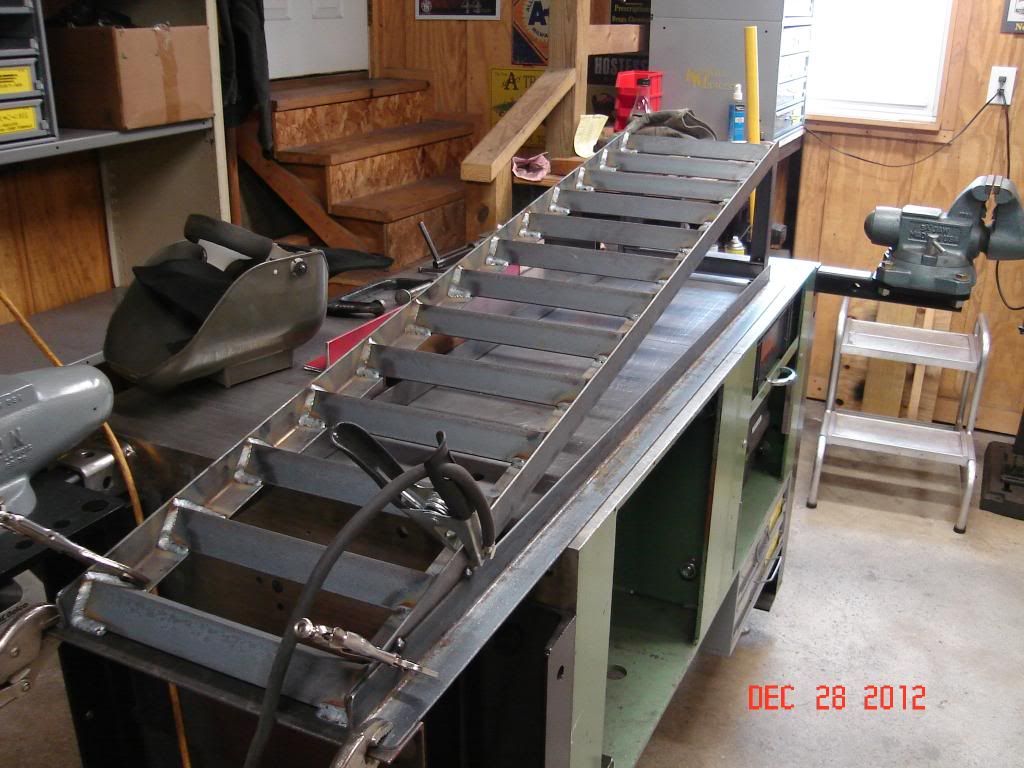
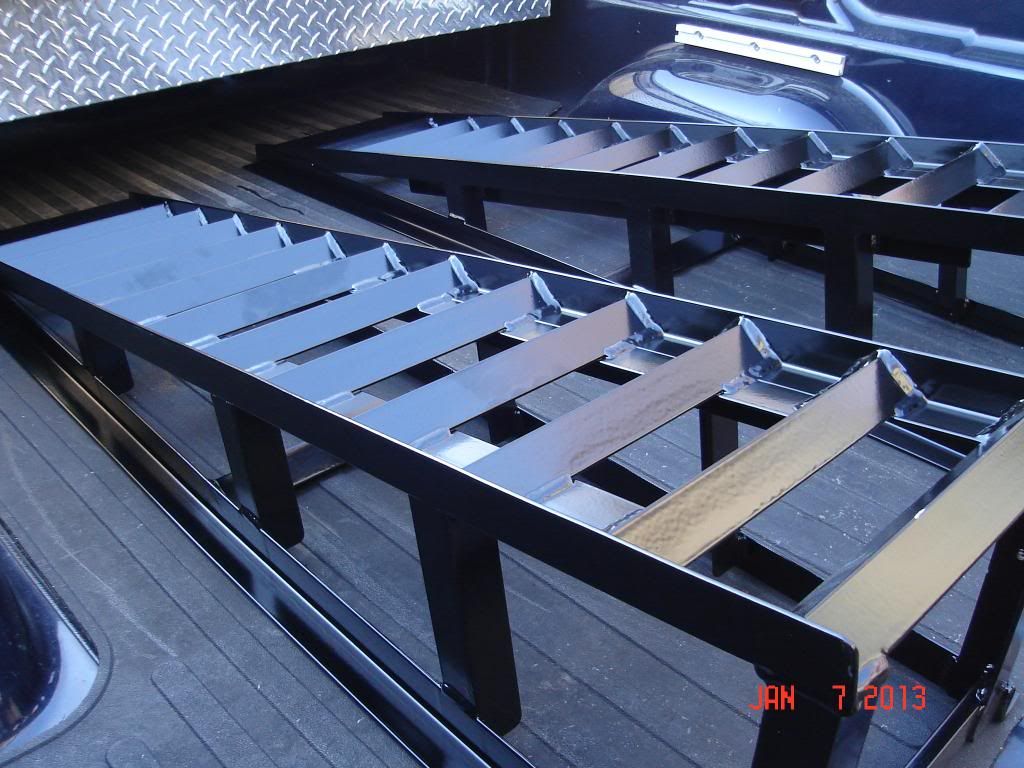
all that said, OP - your ramps look nicely made. should serve you well for a long time. curious if you've seen rhino ramps. plastic ramps that can support about 3K lb ea (6K pair). not knocking your work/effort, just curious. i've used them extensively and am impressed. i use one at a time to change flats on my trailer when its fully loaded (~13K lb) - lifting one wheel, leaving the others airborne and as a pair to do basic service work on everything from golf carts to my one ton dually (~8K lb and yes, i have a weight ticket for it).
ahm