To avoid these ads, REGISTER NOW!

lighting layout

ACDNate

Well-known member
Joined
Dec 15, 2011
Messages
150
Location
Ocean Spings, MS
I'm overloaded with information reading here. Looking for a good start on my lighting.

Building is a 30x60x16 steel building.

2 bays(30x40) will be open shop. 1 bay will be enclosed leaving a 6' tall storage area above the room.

Plan is to get the 200 amp panel and lighting in to get me started. I will add more electrical/lighting when I get to enclosing the room.

To get a decent amount of light in the shop area, what should I be looking at?

I'm thinking florescent obviously, likely 4'.

How much spacing in between fixtures?

How far down should I hang them to be effective?

Any help would be greatly appriciated.
 
To avoid these ads, REGISTER NOW!

pattenp

Well-known member
Joined
Jun 4, 2008
Messages
10,175
Location
Virginia - USA
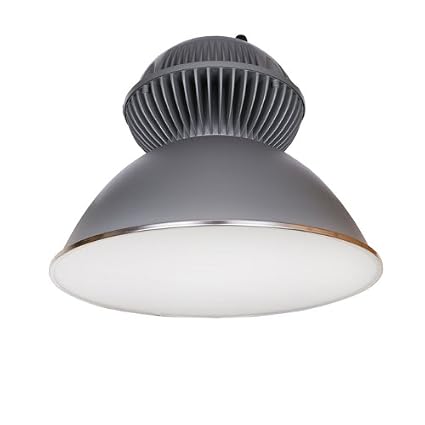
You need to look at the lumens per square foot you want and then look at what the lumen output is of the fixture you'd like to use. I suggest at least 100 lumens per square foot and with 16' ceilings to use T8 high output highbay lighting fixtures. I'd use fixtures that can be surface mounted. A lot depends on your ceiling type, flat, vaulted, etc.
 
OP
A

ACDNate

Well-known member
Joined
Dec 15, 2011
Messages
150
Location
Ocean Spings, MS
Ceiling will be unfinished, typical pre-engineered steel building. Roof is a 1/12 pitch. Hadn't really contemplated a surface mount light but why loose vertical space if I don't need to I suppose.

100 lumens per sq/ft. That definitely helps in figuring out how many fixtures.
 

JoeFin

Well-known member
Joined
Sep 13, 2013
Messages
717
Location
NorCal - where the Rednecks Race
Some one who isn't on this forum any more threw out the 100 fcdl number and it stuck. 100 fcdl is pretty bright and good for extremely detailed work. Like assembling printed circuit boards.

Not that it wouldn't be great to have that over your work benches but you probably wouldn't need that through out the entire shop.

Automotive painting takes even more and it is suggested to be around 110 - 135 fcdl.

You would do yourself a great justice to plan out your lighting by the different areas and the intended use. Use a generous switching scheme that allows you plenty of flexibility while saving you a few bucks at the meter.

Here is a real simple to use lighting calculator to help you get started

http://www.visual-3d.com/tools/interior/Default.aspx?id=14783

And ya - pattenp was definitely giving you some good advice when he suggested you go with a Highbay fixture with some good reflectors
 

Angelfire

Well-known member
Joined
Mar 22, 2012
Messages
1,367
Location
New Mexico and Ireland
I've posted the following link a number of times and I still find it to be the best definitive compilation of how to go about designing your lighting. Right or wrong, it's worth a read to understand the details and to make your own choices with regards to lumens/ft2 etc..... Once you decide on your requirements, use the link posted earlier to lay it all out. Then you'll have a 90% solution and will need to tweak it for other factors inherent to your situation.

http://www.sawmillcreek.org/content.php?146-Lighting-the-Small-Workshop-by-Jack-Lindsey
 
To avoid these ads, REGISTER NOW!

Charles (in GA)

Well-known member
Joined
Jan 11, 2006
Messages
12,489
Location
50 mi south of Atlanta
Ceiling will be unfinished, typical pre-engineered steel building. Roof is a 1/12 pitch. Hadn't really contemplated a surface mount light but why loose vertical space if I don't need to I suppose.

100 lumens per sq/ft. That definitely helps in figuring out how many fixtures.

This type of steel structure. This is a 2/12 roof. 60x60x16 (21 ft peak)

attachment.php
 

Ray916MN

Well-known member
Joined
Apr 15, 2012
Messages
1,066
Location
Orono, MN
100 fcd isn't really that much light, unless you actually achieve it at the work surface. The issue with the calculators is they typically do a poor job of accounting for losses between the lights and the work surface.

Surface colors in the shop, reflectors design, shelving, ceiling height all have an impact on how much light actually gets to what you want lit. With a ceiling height of 16' the losses can easily be 50% or greater. This means if you get enough bulbs to emit 100 fcd for the floor space, you could end up with less than 50 fcd at the work surface because of light lost to the ceiling, walls, and other surfaces in the workshop. One of the common mistakes people make is to think they have white walls/ceilings and therefore there isn't much loss to thems, but near perfect reflectors are mirrors and white is not mirror like. Above 14' generally high bay fixtures should be considered. The 3D calculator is a much better tool than the calculators that do not factor in ceiling height at all and should allow you to figure out the effects of using Lithonia high bay fixtures versus low bay fixtures. This should give you a good idea of whether buying high bay fixtures will make more sense than buying regular fixtures.
 
OP
A

ACDNate

Well-known member
Joined
Dec 15, 2011
Messages
150
Location
Ocean Spings, MS
Some one who isn't on this forum any more threw out the 100 fcdl number and it stuck. 100 fcdl is pretty bright and good for extremely detailed work. Like assembling printed circuit boards.

Not that it wouldn't be great to have that over your work benches but you probably wouldn't need that through out the entire shop.

Automotive painting takes even more and it is suggested to be around 110 - 135 fcdl.

You would do yourself a great justice to plan out your lighting by the different areas and the intended use. Use a generous switching scheme that allows you plenty of flexibility while saving you a few bucks at the meter.

Here is a real simple to use lighting calculator to help you get started

http://www.visual-3d.com/tools/interior/Default.aspx?id=14783

And ya - pattenp was definitely giving you some good advice when he suggested you go with a Highbay fixture with some good reflectors

That visual 3d is pretty decent. Not a whole lot of lights that I can find at Lowes/HD for quick evaluation though.
 

pattenp

Well-known member
Joined
Jun 4, 2008
Messages
10,175
Location
Virginia - USA
Read up on foot candles vs. lumens. Entirely two different measurements of light. There is no straight conversion for lumens to foot candles.
 

pattenp

Well-known member
Joined
Jun 4, 2008
Messages
10,175
Location
Virginia - USA
Look at the lamps the fixture uses to figure up the lumens per fixture. A F48T8/HO which is a 4' T8 lamp outputs about 3600 -3800 lumens. Your 1800 sqft will need about 48 lamps which is 24 two lamp fixtures or 12 four lamp fixtures to get the 100LU per sqft. These are just ballpark figures.
 
Last edited:
OP
A

ACDNate

Well-known member
Joined
Dec 15, 2011
Messages
150
Location
Ocean Spings, MS
Look at the lamps the fixture uses to figure up the lumens per fixture. A F48T8/HO which is a 4' T8 lamp outputs about 3600 -3800 lumens. Your 1800 sqft will need about 48 lamps which is 24 two lamp fixtures or 12 four lamp fixtures to get the 100LU per sqft. These are just ballpark figures.

Thanks for the input. Ball park figures are what i'm looking for. :thumbup:
 
To avoid these ads, REGISTER NOW!
Top Bottom