McBrownie
Well-known member
Parker 203 Repair Post #5
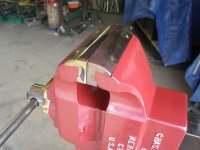
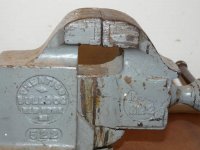
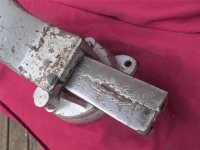
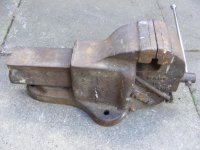
Kevin and I talked about various things that could be done to the jaws. I have that 12" sanding disc on the radial arm saw that does a really nice job of sanding down curved jaws. I used it on the 974. Parker jaws are fairly soft and all of their old advertisements talk about how they can "easily be replaced" Lies, Lies, Lies. We decided to go the welding and resurfacing route. I sent the jaws off to Kevin and here is what he had to say:
"Hi Bill
I made your handle last night and went to weld the jaws and found out that they are hard steel. This represents a problem that I want to share with you. When you weld tool steel you better know what material it is, the reason is it will crack when it cools. All tool steel shrinks at different rates when cooling and that is why it cracks. They must have made some of these jaws out of tool steel and yours is one of them. I could weld them but if they crack then the jaws are worthless, I welded a little section by the crack area to see what it looked like when I sanded the weld off to check compatibility and found the weld to be hard with soft welding rod. It did not crack but I welded just a little. Let me know your thoughts, my feeling is we can get away with the small welds on top of the jaws but welding underneath where the break is could cause a breakage due to unknown steel. If the jaws were made from O-1 tool steel then it is unweldable. This steel was a popular choice back in the day. We call it drill rod or oil hard tool steel."
Great. I have a weird set of jaws to boot. I decided to roll the dice and trust in Kevin's skill and judgment.
View media item 42936
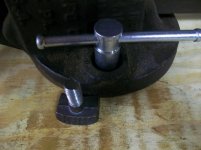
By the way, look at the great job he did on the handle. Looks absolutely stock which is what I wanted. Even you look at the screw threads, they look original. A very nice piece.
View media item 42946
At this point, it was time for me to get busy painting.
I went with a Satin because I think it looks better on old vises. This vise was originally black, and I was going to go with a dark green as Parker refers to in one of their old advertisements. However, I decided on Valspar Outdoor Satin Oceanic P/N 15309.
I am a big fan of letting the parts sit in direct sun for a few hours to let them warm up. The same can be done in an oven, but I didn't want to end up sleeping on the couch.
View media item 42561
Same for the paint. Another GJ member recommends letting the paint can warm up too:
View media item 42562
On last quick wipe down with lacquer thinner before painting and here you go:
View media item 42563
This paint seems to take a couple of days to fully dry, but once it does, it is very durable.
Now to wait to see how Kevin gets on with those jaws.
Kevin and I talked about various things that could be done to the jaws. I have that 12" sanding disc on the radial arm saw that does a really nice job of sanding down curved jaws. I used it on the 974. Parker jaws are fairly soft and all of their old advertisements talk about how they can "easily be replaced" Lies, Lies, Lies. We decided to go the welding and resurfacing route. I sent the jaws off to Kevin and here is what he had to say:
"Hi Bill
I made your handle last night and went to weld the jaws and found out that they are hard steel. This represents a problem that I want to share with you. When you weld tool steel you better know what material it is, the reason is it will crack when it cools. All tool steel shrinks at different rates when cooling and that is why it cracks. They must have made some of these jaws out of tool steel and yours is one of them. I could weld them but if they crack then the jaws are worthless, I welded a little section by the crack area to see what it looked like when I sanded the weld off to check compatibility and found the weld to be hard with soft welding rod. It did not crack but I welded just a little. Let me know your thoughts, my feeling is we can get away with the small welds on top of the jaws but welding underneath where the break is could cause a breakage due to unknown steel. If the jaws were made from O-1 tool steel then it is unweldable. This steel was a popular choice back in the day. We call it drill rod or oil hard tool steel."
Great. I have a weird set of jaws to boot. I decided to roll the dice and trust in Kevin's skill and judgment.
View media item 42936
By the way, look at the great job he did on the handle. Looks absolutely stock which is what I wanted. Even you look at the screw threads, they look original. A very nice piece.
View media item 42946
At this point, it was time for me to get busy painting.
I went with a Satin because I think it looks better on old vises. This vise was originally black, and I was going to go with a dark green as Parker refers to in one of their old advertisements. However, I decided on Valspar Outdoor Satin Oceanic P/N 15309.
I am a big fan of letting the parts sit in direct sun for a few hours to let them warm up. The same can be done in an oven, but I didn't want to end up sleeping on the couch.
View media item 42561
Same for the paint. Another GJ member recommends letting the paint can warm up too:
View media item 42562
On last quick wipe down with lacquer thinner before painting and here you go:
View media item 42563
This paint seems to take a couple of days to fully dry, but once it does, it is very durable.
Now to wait to see how Kevin gets on with those jaws.
Last edited:
 However, I'll hold onto this one and pass it on to the kids when the time comes. It is still better than anything you can buy in this price range today. In the meantime, I'll keep looking for that swivel jaw!