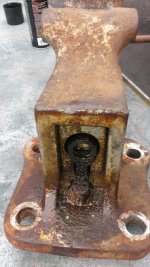
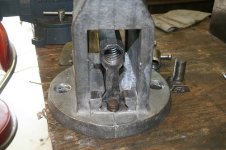
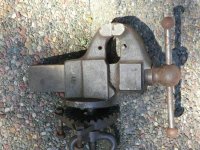
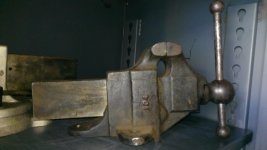
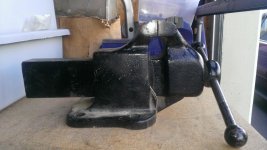
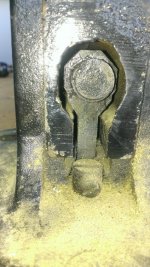
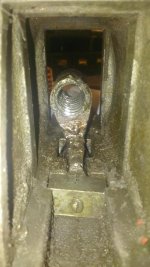
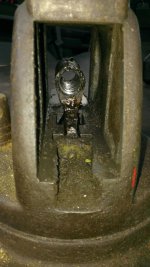
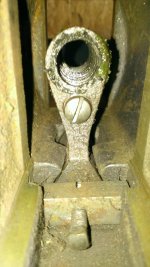
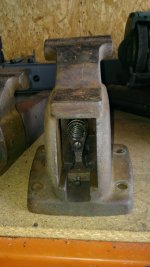
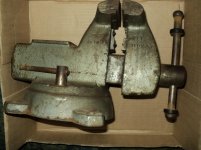
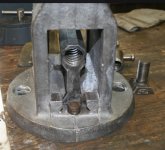
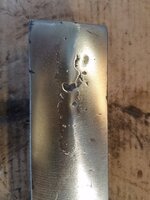
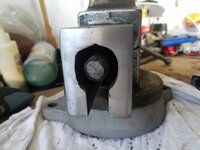
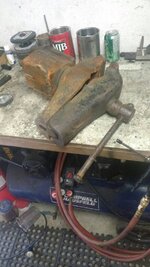
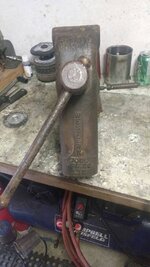
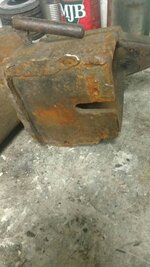
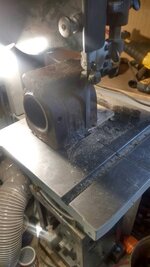
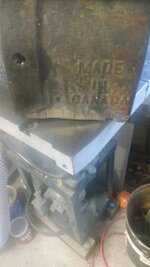
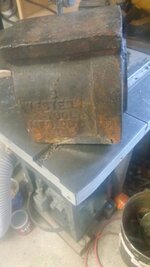
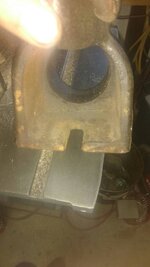
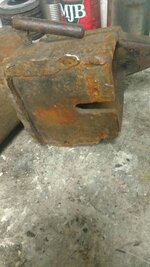
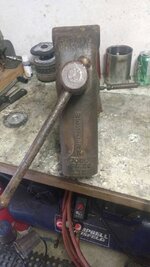
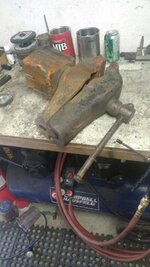
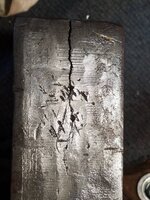
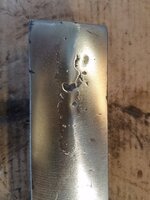
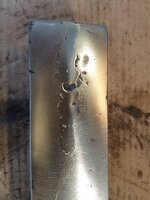
Drives: So my process for welding was as follows. I first magnafluxed the part to determine the end of the crack, I then drilled a 3/16" hole at the end to prevent further travel of the crack. I opened up the crack to a nice wide V with a die grinding burr bit. Then I took a few measurements of the slide and clamped the end with the crack into another vise and closed it up until it measured just a little larger than the rest of the slide, because I knew that welding would pull it together some. The welder Iused is a Lincoln Invertec V205 and the filler was Airgas 3/32" ER70S6.
"ER70S6 is a mild steel TIG welding wire that contains higher levels of manganese and silicon than other standard grades of TIG wire to produce high quality welds when used on dirty, oily, or rusty steel. The high silicon content increases the fluidity of the weld pool, thus creating a smoother bead appearance and resulting in minimal post-weld grinding. This wire is engineered to provide porosity-free, x-ray quality welds at the highest tensile strength (as welded) of all the plain carbon steel wires" . from Airgas website
I pre heated the whole slide to about 400° then began running the torch without filler to try to burn off some impurities. I then began at the hole I drilled and started welding, it was still popping and splattering but eventually started flowing pretty well. After welding I peened the heck out of the entire weld, then post heated to about 450°.
I then wrapped the slide tightly with a welding blanket. Then used another blanket to wrap the whole thing, and let it cool on a wooden pallet overnight. The next day I used a 6" sanding disk on a Makita with 80 then 120 grit to finish it off.
Sorry no prep pictures I was in a hurry and didn't even think about it.

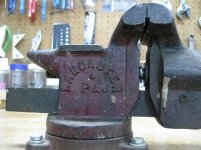
I as well am already loving my Rock Island!
Sent from my SM-G935P using Tapatalk