Private Lugnutz
Well-known member
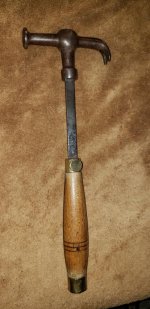
I don’t mind coming home from the flea market with only one tool when the tool is something like this one.
View media item 77715
Here it is cleaned up and in some better light on my workbench.
View media item 77717
View media item 77716
View media item 77722
View media item 77723
View media item 77721
View media item 77719
View media item 77718
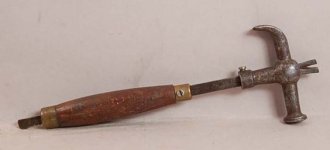
It was patented (#35,715) by John Adams Thayer during the Civil War (June 24, 1862) as a “combination tool.” Here is the diagram from his patent application.
View media item 77726
He described it as a “shank or bar graduated to form a scale” with a “screwdriver and a claw on the ends of said shank or bar,” with an adjustable “handle or sleeve” and an adjustable “hammer-head.”
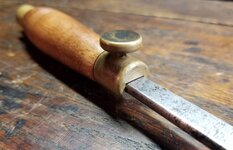
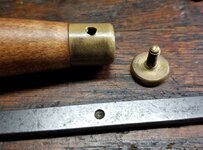
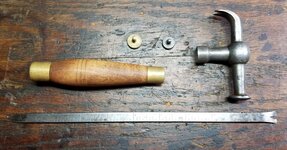
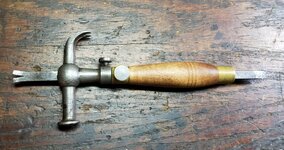
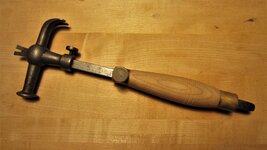
See the thumbnail below for a more complete example of this tool from the Donnelly Antique Tools Auction site. The idea is to slide the handle/sleeve and the hammer head away from their respective ends to use this as a screwdriver and claw, and back down into their end positions to use it as a tack hammer and tack puller. As shown in the two diagrams on the patent. My example is missing the sleeve/handle and also the set screw for adjusting the position of the hammer-head.
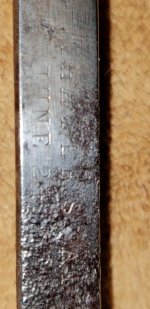
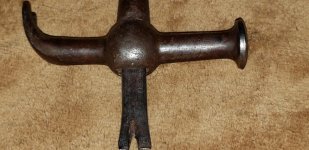
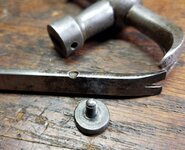
Speaking of the hammer-head, mine is frozen in place at the moment, but in a position where just enough of the marking on the shank is revealed. The whole marking reads “THAYER’S PAT” over “JUNE 24, 1862.”
View media item 77724
Chalked:
View media item 77725
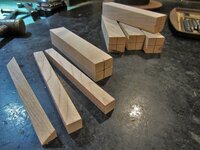
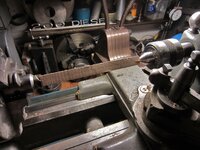
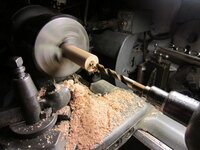
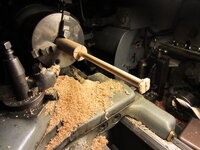
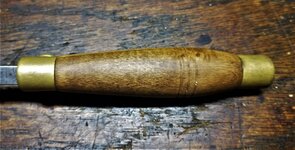
I’ve got some penetrating oil soaking inside the head. This is not characteristic of me, but I am actually thinking of trying to restore this tool. My idea is to cannibalize a handle from one of the antique Babbitt scrapers I have, core it out for the shank, re-shape it a little and fit it with a second ferrule on the back, and drill and thread a small hole in the existing ferrule for the set screw.
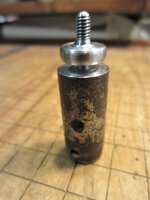
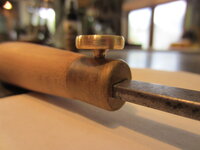
Note that the Donnely auction example blow (which sold for $350, incidentally!) has brass slotted set-screw heads, the patent diagram I posted above shows fancy wingnuts, while an example shown on DATAMP, which can be seen by going to this link, and clicking on photograph 3, has knurled thumbscrews. So it’s pretty wide open in terms of what kind of set screw I can use to restore mine.
View media item 77715
Here it is cleaned up and in some better light on my workbench.
View media item 77717
View media item 77716
View media item 77722
View media item 77723
View media item 77721
View media item 77719
View media item 77718
It was patented (#35,715) by John Adams Thayer during the Civil War (June 24, 1862) as a “combination tool.” Here is the diagram from his patent application.
View media item 77726
He described it as a “shank or bar graduated to form a scale” with a “screwdriver and a claw on the ends of said shank or bar,” with an adjustable “handle or sleeve” and an adjustable “hammer-head.”
See the thumbnail below for a more complete example of this tool from the Donnelly Antique Tools Auction site. The idea is to slide the handle/sleeve and the hammer head away from their respective ends to use this as a screwdriver and claw, and back down into their end positions to use it as a tack hammer and tack puller. As shown in the two diagrams on the patent. My example is missing the sleeve/handle and also the set screw for adjusting the position of the hammer-head.
Speaking of the hammer-head, mine is frozen in place at the moment, but in a position where just enough of the marking on the shank is revealed. The whole marking reads “THAYER’S PAT” over “JUNE 24, 1862.”
View media item 77724
Chalked:
View media item 77725
I’ve got some penetrating oil soaking inside the head. This is not characteristic of me, but I am actually thinking of trying to restore this tool. My idea is to cannibalize a handle from one of the antique Babbitt scrapers I have, core it out for the shank, re-shape it a little and fit it with a second ferrule on the back, and drill and thread a small hole in the existing ferrule for the set screw.
Note that the Donnely auction example blow (which sold for $350, incidentally!) has brass slotted set-screw heads, the patent diagram I posted above shows fancy wingnuts, while an example shown on DATAMP, which can be seen by going to this link, and clicking on photograph 3, has knurled thumbscrews. So it’s pretty wide open in terms of what kind of set screw I can use to restore mine.
Attachments
Last edited:


 What's the date on those?