
You are using an out of date browser. It may not display this or other websites correctly.
You should upgrade or use an alternative browser.
You should upgrade or use an alternative browser.
Between 485 & 705 SQ/FT Mid-Century Moto Mecca Makeover
- Thread starter sakurama
- Start date
Workspaces between 485 and 705 squarefeet.
Bob Heine
ALLIANCE MEMBER
Gregor, I remember Great Sand Dunes National Monument like it was yesterday (at my age, 63 years ago seems like yesterday). It's a pretty neat life lesson to climb the dunes. A step forward is instantly followed by a half (or three-quarter) step back. If you don't give up you can get to the top and see the really big dune on the other side.
wasfast
Well-known member
Don't think it really matters if the van is "done"; you're getting lots of family and personal experiences with it on trips. Those are far more valuable than anything.
I don't post often in your (lengthy) thread but really enjoy all you do. Love your house as well!
I don't post often in your (lengthy) thread but really enjoy all you do. Love your house as well!
tacostand
Well-known member
To test the strength of the tire carrier we put the cat on it. No flex at all. I suspect we could put as many as two, three or perhaps even four cats on it. I'm quite pleased with the strength.

Gregor
Tire carrier
---------------
Make: Halenda Industries
Model: GH1
Rating: CAT 1
Happy New Year, Gregor

Dave
matt_o_70
Member
Gregor,
Looks like you are having a blast in the van, I hope for another Happy trip round the sun for you and your family!
Your thread remains my favorite place on the internet!
Looks like you are having a blast in the van, I hope for another Happy trip round the sun for you and your family!
Your thread remains my favorite place on the internet!
BoilermakerFan
Well-known member
Happy New Year to you and your family.
I forgot how ugly that van was when you got it! :lol
It looks great now, but it's begging for a wrap. The white is such a perfect canvas for your work... I'd love to see what you would do on a wrap.
I forgot how ugly that van was when you got it! :lol
It looks great now, but it's begging for a wrap. The white is such a perfect canvas for your work... I'd love to see what you would do on a wrap.
mr_magicfingers
Well-known member
Happy new year Gregor, to you and the family. Great to see the van being used they way you designed it to be. What a fabulous set of adventures your kids are having growing up. Long may it continue.
sponaugle
Well-known member
On my own I start motorcycle road trips at 6am but with a family it could never happen. I like to start family trips, not in the morning which I've discovered is a recipe for disappointment, but in the late afternoon. We manage to get the leaving part out of the way, the hardest thing to overcome, and then have dinner on the road and a hotel stay. The next morning we wake up in full road trip mode and have knocked a few hours off the trip. Momentum established.
Gregor
Interesting... I know that by myself I would always start out first thing in the morning, but the idea of doing a later departure with shorter travel time to a first stop is a great idea for the family trips. Momentum is good.
Fantastic pictures of your adventures during this rainy time in Portland.
Jeff
Happy new year Gregor, to you and the family. Great to see the van being used they way you designed it to be. What a fabulous set of adventures your kids are having growing up. Long may it continue.
It's funny. I sometimes wonder if the memories will be good or if they'll be like, "Can you imagine how much fuel we burned on vacations! What was he thinking?"
Of course my brother just bought a new Sprinter and he's getting 18-20mpg but it cost about 25k more than our van... There's no winning.
Interesting... I know that by myself I would always start out first thing in the morning, but the idea of doing a later departure with shorter travel time to a first stop is a great idea for the family trips. Momentum is good.
Fantastic pictures of your adventures during this rainy time in Portland.
Wow, we got home to rain and the kids were thrilled. Truly Portland children. It was amazing how the entire trip was either clear or snowing and only as we passed Hood River did the rain start!


The trip was a blast. I like leaving early myself but for the first day of a trip, with all the packing and preparing, leaving early is just too hard for our crew. If I push the date one day earlier but we leave later it seems to help get the momentum going. After that we can do early mornings and the kids even like getting up and being on the road when it's dark which is a treat really. We managed to get back from Denver in two days which is pretty good - the kids buckled down and we listened to a LOT of podcasts.
So the next things on my agenda is getting the BMW ready for the 1Moto Show in February. I got my invitation and this year they've cut the number of entries almost in half to just 100 so to be included is a pretty big deal.
If you're planning on going get tickets early! You do NOT want to wait in the line to get it which last year was about a block long.

We went through Denver so I could stop by and see Woody of Woody's Wheel Works and make a plan for the BMW. He talked me into going with KTM forks so I'll be selling my Ohlins forks I guess. They should pay for the new ones. Most importantly we brought out a scale and spent time weighing all the different options.
The one thing that makes me crazy is that the vast majority of builders don't have any idea what makes a motorcycle work. The custom scene has devolved much like the chopper scene did. I want my bikes to be different and informed from my years of racing and riding. So this bike will get the lightest set of wheels we can build. If you're going to try to save weight you start with unsprung weight. Much like the hikers adage of "1lb on your feet is equal to 5lbs on your back" wheel weight is disproportionally represented. When we raced one of the first things we'd do is search out magnesium wheels and the change in acceleration, handling and braking were huge.
So the set of wheels we're building should cut a decent amount of weight off the bike and improve all aspects of it's performance. The show is in four weeks and I'm sure this will end up being more complicated than I imagine.
Gregor
Millcreekmadman
Well-known member
That 1moto show looks awesome. Will you be doing any racing there? Can anyone partake in the flat track race?
That 1moto show looks awesome. Will you be doing any racing there? Can anyone partake in the flat track race?
I'd love to do some of the flat track with my XR100 but doubt I'll have the time to prep the bike. The BMW is going to take all my time. I think the event is open but I've had a hard time getting into. It's extremely informal so I'd guess yes.
I'm working on a deal with my sister where she comes to help out and I give her my XR100. If that happens I may pick up a CRF150R to build into a framer but I'm trying to avoid new projects...
Like that'll ever happen.
Gregor
Mr. Blewregaurd
Active member
Thanks for stopping but the shop Gregor! It was great finally meeting you and your family!
E12-535iTurbo
Well-known member
Gregor, how do you source interchangeable forks?
I've a small Honda that could use some work but I don't even know where to start to find better forks, brakes, wheels etc. There is always the connection between the original parts and replacement parts. And that's even apart from the basics like length, width, motion, etc.
I've a small Honda that could use some work but I don't even know where to start to find better forks, brakes, wheels etc. There is always the connection between the original parts and replacement parts. And that's even apart from the basics like length, width, motion, etc.
tjpavlov
Well-known member
Any podcast recommendations for listening with kids? This sounds like a much less costly interest than all of the Festool stuff I have ordered because of your thread!
hewey
Well-known member
I love your travel pics and hearing about how you approach things. As a kid growing up, we did tonnes of camping and touring in old Mitsubishi van - the ones that look like a square fridge - as it was a cheap way to go on holidays. Great memories and instilled a love of exploring.
I find if you never fail occasionally, you're actually not pushing or challenging yourself
I went from so low to so high with this one. Failing and then fixing the fail brings a great sense of accomplishment and restores my faith in myself. Something that everyone but me has lots of.
I find if you never fail occasionally, you're actually not pushing or challenging yourself
Thanks for stopping but the shop Gregor! It was great finally meeting you and your family!
Hey Justin, it was cool to stop by the shop and see the race car before it left. Looking forward to seeing your van.
Gregor, how do you source interchangeable forks?
I've a small Honda that could use some work but I don't even know where to start to find better forks, brakes, wheels etc. There is always the connection between the original parts and replacement parts. And that's even apart from the basics like length, width, motion, etc.
I used to really sweat it. Especially the older bikes that had leading axles and weird top clamp offsets. Most of the dirt bikes are pretty close and same with the street/sport bikes so that helps.
If you want to make your life easier buy a complete front end. I was planning on putting the Ohlins forks I have on this new bike and it's hard to figure out what bikes they work with; the axle is a wr450, the top clamp is a crf450 the fork gaiters are... I gave up and bought a complete front end from a KTM 690 Enduro. Now I know all my wheels, brakes, spacers are consistent. The variable now is the steering stem and bearings. If you're swapping a new fork onto an old bike you have do do a lot of bearing juggling. Lower steering race is 58mm, stem is 25mm so now you need to find a bearing that can match that and do it again for the top. It gets much tricker when you need to make a new stem.
I'll try to show what I'm going to have to deal with on the BMW and we'll see how I solve that. I have to have the bike done in two weeks or so in order to have time to test it and reshoot new photos. There's lots to do!
Any podcast recommendations for listening with kids? This sounds like a much less costly interest than all of the Festool stuff I have ordered because of your thread!
YES! My kids love the Myths & Ledgends podcast. It's just sarcastic enough that it's fun to listen to for adults and just fable-y enough that kids love it. I'd say it's good for 5-6 and up. The other one, for when they're following along on adult stories is Snap Judgement which isn't topical and so is good to listen to at any time. Some of the podcasts have adult content and or language but at this point I'm not bothering to worry about the language but violence I try to screen them from if it's pretty gory. This podcast dominated our trip - it's just really engaging story telling.
I love your travel pics and hearing about how you approach things. As a kid growing up, we did tonnes of camping and touring in old Mitsubishi van - the ones that look like a square fridge - as it was a cheap way to go on holidays. Great memories and instilled a love of exploring.
We always hark back to that Idaho tourism slogan: "You have 18 summers..." and when you subtract the first and last few, well, we're in the prime time to have adventures and memories. I'm doing my best to make them good.

And because I don't have any projects to post up at the moment here's a shot of the van in a tunnel at Dead Man Pass on highway 84 in eastern Oregon. There's a rest area there and this tunnel goes under the highway. It's so narrow that it's filled with a million scrapes.

I knew it would make a cool photo so I had to park and shoot it. I'm going to file that away as a cool spot to revisit down the road.
Gregor
Ha.Listen Mr. Portal Axles...
Most likely open as it's more common and simpler. I have a lead on a set of 690 forks right now that I may pull the trigger on. Considering what's on the bike now it will be hard to not improve it.
G
Sooo you are gunning for 250mm travel?
Ha.
Sooo you are gunning for 250mm travel?
Yeah, with portals.
I got the 690 forks. I bought the whole front end to reduce the issues of mixing but the front brake is a two piston. I’d really like a bit more power of a four - do you know of a kit that fits, like the Motomaster, that ups the brake caliper size?
If anyone would know these things I suspect it’s you.
Gregor
BoilermakerFan
Well-known member
Gregor, how do you source interchangeable forks?
I've a small Honda that could use some work but I don't even know where to start to find better forks, brakes, wheels etc. There is always the connection between the original parts and replacement parts. And that's even apart from the basics like length, width, motion, etc.
<snip>
I used to really sweat it. Especially the older bikes that had leading axles and weird top clamp offsets. Most of the dirt bikes are pretty close and same with the street/sport bikes so that helps.
If you want to make your life easier buy a complete front end. I was planning on putting the Ohlins forks I have on this new bike and it's hard to figure out what bikes they work with; the axle is a wr450, the top clamp is a crf450 the fork gaiters are... I gave up and bought a complete front end from a KTM 690 Enduro. Now I know all my wheels, brakes, spacers are consistent. The variable now is the steering stem and bearings. If you're swapping a new fork onto an old bike you have do do a lot of bearing juggling. Lower steering race is 58mm, stem is 25mm so now you need to find a bearing that can match that and do it again for the top. It gets much tricker when you need to make a new stem.
<snip>
Gregor
If it's a street Honda from the mid/late '70s to the early '80s, they're a little easier to swap since many of the stems were the same diameter... From my experience with the '79-'84 Hondas, when the axle was a leading axle, the clamps changed slightly, but the basic location of the actual front axle stayed pretty close to the same spot, maybe a few millimeters difference either way. Not a huge difference and not likely to be noticed on a street bike. The springs and Gold Cart Emulators will have a bigger impact on the handling than 1-2mm on the axle position.
For my CX500, I picked up mid-'80s complete fork from a Magna or similar cruiser (i can't remember which model it was now)... The top triple wasn't going to work so I searched the salvage yard to find one with the correct geometry/offsets and tube diameter. I just have to press out the stem from the new donor fork, press in my CX500 stem, install the new bearings, and she'll bolt back together.
Now switching brands or going to modern sportbike forks becomes the PITA Gregor mentioned with either a custom triple clamps, a custom stem, or both. If you can just swap the stem from your bike onto the donor fork, then your stock bearing sizes work and you can just upgrade to the AllBalls and be done.
Another thing I would do is search Google and IG for a bike like yours that has the forks you want to use. Reach out to that builder and ask them what was involved with the swap. In my experience, even the top custom bike builders will share their experience and information with you. I've talked to a half dozen of them on the phone too. I've yet to have a big name custom bike builder be a d!ckhead and not help me out.
Last edited:
250mm is the sweet spot for this build. If you are thinking of some highspeed sandyness...260-280mm. It will give some topend in the sand. For fireroads aka gravelkilling i thing the 250mm in a semitight setup is king. Suspension first everything else second. Suspension is speed and most importantly the ability to maintain speed in fun environment.Yeah, with portals.
I got the 690 forks. I bought the whole front end to reduce the issues of mixing but the front brake is a two piston. I’d really like a bit more power of a four - do you know of a kit that fits, like the Motomaster, that ups the brake caliper size?
If anyone would know these things I suspect it’s you.
Gregor
You are wrong. Regarding my knownledge on the brake issue. On my behemoth i still run only 1 OEM front(2 piston - 300mm). That bike is immense heavy. With 18litre i'm at 228kg. I've tried some less tricky options out there. But where i ride it isn't really needed. Loose gravel will only make it more stupid with a stronger brake. Especially when YOU are the ABS system. The feel is ok with the OEM on the loose stuff. Soooo, if you want the upgrade i would look at the beringer 4-6 pot. Though clearing spoke would be a nice feature

First of all be sure to think where you would be riding this bike. I know you will be riding every where. But there is riding...then there is RIDING(on the gas). I came to the result that i never is WOT when riding to where my real ride starts(150 rwhp is stupid WOT on the gravel...cant really hook up...at all).
Ride standard brake until you might find its limits.
BTW:Love reading your threads and i consume your pictures. Will you take the fish with you on the Bimmer?
From the desert.
Regards


Attachments


E12-535iTurbo
Well-known member
Thanks guys!
BoilermakerFan
Well-known member
Thanks guys!
Feel free to shoot me a PM if you have any questions regarding Hondas from '77-'85'ish... If I don't know the answer, I have a mentor who will.
250mm is the sweet spot for this build. If you are thinking of some highspeed sandyness...260-280mm. It will give some topend in the sand. For fireroads aka gravelkilling i thing the 250mm in a semitight setup is king. Suspension first everything else second. Suspension is speed and most importantly the ability to maintain speed in fun environment.
You are wrong. Regarding my knownledge on the brake issue. On my behemoth i still run only 1 OEM front(2 piston - 300mm)....
...First of all be sure to think where you would be riding this bike. I know you will be riding every where. But there is riding...then there is RIDING(on the gas). I came to the result that i never is WOT when riding to where my real ride starts(150 rwhp is stupid WOT on the gravel...cant really hook up...at all).
Ride standard brake until you might find its limits.
BTW:Love reading your threads and i consume your pictures. Will you take the fish with you on the Bimmer?
Yes, I'm thinking of making a combination windscreen/fish tank out of plexi...
It's funny that you mention leaving it. Last night when I couldn't sleep I found a solution for the brakes to upgrade to a larger radial caliper and a larger brake but decided that I have enough on my plate right now and the bike is really designed to be used on gravel and off road - where you're not going to need the sort of power that we used to try to find when we did the 17/19 conversions on the 950's.
So I'm going to leave it.
Did you really meet Melania? Damn.
Gregor
While I was in Colorado I got a call from the coffee roaster that I had done work for before. He wanted me to make another burner solution for his giant Probat. While I need to be working on the BMW the money would be helpful to pay for the those new forks I just bought.
In the process of trying to support and drill the very long wands for the burners I realized that I have always just supported material with pieces of scrap and that if I took just a few minutes I could make a machinists jack.
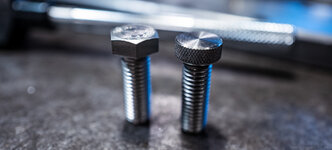
I didn't want to make it complicated so I took a 1/2-13 stainless bolt that I had and chucked it up in the lathe and turned down the flats.

Stainless is hard to knurl but this scissor style knurler does a decent job by allowing you to put pretty heavy pressure on the material without pressing hard against the bearings in the lathe. Use lots of coolant and blow the chips out as it turns.

The base is just a chunk of turned down 303 stainless. 303 machines easily but can't be welded so I keep it around for spacers, or for just these sort of projects. Now I can position this tiny jack under the work and clamp it down far outboard of the vise. It's a small thing that I've been meaning to make for a while.
The other thing I needed to fix was my bench vise. It came on my welding/fab table and while it's pretty clapped out it's always worked so I've just lived with it. Yesterday I couldn't get the rotation to clamp so I finally decided to do something about it.

Both the captured wrench and the bolt were pretty hammered but the bolt was the worst offender so I decided to remake that. I simply bought a stainless bolt of the same size and drilled a hole in the head and turned a piece of stainless bar stock to fit, welded it on and then cleaned up the weld. Since the wrench was wonky I then machined the flats of the bolt down to fit the wrench. The bolt is not english or metric but "Vise Wrench No1" sized.

Those two small shop improvements made a big difference to finishing out the new burner yesterday. Today I want to buckle down and finish them so I can get onto the bike.
The other thing that transpired over the holiday was that I didn't buy a Bridgeport. Pretty much like all the Christmas' before. The difference is that if you saw on Instagram I was looking at one. It was beautiful and clean and just down the road. I decided that I'd see if I could sell my mill and then buy the Bridgeport.
Unfortunately the order of that got messed up. The Bridgeport was sold before I could buy it which was just as well as it was $7000 and that's what kept me from pulling the trigger right away. In the mean time I think I've found a buyer for my mill. He won't be able to take possession of it for a few months so now I have the time to find another Bridgeport - or a Deckle.
If anyone knows of a good clean Series 1 Bridgeport for sale let me know. Hopefully having a bit of time will allow me to find something closer to home. It's also going to force me to rethink the shop and get rid of more things. The shop is getting more serious.
Gregor
In the process of trying to support and drill the very long wands for the burners I realized that I have always just supported material with pieces of scrap and that if I took just a few minutes I could make a machinists jack.
I didn't want to make it complicated so I took a 1/2-13 stainless bolt that I had and chucked it up in the lathe and turned down the flats.
Stainless is hard to knurl but this scissor style knurler does a decent job by allowing you to put pretty heavy pressure on the material without pressing hard against the bearings in the lathe. Use lots of coolant and blow the chips out as it turns.
The base is just a chunk of turned down 303 stainless. 303 machines easily but can't be welded so I keep it around for spacers, or for just these sort of projects. Now I can position this tiny jack under the work and clamp it down far outboard of the vise. It's a small thing that I've been meaning to make for a while.
The other thing I needed to fix was my bench vise. It came on my welding/fab table and while it's pretty clapped out it's always worked so I've just lived with it. Yesterday I couldn't get the rotation to clamp so I finally decided to do something about it.
Both the captured wrench and the bolt were pretty hammered but the bolt was the worst offender so I decided to remake that. I simply bought a stainless bolt of the same size and drilled a hole in the head and turned a piece of stainless bar stock to fit, welded it on and then cleaned up the weld. Since the wrench was wonky I then machined the flats of the bolt down to fit the wrench. The bolt is not english or metric but "Vise Wrench No1" sized.
Those two small shop improvements made a big difference to finishing out the new burner yesterday. Today I want to buckle down and finish them so I can get onto the bike.
The other thing that transpired over the holiday was that I didn't buy a Bridgeport. Pretty much like all the Christmas' before. The difference is that if you saw on Instagram I was looking at one. It was beautiful and clean and just down the road. I decided that I'd see if I could sell my mill and then buy the Bridgeport.
Unfortunately the order of that got messed up. The Bridgeport was sold before I could buy it which was just as well as it was $7000 and that's what kept me from pulling the trigger right away. In the mean time I think I've found a buyer for my mill. He won't be able to take possession of it for a few months so now I have the time to find another Bridgeport - or a Deckle.
If anyone knows of a good clean Series 1 Bridgeport for sale let me know. Hopefully having a bit of time will allow me to find something closer to home. It's also going to force me to rethink the shop and get rid of more things. The shop is getting more serious.
Gregor
dr_clyde
Well-known member
Damn Gregor, I'd love a small mill with the horizontal spindle. What was the taper on that again?
What's your budget on the Bridgeport? Are you willing to have it shipped? We have mills everywhere in West Michigan, I run across them fairly regularly.
What's your budget on the Bridgeport? Are you willing to have it shipped? We have mills everywhere in West Michigan, I run across them fairly regularly.
Damn Gregor, I'd love a small mill with the horizontal spindle. What was the taper on that again?
What's your budget on the Bridgeport? Are you willing to have it shipped? We have mills everywhere in West Michigan, I run across them fairly regularly.
I'm selling my mill for about $4500 which is a good price as I'm including the DRO scales, vise, rotary table and lots of tooling. So my goal is to not go a whole lot above that for the Bridgeport. I'm going to keep my DRO head unit as I have the same one on the lathe and want to stay consistent. I'm not expecting to get tooling but my Rockwell is R8 spindle so I have lots R8 tooling for the Bridgeport. It was actually one of the reasons I bought the Rockwell - I knew some day I'd get a Bridgeport.
I was actually looking at a mill on ebay in Wisconsin. It's dirty but looks like it came from a home shop as there's lots of little things that tell me it was cared for - like way covers and holders. It's about $5-700 to have the mill shipped and it's only $2900 so it's in the budget. It's just super hard to pull the trigger on a machine you can't see.
Thanks for keeping an eye out.
Gregor
Damn Gregor, I'd love a small mill with the horizontal spindle. What was the taper on that again?
Sorry, the Rockwell is an NMTB30 for the horizontal so there's plenty of tooling for it. I bought a NMTB30 to ER35 collet holder that makes it useful. But I've never used the horizontal feature save for once or twice. But I do plenty of stuff that is larger than the table allows and it would be nice to take heavier cuts than the Rockwell can take.
Gregor
...It's just super hard to pull the trigger on a machine you can't see.
Or not...
I now own a Bridgeport Mill!
Once I get something in my mind I tend to start really drilling down and looking. I found an auction site with a few Bridgeports, I spoke to the dealer, the rigger and spent some time mulling over the photos and... I placed a bid.

I had my eye on another, cleaner one hoping it would go for around $2500-3000 and it went for $3750. With time ticking down I decided to take a chance on the second one which wasn't as clean. I was very nervous and decided to place a bid that was the most I'd feel comfortable with and then I walked away convinced I wouldn't win it.
And I won it for $3250.
So on Instagram Pat mentioned that he would love to pick up a mill but didn't know where to start and it made me realize that this might be a good opportunity to talk about how to get into machining and maybe buy a mill. Especially since I probably broke most of the rules.
First I'm sure I've mentioned it before but there's a truly awesome book by Frank Marlow that deal with the basics Machine Shop Essentials It seems to be out of print but you can find used copies on Amazon. He has a second book as well that expands on the first. This is a good book to get used to some of the terms and concepts.
When I started to get into this YouTube didn't exist but now I spend a lot of time watching machining videos - my favorite is This Old Tony. He takes the time to explain things but makes it fun. Another that is very good is Tom's Techniques. He's dry but by the book. He also stresses safety a lot which is a big deal.
So, how do you buy a mill? There's plenty of good info out there but I'll try to simplify it a bit. To start you can answer a few questions:
1. How much do you want to spend?
2. How much space do you have?
3. What sort of things do you want to make?
If you want to dip your toe in the water and spend less than a grand there are small mill/drills you can buy from China. I know next to nothing about them save that they don't/can't do very big things.
But it might help you figure out if you want to go down the deep end.

If you don't have much space a Rockwell like my mill is a good if light mill. Light in mills is something around 1000lbs. Crazy but true. These sort of mid sized mills are hard to find and can command the same price as a Bridgeport. Mine is a rare one that has both horizontal and vertical functions. Prices will vary from $1500 to ones that are pretty rough to $4-5000 for good condition and lots of tooling.
Bridgeports or similar are the end of the line. Mass is what allows a machine to take big cuts of metal and not be deflected and these mills will weigh a ton and up, take up a sizable foot print and cost anywhere from $1000-10,000.
So why the big spread and what are you looking for?

Condition and features. To machine accurately you need that mass but you also need tight tolerances. To machine a surface accurately to within .001" or less you need a machine that fits together with that or finer fits. So most important are the ways. These are the surfaces that hold and move the table: the knee, the saddle and the column. You can't replace these parts and while they can be refinished it's expensive and time consuming. The good news is that they rarely wear out.

More expensive machines like the Bridgeport have scraped ways. Sraping is the old technique of hand shaving the metal to an absolute flatness beyond machining. The pattern created also holds oil. You can see in the photo above that the ways get shinier as you go back because that's the work envelop of the machine - the front doesn't see as much use. This is a good way to tell if the machine has been used in a heavy production environment. Worn ways can still make good parts but you need to be a better machinist.
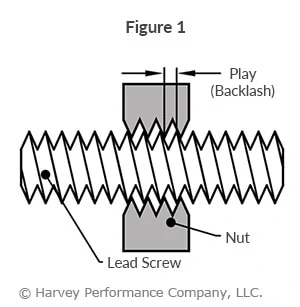
The next thing people tend to look for is backlash on the handles. Backlash is the loose spinning of the handle when you change the cranking direction. If you're using the numbers on the dials you have to be aware of how much your backlash is and remember to take it up each time you do an operation. Again, you can machine around this but it's another thing to consider. Sometimes backlash can be adjusted and sometimes it's a sign of worn half-nuts or leadscrews. You can replace these parts but it's a real pain to do that.

Now if you're using a DRO backlash isn't really an issue as the DRO (Digital Read Out) simply reads the actual position of the table no matter where the knobs or wheels are turned. At this point DRO's are getting pretty cheap so it's a great thing to have and will make a huge difference in the whole enterprise. They also can calculate all sorts of things like patterns and bolt circles and make finding the edges and centers easy.
After that it's the spindle bearings. As you can imagine these are super precise and super expensive but they can be replaced with a lot of effort. It's not typically something that goes bad.
So it remains to be seen if I got a good deal. I could have tried to be patient and waited for a mill to show up within driving distance but that last mill was the first I'd seen for sale in several years. They're not as common in the PNW as they are in the former manufacturing cites or the east coast. Here's the two I was looking at:


The first thing I did was look at the photos to try to judge the overall condition. The top one was the first one I was interested in. I was prepared to go to $3000 as it seemed pretty clean. It went for $3750 so I had about 30 minutes to decide on the second one and recalibrate my bidding strategy.

I copied the photos and opened them in Photoshop so I could brighten them to see better. Bad photos make things look worse. What I saw was an original condition mill not repainted but not used for a while. Both were pluses to me. The surface rust on the handles and table are really nothing - that sort of thing wipes off easily with some WD40 and scotchbrite. I'm looking for original paint because machinery dealers are famous for taking worn out machines, slapping paint on them and trying to get a premium.
The other things I saw were good scraping on the ways and a table without any damage. No drill marks, no dents or signs of abuse. The caliper on the head is a very old way of reading Z axis. When I spoke to the person from the auction I was told that these mills came from small shops and that means less production time but maybe less care paid.
These two mills are Series 1 machines. Series 1 have a two speed hi/low gearbox and adjustable speeds via a crank handle making them easy to to change spindle speeds. That also makes them more expensive. An earlier mill, the Bridgeport J head, has a similar set up as my Rockwell where the speeds are changed via a stepped pulley arrangement on the top of the head. It's not a big deal but it's not as easy. At this same auction a rough around the edges J-head Bridgeport went for $1150 which is quite the deal. If I was just starting to look for a mill I'd look for a J-head at an auction or on Craigslist. They're falling as Series 1's are climbing.
Another thing to look for or consider is tooling. At an auction you won't get much but at a private sale you might. Expect to spend as much on tooling as the mill - if not more. Once I won the mill I quickly started bidding on some tooling as I knew it would be easy to put on the pallet and not cost any more to ship. I bought a Kurt D60 vise on a swivel base for $190 and 100lbs of various end mills for $100. I will pick out the end mills I want and sell the rest and probably offset the cost of at least 20% of the mill.
Next if you buy a mill at auction is the sellers premium which is typically 15% so another few hundred. After that you're going to need to have it moved and put in a truck so expect to pay the rigger/forklift another $2-300 and finally shipping which can be $300-1000.
You can see the prices start to add up pretty quickly especially if you're buying out of state. Nonetheless I should end up about even after selling my mill at least as far as getting it here.
Next up comes powering the mill. Smaller mills will run on 120-220 single phase power so you won't have much trouble just plugging them in. Big mills are always going to be 3 phase so you're going to need to convert your single phase power into 3 phase. The easiest way to do that is with a VFD or variable frequency drive. These allow you to not only convert the power but program in things like braking, acceleration and reversing. And they will add another $2-400 to the price.
The good news is that once you are on the treadmill and have a mill your collection of tooling can be used with most other machines. And most mills are going to hold their value or even increase in value. I got a great deal on my Rockwell because it had been in storage and was so dirty but after a lot of work it turned out to be a great machine.
So there's plenty of people that know a lot more than me but hopefully it gives you some insight into the process of buying a mill. It will take a few weeks before the mill arrives and it's going to require a complete revamping of the entire shop in order to find the space. I consider this a net positive as I've been wanting to do this for a long time.
We can talk about moving a mill when it comes time for that. It's not something to attempt without a great deal of caution and there's a lot of precautions to consider but it can be done safely if you're smart about it.
Gregor
Tergi
Member
Hi Gregor, today i have read all your thread!
great works, and great pics!
great works, and great pics!
slodat
ALLIANCE MEMBER
Gregor, you need to get ahold of Dan Lewis of Lewis Machine. He was in Gresham last I knew. He has at least 10 knee mills in stock at any time. His pricing is fair. Now that you bought the mill, I recommend setting up a time to check out his warehouse. He has tooling and machinery for days. I have bought some VERY good deals from him over the years, along with machinery.
douglawrence42
Active member
Thanks for the great write-up on a very interesting topic. Can’t wait for the “how to economically get the mill from the truck and into the shop without owning a forklift” post.
Sent from my iPhone using Tapatalk
Sent from my iPhone using Tapatalk
slik560
Well-known member
I wish I understood half of the discussions on milling. Facinating. Terrific info for someone starting out.
Hi Gregor, today i have read all your thread!
great works, and great pics!
Wow, thanks. That’s an accomplishment!
Gregor, you need to get ahold of Dan Lewis of Lewis Machine. He was in Gresham last I knew. He has at least 10 knee mills in stock at any time. His pricing is fair. Now that you bought the mill, I recommend setting up a time to check out his warehouse. He has tooling and machinery for days. I have bought some VERY good deals from him over the years, along with machinery.
What?!? You can’t tell me this now! I will look him up because I really didn’t know there was more than Jerry around here. I checked Seattle as well but it seems that supply has dried up too. I’m buying at the top of the market but I’m also selling then too...
Thanks for the great write-up on a very interesting topic. Can’t wait for the “how to economically get the mill from the truck and into the shop without owning a forklift” post.
I’m going to cheat here. I’m having it delivered to a friend with a forklift. So that would be on the list of things to acquire - a friend with a fork lift. Still, there’s plenty of work and tricks to come. Like, can it fit under the garage door?
Stay tuned!
Gregor
Vertigo Cycles
Well-known member
Dan Lewis definitely has a lot of machines but "fair pricing" is only an applicable descriptor if you're not willing to look further east and pay for rigging.
I'm glad to see you bought the Bridgeport as I was about to post a list of reasons not to get a Deckel. Don't get me wrong, I still love it, its stoutness and its own brand of versatility, but it's lacking in a lot of areas and if you find yourself doing anything longer than 8" on two perpendicular sides or a lot of drilling, it's a pain.
Just for future purposes...There's no depth stop on the quill. The Y-axis is limited to just under 8", X to 20 (not too bad until it is.) You can't use the horizontal spindle until you take off the vertical attachment, which weighs about 100lb (unless you can find a flip-head FP3) and for those of us who are getting older and/or keep hurting ourselves, having to remove the head gets pretty awkward.
Good choice on the BP.
I'm glad to see you bought the Bridgeport as I was about to post a list of reasons not to get a Deckel. Don't get me wrong, I still love it, its stoutness and its own brand of versatility, but it's lacking in a lot of areas and if you find yourself doing anything longer than 8" on two perpendicular sides or a lot of drilling, it's a pain.
Just for future purposes...There's no depth stop on the quill. The Y-axis is limited to just under 8", X to 20 (not too bad until it is.) You can't use the horizontal spindle until you take off the vertical attachment, which weighs about 100lb (unless you can find a flip-head FP3) and for those of us who are getting older and/or keep hurting ourselves, having to remove the head gets pretty awkward.
Good choice on the BP.
Finallygotit
ALLIANCE MEMBER
Gregor, you are more than welcome to pick my brain if you like.
Before

During


After

Before
During
After
I'm glad to see you bought the Bridgeport as I was about to post a list of reasons not to get a Deckel. Don't get me wrong, I still love it, its stoutness and its own brand of versatility, but it's lacking in a lot of areas and if you find yourself doing anything longer than 8" on two perpendicular sides or a lot of drilling, it's a pain.
Just for future purposes...There's no depth stop on the quill. The Y-axis is limited to just under 8", X to 20 (not too bad until it is.) You can't use the horizontal spindle until you take off the vertical attachment, which weighs about 100lb (unless you can find a flip-head FP3) and for those of us who are getting older and/or keep hurting ourselves, having to remove the head gets pretty awkward.
Good choice on the BP.
I actually just finished a fabrication job that paid for half the Bridgeport so I can justify it - sort of. My very limited table travel required lots of repositioning of the work and I miss the solidity of the Bridgeport.
Another thing that scared me away from the Deckle is it’s scarcity. I never see them which means I’ll see parts even less. I know I can find parts easily for the BP and there’s plenty of information on them... like “Finallygotit”
When I missed out on the BP Jerry offered me a Supermax but it was still $6k and I just didn’t want a clone - even a good one.
Gregor, you are more than welcome to pick my brain if you like.
Damn! That’s awesome. Did you do a rebuild thread? I would love to read all about that. I’m hoping I don’t have too much to do but I’m expecting some work but you went deep!
If there’s a thread send me the link.
Gregor